
• KSAN
  • Contact us
  • E-Submission
ABOUT
BROWSE ARTICLES
EDITORIAL POLICY
FOR CONTRIBUTORS

Page Path

48
results for

"psychological"

Filter

Article category

Keywords

Publication year

Authors

Funded articles

"psychological"

Review Article

Purpose
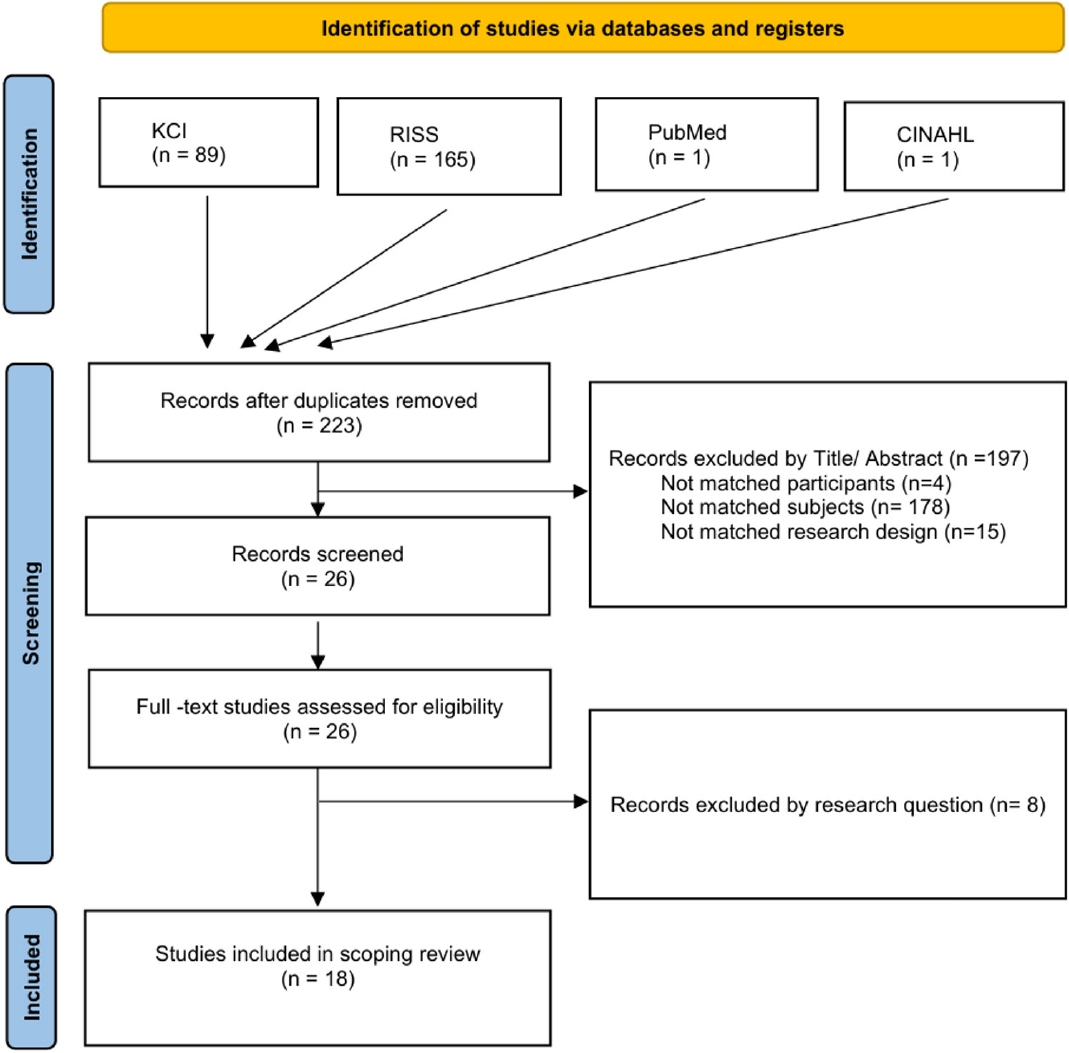
This scoping review aimed to comprehensively examine environmental and individual factors contributing to clinical practice stress among nursing students in South Korea and to provide evidence-based recommendations for improving the clinical education environment. Methods: A scoping review was conducted following Arksey and O’Malley’s five-stage framework and the PRISMA-ScR guidelines. Relevant studies published between January 2016 and March 2025 were identified through searches of domestic databases (KCI, RISS) and international databases (PubMed, CINAHL) using predefined keywords. A total of 18 studies met the inclusion criteria. Data were extracted using a standardized template and categorized by study characteristics, methodological features, and stress-related variables. Results: Most included studies were conducted after 2022 and involved students from multiple institutions. Environmental stressors identified included poor clinical setting quality, lack of instructor support, interpersonal challenges, limited educational infrastructure, and disruptions caused by new infectious diseases. At the individual-level, resilience, coping strategies, and emotional regulation were the most frequently studied variables. Among these, resilience was consistently reported as a protective factor against stress, while incivility emerged as the most prominent environmental stressor. Multiple regression models indicated that stress-related factors explained between 18.0% and 75.6% of the variance in outcomes. Conclusion: Clinical practice stress in nursing students results from a dynamic interaction between environmental and individual factors. Nursing education programs should incorporate resilience-enhancing interventions, strengthen collaboration with clinical sites, and adopt flexible educational methods, such as simulation-based training, particularly during periods of restricted clinical access.
  • 448 View
  • 10 Download

Original Article

Influencing Factors of Fear of Cancer Recurrence among Adult Breast Cancer Survivors: A Cross-Sectional Study
Kyunghwa Lee, Eun-Jeong Park, Jung Ok Choi
Korean J Adult Nurs 2025;37(4):401-411.   Published online November 13, 2025
DOI: https://doi.org/10.7475/kjan.2025.0417
Purpose
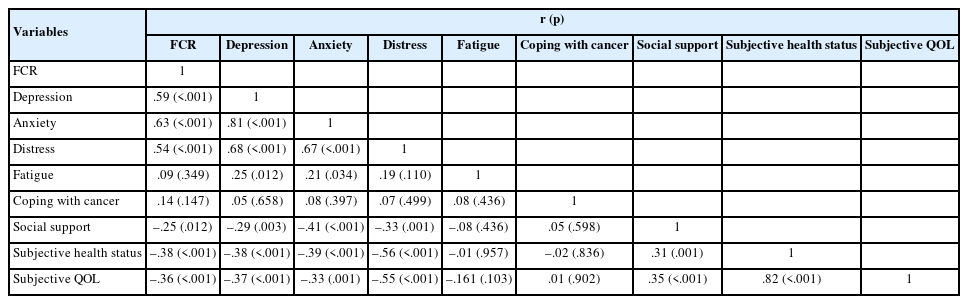
This study aimed to examine the level of fear of cancer recurrence (FCR) among adult breast cancer survivors and to identify factors influencing it. Methods: This cross-sectional study included 104 adult breast cancer survivors who were no longer receiving active treatment. Data were collected through self-report questionnaires addressing FCR, depression, anxiety, distress, fatigue, coping with cancer, social support, subjective health status, subjective quality of life, demographic characteristics, and disease-related characteristics. Surveys were administered both face-to-face and online between March and September 2024. Data analysis was conducted using descriptive statistics, frequencies, the independent t-test, one-way analysis of variance, Pearson’s correlation, and multiple regression. Results: The mean total FCR score was 78.83±25.71 (range, 0–168), reflecting a moderate level. Among participants, 22.1% scored above the cutoff for depression, 34.6% for mild anxiety, and 27.9% for severe distress. More than 70% of participants reported fatigue. Levels of coping with cancer, social support, subjective health status, and subjective quality of life were moderate or higher. Anxiety (β=.56, p<.001), fatigue (≤34) (β=.18, p=.019), and subjective quality of life (β=–.18, p=.022) significantly influenced FCR. Conclusion: Ongoing assessments and tailored interventions are essential to address FCR and to promote psychological well-being in breast cancer survivors following completion of active treatment.
  • 410 View
  • 14 Download

Review Article

Purpose
This study involved a meta-synthesis of qualitative research concerning the experiences of women with infertility and infertility treatments. Based on an analysis of emotional changes and adaptation processes, it aimed to propose an interaction model encompassing expectation, loss, and resilience and clarify the conceptual meaning of each component.
Methods
Thomas and Harden’s five-step qualitative meta-synthesis methodology was employed. A total of 22 studies published between 2014 and 2024 were comprehensively analyzed and synthesized. The findings were integrated into a model representing the experiences of women undergoing infertility and infertility treatments.
Results
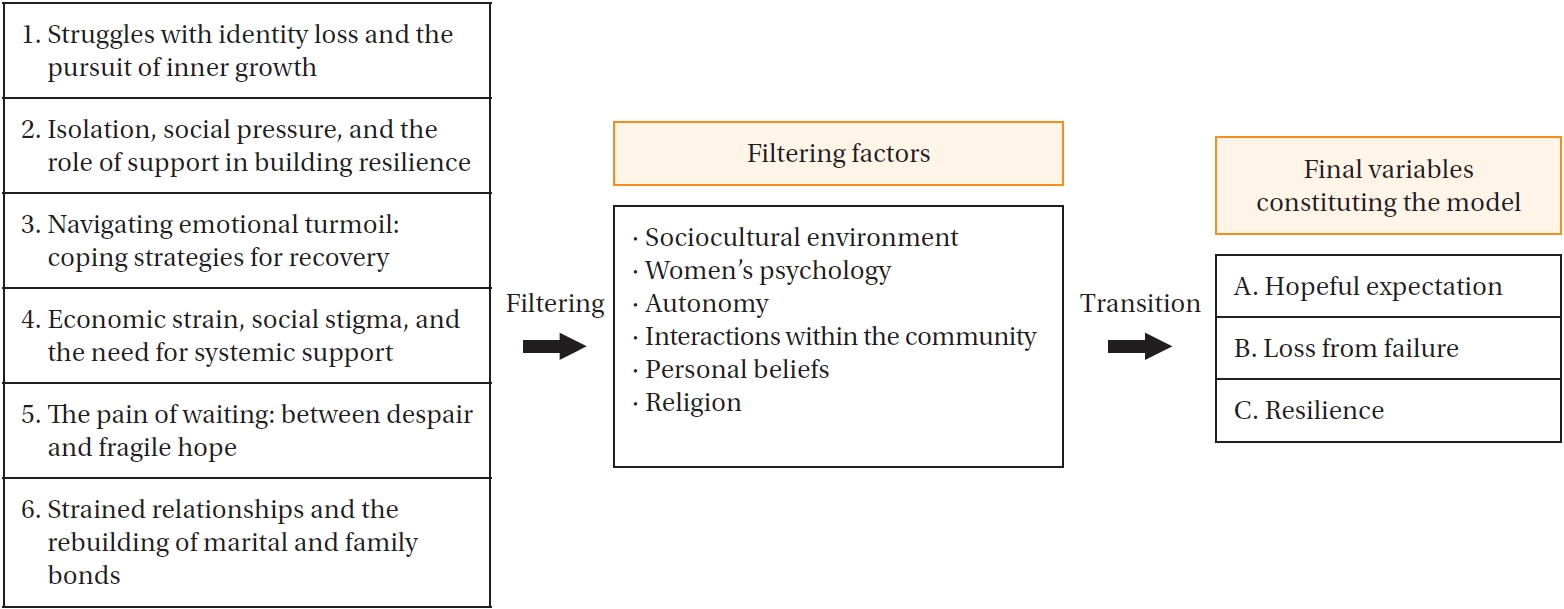
The meta-synthesis identified six key themes: changes in identity and inner growth; strengthening resilience through the roles of spouses, family, and peers; strategies for recovery and growth; support systems amidst economic and social burdens; life in the tension of waiting and hope; and the reconfiguration of couple and family relationships. Based on these themes, a dynamic interaction model, named the Model of Psychological Changes and Resilience (PCR Model), was developed to illustrate the interrelationships among expectation, loss, and resilience. The conceptual implications of these relationships were also explicated.
Conclusion
The cyclical interplay between expectation and loss among women experiencing infertility is intensified by social ideologies and cultural contexts, while resilience is strengthened through overcoming distress and finding meaning in life. Further quantitative research is necessary to validate these relationships in clinical settings by obtaining empirical data that apply this model.
  • 1,499 View
  • 43 Download

Original Articles

Psychological Distress and Influencing Factors in Newly Diagnosed Patients with Breast Cancer: A Cross-Sectional Study
Jin-Hee Park, Yong Sik Jung, Min Hee Hur, Yu Jin Jeong
Korean J Adult Nurs 2024;36(4):311-319.   Published online November 30, 2024
DOI: https://doi.org/10.7475/kjan.2024.36.4.311
Purpose
Cancer diagnosis is associated with psychological distress, which often leads to a significant reduction in adaptation and quality of life. This study aimed to identify the prevalence and related factors of psychological distress in newly diagnosed breast cancer patients.
Methods
The study included 138 women scheduled for surgery or neoadjuvant chemotherapy following a recent breast cancer diagnosis at a university hospital in Korea. Psychological distress was assessed using the National Comprehensive Cancer Network Distress Thermometer and problem lists. Data collection occurred from November 1, 2021, to November 30, 2022. Descriptive statistics and logistic regression analysis were utilized for data analysis.
Results
The average age of the participants was 51.72 years. Among the 138 participants, 67.4% (n=93) reported moderate to severe levels of psychological distress. Multivariate logistic regression analysis identified financial burden (Odds Ratio [OR]=4.32), fears (OR=5.35), and nervousness (OR=5.50) as predictors of moderate to severe psychological distress.
Conclusion
Approximately two-thirds of newly diagnosed breast cancer patients experienced significant psychological distress. Nervousness, fears, and financial burden were significant factors influencing this distress. Therefore, management of psychological distress should be implemented for patients experiencing financial burdens or emotional problems, such as nervousness and fear, from the time of diagnosis.

Citations

Citations to this article as recorded by  
  • Impact of fragmented care on cancer outcomes among korean women with breast and cervical cancer: a focus on regional and economic disparities
    Sun Jung Kim, Noorhee Son, Woo-Ri Lee, Dong-Woo Choi, Seojin Park, Kyu-Tae Han
    International Journal for Equity in Health.2025;[Epub]     CrossRef
  • Family roles and limitations as mediators in medical communication for cancer patients: A qualitative study
    Yeori Park, Jiyeon Kang, Yeonju Kim, Young Su Park, Sang-Ho Yoo, Taiwo Opeyemi Aremu
    PLOS One.2025; 20(10): e0333669.     CrossRef
  • 2,773 View
  • 77 Download
  • 2 Crossref
  • 0 Scopus
Factors Influencing Resilience in Patients with Multiple Myeloma: A Cross-Sectional Study
Hae-Lyeon Jeon, Hye-Ah Yeom
Korean J Adult Nurs 2024;36(1):41-51.   Published online February 29, 2024
DOI: https://doi.org/10.7475/kjan.2024.36.1.41
Purpose
The purpose of this study was to investigate the level of resilience in multiple myeloma patients and to identify the impact of symptom experience, cancer coping, and social support on resilience. Methods: Data were collected from January 2022 to May 2022 using self-report structured questionnaires administered to 162 outpatients who were undergoing chemotherapy or follow-up care after multiple myeloma treatment. The measured variables included symptom experience, cancer coping, social support, and resilience. The collected data were analyzed using SPSS/WIN 25 for descriptive statistics, the independent t-test, one-way analysis of variance, the Scheffé test, Pearson correlation coefficients, and hierarchical regression analysis. Results: The mean resilience score of the participants was 66 out of 100 points. The levels of resilience were significantly higher in patients who had a job, recognized the importance of religion, and had a good economic status. Significantly higher levels of resilience were also observed in patients with lower physical performance status, fewer symptom experiences, more positive cancer coping, and higher support from healthcare staff. Conclusion: Monitoring the symptom experience and physical performance ability of patients with multiple myeloma is important for enhancing their resilience. Positive coping strategies need to be developed and additional support from nurses should be provided to strengthen the personal resilience of patients with multiple myeloma.
  • 846 View
  • 32 Download
  • 0 Scopus
Purpose
This study was conducted to investigate the moderating effect of physical activity on the relationship between perceived stress and depression in patients newly diagnosed with ischemic heart disease. Methods: This study had a cross-sectional design. Data were collected using a structured self-report questionnaire, which covered demographic characteristics, perceived stress, depression, and physical activity. Multiple linear regression was used to determine whether perceived stress and physical activity influenced depression, after controlling for demographic characteristics. The moderating effect of physical activity on the relationship between perceived stress and depression was analyzed using model 1 of the PROCESS macro (bootstrap sample size=5,000). Results: The findings revealed that the level of depression was higher in women (p=.003), individuals without a spouse (p=.004), and those with an average monthly income of less than 3 million won (p=.045). The regression results showed that perceived stress was associated with a significant increase in the level of depression (β=.53, p<.001), and low physical activity was also a significant predictor of depression (β=.16, p=.013). The moderating effect of physical activity on the relationship between perceived stress and depression was confirmed, indicating that when physical activity was high, the impact of perceived stress on depression was weaker than when physical activity was low (B=-0.37, p=.038). Conclusion: The findings suggest the need to implement a nursing program that can enhance physical activity and early screening for stress and depression in patients with ischemic heart disease.
  • 728 View
  • 15 Download
  • 0 Scopus
Purpose
Contrast therapy, which includes alternately applying cold and heat therapy, is an effective intervention to increase muscle elasticity and reduce musculoskeletal edema and pain. This study aimed to confirm the effects of contrast therapy by using flexible Thermoelectric Devices (TEDs) — that not only maintain a constant temperature but can also change the temperature in a short time — on lower extremity edema, pain, muscle fatigue, and stress among nursing home workers.
Methods
This randomized controlled pre-post experimental study used a flexible thermoelectric element to administer contrast therapy in nursing home workers to compare its impact on lower extremity swelling, pain, muscle fatigue, and stress. As an intervention method, 4 minutes of heat therapy and 1 minute of cold therapy were repeated for a total of 30 minutes.
Results
The experimental group displayed a significant difference of -2.53 points, and the control group displayed a significant difference of -0.94 points (t=2.65, p<.050) as a result of an analysis comparing the two groups’ pain levels before and after the experimental treatment. The experimental group also displayed a statistically significant reduction in the degree of lower extremity edema (t=3.91, p=.001). Furthermore, the experimental group’s lower extremity stress index decreased significantly (t=2.87, p=.049).
Conclusion
The findings of this study indicated that contrast therapy by using flexible TEDs alleviated stress, leg pain, and swelling in nursing home workers and could be used as an intervention to alleviate musculoskeletal problems in healthcare workers.
  • 4,004 View
  • 24 Download
  • 0 Scopus
Purpose
This study aims to confirm the influence of type D personality and health literacy on resilience of patients hospitalized for Cardiovascular Diseases (CVDs), and provide basic information for improving resilience as a post-discharge strategy to promote self-care among patients with chronic diseases. Methods A questionnaire-based survey was carried out in this cross-sectional study. The subjects were 142 patients who were being treated at a tertiary general hospital for CVDs such as coronary artery disease, arrhythmia, and heart failure. Data were collected from July to October 2022 using a structured questionnaire, and then analyzed using the SPSS program version 26.0. Results 75.3% of the study subjects (n=107) had type D personalities, and the average health literacy and resilience scores were 48.96±9.13 points and 68.27±13.02 points, respectively, indicating relatively low grades. Following a hierarchical regression analysis, low monthly income (β=-.62, p<.001), current smokers (β=-.23, p=.010), patients with type D personality (β=-.24, p=.001), and patients with low health literacy (β=.27, p<.001) were identified as significant predictors of resilience (Adjusted R2=.57, F=14.32, p<.001). Conclusion In order to increase the resilience of patients hospitalized for CVD, it is necessary to identify and take into account smokers with low socioeconomic status, poor health literacy, and type D personality. We advise doing a follow-up study to ascertain if the resilience of patients hospitalized for CVD influences post-discharge self-care and clinical outcomes.

Citations

Citations to this article as recorded by  
  • Associations between Health Literacy, Autonomy Support, and Health Behavior Adherence in Premature Coronary Artery Disease Patients: A Cross-Sectional Survey
    Seong Rae Cho, Yeojin Yi
    Korean Journal of Adult Nursing.2025; 37(4): 436.     CrossRef
  • 656 View
  • 20 Download
  • 1 Crossref
  • 0 Scopus

Review Article

Association of Psychological Stress with Telomere Length as a Biomarker of Cellular Aging: A Systematic Review
Seolbin Han, Sangeun Jun, Nahyun Kim
Korean J Adult Nurs 2022;34(5):450-465.   Published online October 31, 2022
DOI: https://doi.org/10.7475/kjan.2022.34.5.450
Purpose
This study aimed to synthesize evidence for the association of psychological stress with Telomere Length (TL)-a potential biomarker of cellular aging. Methods: A systematic literature search was conducted to identify eligible studies in the Cochrane Library, PubMed, Embase, and CINHAL. In this review, we included all papers published since the initiative's inception and summarized results as of March 2022. Studies that investigated subjective stress using questionnaires and objective stress using biomarkers of adults (aged≥18 years) were included. Ultimately, 20 studies met our selection criteria. The risk of bias was assessed using the Newcastle-Ottawa Scale. Results: Fifteen of the twenty studies (75.0%) reported that individuals with higher psychological stress levels had shorter TL. Eleven of sixteen studies (68.8%) measuring subjective stress and five of eight studies (62.5%) measuring objective stress showed significant associations of psychological stress with TL. However, five studies reported no association between psychological stress and TL shortening. Although the heterogeneous studies limited the ability to draw clear conclusions, it is suggested that psychological stress might accelerate the erosion of telomere ends.
Conclusion
Our findings indicate that TL could be a useful emerging biomarker for measuring stress-related health outcomes in nursing. Further large-scale longitudinal studies using TL as a genetic biomarker with multidimensional stress measurements are needed to investigate the association between psychological stress and cellular senescence.

Citations

Citations to this article as recorded by  
  • A biobehavioral theoretical framework based on the mechanism of cellular aging for nursing interventions to promote autonomic balance
    Nahyun Kim, Jooyeon Park
    Journal of Korean Biological Nursing Science.2024; 26(2): 99.     CrossRef
  • The Understanding and Application of Telomere Length as an Emerging Biomarker in Adult Nursing Research: A Review
    Seolbin Han, Jihee Min, Dae-Kwang Kim, In Deok Kong, Nahyun Kim
    Korean Journal of Adult Nursing.2023; 35(1): 1.     CrossRef
  • 1,243 View
  • 23 Download
  • 2 Crossref
  • 2 Scopus

Original Articles

Purpose
This study aimed to identify the relationship among post-traumatic stress disorder (PTSD), resilience, and retention intention in nurses who had experienced a traumatic event during hospital work. Methods A structured questionnaire, was administered online from September 10 to September 22, 2021 to 198 nurses who had experienced a traumatic event during work at a university hospital in G metropolitan city. Data were analyzed using three-step mediated regression analysis. Results Of the total participants, 70.7% had a high risk of PTSD. PTSD (β=-.20, p=.002) and resilience (β=.47, p<.001) had a direct effect on retention intention, and the explanatory power was 27.0%. However, the mediating effect of resilience on the relationship between PTSD and retention intention was not supported, which indicates that the relationship between post-traumatic stress and resilience was not significant (β=-.09, p=.232). Conclusion Although there was no mediating effect of resilience, PTSD and resilience are considered to be important in order to improve nurses’ retention intention. It is needed to develop strategies to prevent the occurrence of traumatic events and to formulate policies and conduct programs for stress symptom management, aimed at increasing nurses’ resilience.

Citations

Citations to this article as recorded by  
  • Vicarious Resilience in Hospital Nurses: A Concept Analysis
    Miri Jeong
    Healthcare.2025; 13(18): 2279.     CrossRef
  • 795 View
  • 28 Download
  • 1 Crossref
  • 0 Scopus
Mediating Effect of Resilience between Supportive Care Needs and Quality of Life of Female Genital Cancer Patients
Yu-Jung Son, Keum-Hee Nam
Korean J Adult Nurs 2022;34(3):269-279.   Published online June 30, 2022
DOI: https://doi.org/10.7475/kjan.2022.34.3.269
Purpose
This study aimed to confirm the relationship between supportive care needs and resilience of female genital cancer patients, and to investigate the mediating effect of resilience in the relationship between supportive care needs and quality of life.
Methods
This study was conducted with 105 outpatients and inpatients who were receiving treatment for female genital cancer at K University Hospital in B City. Data were collected from July 22, 2021 to August 17, 2021 and analyzed by using the SPSS/WIN 23.0 program. The correlation between the patients’ supportive care needs, resilience, and quality of life was analyzed by Pearson's correlation coefficients, and SPSS Process Macro was used for the significance of parameter indirect effects.
Results
The quality of life of female genital cancer patients showed a significant negative correlation with supportive care needs (r=-.68, p<.001), and a significant positive correlation with resilience (r=.53, p<.001). Moreover, resilience partially mediated the relationship between supportive care needs and quality of life (95% CI -0.009~-0.032).
Conclusion
Based on the results of this study, improving the resilience of female genital cancer patients may act as an additional coping strategy to reduce supportive care needs and establish an enhanced quality of life.

Citations

Citations to this article as recorded by  
  • Validity and Reliability of the Korean Version of Supportive Care Needs Survey-Short Form 34 for Patients With Cancer: A Methodological Study
    Eun Ji Park, Hye Young Kim, Ju-Hee Nho, Eun Ko, Allison W. Boyes
    Asian Nursing Research.2025; 19(1): 60.     CrossRef
  • Influences of Distress and Uncertainty on Supportive Care Needs in Preoperative Gynecological Cancer Patients in the Early Stages of Diagnosis
    Lee Na Yun, Jeong Hye Kim
    Asian Oncology Nursing.2025; 25(2): 53.     CrossRef
  • Influences of Fatigue, Uncertainty, and Resilience on Self-Care Behaviors in Cancer Patients Undergoing Chemotherapy
    Sa-Rang Kim, Gie-Ok Noh
    Asian Oncology Nursing.2025; 25(2): 110.     CrossRef
  • Factors influencing the supportive care needs of female patients with genital cancer in South Korea
    Yu-Jung Son, Keum-Hee Nam, JaeLan Shim
    Medicine.2023; 102(51): e36650.     CrossRef
  • 1,002 View
  • 22 Download
  • 4 Crossref
  • 2 Scopus
Purpose
This study aimed to evaluate distress, family resilience, and Quality of Life (QoL) among family caregivers of cancer patients undergoing chemotherapy and explore whether family resilience moderates the association between distress and QoL.
Methods
This is a cross-sectional study. One hundred seventeen family caregivers of cancer patients undergoing chemotherapy were recruited through the oncology outpatient clinic and two oncology wards at a tertiary university hospital. The participants completed self-reported questionnaires, including the Hospital Anxiety and Depression Scale, Family Resilience Scale-Cancer, and Caregivers’ Quality of Life Index-Cancer. Descriptive statistics, independent t-tests, one-way Analysis of Variance (ANOVA), and hierarchical regression analysis were used for statistical analysis.
Results
The mean distress score was 15.31±6.91, the mean family resilience score was 112.71±14.11, and the mean QoL score was 71.19±18.90. After controlling for potential covariates, distress was found to be negatively associated with QoL (β=-.45, p<.001), whereas family resilience was positively associated with QoL (β=.49, p<.001), explaining 62.8% of the variance. However, family resilience did not moderate the association between distress and QoL in this study.
Conclusion
Distress and family resilience are crucial factors associated with QoL in the caregivers of cancer patients undergoing chemotherapy. This finding indicates that oncology nurses should develop interventions to relieve distress and enhance family resilience to improve family caregivers’ QoL. Further studies are required to confirm the moderating role of family resilience.

Citations

Citations to this article as recorded by  
  • Navigate Chronic Illness: Antecedents and Consequences of Family Resilience—A Systematic Review and Meta-Analysis
    Charin Suwanwong, Darawan Raksat
    The Family Journal.2025;[Epub]     CrossRef
  • Effectiveness of web-based education program on knowledge, coping, burden, and quality of life among colorectal cancer caregivers in Vietnam: a quasi-experimental study
    Hien Thi Nguyen, Hsiu-Hsin Tsai, Hong Thuy Phuong Huynh, Thuy Khanh Linh Tran, Tuan Anh Le, Li-Chueh Weng, Ching-Yu Cheng, Pei-Kwei Tsay, Wann-Yun Shieh, Chia-Yih Liu
    BMC Nursing.2025;[Epub]     CrossRef
  • Mediating Effects of Family and Clinical Characteristics on the Quality of Life of Children With Spina Bifida and Their Parents
    Seung Hyeon Yang, Hyeseon Yun, Hooyun Lee, Kyua Kim, Chang Gi Park, Eun Kyoung Choi
    Journal of Advanced Nursing.2025;[Epub]     CrossRef
  • Resilience and its association with caregiving and psychosocial factors among lung cancer caregivers in Vietnam
    Thinh Toan Vu, Sasha Fleary, Glen Johnson, Victoria Khanh Ngo
    European Journal of Oncology Nursing.2025; 77: 102932.     CrossRef
  • Asian American Occupational Therapy Practitioners’ Perspectives on Supporting the Mental Health of Asian American Caregivers for Older Adults
    Arianna Bayangos, Rawan AlHeresh, Hadeel R. Bakhsh, Diane Smith, Claudia Hilton
    Occupational Therapy International.2025;[Epub]     CrossRef
  • Linking Healthcare, Family, and Work Systems: the Roles of Family-Centered Care, Family Resilience, and Caregiving-to-Work Conflict in Psychological Well-being among Parents of Children with Autism Spectrum Disorder
    Liangqi Shen, Linxiao Zhang
    Applied Research in Quality of Life.2025; 20(5): 2099.     CrossRef
  • The effect of mindfulness‐based interventions on caregiver burden, quality of life and psychological distress in caregivers of adults with chronic diseases: Systematic review and meta‐analysis of randomized controlled trials
    Gülyeter Erdoğan Yüce, Ayser Döner, Aylin Bilgin, Gamze Muz
    Worldviews on Evidence-Based Nursing.2024; 21(5): 528.     CrossRef
  • The experiences of family resilience in patients with permanent colostomy and their spouses: A dyadic qualitative study
    Fangfang Yang, Sumin Cui, Mengyi Cai, Fangming Feng, Meihui Zhao, Mengchen Sun, Weiying Zhang
    European Journal of Oncology Nursing.2024; 70: 102590.     CrossRef
  • Dyadic effects of family resilience on quality of life in patients with lung cancer and spousal caregivers: The mediating role of dyadic coping
    Jianfan Ke, Jialing Lin, Xiujing Lin, Wei-ti Chen, Feifei Huang
    European Journal of Oncology Nursing.2023; 66: 102400.     CrossRef
  • Family resilience and its influencing factors among advanced cancer patients and their family caregivers: a multilevel modeling analysis
    Panpan Cui, Jiaoxia Shi, Shifeng Li, Mikiyas Amare Getu, Ruibo Wang, Changying Chen
    BMC Cancer.2023;[Epub]     CrossRef
  • 1,981 View
  • 44 Download
  • 10 Crossref
  • 8 Scopus
Purpose
The purpose of this study was to provide the fundamental data for improving working environments for operating room nurses as well as the quality of surgical nursing.
Methods
Study participants were 95 operating room nurses with at least three months of work experience in general and tertiary hospitals in S and G provinces. Data were collected from October 2021 to November 2021 using a structured questionnaire. Results: Factors affecting the participants’ burnout were verbal violence (β=.23, p=.007), the self-perceived health status “not healthy” (β=.21, p=.009), and job satisfaction: “dissatisfied” (β=.34, p<.001) and “moderate” (β=.44, p<.001). Work-oriented nursing organizational culture (β=.26, p=.007) had a moderating effect on the relationship between verbal violence and burnout.
Conclusion
The results indicated that the verbal violence experienced by the participants affected their burnout, and work-oriented nursing organizational culture acted as a moderating variable.Therefore, a hospital’s organizational efforts to reduce verbal violence in the operating room and develop a well-balanced nursing organizational culture must be aimed at lowering nurse burnout.

Citations

Citations to this article as recorded by  
  • The Effects of Grit, Emergency Nursing Competency, and Positive Nursing Organisational Culture on Burnout Among Nurses in the Emergency Department
    Su-Young Moon, Hyung-Ran Park
    Behavioral Sciences.2025; 15(4): 486.     CrossRef
  • Effects of Verbal Abuse Experience and Communication Competence on Burnout among Operating Room Nurses
    Yesol Byon, Yoon Goo Noh
    Journal of Health Informatics and Statistics.2024; 49(2): 117.     CrossRef
  • Predictive modeling of burnout based on organizational culture perceptions among health systems employees: a comparative study using correlation, decision tree, and Bayesian analyses
    Teray Johnson, Sameh Shamroukh
    Scientific Reports.2024;[Epub]     CrossRef
  • The relationship between occupational burnout and moral courage in operating room personnel: A cross-sectional study
    Mahla Zakeriafshar, Camellia Torabizadeh, Zahra Jamshidi
    Perioperative Care and Operating Room Management.2023; 32: 100339.     CrossRef
  • Effects of Clinical Nurses' Responses to Violence on Burnout: The Moderating Role of Positive Psychological Capital
    Haejun Choi, Sujin Shin, Seungji Kim, Sungran Kim
    Korean Journal of Adult Nursing.2023; 35(4): 406.     CrossRef
  • 1,134 View
  • 52 Download
  • 5 Crossref
  • 4 Scopus
Structural Equation Model for Psychosocial Adjustment of Breast Cancer Survivors Based on Family Resilience Model
Jiyoung Seo, Myungsun Yi
Korean J Adult Nurs 2022;34(2):178-195.   Published online April 30, 2022
DOI: https://doi.org/10.7475/kjan.2022.34.2.178
Purpose
This study aimed to construct and test a hypothetical model which explains the psychosocial adjustment of breast cancer survivors using the family resilience model suggested by McCubbin and McCubbin.
Methods
The study participants were 242 breast cancer survivors who had finished active treatments within the past five years. Data were collected from September to October 2017 from an offline breast cancer self-help group survey and an online breast cancer support group. Data were analyzed using SPSS version 22.0 and AMOS version 23.0.
Results
The model fit indices for the modified hypothetical model were suitable for the recommended level: x2 =223.80 (df=88, p<.001), x2 /df=2.54, RMR=.04, GFI=.90, IFI=.93, CFI=.93, and RMSEA=.08. Symptoms and posttraumatic growth directly affected psychosocial adjustment. Symptoms were found to be the most influential factors in the psychosocial adjustment. All three family resilience factors-family hardiness, problem-solving communication, and problem-solving coping-directly affected posttraumatic growth and indirectly affected psychosocial adjustment through posttraumatic growth. These variables explained 81.2% of breast cancer survivors’ psychosocial adjustment.
Conclusion
Health care professionals need to continue to provide interventions for symptom relief and support to improve the psychosocial adjustment of breast cancer survivors. Additionally, practical nursing interventions should be prepared for individuals and families of breast cancer survivors to promote recovery and reinforce family resilience. This will ultimately improve the quality of life for breast cancer survivors and their families.

Citations

Citations to this article as recorded by  
  • Validation of the Korean Version of Patient-Centered Care Tool: For Outpatients
    Yeo Ju Kim, Gunjeong Lee, Sunyeob Choi
    Patient Preference and Adherence.2023; Volume 17: 1525.     CrossRef
  • Do spouse burden of care, family resilience, and coping affect family function in gynecologic cancer in Korea?: a cross-sectional study
    Minkyung Kim, Sukhee Ahn
    Korean Journal of Women Health Nursing.2022; 28(3): 197.     CrossRef
  • 791 View
  • 19 Download
  • 2 Crossref
  • 2 Scopus
Purpose
The purpose of this study was to compare and verify the effects of aroma essential oil inhalation and music listening on stress response, vital signs, and bispectral index. Methods In a randomized controlled trial design, the participants consisted of healthy adults aged 20~50 years who were randomly assigned to the Aroma essential oil inhalation Group (AG), Music Listening Group (MLG), or control group. The AG inhaled aroma essential oil for 10 minutes, the MLG listened to music for 10 minutes, and the control group took a break for 10 minutes. Stressors introduced to the participants included 70 dB of white noise and an arithmetic calculation. Results The perceived stress was significantly different between three groups at 10 minutes and 30 minutes after the intervention. The stress responses of the AG and MLG were significantly lower than that of the control group. At 10 minutes and 30 minutes after the intervention, there were significant differences in the Bispectral index (BIS) between three groups, and the BIS of the AG and MLG were significantly lower than that of the control group. At 30 minutes after the intervention, the stress index, systolic blood pressure, and heart rate were significantly different between three groups. Conclusion Aroma essential oil inhalation and music listening are effective nursing interventions as they reduce stress, stabilize vital signs, and have sedative effects in healthy adults who perceive stress.

Citations

Citations to this article as recorded by  
  • Effect of Healing Beats Program on Stress, Heart Rate and Sleep Quality of Colorectal Cancer Patients Treated with Chemotherapy: A Randomized Controlled Trial
    Eun-Jeong Hong
    Asian Oncology Nursing.2024; 24(1): 32.     CrossRef
  • Comparative effects of music therapy and aromatherapy on stress, quality of life, and happiness among shift nurses in Korea: a randomized controlled trial
    So-heun Lee, Won-jong Kim, Eun-Hi Choi, Myung-Haeng Hur
    Journal of Korean Biological Nursing Science.2024; 26(4): 337.     CrossRef
  • 741 View
  • 29 Download
  • 2 Crossref
  • 1 Scopus
A Concept Analysis of Stress in Hemodialysis Patients
Bomi Kim, Hyeyoung Kim, Jisun Lee
Korean J Adult Nurs 2021;33(6):601-615.   Published online December 31, 2021
DOI: https://doi.org/10.7475/kjan.2021.33.6.601
Purpose
This concept analysis was performed to clarify “stress in hemodialysis patients”. Methods: Walker and Avant’s methodology guided the analysis. In addition, the concept was compared with stress from other perspectives. Results: Stress in hemodialysis patients was defined in terms of “Physical”, “Psychological”, “Social ‧ Economic”, and “Behavioral” dimensions. Stress in hemodialysis patients is preceded by kidney failure, fear of treatment, and uncertainty about prognosis, after which there is often negative coping such as non-compliance with treatment, or positive coping such as maintaining the status quo, relying on medical staff, conforming to treatment, and self-management. Conclusion: It is necessary to develop a stress intervention program suitable for hemodialysis patients and a tool to identify the concept of stress in hemodialysis patients suitable for domestic situations, as well as conduct further research to identify its influencing factors.

Citations

Citations to this article as recorded by  
  • Mediating Effect of Shared Decision-Making on the Relationship between Patient Activation and Self-Management in Patients on Hemodialysis: A Cross-Sectional Study
    Mi Yeon Kim, So Young Yun
    Korean Journal of Adult Nursing.2025; 37(2): 177.     CrossRef
  • Lived Experience of Kidney Transplant Recipients with Kidney Graft Failure
    Younghui Hwang, Kyoungok Min, Haeng-Mi Son
    Journal of Korean Academy of Nursing.2024; 54(1): 93.     CrossRef
  • Effects of self-care intervention using a mobile instant messenger on hemodialysis patient’s knowledge, self-efficacy, self-care behavior and physiological index
    Yu Kyung Shin, Mi Young Kim
    Journal of Korean Biological Nursing Science.2024; 26(2): 123.     CrossRef
  • 1,002 View
  • 37 Download
  • 3 Crossref
  • 2 Scopus
A Structural Equation Modeling of Sexual Adjustment in Radical Prostatectomy Patients
Min Kweon Ahn, Hyun Kyung Kim
Korean J Adult Nurs 2021;33(5):532-543.   Published online October 31, 2021
DOI: https://doi.org/10.7475/kjan.2021.33.5.532
Purpose
This study aimed to identify variables influencing the sexual adjustment of patients who underwent radical prostatectomy in order to establish a structural model and intervention strategy for improving patients’ sexual adjustment.
Methods
Participants were 179 patients who received follow-up care after undergoing radical prostatectomy at two university hospitals in South Korea. Data were collected from July to November, 2017 using structured questionnaires. The exogenous variables were urinary symptoms and age, and the endogenous variables were sexual function, self-esteem, depression, couple intimacy, and sexual adjustment. The collected data were analyzed using SPSS 21.0 and AMOS 21.0.
Results
The goodness-of-fit measures of the final hypothetical model were satisfactory, as follows: χ2 /df=2.68, GFI=.91, CFI=.90, RMSEA=.09, SRMR=.07. Sexual function, self-esteem, and couple intimacy had direct and total effects on sexual adjustment in patients who underwent radical prostatectomy, and age had only an indirect effect. These variables explained 66.5% of sexual adjustment among patients. Urinary symptoms and depression did not show any significant effects, however.
Conclusion
To improve sexual adjustment in patients who underwent radical prostatectomy, it is imperative to establish active and effective nursing interventions to strengthen their sexual function, self-esteem, and couple intimacy, considering their age.
  • 535 View
  • 16 Download
  • 0 Scopus
Factors Affecting Health-Promoting Behaviors among Vietnamese Students in Korea
Tran Thi Quynh Anh, Minkyung Kang, Nahyun Kim
Korean J Adult Nurs 2021;33(4):349-359.   Published online August 31, 2021
DOI: https://doi.org/10.7475/kjan.2021.33.4.349
Purpose
This study aimed to examine health-promoting behaviors among Vietnamese students in Korea and identify the factors affecting these behaviors. Methods: A survey using self-administered questionnaires was employed. Data were collected between October 2020 and May 2021 from 260 Vietnamese students whose stay in Korea has been for longer than six months and who agreed to participate in the study. Variables included health-promoting behaviors (physical activity, nutrition, stress management, and health risk behavior), self-esteem, acculturative stress, and social support. A multiple regression analysis was performed to assess the factors that might influence health-promoting behaviors. Results: Of the total participants, 56.9% were women, and the mean age was 24.60±2.58 years. The mean score of the participants on total health-promoting behaviors was 2.64±0.36, on self-esteem 2.96±0.35, on acculturative stress 2.39±0.15, and on social support 2.53±0.24. Self-esteem, acculturative stress, social support, length of stay in Korea, and education level were found to affect healthpromoting behaviors, and these variables explained 76.2% of the variance. Conclusion: There is a need to develop intervention strategies for promoting self-esteem and social support programs and coping strategies for managing acculturative stress to increase health-promoting behaviors among Vietnamese students.
  • 1,398 View
  • 11 Download
  • 0 Scopus
Structure Equation Modeling for Resilience in Patients with Breast Cancer
Dong Rim Hyun, So Yeun Jun, Chang Wan Jun, Sue Kyung Sohn
Korean J Adult Nurs 2021;33(2):87-101.   Published online April 30, 2021
DOI: https://doi.org/10.7475/kjan.2021.33.2.87
Purpose
This study was conducted so as to determine a hypothetical model concerning factors affecting breast cancer patients' resilience. Methods: Data were collected via a self-administered questionnaire from 212 patients with breast cancer between July 25 and August 24, 2020. The data were analyzed using SPSS/WIN 20.0 and AMOS 21.0. Results: The model supported 7 of the 11 presented hypotheses for all participants. Test results indicated that “hope”, “uncertainty”, and “symptom experience” all directly affected participants' resilience, and that “uncertainty” also affected participants', “depression” and “hope”. “Spiritual well-being” affected participants' sense of “hope” and “symptom experience”. Of these variables, “hope” had the strongest direct influence on resilience across all participants. “Uncertainty” was found to directly and indirectly affect participants, whereas “spiritual well-being” indirectly affected the resilience of all participants. “Uncertainty” and “spiritual well-being” indirectly affected the resilience of all participants. Conclusion: These results suggest that management strategies to enhance breast cancer patients' resilience should address patients' uncertainty, spiritual well-being, hope, and symptom experience.

Citations

Citations to this article as recorded by  
  • Analysis of Educational Needs Related to Chemotherapy among Patients with Solid Tumors
    Se-Na Lee
    Asian Oncology Nursing.2025; 25(2): 89.     CrossRef
  • Resilience-related Breast Cancer: A Concept Analysis
    Fitria Endah Janitra, Nur Aini, Anggi Lukman Wicaksana
    Nurse Media Journal of Nursing.2023; 13(1): 31.     CrossRef
  • 891 View
  • 17 Download
  • 2 Crossref
  • 1 Scopus
Purpose
This study aimed to examine the influence of lifestyle-related factors, such as sleep quality, eating habits, and perceived stress, on the incidence of thyroid cancer in healthy adults. Methods: This study is a cross-sectional case-control study comparing lifestyle-related factors in thyroid cancer and healthy groups. Outpatients with thyroid cancer were recruited from 2012 to 2013, 3~6 months after thyroidectomy at a tertiary hospital in Seoul, Korea (n=468). For the control group, 935 healthy adults were recruited by propensity score matching on demographic characteristics in a 1:2 ratio from hospital health checkup data. The effect of sleep quality, eating habits, and perceived stress on the incidence of thyroid cancer was determined through multiple logistic regression analysis and backward stepwise variable selection. Results: Sleep disturbance and mild/moderate daytime dysfunction were found to have a 1.22 and 1.66/1.77-fold influence, respectively, in patients with thyroid cancer than in healthy controls (p<.05). Coffee consumers who drink 3~6 times/day showed reduced cancer incidence than those who drink very little (odds ratio=0.53, 95% confidence interval=0.32~0.87). Perceived stress was a significant risk factor in univariate (p=.004), but not in multivariate analysis. Conclusion: These findings highlight the need for evaluating sleep quality, especially in high-risk adults and patients with thyroid cancer. Preventive measures should be adopted to lower stress levels and improve sleep quality.

Citations

Citations to this article as recorded by  
  • Development and Effects of a Smartphone Application to Improve Self-Management in Workers Who Underwent Thyroid Cancer Surgery
    Myoyoun Kim, Seon Young Hwang
    Cancer Nursing.2025;[Epub]     CrossRef
  • Multidimensional Prediction Method for Thyroid Cancer Based on Spatiotemporally Imbalanced Distribution Data
    Zhiwei Jia, Yuqi Huang, Yanhui Lin, Min Fu, Chenhao Sun
    IEEE Access.2024; 12: 4674.     CrossRef
  • Determining the spatial non-stationarity underlying social and natural environment in thyroid cancer in China
    Xiyu Zhang, Yongqiang Lai, Xiaodan Bai, Bing Wu, Wenjing Xiang, Chenxi Zhang, Guihong Geng, Wenqing Miao, Qi Xia, Qunhong Wu, Huiying Yang, Yanjie Wang, Wanxin Tian, Yu Cao, Xinwei Liu, Hongyu Li, Yulu Tian, Zhe Song, Ziwen Zhao, Zhipeng Huang, Xiaonan Ch
    Science of The Total Environment.2023; 870: 162009.     CrossRef
  • Sleep quality, stress and thyroid cancer: a case–control study
    S. Afrashteh, M. Fararouei, M. T. Parad, A. Mirahmadizadeh
    Journal of Endocrinological Investigation.2022; 45(6): 1219.     CrossRef
  • 972 View
  • 18 Download
  • 4 Crossref
  • 4 Scopus
Purpose
The purpose of this study was to explore and describe the process of illness adaptation of patients with Atrial Fibrillation (AF).
Methods
Data were collected from December 2017 to July 2018 through individual in-depth interviews with thirteen patients with AF. Verbatim transcripts were analyzed using the grounded theory methodology developed by Corbin and Strauss.
Results
The core category about the illness adaptation process of patients with AF was identified as “living a life managing the silent insurrection of the heart.” The process of illness adaptation of patients with AF consisted of four phases: “withdrawal”, “transition”, “practice”, and “adeptness”.
Conclusion
An in-depth understanding of the illness adaptation process of patients with AF will guide nurses in proactively developing and implementing effective nursing interventions to better support patients with AF in Korea.
  • 882 View
  • 15 Download
  • 0 Scopus
Purpose
The purpose of this study was to investigate the roles of the perception of aging symptoms in mediating and moderating the relationship between family function and stress in middle-aged adults.
Methods
This was a cross-sectional correlational study of 244 middle-aged men and women. Self-administered surveys were conducted using the Family APGAR, stress index, and symptom management beliefs questionnaire. The data were analyzed using descriptive statistics, independent t-test, Pearson’s correlation coefficient, hierarchical multiple regression analysis, and PROCESS macro using SPSS 23.0.
Results
A significant interaction between family function and the perception of aging symptoms in predicting stress was found, indicating a moderating effect of the perception of aging symptoms on the relationship between family function and stress. An indirect effect of family function on stress through the perception of aging symptoms was not significant, indicating an insignificant mediating effect of the perception of aging symptoms.
Conclusion
The relationship between family function and stress differed depending on participants’ perceptions of aging symptoms. Individuals with negative perceptions of aging symptoms may be vulnerable to stress caused by poorer family function. It is necessary to develop programs to help modify negative perceptions of aging as well as strengthen family function to decrease the stress of middle-aged adults.

Citations

Citations to this article as recorded by  
  • The Relationship Among Stress, Sense of Coherence and Sleep Quality in Middle-aged Women
    So Hyeon Kim, So Young Choi
    Journal of Korean Maternal and Child Health.2025; 29(3): 137.     CrossRef
  • 652 View
  • 22 Download
  • 1 Crossref
  • 0 Scopus
Purpose
This study aimed to identify the effects of psychological insulin resistance, diabetes distress, and diabetes self-efficacy of patients and their spouses on insulin therapy adherence of patients with type 2 diabetes.
Methods
A path analysis based on the actor-partner interdependence model, a couple analysis method, was used to identify the actor and partner effects of psychological insulin resistance, diabetes distress, diabetes self-efficacy on the insulin therapy adherence of patients with type 2 diabetes. Data were collected between February 25 and May 1, 2019, from 200 patients with type 2 diabetes and their spouses.
Results
The psychological insulin resistance of the patient had an actor effect on the diabetes self-efficacy of the patient and a partner effect on the diabetes self-efficacy of the spouse, and the patient’s diabetes distress had a partner effect on the diabetes self-efficacy of the spouse. The psychological insulin resistance of the spouse had an actor effect on the diabetes self-efficacy of the spouse, and the diabetes self-efficacy of the patient and spouse were found to affect the insulin therapy adherence of the patient directly.
Conclusion
This study provided basic data for the development of programs that can enhance insulin therapy adherence in patients with type 2 diabetes, focusing on the perspectives of both the patient and spouse.

Citations

Citations to this article as recorded by  
  • The Impact of Psychological Insulin Resistance and Dyadic Coping on Insulin Medication Adherence in Elderly Diabetes Patients and Their Spouses: A Latent Profile Analysis
    Yuanhong Wu, Huijing Xu, Yuxin Wang, Xiaohui Wang, Shanyu Wu
    Patient Preference and Adherence.2024; Volume 18: 2647.     CrossRef
  • The use of multiple daily injections versus insulin pump therapy for HgbA1c reduction in patients with insulin-dependent type 2 diabetes
    Dana E. Stallings, Karen J. Higgins
    Journal of the American Association of Nurse Practitioners.2023; 35(10): 615.     CrossRef
  • 689 View
  • 13 Download
  • 2 Crossref
  • 3 Scopus
Influences of Patient Activation on Diabetes Self-Care Activities and Diabetes-Specific Distress
Sookyung Choi, Su Hyun Kim
Korean J Adult Nurs 2020;32(1):10-20.   Published online February 29, 2020
DOI: https://doi.org/10.7475/kjan.2020.32.1.10
PURPOSE
The purpose of the study was to evaluate the influence of patient activation on diabetes self-care activities and diabetes-specific distress among patients with type 2 diabetes mellitus.
METHODS
This cross-sectional correlational study was a secondary data analysis, utilizing data collected from September 2016 to July 2017, for 151 adults diagnosed with type 2 diabetes in ambulatory endocrinology units of two tertiary hospitals in a metropolitan city. The instruments used for data collection included the Summary of Diabetes Self-Care Activities Questionnaire, the Patient Activation Scale, and the Brief Diabetes Distress Screening Instrument. Hierarchical multiple linear regression analyses were conducted to test the influence of patient activation levels on self-care activities and diabetes-specific distress, after controlling for demographic and clinical variables.
RESULTS
The average patient activation level was 67.8±16.72 (with the possible range from 0 to 100), and the average diabetes-specific distress level was 6.91±2.69 (with the possible range from 2 to 12). Diabetes self-care activities scores were highest in medication adherence and lowest in glucose self-monitoring. Patient activation was the significant factor influencing self-care activities, after controlling for demographic and clinical variables, but showed no significant influence on diabetes-specific distress. Oral hypoglycemic agents and insulin medications were the significant factors influencing diabetes-specific distress.
CONCLUSION
These findings indicate the importance of nursing interventions to improve patient activation and to alleviate diabetes-specific distress. Therefore, in order to improve diabetes self-care activities, it is necessary to facilitate patient activation for diabetes care.

Citations

Citations to this article as recorded by  
  • Diabetes self‐care activities and its correlates in patients with diabetic neuropathy
    Younhee Kang, Inkyung Park
    Journal of Clinical Nursing.2025; 34(6): 2163.     CrossRef
  • Relationship between Person-Centered Climate and Patient Satisfaction in Cancer Patients: The Mediating Effects of Patient Activation and Nurse Trust
    Hyun Jin Jung, Seon Hwa Park, Jung Hwa Jo, Hyun Jo Youn, A Ram Kim, Da Hye Lee, Mi Sun Park
    Asian Oncology Nursing.2024; 24(1): 21.     CrossRef
  • Influence of Digital Literacy and Patient Activation on Sick Role Behavior in Vulnerable Older Adults with Diabetes
    Young-Eun Yi, Hyun-Ju Lee
    Journal of Korean Academy of Fundamentals of Nursing.2024; 31(2): 179.     CrossRef
  • Patient Activation in Cancer Patients: Concept Analysis
    Se Young Jang, Eun Sun Lee
    Korean Journal of Adult Nursing.2024; 36(1): 15.     CrossRef
  • The Mediating Effect of Experiential Avoidance on the Relationship between Diabetes Distress and Self-Stigma in People with Diabetes Mellitus Type 2 in Republic of Korea
    Kawoun Seo
    Healthcare.2023; 11(20): 2773.     CrossRef
  • The Mediating Effect of Acceptance Action in the Relationship between Diabetes Distress and Self-stigma among Old Adults with Diabetes in South Korea
    Hyesun Kim, Kawoun Seo
    Journal of Korean Academy of Community Health Nursing.2022; 33(4): 446.     CrossRef
  • Psychometric Evaluation of the Korean Version of PROMIS Self-Efficacy for Managing Symptoms Item Bank: Item Response Theory
    Mona Choi, Chang Gi Park, Soomin Hong
    Asian Nursing Research.2022; 16(4): 187.     CrossRef
  • Effects of Symptoms and Patient Activation on Sleep Disturbance in Patients with Acute Leukemia Undergoing Chemotherapy
    Suna Lee, Eunjung Ryu
    Asian Oncology Nursing.2021; 21(3): 173.     CrossRef
  • 1,296 View
  • 75 Download
  • 8 Crossref
  • 8 Scopus
PURPOSE
This study aimed to examine the relationship between illness perception, stress, and sleep, focusing on the influence of illness perception on the quality of sleep through the mediating effect of stress in patients with metabolic syndrome risk factors.
METHODS
A cross-sectional correlational study was conducted with 219 patients with two metabolic syndrome risk factors. Participants were recruited from outpatient clinics in Daegu and Gyeongbuk between June and July 2016. Data were collected using a self-administered structured questionnaire that included items from the Brief Illness Perception Scale, the Perceived Stress Inventory, and the Pittsburgh Sleep Quality Index. Pearson's correlation coefficient, independent t-test, one-way ANOVA, multiple linear regression analysis, and a SPSS macro bootstrap approach were performed.
RESULTS
There were significant correlations between illness perception and sleep (r=.42, p<.001) and between stress and sleep (r=.49, p<.001). Illness perception was a significant predictor of stress (t=7.99, p<.001) and sleep (t=5.83, p<.001) after adjusting for the influence of age, gender, job status, and body mass index. A mediating effect of stress on the relationship between illness perception and sleep was demonstrated by Baron and Kenny's approach (Z=4.57, p<.001) and the PROCESS macro for SPSS (95% confidence interval=0.04~0.13).
CONCLUSION
This study suggests that the negative impact of illness perception on sleep can be reduced by regulating stress. Further, it is necessary to develop intervention programs that can reduce stress linked to the illness perception among patients with metabolic syndrome risk factors.

Citations

Citations to this article as recorded by  
  • Disease Perception, Stigma, Distress, Physical Symptom Experience and Quality of Life in Colorectal Cancer Patients Undergoing Chemotherapy: A Cross-Sectional Study
    Eun-Hee Lee, Dongwon Choi
    Journal of Korean Academy of Fundamentals of Nursing.2024; 31(4): 494.     CrossRef
  • Illness perception and cardiovascular risk factors in patients with myocardial infarction undergoing percutaneous coronary intervention in Iran
    Aysan Thagizadeh, Akram Ghahramanian, Vahid Zamanzadeh, Naser Aslanabadi, Tonia C. Onyeka, Nargess Ramazanzadeh
    BMC Cardiovascular Disorders.2022;[Epub]     CrossRef
  • 654 View
  • 7 Download
  • 2 Crossref
  • 3 Scopus

Review Article

PURPOSE
The purpose of this study was to review articles that used the Pittsburgh Sleep Quality Index (PSQI) scale to measure sleep quality among adults with trauma experiences.
METHODS
Databases such as PubMed, CINAHL, Embase, Cochrane, Medline, Google Scholar, Riss, NDSL, and reference data were searched systematically for relevant studies from July 5 to 6, 2018. A quality assessment was conducted using the COSMIN (COnsensus-based Standards for the selection of health Measurement INstruments) risk of bias checklist, including content validity, structural validity, internal consistency, reliability, measurement error, hypotheses testing, cross-cultural validity, criterion validity, and responsiveness.
RESULTS
Fourteen studies met the inclusion criteria. All selected studies confirmed the overall quality of sleep by total score, but only 28.6% of the papers presented subscales. The quality of the methodology used varied within and between studies. Internal consistency of 21.5%, cross-cultural validity of 7.1%, and criterion validity of 14.2% were all evaluated as sufficient (+). Reliability and measurement errors were not presented in selected studies.
CONCLUSION
Our findings revealed that overall quality of sleep was measured by analyzing the characteristics and measurement attributes of the PSQI. However, as a result of the varying purposes of each study, the full potential of the tool could not be optimized. Future research should assess the attributes of the PSQI based on the content specified in the COSMIN evaluation standard, using it carefully to consider the target population's socio-cultural characteristics.

Citations

Citations to this article as recorded by  
  • Current status of systematic review studies on patient-reported outcome measures published in Korean journals
    Duck-Hee Chae, Jiyeon Lee, Eun-Hyun Lee
    Research in Community and Public Health Nursing.2025; 36: 1.     CrossRef
  • Evaluation of changes in skin characteristics due to the poor quality of sleep caused by smartphone usage
    Sue Im Jang, Yuchul Jung, Myeongryeol Lee, Jinsol Kim, Beom Joon Kim, Byung‐Fhy Suh, Eunjoo Kim
    Journal of Cosmetic Dermatology.2022; 21(4): 1656.     CrossRef
  • Affecting Factors on Sleep Quality in Foreign Workers
    Soojeong Kim, Min Kyung Kim, Inkyoung Lee, Kyoung Won Cho
    Journal of Health Informatics and Statistics.2022; 47(2): 139.     CrossRef
  • Discharge Readiness Scale for Parents of High-Risk Infants: A Systematic Review
    Ki-Eun Kim, Hyejung Lee, Na-Young Jeon
    Journal of The Korean Society of Maternal and Child Health.2022; 26(4): 205.     CrossRef
  • A Systematic Review of Measurement Properties of Spirituality related Assessment Tools Published in Korean Journals
    Il-Sun Ko, Jin Sook Kim, Soyoung Choi
    Journal of Korean Academy of Fundamentals of Nursing.2021; 28(1): 133.     CrossRef
  • 2,595 View
  • 35 Download
  • 5 Crossref
  • 3 Scopus
Original Articles
PURPOSE
Although many studies have reported the high-stress levels of clinical nurses, there are few studies regarding the stress of clinical nurses who are concurrently working and studying as graduate students. This study investigated the stress, self-efficacy, and context of stress experienced by clinical nurses in graduate school.
METHODS
Explanatory sequential strategy of mixed method was used. Stress and self-efficacy were quantitatively analyzed by general and academic characteristics of 61 nurses. The effect of self-efficacy on stress and the conditional effect of the years employed were investigated through conditional process analysis. Stress and related contextual aspects were explored through focus group interviews, differentiated by the number of years employed, with 22 nurses in June of 2018.
RESULTS
The average score of self-efficacy was 3.42±0.53, and stress was 2.88±0.60, out of 5 points. There were no differences in self-efficacy and stress according to demographics and academic characteristics. The moderation effect of the number of years employed on stress was present for those nurses with under 8.88 years of experience. Nurses who had under 9 years of work experience endured a busy schedule full of study and work. On the other hand, participants with more than 9 years of work experience reported having household chores or childcare, so their academic career was less of a priority, and they faced incrementally increasing physical illness or strain in their family life.
CONCLUSION
Since graduate school provides clinical nurses with the opportunity to further advance within the nursing field, a supportive environment is imperative.

Citations

Citations to this article as recorded by  
  • Experiences of Career Nurses Balancing Clinical Nursing with Ongoing Studies
    Yunhyung Kim, Yeonsook Joo, Eun Hee Kang, Jeong Hye Kim
    Journal of Korean Association for Qualitative Research.2024; 9(3): 215.     CrossRef
  • Experience of Work-Study Balance among Clinical Nurses in a Nursing Doctoral Program: A Qualitative Study
    Suyeon Noh, Yeongbin Yu, Sunyeob Choi
    Journal of Korean Academy of Fundamentals of Nursing.2023; 30(2): 193.     CrossRef
  • Evaluation of the Effectiveness of Mobile App-Based Stress-Management Program: A Randomized Controlled Trial
    Won Ju Hwang, Hyun Hee Jo
    International Journal of Environmental Research and Public Health.2019; 16(21): 4270.     CrossRef
  • 726 View
  • 6 Download
  • 3 Crossref
  • 2 Scopus
Stress, Pain, and Nursing Needs of Surgical Patients under General Anesthesia in the Recovery Room
Jihyun Jo, Minkyung Gu, Sohyune Sok
Korean J Adult Nurs 2019;31(3):249-258.   Published online June 30, 2019
DOI: https://doi.org/10.7475/kjan.2019.31.3.249
PURPOSE
This study sought to examine the relationships among patient's stress, pain, and nursing needs in the recovery room after surgery that was performed under general anaesthesia.
METHODS
Participants were adult patients aged 20 to 64 years who underwent surgery under general anesthesia from February 5, 2018 to March 9, 2018. A survey was conducted to evaluate the participants' general demographics, stress, pain and recovery room nursing needs at a Post Anesthesia Care Unit (PACU). A total of 145 patients receiving operational treatment in Daejin Medical Center at Gyeonggi-do were recruited. Collected data were analyzed in terms of percentage, frequency, independent t-test, one-way ANOVA, and Pearson's correlation coefficient using SPSS/WIN 23.0 program.
RESULTS
Among the PACU nursing needs environmental and educational nursing needs were the highest. In addition, patients with underlying diseases experienced more post-operational stress and had fewer educational nursing needs in the recovery room. Therefore, Aggressive pain management and emotional recovery room nursing needs should be provided in the PACU.
CONCLUSION
It is necessary to build a comfortable environment for the patient as well as protect patients from infection and guarantee their privacy. In order to reduce patients' stress, educational nursing needs in the recovery room should be provided before an operation.

Citations

Citations to this article as recorded by  
  • Preoperative Anxiety and Its Postoperative Associated Factors in Patients Receiving Post Anesthetic Recovery Care at Surgical Intensive Care Unit
    Yul Ha Lee, Hye-Ja Park
    Journal of Health Informatics and Statistics.2023; 48(3): 267.     CrossRef
  • 1,278 View
  • 36 Download
  • 1 Crossref
  • 1 Scopus
Differences of Stress, Sleep Quality and Metabolic Syndrome by Prolonged Fatigue in Early Adulthood
Bok Nam Seo, Inja Kim
Korean J Adult Nurs 2019;31(2):202-210.   Published online April 30, 2019
DOI: https://doi.org/10.7475/kjan.2019.31.2.202
PURPOSE
To provide basic data for the health management of adults with prolonged fatigue, demographic characteristics, stress, sleep quality, and metabolic syndrome were compared between groups with and without prolonged fatigue.
METHODS
Data of 370 adults (197 with Prolonged Fatigue [PF] and 173 without PF) from the 2014~2016 database of Korea Medicine Data Center were used. Fatigue, stress and sleep quality were measured with the revised Chalder Fatigue Scale, Psychosocial Well-being Index-Short Form, and Pittsburgh Sleep Quality Index, respectively. Metabolic syndrome was diagnosed according to the National Cholesterol Education Program Adult Treatment Panel III criteria.
RESULTS
First, regarding demographic characteristics, there were significant differences in occupation, smoking, and Body Mass Index (BMI) between groups with and without PF. More of the participants with PF than those without PF were employed, and smokers. They were also more likely to be obese than the participants in the group without PF. Second, there were significant differences between the groups in terms of stress and sleep quality; the participants with PF showed higher stress and lower sleep quality than those without PF. Finally, the prevalence of metabolic syndrome was found to be higher in the participants with PF than those without PF.
CONCLUSION
Considering the characteristics of the participants with PF, it is necessary to develop nursing programs to improve stress, sleep quality, and metabolic syndrome to reduce fatigue. These kinds of nursing programs are particularly necessary for people who are smokers, obese and employed.

Citations

Citations to this article as recorded by  
  • Effects of Varying Caffeine Dosages and Consumption Timings on Cerebral Vascular and Cognitive Functions: A Diagnostic Ultrasound Study
    Min-Ki Choi, Hee-Seul Ahn, Da-Eun Kim, Da-Seul Lee, Chan-Sol Park, Chang-Ki Kang
    Applied Sciences.2025; 15(4): 1703.     CrossRef
  • Factors affecting physical and mental fatigue in adults from South Korea: A cross-sectional study
    Kyeha Kim, Jihyun Oh
    Medicine.2023; 102(50): e36549.     CrossRef
  • A Study on the Relationship between Fatigue, Psychosocial Stress, and Behavior that Reduces Endocrine Disrupting Chemicals Exposure in Infertile Males
    Sung Ju Kim, So Young Choi
    Journal of The Korean Society of Maternal and Child Health.2021; 25(3): 211.     CrossRef
  • 665 View
  • 6 Download
  • 3 Crossref
  • 3 Scopus
Factors Affecting Quality of Life in Patients with Radical Prostatectomy
Hyo Jung Park, Yoonju Lee
Korean J Adult Nurs 2019;31(2):190-201.   Published online April 30, 2019
DOI: https://doi.org/10.7475/kjan.2019.31.2.190
PURPOSE
This study aimed to identify the factors affecting the quality of life of patients with radical prostatectomy.
METHODS
Participants included 114 patients with radical prostatectomy in Pusan National University Hospital in Busan, Korea. Data were collected from May to July 2018, using a structured questionnaire measuring quality of life, erectile dysfunction, lower urinary tract symptoms, appraisal of uncertainty, resilience, educational needs for sexual health, and marital intimacy. Data were analyzed using descriptive statistics, an independent t-test, a one-way analysis of variance, and hierarchical multiple regression.
RESULTS
The statistically significant regression model explained about 77% of the variance in quality of life. Appraisal of uncertainty as an opportunity, appraisal of uncertainty as a danger, and resilience were identified as factors influencing the participants' quality of life.
CONCLUSION
In order to improve the quality of life of patients with radical prostatectomy, it is necessary to reduce uncertainty through providing practical information on uncertain situations, and the programs should be applied that can lower the danger aspect of uncertainty, increase the opportunity factor of uncertainty, and increase the resilience of the patient himself.

Citations

Citations to this article as recorded by  
  • A Structural Equation Modeling of Sexual Adjustment in Radical Prostatectomy Patients
    Min Kweon Ahn, Hyun Kyung Kim
    Korean Journal of Adult Nursing.2021; 33(5): 532.     CrossRef
  • 441 View
  • 1 Download
  • 1 Crossref
  • 1 Scopus
PURPOSE
The purpose of this study is to identify the moderating and mediating effects of resilience in the relationship between symptom experience and quality of life.
METHODS
Participants were recruited from one general hospital and one hospital specialized in hemodialysis located in Busan city. The participants included 105 patients diagnosed with chronic renal failure who had been receiving hemodialysis twice a week or more on a regular basis. Data collection was conducted from December 14, 2017, to January 15, 2018. Collected data were analyzed using the SPSS/WIN 24.0 program.
RESULTS
There were significant correlations between participants' symptom experience and resilience (r=−.36, p < .001), symptom experience and quality of life (r=−.50, p < .001), and resilience and quality of life (r=.67, p < .001), respectively. Resilience had a partial mediating effect (z=−3.48, p < .001) in the relationship between symptom experience and quality of life but did not have moderating effects.
CONCLUSION
To improve the quality of life among patients on hemodialysis, it is necessary to develop interventions that enhance resilience in addition to providing symptom relief.

Citations

Citations to this article as recorded by  
  • Differences in the recirculation rate and dialysis adequacy according to arteriovenous fistula puncture direction and method in hemodialysis patients in South Korea: a one-group pretest-posttest study
    WooJeong Ban, YulHa Min, Jungmin Lee, Soo-Hyun Nam
    Journal of Korean Biological Nursing Science.2025; 27(2): 203.     CrossRef
  • The moderating role of social support in the relationship between death anxiety and resilience among dialysis patients
    Zahra Shafiei Kisomi, Omid Taherkhani, Mina Mollaei, Hoda Esmaeily, Ghazaleh Shirkhanloo, Zahra Hosseinkhani, Mohammad Amerzadeh
    BMC Nephrology.2024;[Epub]     CrossRef
  • Resilience’s impact on quality of life and post-traumatic growth in breast cancer patients during treatment
    Songül Duran, Umut Varol, Özlem Tekir, Ahmet Hakan Soytürk
    Breast Cancer.2024; 31(5): 807.     CrossRef
  • The Mediating Effects of Symptom Experiences on the Relationship between Body Image and Quality of Life among Hemodialysis Patients in a Single Center
    Yaki Yang
    Healthcare.2024; 12(17): 1779.     CrossRef
  • Mediating Effect of Resilience on the Relationship Between Job Stress and the Professional Quality of Life of Hospice and Palliative Care Nurses: A Multicenter Cross-sectional Study
    Eunhee Jo, Soon-Jung Hwang, Hyang-Suk Kwon
    Korean Journal of Adult Nursing.2024; 36(3): 241.     CrossRef
  • Effect of Social Support, Fatigue, and Depression on the Quality of Life of Patients Undergoing Peritoneal Dialysis
    Ji Hye Jung, Hye Young Kim
    Journal of Korean Academy of Fundamentals of Nursing.2024; 31(2): 254.     CrossRef
  • Factors influencing health-related quality of life for young single-person households: the mediating effect of resilience
    Soo Jin Lee, Sujin Lee, Xianglan Jin
    Journal of Korean Biological Nursing Science.2023; 25(3): 160.     CrossRef
  • Factors Affecting Diet-Related Quality of Life Among Hemodialysis Patients According to Age-group
    Ae Kyung Chang, Jin Yi Choi
    Clinical Nursing Research.2022; 31(6): 1172.     CrossRef
  • Relationship of Symptom Clusters, Compliance with the Patient’s Role Behavior, and Dialysis Adequacy with Quality of Life in Hemodialysis Patients
    Semi Moon, Chiyoung Cha
    Journal of Korean Academy of Fundamentals of Nursing.2022; 29(3): 295.     CrossRef
  • Effect of Role Conflict on Job Satisfaction by Comprehensive Nursing Care Service Ward Nurse: Moderating and Mediating Effect of Resilience
    So Hee Lee, Roma Seol, Min Hye Kim
    Journal of Korean Critical Care Nursing.2021; 14(3): 50.     CrossRef
  • Factors Affecting Quality of Life of Hemodialysis Patients - with Focus on Resilience, Symptom Experience and Self-management
    Hyun-Young Jung, Yong-Kyung Park, Soon-Rim Suh
    Journal of Health Informatics and Statistics.2021; 46(4): 429.     CrossRef
  • Perceptions of resilience in patients undergoing peritoneal dialysis: A Q‐methodology study
    Mi Young Chon, Eun Ja Yeun, Kyoung Hee Jung, Young‐il Jo, Kyeong Ryong Lee
    Nursing & Health Sciences.2020; 22(1): 108.     CrossRef
  • Relationship between Self-efficacy and Resilience among Patients with Colorectal Cancer with Stoma: Mediating Effects of Family Support and Medical Staff Support
    Mi Na Yun, Kyoung Mi Kim
    Korean Journal of Adult Nursing.2020; 32(6): 599.     CrossRef
  • Influence of Perceived Health, Anxiety, Depression, and Social Support on Quality of Life in Patients with Meniere Disease
    Young Mi Ryu, Woo Joung Joung
    Korean Journal of Adult Nursing.2020; 32(4): 399.     CrossRef
  • 777 View
  • 11 Download
  • 14 Crossref
  • 11 Scopus
Influence of Post-traumatic Stress Disorders on Quality of Life among Patients with Ostomy: Focused on the Mediating Effect of Resilience
Jee Hye Shin, Hyang Sook So, Eun A Kim
Korean J Adult Nurs 2017;29(6):657-666.   Published online December 31, 2017
DOI: https://doi.org/10.7475/kjan.2017.29.6.657
PURPOSE
This study was performed to identify the mediating effect of resilience in the relationship between post-traumatic stress disorder (PTSD) and quality of life (QoL) among patients with ostomy.
METHODS
A crosssectional survey design was used. A convenience sample of 150 patients with ostomy was recruited from three hospitals located in Gwangju and Chonnam province in Korea. Data were collected by self-report questionnaires and included demographics as well as measures of PTSD, resilience, and QoL. Data were analyzed with descriptive statistics, Pearson correlation coefficients, independent t-test, One-way ANOVA, and linear regression using the SPSS 24.0 program.
RESULTS
There were significant negative relationships between PTSD and QoL (r=−.30, p < .001) and between PTSD and resilience (r=−.57, p < .001). Resilience showed a partial mediating effect (β=.39, p < .001) between PTSD and QoL (Z=−3.12, p < .001).
CONCLUSION
This study findings suggest the importance of reducing PTSD scores and improving resilience among persons with ostomy which will possibly increase their QoL. Nursing interventions including counseling or education to improve psychological resilience might help better manage PTSD among patients with ostomy.

Citations

Citations to this article as recorded by  
  • Relationships between stigma, coping styles, self-care and post-traumatic growth among colorectal cancer patients with permanent enterostomy: A cross-sectional study
    Meida Zhang, Yiming Li
    Heliyon.2025; 11(10): e38902.     CrossRef
  • Resilience Among Residents from the Areas First Affected by COVID-19 in South Korea
    Eunhee Nam, Yujeong Kim
    Psychology Research and Behavior Management.2022; Volume 15: 1033.     CrossRef
  • Mediating Effect of Resilience between Supportive Care Needs and Quality of Life of Female Genital Cancer Patients
    Yu-Jung Son, Keum-Hee Nam
    Korean Journal of Adult Nursing.2022; 34(3): 269.     CrossRef
  • Patient Perspectives on Medical Trauma Related to Inflammatory Bowel Disease
    Kimberly Pothemont, Sarah Quinton, Majdoline Jayoushe, Sharon Jedel, Alyse Bedell, Stephen B. Hanauer, Ece A. Mutlu, Tiffany H. Taft
    Journal of Clinical Psychology in Medical Settings.2022; 29(3): 596.     CrossRef
  • Development and Evaluation of Resilience Enhancement Program Applying Mindfulness Meditation in Patients with Ileostomy
    Jee Hye Shin, Ja Yun Choi
    Journal of Korean Academy of Nursing.2021; 51(3): 334.     CrossRef
  • Relationship between Self-efficacy and Resilience among Patients with Colorectal Cancer with Stoma: Mediating Effects of Family Support and Medical Staff Support
    Mi Na Yun, Kyoung Mi Kim
    Korean Journal of Adult Nursing.2020; 32(6): 599.     CrossRef
  • Hopelessness and suicide ideation in ostomy patients: a mixed method study
    Nasrin Sarabi
    Journal of Coloproctology.2020; 40(03): 214.     CrossRef
  • Effects of social support and self‐efficacy on the psychosocial adjustment of Korean ostomy patients
    Keum Hee Nam, Heui Yeoung Kim, Jung Ho Kim, Ki‐Noh Kang, Soo Yang Na, Bok Hee Han
    International Wound Journal.2019; 16(S1): 13.     CrossRef
  • Symptom Distress and Depression in Patients with Recurrent Gynecologic Cancer Undergoing Chemotherapy: Mediating Effect of Resilience
    Eun Jung Yang, Ho Sihn Ryu
    Korean Journal of Adult Nursing.2019; 31(1): 28.     CrossRef
  • 456 View
  • 3 Download
  • 9 Crossref
  • 9 Scopus
Effects of Subjective Hearing Handicap and Perceived Stress on Quality of Communication Life of Older Adults
Younghye Go, Myonghwa Park
Korean J Adult Nurs 2017;29(5):496-504.   Published online October 31, 2017
DOI: https://doi.org/10.7475/kjan.2017.29.5.496
PURPOSE
The aim of the study was to identify factors influencing quality of communication life of older adults in the community.
METHODS
Participants in this study were 128 older adults who registered at the community welfare center. The data were collected from September to October 2015 by using audiometer and three self-administered questionnaires including Korean Evaluation Scale for Hearing Handicap, Korean-Perceived Stress Scale, and Quality of Communication Life Scale. Mean minimal threshold of both ears was defined as 40dB and above for hearing handicap in this study. Data analysis included descriptive statistics, t-test, Pearson correlation coefficients, and hierarchical regression.
RESULTS
According to the screening test result from audiometer measurement, 53.9% of the participants were found to have hearing impairment. The main factors influencing quality of communication life in older adults were subjective hearing handicap of social domain and perceived stress. They explained about 41% of quality of communication life.
CONCLUSION
This study identified that subjective hearing handicap on social domain and self perceived stress in older adults were more important factors for their quality of communication life compared to physical hearing loss. Nurses caring for older people should include strategies to increases communication skills and to decrease communication related stress.

Citations

Citations to this article as recorded by  
  • Knowledge and Attitude Regarding the Care of the Elderly with Hearing Loss among Nurses
    Ye Seul Kang, Jeong Yun Park
    Korean Journal of Health Promotion.2023; 23(3): 147.     CrossRef
  • Association of age-related hearing loss, tinnitus, and chronic low back pain in middle-aged and older Korean adults
    Hye-Mi Noh, Yi Hwa Choi, Jee Hye Wee, Hong Ji Song, Hye-Ji An, Keum Ji Kim, Soo Kyung Lee, Min Soo Jang, Nayoung Yeon, Tadashi Ito
    PLOS ONE.2023; 18(9): e0291396.     CrossRef
  • A Grounded Theory Study on the Symptom Acceptance of Tinnitus Patients
    Woo Joung Joung
    Korean Journal of Adult Nursing.2018; 30(6): 611.     CrossRef
  • 562 View
  • 10 Download
  • 3 Crossref
  • 3 Scopus
Experiences of Distress among Family Caregivers of Hospitalized Cancer Patients
Juhye Jin, Jin Hee Yoo
Korean J Adult Nurs 2017;29(5):451-462.   Published online October 31, 2017
DOI: https://doi.org/10.7475/kjan.2017.29.5.451
PURPOSE
There is limited available research about the experiences of family caregivers and their care of family members with cancer. The purpose of this study was to explore the experience of distress among family caregivers. Further, this study explored what aspects of caring for family member contributed to the distress.
METHODS
Data were collected through in-depth interviews with thirteen family members primarily responsible for the care of the member with cancer. All interviews were audio-taped, transcribed, and analyzed with qualitative content analysis.
RESULTS
The findings showed that the patients' physical, psychological, socio-relational, and spiritual symptoms influenced their caregivers' distress. The four categories that emerged from the data included “focusing attention only on the patient battling with cancer,”“being trapped in turmoil of complex emotions and feelings,”“having had to endure alone,” and “hanging in there at the crossroads of life and death.” With respect to these categories, fourteen sub-categories were ultimately identified.
CONCLUSION
Based on this study, researchers need to focus more attention on, and explore such co-existing distress to develop an adequate support program for the family caregivers of cancer patients.

Citations

Citations to this article as recorded by  
  • Caregivers of patients with cancer: perceived stress, quality of life and immune function
    Yoonjoo Kim, Misook L Chung, Hyangkyu Lee
    BMJ Supportive & Palliative Care.2025; 15(2): 195.     CrossRef
  • Validity and Reliability of the Korean Version of the Parkinson’s Disease Questionnaire–Carer
    JuHee Lee, Young H. Sohn, Seok Jong Chung, Sung Hae Kim, Yujin Suh, Jungah Park, Yielin Kim
    Journal of Clinical Neurology.2023; 19(6): 547.     CrossRef
  • Influences of Depression and Social Support on Quality of Life in Family Caregivers of Cancer Patients Undergoing Chemotherapy at an Outpatient Department
    Hye Young Kim, Eun Ko
    Journal of Korean Academy of Fundamentals of Nursing.2022; 29(4): 430.     CrossRef
  • Factors Related to the Caregiving Burden on Families of Korean Patients With Lung Cancer
    Hyun Jung Lee, Soo Kyung Park
    Clinical Nursing Research.2022; 31(6): 1124.     CrossRef
  • Caregiving experiences of Korean family caregivers of cancer patients: An integrative literature review
    Eunice E. Lee, Shin‐Young Lee
    Psycho-Oncology.2020; 29(10): 1486.     CrossRef
  • Factors influencing caregiver burden in families of hospitalised patients with lung cancer
    Ye Ji Seo, Heeok Park
    Journal of Clinical Nursing.2019; 28(9-10): 1979.     CrossRef
  • 928 View
  • 25 Download
  • 6 Crossref
  • 7 Scopus
Influences of Resilience and Social Support on Postoperative Recovery among Patients with Gastrointestinal Cancer
Young Man Kim, Hye Jeong Jung, Eui Geum Oh
Korean J Adult Nurs 2017;29(4):432-440.   Published online August 31, 2017
DOI: https://doi.org/10.7475/kjan.2017.29.4.432
PURPOSE
The purpose of this study was to investigate patients’ perceived postoperative recovery over time and to identify the influences of resilience and social support on postoperative recovery among patients with gastrointestinal cancer.
METHODS
101 patients with GI cancer who underwent surgery at S tertiary hospital were recruited from October 29th, 2015 to January 19th, 2016. Data was collected 3 times at postoperative day (POD)3, and POD5 in the hospital and at POD14 at home. Statistical analyses used were descriptive statistics, t-test, ANOVA, ANCOVA, correlation, and linear mixed model.
RESULTS
The patients' perceived postoperative recovery(reverse cording) decreased at home rather than time during hospital stay (POD3: 16.70, POD5: 15.74, POD14: 17.08). Postoperative recovery at POD5 showed negative correlation with resilience (r=−.36, p=.002). Postoperative recovery scores at POD14 were negatively correlated with resilience (r=−.60, p < .001) and social support (r=−.34, p=.019). There was a positive correlation (r=−.36, p=.002) between resilience and social support. Resilience was a significant associated factor with postoperative recovery over time (β=−0.29, p=.001).
CONCLUSION
Since the degree of postoperative recovery after hospital discharge was perceived lower than that of during hospital stay, nursing interventions such as nurse-led telephone follow-up programs should be applied during the transition period.

Citations

Citations to this article as recorded by  
  • Influence of Resilience and Social Support on Body Image of Patients in an Acute Stage Following Traffic Accidents
    Jihye Shin, Jieun Cha
    Journal of Korean Academy of Fundamentals of Nursing.2021; 28(2): 156.     CrossRef
  • Factors Affecting Quality of Life in Patients with Radical Prostatectomy
    Hyo Jung Park, Yoonju Lee
    Korean Journal of Adult Nursing.2019; 31(2): 190.     CrossRef
  • Predictive model for quality of life in patients with recurrent coronary artery disease
    Eunhee Jo, Sung Reul Kim, Hye Young Kim
    European Journal of Cardiovascular Nursing.2019; 18(6): 501.     CrossRef
  • 615 View
  • 11 Download
  • 3 Crossref
  • 5 Scopus
PURPOSE
This study aimed to identify the mediating effect of the resilience on the relationship between type D personality and compliance of Coronary Artery Disease (CAD) patients.
METHODS
The subjects were 236 CAD patients who visited the cardiology outpatient clinics of D University Medical Center in B City in Korea. The type D personality, resilience, and compliance of subjects were measured using structured questionnaires from July to August, 2014. The mediating effect was analyzed by a multiple hierarchical regression.
RESULTS
The subjects with type D personality accounted for 30.9% of all study subjects. The resilience and compliance of type D subjects were significantly lower than those of non type D subjects. There was a significant correlation between resilience and compliance. The direct effect of type D personality on compliance was not significant (β=-.07, p=.243), while the indirect effect of type D personality on compliance via resilience was significant (β=.23, p<.001).
CONCLUSION
On the basis of above results, it can be concluded that the resilience had completely mediating effect on the relation between type D personality and compliance of CAD patients. Further studies need to be done to develop the intervention enhancing resilience of CAD patients with Type D personality.

Citations

Citations to this article as recorded by  
  • Influence of self-efficacy in health management and resilience on treatment compliance in Korean patients undergoing percutaneous coronary intervention: a descriptive survey study
    Mi-Ra Jung, Eun Jeong, Kyung Sim Lee, Jang Hyun Cho
    Journal of Korean Biological Nursing Science.2025; 27(2): 266.     CrossRef
  • Self-Care, Resilience, and Uncertainty in Patients After Coronary Artery Bypass Graft Surgery
    Eun-Hye Park, JiYeon Choi, Phill Ja Kim, Jiyeon Lee
    Journal of Cardiovascular Nursing.2025;[Epub]     CrossRef
  • Assessing Health and Economic Benefits of Omega-3 Fatty Acid Supplementation on Cardiovascular Disease in the Republic of Korea
    Moon Seong Kim, Jin Man Kim, Sang Gyeong Lee, Eun Jin Jung, Sang Hoon Lee, Wen Yan Huang, Bok Kyung Han, Da Eun Jung, Sung Bum Yang, Inbae Ji, Young Jun Kim, Ji Youn Hong
    Healthcare.2023; 11(16): 2365.     CrossRef
  • Impact of Type D Personality and Health Literacy on Resilience of Inpatients with Cardiovascular Diseases: A Cross-Sectional Study
    Da Eun Kim, Seon Young Hwang
    Korean Journal of Adult Nursing.2023; 35(1): 23.     CrossRef
  • Influences of Type D Personality, Depression, and Stress on Quality of Life in Migraine Patients
    Eunhee Jo, Su-Jin Lee, Jung-Hwa Jo, Sun-Young Oh
    Journal of Korean Academy of Fundamentals of Nursing.2022; 29(3): 316.     CrossRef
  • Effects of Video Program by Tablet PC on Anxiety, Vital Signs, Pain, and Knowledge Level among Patients Undergoing Percutaneous Coronary Intervention
    Hyun Hee Park, Gye Seon Jeong
    Korean Journal of Adult Nursing.2021; 33(2): 102.     CrossRef
  • The Effect of Perceived Stress, Fine Dust Risk Perception, and Resilience on Stress Response in Patients with Respiratory and Circulatory Disorders
    Jin-Hee Park, Kuem-Sun Han
    STRESS.2021; 29(1): 21.     CrossRef
  • The mediating effect of resilience on the relationship between Type D personality and self‐care behavior in patients with heart failure
    Ji Min Heo, Chul‐Gyu Kim
    Japan Journal of Nursing Science.2020;[Epub]     CrossRef
  • Predictive model for quality of life in patients with recurrent coronary artery disease
    Eunhee Jo, Sung Reul Kim, Hye Young Kim
    European Journal of Cardiovascular Nursing.2019; 18(6): 501.     CrossRef
  • Health Literacy and Self-care Activities of Older Patients with Type 2 Diabetes: The Mediating Effect of Resilience
    Eun Woo Yoo, Yun Mi Lee
    Korean Journal of Adult Nursing.2018; 30(4): 376.     CrossRef
  • 395 View
  • 2 Download
  • 10 Crossref
Development of the Resilience Scale for Korean Nursing College Students
Young Hee Yang, Eun Man Kim, Mi Yu, Seungmi Park, Haeyoung Lee
Korean J Adult Nurs 2015;27(3):337-346.   Published online June 30, 2015
DOI: https://doi.org/10.7475/kjan.2015.27.3.337
PURPOSE
This study was to develop and test the resilience scale for Korean nursing college students.
METHODS
The initial 82 items (7 factors) were developed through literature review and student interviews. Items were reduced to 55 items through content validity test by 5 experts and face validity tests by 20 nursing students. The preliminary Resilience Scale for Korean Nursing Students (RS_KNS) was administered to 302 nursing students of 4 universities in Chungnam. Data were analyzed using item analysis, factor analysis, Pearson correlation coefficients, and Cronbach's alpha.
RESULTS
Twenty-four items were selected for the final scale. Seven factors evolved from the factor analysis, which explained 61.9% of the total variance. The internal consistency, Cronbach's alpha was .84 and reliability of the subscales ranged from .60 to .77.
CONCLUSION
The resilience scale for Korean nursing college students demonstrated acceptable validity and reliability. It can be used to assess the resilience of nursing college students and is expected to get utilized in teaching and research.

Citations

Citations to this article as recorded by  
  • Resilience of nursing students: A concept analysis study
    Sunghee Park, Mi-Young Choi
    Nurse Education Today.2025; 144: 106463.     CrossRef
  • The Effects of Nursing Students’ Practice Transition Shock, Resilience, and Professional Self-concept on Career Identity
    Sein Ryu
    Journal of Health Informatics and Statistics.2024; 49(2): 153.     CrossRef
  • Effects of Emotional Regulation, Resilience, and Distress Disclosure on Post-Traumatic Growth in Nursing Students
    Kyungmi Kim, Jongeun Lee, Jaeyeon Yoon
    International Journal of Environmental Research and Public Health.2023; 20(4): 2782.     CrossRef
  • Development and testing of the university student resilience scale
    Thomas Mueller
    Journal of American College Health.2023; 71(3): 967.     CrossRef
  • Turkish adaptation of the resilience scale for nurses: A validity and reliability study
    Süleyman Ü. Şenocak, Fatma Demirkıran, Tarık Totan
    Nurse Education Today.2021; 107: 105108.     CrossRef
  • Development and psychometric properties of the Nursing Student Academic Resilience Inventory (NSARI): A mixed-method study
    Tayyebeh Ali-Abadi, Abbas Ebadi, Hamid Sharif Nia, Mohsen Soleimani, Ali Asghar Ghods, Paola Gremigni
    PLOS ONE.2021; 16(6): e0252473.     CrossRef
  • The mediating effects on the relationship between campus life adaptation and clinical competence
    Sunghee Park, Miyoung Choi, Sookhee Lee
    Nurse Education Today.2019; 72: 67.     CrossRef
  • Predictors of Emotional Labor and Resilience on Clinical Competency in Nursing Students
    Eun Mi Park, Yeoungsuk Song
    Journal of Korean Academic Society of Nursing Education.2019; 25(3): 357.     CrossRef
  • Effect of Incivility, Resilience, and Social Support Experienced by Nursing Students on Burnout in Clinical Practice
    Eun Jung Lee, Mi-Hae Sung, Hye-Kyong Ahn, Yun Ah Kim
    Korean Journal of Women Health Nursing.2019; 25(1): 86.     CrossRef
  • Factors Influencing Subjective Happiness in Korean Nursing Students
    Eun Man Kim, Young Hee Yang, Haeyoung Lee, Mi Yu
    The Journal of Korean Academic Society of Nursing Education.2016; 22(3): 294.     CrossRef
  • 1,302 View
  • 50 Download
  • 10 Crossref
  • 11 Scopus
PURPOSE
The purpose of this study was to determine the relationships among health locus of control, resilience, social support, and health promoting behavior in patients with coronary artery diseases.
METHODS
This study utilized a descriptive correlational design using a survey method. The subjects were 165 coronary artery disease patients at the cardiology out-patient clinic of the C university hospital. Data were collected through Health Locus of Control Scale, Resilience Scale, ENRICHD Social Support Instrument, Health Promoting Lifestyle Profile scale. Data were analyzed using descriptive statistics, t-test, ANOVA, Pearson's correlation coefficient and hierarchial regression.
RESULTS
There were significant positive bivariate correlations of health promoting behavior with internal health locus of control, doctors health locus of control, resilience and social support respectively, and correlation between resilience and social support. Among predictors, internal health locus of control (beta=.28), social support (beta=.28) and resilience (beta=.25) had statistically significant influences on health promoting behavior.
CONCLUSION
These results proposed that internal health locus of control, social support and resilience have important influences on health promoting behavior. Nursing interventions to enhance internal health locus of control, resilience and social support might be essential for patients with coronary artery disease in order to promote their health behaviors.

Citations

Citations to this article as recorded by  
  • Self-Care, Resilience, and Uncertainty in Patients After Coronary Artery Bypass Graft Surgery
    Eun-Hye Park, JiYeon Choi, Phill Ja Kim, Jiyeon Lee
    Journal of Cardiovascular Nursing.2025;[Epub]     CrossRef
  • The Association Between Clinical Nurses’ Work Environment, Job Stress, and Health Locus of Control and Presenteeism in South Korea
    Jin-Young Park, Yong-Sook Eo
    Healthcare.2024; 12(22): 2293.     CrossRef
  • Effects of health perception, health literacy, and resilience on health behaviors among elderly women
    Yong Mi Kim, Min Sun Song
    Korean Journal of Health Education and Promotion.2024; 41(2): 79.     CrossRef
  • The effects of self-efficacy, a health-promoting lifestyle, and social support on resilience of patients receiving percutaneous coronary intervention: A descriptive survey study
    Su-Jin Kim, Jeong-soo Kim
    Journal of Korean Gerontological Nursing.2024; 26(4): 403.     CrossRef
  • Associations Between Psychological Factors and Adherence to Health Behaviors After Percutaneous Coronary Intervention: The Role of Cardiac Rehabilitation
    Emma R Douma, Willem J Kop, Nina Kupper
    Annals of Behavioral Medicine.2024; 58(5): 328.     CrossRef
  • Psychological separation, health locus of control, and transition readiness in adolescents and young adults with type I diabetes
    Nuri Kang, Sunhee Lee
    Journal of Pediatric Nursing.2024; 76: 38.     CrossRef
  • Factors Influencing Resilience in Patients with Multiple Myeloma: A Cross-Sectional Study
    Hae-Lyeon Jeon, Hye-Ah Yeom
    Korean Journal of Adult Nursing.2024; 36(1): 41.     CrossRef
  • Health-Promoting Behaviors, Relationship Satisfaction, and Resilience Among a Community Sample
    Chelsey L. Holden, Pam Rollins, Mosiah Gonzalez
    Contemporary Family Therapy.2023; 45(2): 146.     CrossRef
  • Self-Management Behaviors for Chronic Low Back Pain in Patients with Spinal Disease: A Structural Equation Modeling Analysis
    Jeom Suk Jung, Gwang Suk Kim
    Korean Journal of Adult Nursing.2023; 35(4): 340.     CrossRef
  • Predictive and Protective Role of Grit, Internal Locus of Control and Social Support in Mental Health of Cardiac Patients
    Syed Messum Ali Kazmi, Fatima Murtaza, Farhan Hashmi, Masooma Iftikhar, Muhammad Nasar Iqbal, Awais Nasir
    Pakistan Journal of Health Sciences.2023; : 34.     CrossRef
  • Factors Influencing the Dementia-Preventive Behaviors among Middle-Aged Persons with Chronic Diseases in Korea
    Jisung Park, Juh Hyun Shin
    International Journal of Environmental Research and Public Health.2021; 18(6): 2936.     CrossRef
  • Factors related to Bowel Cleanliness of Colonoscopy Examinees
    Yohan Lee, Haejung Lee
    Korean Journal of Adult Nursing.2021; 33(6): 545.     CrossRef
  • Factors affecting frailty among community-dwelling older adults: A multi-group path analysis according to nutritional status
    Eunjung Kim, Sohyune R. Sok, Chang Won Won
    International Journal of Nursing Studies.2021; 115: 103850.     CrossRef
  • Vitamin D levels are associated with trait resilience but not depression in a general population sample
    Jan Terock, Anke Hannemann, Deborah Janowitz, Jasmin Müller, Henry Völzke, Hans J. Grabe
    Brain and Behavior.2020;[Epub]     CrossRef
  • Resilience and its correlates among first ischemic stroke survivors at acute stage of hospitalization from a tertiary hospital in China:a cross-sectional study
    Zhihui Liu, Xuan Zhou, Wei Zhang, Lanshu Zhou
    Aging & Mental Health.2020; 24(5): 828.     CrossRef
  • Korean frailty and aging cohort study (KFACS): cohort profile
    Chang Won Won, Seoyoon Lee, Jinhee Kim, Doukyoung Chon, Sunyoung Kim, Chang-O Kim, Mi Kyung Kim, Belong Cho, Kyung Mook Choi, Eun Roh, Hak Chul Jang, Sang Joon Son, Jin-Hee Lee, Yong Soon Park, Sam-Gyu Lee, Bong Jo Kim, Hyeon Ju Kim, Jaekyung Choi, Hyuk G
    BMJ Open.2020; 10(4): e035573.     CrossRef
  • Prevalence of Physical Frailty and Its Multidimensional Risk Factors in Korean Community-Dwelling Older Adults: Findings from Korean Frailty and Aging Cohort Study
    Heeeun Jung, Miji Kim, Yunhwan Lee, Chang Won Won
    International Journal of Environmental Research and Public Health.2020; 17(21): 7883.     CrossRef
  • Factors Influencing the Improvement in Lifestyle Among Patients with Colorectal Cancer
    Song Ok Lim, Sangeun Jun
    Korean Journal of Adult Nursing.2019; 31(3): 325.     CrossRef
  • Predictive model for quality of life in patients with recurrent coronary artery disease
    Eunhee Jo, Sung Reul Kim, Hye Young Kim
    European Journal of Cardiovascular Nursing.2019; 18(6): 501.     CrossRef
  • Gender Comparison Factors Influencing Regular Exercise Adherence in Patients with Coronary Artery Disease: Data from the 6th Korea National Health and Nutrition Examination Survey (2013~2015)
    Hyekyung Jin, Minju Kim
    Journal of Korean Academy of Fundamentals of Nursing.2018; 25(2): 134.     CrossRef
  • Effects of Birth Control Empowerment Program for Married Immigrant Vietnamese Women in South Korea
    Jihyun Kim, Nam Cho Kim
    Korean Journal of Women Health Nursing.2017; 23(1): 1.     CrossRef
  • The Effects of Smart Program for Patients Who Underwent Percutaneous Coronary Intervention (SP-PCI) on Disease-Related Knowledge, Health Behavior, and Quality of Life: A Non-Randomized Controlled Trial
    Jueun Lee, Haejung Lee
    Journal of Korean Academy of Nursing.2017; 47(6): 756.     CrossRef
  • The Mediating Effect of Resilience on Depression and Rehabilitation Motivation in Stroke Patients
    Eun Sil Choi, Eun Nam Lee, Jeong Lim Cho
    Journal of muscle and joint health.2016; 23(1): 19.     CrossRef
  • The Effect of Physical and Psychological, and Social factors on Health Promotion Behavior among the stroke patients
    Eun-Ju Kim
    Journal of the Korea Academia-Industrial cooperation Society.2015; 16(12): 8525.     CrossRef
  • 888 View
  • 9 Download
  • 24 Crossref
PURPOSE
The purpose of this study was to examine the relationships between treatment belief, personal control, depressive mood, and health-related quality of life in patients with hemodialysis based on self-regulation theory.
METHODS
Data were collected from 220 patients at 27 local hemodialysis clinics in Seoul during 2013 and 2014. The Revised Illness Perception Questionnaire, the Hospital Anxiety and Depression Scale, and Medical Outcomes Study Short Form-12 were used to measure outcome variables. Data were analyzed using descriptive statistics, t-tests, ANOVA, Pearson correlation, and multiple regression using the 'enter' method.
RESULTS
Treatment belief and personal control scored 3.58 and 3.54 out of 5 points respectively, on average. Treatment belief and personal control of kidney disease were negatively correlated with depressive mood and positively correlated with health-related quality of life. According to the regression analysis, treatment belief, monthly income, and personal control were discovered to account for 21.8% of the variance in depressive mood, where as depressive mood, monthly income, treatment belief, and age were found out to account for 40.6% of the variance in health-related quality of life.
CONCLUSION
Our study demonstrated significant positive relationships between treatment belief and illness outcome in hemodialysis patients. Interventions aimed to provide the necessary information and trust to maximize the effectiveness of treatment need be developed to improve patients outcomes.

Citations

Citations to this article as recorded by  
  • Predictive Model of Self‐Management and Quality of Life for Patients on Hemodialysis Using Information‐Motivation‐Behavioral Skills Model: A Cross‐Sectional Study
    Sung Reul Kim, Hye Young Kim, Eun Ko, No Eul Kang, Kang Sun Lee
    Nursing & Health Sciences.2025;[Epub]     CrossRef
  • Effects of Depression, Social Support of Tuberculosis Patients on Self-care
    Go Un Lee, Hye Kyung Lee
    Journal of Korean Academy of Community Health Nursing.2022; 33(4): 456.     CrossRef
  • Correlations between uncertainty in illness and anxiety, depression and quality of life in patients receiving maintenance haemodialysis: A cross‐sectional study
    Jingxia Cheng, Dongju Yang, Qiantao Zuo, Weixu Peng, Longling Zhu, Xiaolian Jiang
    Nursing Open.2022; 9(2): 1322.     CrossRef
  • Factors Affecting Fear of Cancer Recurrence in Hematopoietic Stem Cell Transplant Patients
    Eun Jin Jo, Sanghee Kim
    Asian Oncology Nursing.2021; 21(2): 88.     CrossRef
  • Mediating Effects of Self-Care Competence on the Relationship between Uncertainty and Quality of Life in Hemodialysis Patients
    Yoon Jung Chae, Jun Hee Ahn, Kyung Pyo Kang, Eunhee Jo
    Korean Journal of Adult Nursing.2020; 32(1): 67.     CrossRef
  • Factors affecting depressive symptoms in employed hemodialysis patients with chronic renal failure
    Hae Ok Jeon, Jiyoung Kim, Oksoo Kim
    Psychology, Health & Medicine.2020; 25(8): 940.     CrossRef
  • Illness uncertainty and complementary and alternative medicine use in patients undergoing hemodialysis
    Hae Ok Jeon, Bo Hye Kim, Oksoo Kim
    Nursing & Health Sciences.2019; 21(3): 375.     CrossRef
  • Predictors Influencing of Medication Adherence in Hemodialysis Patients
    Hana Kim, Eunha Kim
    Korean Journal of Adult Nursing.2019; 31(3): 283.     CrossRef
  • Structural Equation Modeling of Self-Management in Patients with Hemodialysis
    Jieun Cha
    Journal of Korean Academy of Nursing.2017; 47(1): 14.     CrossRef
  • Effects of Intra-dialytic, Short-term Resistance Exercise on Physical Fitness, Depression and Dialysis Adequacy
    On Lee, Myoung-Hyee Kim, Chang-Hwa Lee, Il-Hwan Oh, Yeon-Soo Kim
    The Korean Journal of Sports Medicine.2016; 34(2): 162.     CrossRef
  • 402 View
  • 1 Download
  • 10 Crossref
The Experience of Self-help Group Activities among Women with Breast Cancer in Korea
Myungsun Yi, Young Mi Ryu, Eunkyung Hwang
Korean J Adult Nurs 2014;26(4):466-478.   Published online August 31, 2014
DOI: https://doi.org/10.7475/kjan.2014.26.4.466
PURPOSE
The purpose of the study was to explore and describe the experience of breast cancer self-help group activities in Korea.
METHODS
The data were collected via individual in-depth interviews with 8 women with breast cancer, who participated in self-help groups during 2012~2013. All interviews were audio-taped and transcribed, and they were analyzed using a phenomenological method.
RESULTS
Six theme clusters were identified. "Breakthrough toward survival" describes how the participants identified self-help groups and got involved in the activities. "Genuine comfort obtained by 'misery loves company' deals with the emotional relief and catharsis. "New life fully recharged" demonstrates the changed belief system and the joy for life and living. "Rebirth in family" deals with how family dynamics has been changed. "Societal change by raising collective consciousness" illustrates many activities to improve their rights and advocate employment issues. "Obstacles to the group harmony" illustrates the major difficulties including interpersonal conflicts the participants encountered during their participation.
CONCLUSION
The results of the study showed that participating in self-help groups was mostly beneficial for women with breast cancer. Therefore, oncology professionals need to encourage them to participate in self-help groups and also need to provide professional support to self-help groups for their harmonious interpersonal relationships.

Citations

Citations to this article as recorded by  
  • Health-related quality of life of premenopausal young breast cancer survivors undergoing endocrine therapy
    Kyungmi Lee, Hye Suk Jun
    European Journal of Oncology Nursing.2024; 68: 102496.     CrossRef
  • Experiences of peer support activities and the need for a metaverse-based program in young women with breast cancer: A qualitative study
    Jeonghee Ahn, Kyoung-eun Lee
    Asia-Pacific Journal of Oncology Nursing.2023; 10(7): 100253.     CrossRef
  • Experiences of Accessing Medical Services after Diagnosis in Breast Cancer Survivors
    Jae Woo Oh, Mi Ran Kim
    The Korean Journal of Rehabilitation Nursing.2022; 25(1): 22.     CrossRef
  • Operation Experiences of Women with Breast Cancer
    Hyeon-Young Kim, Sun Hwa Shin
    Journal of Korean Academy of Fundamentals of Nursing.2020; 27(2): 129.     CrossRef
  • Relationships Among Self-Efficacy, Social Support, and Community Participation in Breast Cancer Survivors
    Hye-Mi Kim, Gyeong-A Park, Jin-Ju Park, Myung-Hwa Oh
    Journal of Korean Society of Occupational Therapy.2019; 27(4): 69.     CrossRef
  • Journey through the Fight against Ovarian Cancer: Finding the Existence Value with being Tied to the Bridle of Death
    Young-Suk Park, Jeong Sook Park
    Korean Journal of Adult Nursing.2018; 30(6): 656.     CrossRef
  • Effect of empowerment on the quality of life of the survivors of breast cancer: The moderating effect of self‐help group participation
    Sunhwa Shin, Hyojung Park
    Japan Journal of Nursing Science.2017; 14(4): 311.     CrossRef
  • Analysis of Nursing Needs of Home-dwelling Breast Cancer Patients Based on Counselling Contents
    Eun Ja Kim, Jin Sook Hyun, Jung Hwa Han, Nahyun Kim
    Journal of Korean Public Health Nursing.2016; 30(3): 420.     CrossRef
  • Exploring Existential Coping Resources: The Perspective of Koreans with Cancer
    Fereshteh Ahmadi, Jisung Park, Kyung Mee Kim, Nader Ahmadi
    Journal of Religion and Health.2016; 55(6): 2053.     CrossRef
  • Experiences of Self-management Support among Breast Cancer Survivors
    Seok-Mo Heo, Narae Heo
    Korean Journal of Adult Nursing.2016; 28(4): 470.     CrossRef
  • Development and Validation of the Empowerment Scale for Woman with Breast Cancer
    Sun Hwa Shin, Hyojung Park
    Journal of Korean Academy of Nursing.2015; 45(4): 613.     CrossRef
  • 416 View
  • 3 Download
  • 11 Crossref
The Effect of Job Stress on Health Promoting Behaviors among Nurses: Mediating Selection, Optimization and Compensation Strategy
Seung Jin Oh, Sun Hwa Shin, Gee Youn Go, Bhandari Pratibha
Korean J Adult Nurs 2014;26(2):149-158.   Published online April 30, 2014
DOI: https://doi.org/10.7475/kjan.2014.26.2.149
PURPOSE
The purpose of this study was to determine whether Selection, Optimization and Compensation (SOC) Strategy mediated the relationship between job stress and health promoting behaviors among nurses.
METHODS
A descriptive causal relationship research design was used. 245 subjects recruited from the five general hospitals, which have over 500 beds in Seoul and Kyunggi-do, participated in the study by completing a survey which included questions about SOC strategy, job stress and health promoting behaviors. t-test, ANOVA, Pearson's correlation coefficient and multiple regression were used to analyze the data. SPSS/WIN 20.0 was used for all analysis.
RESULTS
The mean job stress score was 47.89; mean SOC strategy score was .71. 'Spiritual development' was the highest reported health promoting behavior with a mean of 3.57. Job stress was significantly and negatively related to health promoting behaviors. The result showed that all the mediating paths of SOC strategy were significant. The partial mediating model showed high goodness of fit demonstrating that the model was outstanding.
CONCLUSION
SOC strategy mediated the relationship between job stress and health promoting behaviors. Applying better SOC strategies among nurses will increase flexibility in responding to job stress and will also better perform health promoting behaviors.

Citations

Citations to this article as recorded by  
  • Factors Associated with Job Stress among Hospital Nurses: A Meta-Correlation Analysis
    Ji-Young Lim, Geun-Myun Kim, Eun-Joo Kim
    International Journal of Environmental Research and Public Health.2022; 19(10): 5792.     CrossRef
  • Rotating between day and night shifts: Factors influencing sleep patterns of hospital nurses
    Seunghwa Shin, SuHyun Kim
    Journal of Clinical Nursing.2021; 30(21-22): 3182.     CrossRef
  • Comparison Study of e-Health Literacy and Health Promoting Behaviors of Cancer Patients and Nurses
    Hyoen Jeong Kim, Miyoung Kim
    Asian Oncology Nursing.2020; 20(2): 100.     CrossRef
  • Influence of Clinical Nurses’ Job Stress on Mental Health Problems: Mediating Effect of Appreciation Moderated by Health-Promoting Lifestyle
    Sun Hwa Shin, Hwa Jin Kim
    Journal of Korean Academy of Nursing Administration.2020; 26(4): 378.     CrossRef
  • Association of Job Stress with Health-promoting Behaviors and Health Status in Clinical Nurses
    Jung-Suk Kim, Chun-Ja Kim
    Korean Journal of Occupational Health Nursing.2016; 25(4): 311.     CrossRef
  • Research Trends on Mibyeong Symptoms and Related Factors of Korean Nurses
    Jiyoung Kim, Hee-Jeong Jin, Younghwa Baek, Jonghyang Yoo, Siwoo Lee
    Journal of East-West Nursing Research.2016; 22(1): 17.     CrossRef
  • 530 View
  • 1 Download
  • 6 Crossref
  • 4 Scopus
Perception of Sex Life and Sexual Desire Coping Behavior according to General Characteristics among the Spouseless Aged
Eun Young Choi, Ju Young Ha
Korean J Adult Nurs 2014;26(1):58-66.   Published online February 28, 2014
DOI: https://doi.org/10.7475/kjan.2014.26.1.58
PURPOSE
The aim of this study was to identify factors affecting the perception of sex life and sexual desire coping behavior among the spouseless elderly.
METHODS
The participants were 149 elders who resided in six administrative regions of B city. Data were collected from December 1, 2012 to March 3, 2013 using a questionnaire. Data were analyzed using descriptive statistics, t-test, ANOVA, Scheffe test, Pearson's correlation coefficient, and Stepwise multiple regression in a PASW 18.0 program.
RESULTS
Stepwise multiple regression analysis of data indicated that the most likely predictor is gender. Gender, sexual relation, subjective health status and parent-child relationship explained 34% of the variance of perception of sex life. Gender, dating status and age explained 44% of the variance of sexual desire coping behavior.
CONCLUSION
Based on the study findings, gender and current dating status should be considered to conduct comprehensive sex health care education for healthy sex life of the elderly with no spouse.
  • 306 View
  • 2 Download
  • 0 Scopus
Effects of Burden and Family Resilience on the Family Adaptation of Family Caregivers of Elderly with Dementia
Hye Young Jang, Myungsun Yi
Korean J Adult Nurs 2013;25(6):725-735.   Published online December 31, 2013
DOI: https://doi.org/10.7475/kjan.2013.25.6.725
PURPOSE
The purpose of this study was to investigate the levels of burden, family resilience and adaptation of caregivers of elderly patients with dementia, and further to identify factors influencing their adaptation.
METHODS
A cross-sectional descriptive study was designed. Data were collected from questionnaires distributed to 131 family caregivers of elderly patients who visited at the Centers for Dementia in Seoul during 2012~2013. The data were analyzed using descriptive statistics, t-test, ANOVA, Pearson's correlation analysis, and stepwise multiple regression.
RESULTS
The average age of the care giving subjects was 63.58, and 31.3% were male, and 41.2% were the spouses. Statistically significant relationships were found between burden and adaptation (r=-.38, p<.001), and between family resilience and adaptation (r=.52, p<.001), and between burden and family resilience (r=-.35, p=.001). Thirty percent of adaptation was explained by burden and family resilience. The most influencing factor to adaptation was family resilience which explained about 27% of the variance.
CONCLUSION
The results of the study clearly indicate that family resilience explains better than burden on adaptation of family caregivers. Thus, to develop more effective nursing intervention for family caregivers of elderly patients with dementia, it would be necessary to integrate family resilience in the programs. 27% is not that much and I wonder if we have to do more work to identify the factors that influence care giving.
  • 356 View
  • 4 Download
The Influence of Cognitive Coping on Hope, Depression and Satisfaction with Life in Hemodialysis Patients
Jieun Cha, Myungsun Yi
Korean J Adult Nurs 2013;25(4):389-399.   Published online August 31, 2013
DOI: https://doi.org/10.7475/kjan.2013.25.4.389
PURPOSE
The purpose of the study was to examine the relationships between cognitive coping, hope, depression, and life satisfaction of hemodialysis patients based on the stress-coping model.
METHODS
For this cross-sectional survey, 142 participants were recruited from 10 local clinics in Seoul and Daegu during 2012-2013. The data collection instruments included the Cognitive Emotion Regulation Questionnaire, the Herth Hope Index, the Hospital Anxiety and Depression Scale, and the Satisfaction with Life Scale. The data were analyzed using descriptive statistics, t-test, ANOVA, Pearson's correlation analysis, and stepwise multiple regression.
RESULTS
The cognitive coping scores were significantly related to hope, depression, and life satisfaction. The coping strategies explained 80%, 37%, and 38% of the variances in hope, depression, and life satisfaction, respectively. The most powerful coping strategy was positive refocusing, explaining 73% in hope, 25% in depression, and 25% in life satisfaction.
CONCLUSION
The results of the study indicate that cognitive coping plays an essential role for psychological adaptation of hemodialysis patients. Thus, interventions integrating positive refocusing would help instilling hope of hemodialysis patients in Korea.

Citations

Citations to this article as recorded by  
  • The Effects of Spiritual Well-being on Self-care Practices in People Undergoing Hemodialysis: The Mediating Effect of Hope
    Bu Kyung Kim, Pok-Ja Oh
    Korean Journal of Adult Nursing.2022; 34(6): 592.     CrossRef
  • Factors Influencing Resilience among Korean adolescents and young adult survivors of childhood cancer
    Yoon Jung Shin, Eui Geum Oh
    European Journal of Oncology Nursing.2021; 53: 101977.     CrossRef
  • A health‐related quality of life model for patients undergoing haemodialysis
    Hye Min Jung, Hye Young Kim
    Journal of Clinical Nursing.2020; 29(3-4): 613.     CrossRef
  • Difficulties of Treatment Adherence in Adult Patients with Hemodialysis
    Cho Rong Gil, Kyung Mi Sung
    The Korean Journal of Rehabilitation Nursing.2018; 21(2): 71.     CrossRef
  • Structural Equation Modeling of Self-Management in Patients with Hemodialysis
    Jieun Cha
    Journal of Korean Academy of Nursing.2017; 47(1): 14.     CrossRef
  • The influence of Cognitive Coping on Sick Role Behavioral Compliance and Depression, Satisfaction with Life in Hemodialysis Patients
    Ji-Hyun Kim
    Journal of the Korea Academia-Industrial cooperation Society.2015; 16(2): 1328.     CrossRef
  • Factors related to Hope and Relationships between Hope, Physical Symptoms, Depressive Mood and Quality of Life in Young Adult and Prime-aged Patients with Hemodialysis
    Jieun Cha, Dallong Han
    Journal of Korean Academy of Psychiatric and Mental Health Nursing.2014; 23(4): 250.     CrossRef
  • 499 View
  • 0 Download
  • 7 Crossref
  • 5 Scopus
Factors Influencing Resilience of Patients with Hematologic Malignancy
So Young Kwak, Young Soon Byeon
Korean J Adult Nurs 2013;25(1):95-104.   Published online February 28, 2013
DOI: https://doi.org/10.7475/kjan.2013.25.1.95
PURPOSE
The purpose of this study was to investigate the level of resilience, family support, anxiety and depression in patients with hematologic malignancy, and to determine modifiable psychosocial factors that affect their resilience.
METHODS
Data were collected from 104 patients undergoing curative therapy at 'S' hospital in Seoul. The data were collected from April to May, 2012. The questionnaires included Korean Version of Connor-Davidson Resilience Scale, Family Support Scale and Hospital Anxiety-Depression Scale. The data were analyzed using descriptive statistics, t-test, ANOVA, Pearson correlation and stepwise multiple regression.
RESULTS
Resilience had statistically significant correlation with family support (r=.43, p<.001), anxiety (r=-.49, p<.001) and depression (r=-.52, p<.001). Factors influencing resilience were depression, family support, anxiety and time since diagnosis with R-sq. value of 36%.
CONCLUSION
The results of the study show that family support, anxiety and depression have important influences on resilience of patients with hematologic malignancy. Thus, family support needs to be reinforced when developing and implementing nursing intervention, and nurses need to intervene to reduce anxiety and depression of patients with hematologic malignancy.

Citations

Citations to this article as recorded by  
  • Comparative Analysis of Chemotherapy‐Induced Oral Mucositis, Nutritional Status, and Depression in Patients With Acute Leukemia
    Juhee Song, Hannah Yu, Eunjung Ryu, Liren Qian
    European Journal of Cancer Care.2025;[Epub]     CrossRef
  • Factors associated with meaning in life of patients with multiple myeloma in Korea
    Yoorin Cho, Yangsook Yoo
    Psychology, Health & Medicine.2025; : 1.     CrossRef
  • Factors Influencing Resilience in Patients with Multiple Myeloma: A Cross-Sectional Study
    Hae-Lyeon Jeon, Hye-Ah Yeom
    Korean Journal of Adult Nursing.2024; 36(1): 41.     CrossRef
  • The effects of self-efficacy, a health-promoting lifestyle, and social support on resilience of patients receiving percutaneous coronary intervention: A descriptive survey study
    Su-Jin Kim, Jeong-soo Kim
    Journal of Korean Gerontological Nursing.2024; 26(4): 403.     CrossRef
  • Effects of Family Support and Health Promotion Behaviors on Quality of Life of Cancer Patients after Gastrectomy
    Eun Hee Yang, Jeong Hee Kang
    Asian Oncology Nursing.2024; 24(4): 196.     CrossRef
  • Factors Affecting the Well-dying Awareness of Lung Cancer Survivors
    Dong Sim Choi, Gie Ok Noh
    Asian Oncology Nursing.2023; 23(4): 225.     CrossRef
  • Participation and Influencing Factors in the Decision-Making of Life-Sustaining Treatment: A Focus on Deceased Patients with Hematologic Neoplasms
    Jae Eun Jang, Jeong Moon Ryu, Min Hee Heo, Do Eun Kwon, Ji Yeon Seo, Dong Yeon Kim
    The Korean Journal of Hospice and Palliative Care.2023; 26(2): 69.     CrossRef
  • Comparing Perceptions, Determinants, and Needs of Patients, Family Members, Nurses, and Physicians When Making Life-Sustaining Treatment Decisions for Patients with Hematologic Malignancies
    Semi Kim, Eun Hye Ham, Dong Yeon Kim, Seung Nam Jang, Min kyeong Kim, Hyun Ah Choi, Yun A Cho, Seung A Lee, R.N. Min Jeong Yun
    The Korean Journal of Hospice and Palliative Care.2022; 25(1): 12.     CrossRef
  • Factors Affecting Intensive Care Unit Nurses’ Care Burden of Patients with Hematologic Neoplasm
    Jiwon Lee, Da Seul Jeong, Hyunji Jeon, Jin Hee Kim, Dong Yeon Kim
    Asian Oncology Nursing.2022; 22(4): 235.     CrossRef
  • Influence of anxiety and resilience on depression among hospital nurses: A comparison of nurses working with confirmed and suspected patients in the COVID‐19 and non‐COVID‐19 units
    Eun‐Young Doo, Miyoung Kim, Soyoung Lee, Su Young Lee, Ka Young Lee
    Journal of Clinical Nursing.2021; 30(13-14): 1990.     CrossRef
  • Structure Equation Modeling for Resilience in Patients with Breast Cancer
    Dong Rim Hyun, So Yeun Jun, Chang Wan Jun, Sue Kyung Sohn
    Korean Journal of Adult Nursing.2021; 33(2): 87.     CrossRef
  • Health Related Quality of Life among Blood Cancer Patients in Pakistan: A Cross Sectional Survey
    Madeeha Malik, Ifrah Rizwan, Azhar Hussain
    INQUIRY: The Journal of Health Care Organization, Provision, and Financing.2021;[Epub]     CrossRef
  • Relationship between Self-efficacy and Resilience among Patients with Colorectal Cancer with Stoma: Mediating Effects of Family Support and Medical Staff Support
    Mi Na Yun, Kyoung Mi Kim
    Korean Journal of Adult Nursing.2020; 32(6): 599.     CrossRef
  • Examining the Relative Influences of the Risk Factors and Protective Factors That Affect Firefighter Resilience
    Yunjo Song, Jung Hee Ha, Juliet Jue
    Sage Open.2020;[Epub]     CrossRef
  • Resilience in Koreans With Cancer
    Shin-Young Lee, Haeok Lee, Jacqueline Fawcett, Jeong-Hwan Park
    Journal of Hospice & Palliative Nursing.2019; 21(5): 358.     CrossRef
  • Factors influencing quality of life in patients with multiple myeloma
    Hee-Young Kang, Eun-Young Choi
    Contemporary Nurse.2019; 55(2-3): 109.     CrossRef
  • Symptom Distress and Depression in Patients with Recurrent Gynecologic Cancer Undergoing Chemotherapy: Mediating Effect of Resilience
    Eun Jung Yang, Ho Sihn Ryu
    Korean Journal of Adult Nursing.2019; 31(1): 28.     CrossRef
  • Resilience as a Moderator and Mediator of the Relationship between Symptom Experience and Quality of Life in Hemodialysis Patients
    Yeon Hee Cho, Yun Mi Lee
    Korean Journal of Adult Nursing.2019; 31(1): 68.     CrossRef
  • Effects of Mobile Navigation Program in Colorectal Cancer Patients based on Uncertainty Theory
    Kyengjin Kim, Wanju Park
    Journal of Korean Academy of Nursing.2019; 49(3): 274.     CrossRef
  • Factors Influencing Resilience in Hospitalized Patients with Stroke
    Jong Kyung Lee, Ji Yeong Yun
    Korean Journal of Adult Nursing.2018; 30(4): 385.     CrossRef
  • Factors Influencing Resilience of Burn Patients in South Korea
    Mi Heui Jang, Jongui Park, Mi Kyong Chong, Sohyune R. Sok
    Journal of Nursing Scholarship.2017; 49(5): 478.     CrossRef
  • Factors Influencing on Resilience of Elderly Gastric Cancer Patients
    Mi-Seon Bang, Ji-Hyun Lee
    Asian Oncology Nursing.2017; 17(3): 170.     CrossRef
  • Factors Influencing Quality of Sleep among Patients with Colorectal Cancer Receiving Chemotherapy
    Hee Soon Jang, Eun Ok Choi
    Asian Oncology Nursing.2016; 16(2): 103.     CrossRef
  • Effects of a Navigation Program for Patients with Newly Diagnosed Gastric Cancer: A Randomized Controlled Trial
    Yeon Seo Hong, Jeong Yun Park, So Hee Kim, Sun A Kim, Yeon Hee Kim
    Asian Oncology Nursing.2016; 16(3): 132.     CrossRef
  • The Structural Equation Model on Resilience of Breast Cancer Patients Receiving Chemotherapy
    Jeong Ha Yang, Ok Soo Kim
    Journal of Korean Academy of Nursing.2016; 46(3): 327.     CrossRef
  • The Relationships among Social Support, Hope, Anxiety, and Depression in Patients Expecting to Receive Hematopoietic Stem Cell Transplantation
    Ka Ryeong Bae, Sue Kim
    Korean Journal of Adult Nursing.2016; 28(1): 30.     CrossRef
  • Effects of the Symptoms, Anxiety, and Depression on the Quality of Sleep of Benign Prostate Hyperplasia Patients
    Na-Rae Lee, Kyung-Hee Kim, Yeun-Hee Kwak, Yoon-Jung Kim
    The Journal of the Korea Contents Association.2015; 15(1): 338.     CrossRef
  • A study on the effect of self bedside exercise program on resilience and activities of daily living for patients with hemiplegia
    Yang-Chool Lee, Eun-Surk Yi, Won-Ho Choi, Byung-Mun Lee, Sung-Bo Cho, Ji-Youn Kim
    Journal of Exercise Rehabilitation.2015; 11(1): 30.     CrossRef
  • Resilience and Related Factors for Patients with Breast Cancer
    Eunmi Kim, Sanghee Kim, Sue Kim, Yoonju Lee
    Asian Oncology Nursing.2015; 15(4): 193.     CrossRef
  • The Effectiveness of a Forest-experience-integration Intervention for Community Dwelling Cancer Patients' Depression and Resilience
    Yeon Hee Choi, Young Sun Ha
    Journal of Korean Academy of Community Health Nursing.2014; 25(2): 109.     CrossRef
  • 564 View
  • 2 Download
  • 30 Crossref
  • 19 Scopus
Mental Health and Self-care Activities according to Perceived Stress Level in Type 2 Diabetic Patients with Metabolic Syndrome
Chun Ja Kim
J Korean Acad Adult Nurs 2010;22(1):51-59.   Published online February 28, 2010
PURPOSE
This study was to identify the mental health and self-care activities according to perceived stress level in type 2 diabetic patients with metabolic syndrome.
METHODS
The descriptive survey design was conducted using a convenient sample. One hundred and fifty-two diabetic participants with metabolic syndrome were recruited in a university hospital. The data were analyzed using descriptive statistics, Students' t-test, and ANOVA with SPSS/WIN 12.0.
RESULTS
The high, moderate, and low stress groups according to perceived stress score consisted of 30.9%, 38.2%, and 30.9%, respectively. Differences of mental health and total self-care activities among the three groups were statistically significant. Depression (F=46.73, p<.001), trait anger (F=5.75, p<.01), and anger expression-in (F=4.60, p<.01) of participants in the high stress group were higher than other groups, whereas the total of self-care activities (F=2.85, p<.05) and exercise (F=3.49, p<.05) were lower than other groups.
CONCLUSION
This study concluded that type 2 diabetic patients with metabolic syndrome with a high stress level were low in self-care activities along with elevated depression and anger.
  • 135 View
  • 2 Download
Focus Group Study on Psychosocial Distress of Cancer Patients
Myungsun Yi, Jong Heun Kim, Eun Young Park, Jong Nam Kim, Eun Seung Yu
J Korean Acad Adult Nurs 2010;22(1):19-30.   Published online February 28, 2010
PURPOSE
The purpose of the study was to describe psychosocial difficulties experienced by cancer patients.
METHODS
Three focus group interviews were conducted to collect the data from 19 outpatients with cancer undergoing treatments during 2009. All interviews were audio-recorded and transcribed verbatim. The data were analyzed using constant comparative analysis of grounded theory.
RESULTS
As a result of constant comparative analysis, 'psychosocial distress' was identified as a core category, and seven subcategories were identified. 'Plunged into negative emotions' and 'damaged self-identity' were identified as major categories in the individual dimension. 'Difficulty in dealing with diagnosis' and 'hasty expectations and concerns' were identified in the dimension of family. 'Inefficient communication' and 'lack of necessary information' were identified in the dimension of health care setting. 'Lonely journey into a strange territory' was identified in the dimension of society.
CONCLUSION
The results of the study indicate that cancer patients experience a wide range of psychosocial problems. Thus, in assessing and relieving psychosocial distress of cancer patients, it is necessary to focus not only on the level of the individual but also on the levels of family, health care setting, and society in general is necessary.
  • 146 View
  • 2 Download
Effects of Foot Reflexo-massage on Physical, Psychological, Physiological Parameters in Patients with Osteoarthritis
Dong Choon Uhm
J Korean Acad Adult Nurs 2004;16(2):276-287.   Published online June 30, 2004
PURPOSE
This study was undertaken to investigate the effects of foot reflexo-massage on physical, psychological, and physiological parameters in patients with osteoarthritis of the knee. METHOD: This study was employed non-equivalent control group pretest-posttest time series experimental design. The subjects of this study were 47 elderly patients with osteoarthritis of the knee from two different nursing homes in Deajeon. The patients were divided into two groups; 26 patients in experimental group, the rest in control group. Each patient in experimental group received the 30-minute foot reflexo-massage, 3 times per week for 4 weeks. The dependent variables of each patient were measured before treatment, after 2 weeks and after 4 weeks during the treatment session. The collected data was analyzed using the Social Package Social Science(version 10.0) software program. RESULT: There were significant differences in the flexion angle of both knees; the flexion and extension muscle strength of both knees; systolic blood pressure; POMS; plantaris skin temperature and blood velocity of dorsalis pedis artery between the two groups over different the three measurement times. CONCLUSION: The results suggest that foot reflexo-massage could be an effective intervention to improve physical, psychological and physiological parameters for patients with knee osteoarthritis.
  • 120 View
  • 0 Download
TOP