
• KSAN
  • Contact us
  • E-Submission
ABOUT
BROWSE ARTICLES
EDITORIAL POLICY
FOR CONTRIBUTORS

Page Path

126
results for

"Aged"

Filter

Article category

Keywords

Publication year

Authors

"Aged"

Original Articles

Purpose
The subjective experiences of middle-aged individuals during the coronavirus disease 2019 (COVID-19) pandemic play a pivotal role in fostering resilience for reintegration into normal life post-pandemic and preparing for potential future infectious disease outbreaks. This study aimed to explore the experiences of middle-aged individuals during the COVID-19 pandemic using the Q methodology.
Methods
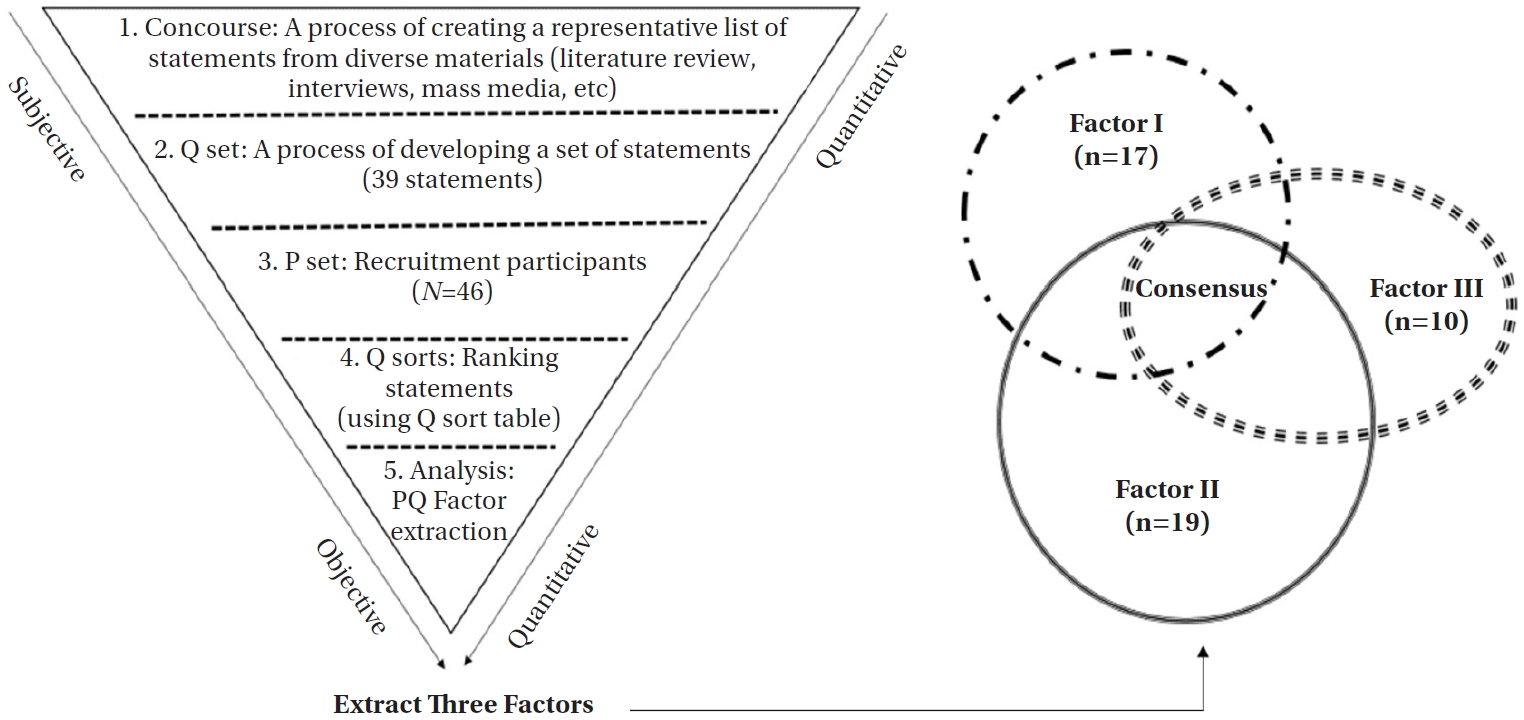
Forty-six middle-aged individuals from 10 cities in South Korea participated in this study. The participants arranged and ranked 39 Q statements describing their experiences with the COVID-19 pandemic using a Q-sort table. Subsequently, the data were analyzed using the PQ method.
Results
Three distinct viewpoints were identified: concerns regarding government policies related to COVID-19 (political perspective: consistent government policies are of utmost importance); concerns about personal loss related to COVID-19 (personal perspective: daily life is of the utmost importance); and concerns about social losses related to COVID-19 (social perspective: societal interests take precedence over individual needs).
Conclusion
The nursing interventions recommended for these three factors serve as a strategic blueprint for effectively addressing future outbreaks of infectious diseases. These nursing intervention strategies can significantly enhance positive perceptions of the three identified elements of the COVID-19 experience, providing an opportunity to transform negative outlooks into positive ones.
  • 1,141 View
  • 29 Download
  • 0 Scopus
Purpose
The incidence of diabetes mellitus (DM) rises significantly in the post-middle-age population, and stress along with depressive symptoms hinders effective DM management. This study examined the mediating effect of social capital (trust in the physical environment, reciprocity, social participation, and social networks) on the relationship between perceived stress and depression among middle-aged adults with DM in Korea. It also aimed to provide data for developing targeted interventions to enhance blood glucose management in this population.
Methods
A descriptive correlational study using data from the 2019 Community Health Survey by the Korea Disease Control and Prevention Agency (KDCA) was conducted. Complex sample regression analysis and the Sobel test were employed for mediation analysis. The study included 9,394 middle-aged adults (aged 45-64 years) diagnosed with DM. The analysis assessed the effects of perceived stress on social capital and depression, as well as the mediating role of social capital.
Results
Perceived stress negatively impacted social capital (β=-0.16, p<.001) and positively influenced depression (β=0.37, p<.001). Both perceived stress and social capital significantly affected depression (F=998.83, p<.001), with social capital showing a partial mediating effect (z=2.65, p<.001).
Conclusion
Social capital partially mediated the relationship between stress and depression, suggesting its potential as a strategy for reducing stress and lowering depression among middle-aged adults with DM. These findings lay the groundwork for targeted interventions to improve blood glucose management in this population. Future research should explore the relationships among specific components of social capital, stress, and depression.
  • 1,761 View
  • 44 Download
  • 0 Scopus
Predictive Factors of Intensive Care Unit Readmission among Older Patients: A Retrospective Study
Sunhui Choi, Kuem Sun Han, Sung Reul Kim, Hyemin Lim
Korean J Adult Nurs 2025;37(1):36-49.   Published online February 28, 2025
DOI: https://doi.org/10.7475/kjan.2025.37.1.36
Purpose
This study aimed to determine the rates of intensive care unit readmission and to identify the factors influencing readmission among intensive care unit patients aged≥65 years with internal medicine conditions.
Methods
We retrospectively reviewed electronic medical records from a tertiary care hospital in Seoul, analyzing the characteristics of patients who were and were not readmitted between December 2020 and September 2022.
Results
A total of 351 patients were included. The unplanned intensive care unit readmission rate was 4.8% within 7 days and 9.1% beyond 7 days after discharge. Comorbid diabetes, higher total bilirubin levels at intensive care unit admission, lower PaO2/FiO2 ratios at discharge, and elevated Blood Urea Nitrogen (BUN) levels at discharge were associated with an increased risk of readmission within 7 days. In contrast, hypertension, prolonged intensive care unit stays, and lower hemoglobin levels at discharge were associated with readmissions occurring after 7 days.
Conclusion
Intensive care unit readmission among older patients is influenced by several clinical and hematological factors. Nurses should consider a patient's history of diabetes and hypertension, length of intensive care unit stay, and laboratory values-specifically total bilirubin at admission, and PaO2/FiO2 ratio, hemoglobin, and BUN levels at discharge-when making discharge decisions. These findings can inform the development of discharge guidelines.
  • 2,393 View
  • 79 Download
  • 0 Scopus
Purpose
Middle-aged women often experience weight gain, particularly as visceral fat, due to hormonal changes associated with menopause. Visceral fat, which accumulates in the abdomen, poses significant risks to cardiometabolic health. This cross-sectional study aimed to compare the cardiometabolic risks associated with Visceral Fat Obesity (VFO) and Subcutaneous Fat Obesity (SFO) in middle-aged Korean women and to identify factors that influence VFO.
Methods
Women aged 40 to 64 with overweight or obesity were recruited from March to April 2019. The study involved anthropometric measurements, fasting blood tests, and low-volume abdominal computed tomography. Additionally, participants provided self-reported sociodemographic, health-related, and lifestyle information, including Physical Activity (PA) and dietary intake.
Results
Of all participants, 70.8% were post-menopausal, and 55.1% had VFO. Those with VFO exhibited significantly higher mean values for waist circumference, total cholesterol, low-density lipoprotein cholesterol, triglycerides, fasting glucose, high sensitivity C-reactive protein, and the Framingham risk score compared to those with SFO. The factors influencing VFO were age (odds ratio (OR)=1.14; 95% confidence interval (CI), 1.032~1.247), body mass index (OR=1.47; 95% CI, 1.151 ~1.875), days of vigorous PA per week (OR=0.42; 95% CI, 0.244~0.735), and intake of animal calcium (OR=0.99; 95% CI, 0.988~0.997).
Conclusion
The findings indicate that middle-aged women with VFO face increased cardiometabolic risks. Since menopause is inevitable in women, targeting modifiable behaviors to reduce weight, particularly visceral fat, is crucial for lowering cardiometabolic risk.
  • 3,642 View
  • 34 Download
  • 0 Scopus

Invited Article

The Significance of Sarcopenia in Patients with Heart Failure: What Do We Know and Need to Know?
Youn-Jung Son, Sook Hyun Park
Korean J Adult Nurs 2023;35(4):303-310.   Published online November 30, 2023
DOI: https://doi.org/10.7475/kjan.2023.35.4.303
Purpose
Sarcopenia is significantly associated with frailty, readmission, and mortality in patients with heart failure. This review aims to provide an overview of the literature on sarcopenia in individuals with heart failure.
Methods
A comprehensive literature review was conducted regarding the current state of knowledge on assessment tools for the diagnosis, prognosis, and optimal management of sarcopenia in patients with heart failure.
Results
Sarcopenia can be defined as the loss of muscle mass with low muscle strength and/or poor physical performance. Sarcopenia has been officially listed as a disease in the eighth revision of the Korean Classification of Diseases in 2021. The causes of sarcopenia in patients with heart failure are multifactorial, including chronic inflammation, hormonal imbalances, nutritional deficiencies, low muscle blood flow, and endothelial dysfunction. The management of sarcopenia is primarily focused on exercise and/or nutritional management because there is no specific pharmacological therapy to treat sarcopenia.
Conclusion
Healthcare professionals should be aware of the significance of early detection and timely management of sarcopenia to avoid physical disability, long-term institutional care, and mortality in individuals with heart failure. Clinical trials are required to evaluate the effectiveness of interventions including exercise and nutrition, alone or in combination, on sarcopenia in patients with heart failure. In addition, more research is required to identify multidimensional risk factors and diagnostic biomarkers for sarcopenia.
  • 1,261 View
  • 11 Download
  • 0 Scopus

Original Articles

Purpose
The objective of this study was to ascertain the level of life satisfaction among baby boomers in South Korea, as well as the factors that influence it.
Methods
We conducted a secondary analysis and descriptive research using data from the 2020 Korea National Survey of Elderly. From a total of 10,097 individuals, we analyzed the responses of 605 who provided feedback on life satisfaction, applying sample weights for accuracy. Data analysis was performed using hierarchical multiple regression in the SPSS/WIN 23.0 program.
Results
The study's participants comprised 61.8% women, 80.2% individuals with a living spouse, and 54.8% high school graduates, and the participants had an average subjective health status score of 3.77 points. Hierarchical regression analysis revealed several significant factors impacting life satisfaction. These included the presence or absence of a spouse (p<.001), education level (p<.001), subjective health status (p<.001), experience of suicidal thoughts after the age of 60 (p=.004), and use of a smartphone or tablet (p=.037), degree of social respect (p<.001) and the degree of preparation for death (p=.001). The overall explanatory power for life satisfaction was 57.5%.
Conclusion
The life satisfaction of baby boomers did not differ greatly from that of previous generations of older adults. A future longitudinal study should observe changes in older adults' life satisfaction. Additionally, it is important to explore variations in life satisfaction across different age groups, especially given the increasing longevity of older adults.

Citations

Citations to this article as recorded by  
  • Deficits in facial emotion recognition and cognitive function among baby boomers
    Hyunsan Cho, Hee-Jin Park, Yoon Hee Park, Intae Hwang, Hyo Jin Kang
    Acta Psychologica.2025; 253: 104738.     CrossRef
  • Prevalence of depression and its associated factors among Korean women: A cross-sectional study in Seoul
    Thi Thanh Lan Nguyen, Van Cuong Nguyen
    Archives of Psychiatric Nursing.2025; 57: 151928.     CrossRef
  • The Relationship of Satisfaction With Life on Quality of Care in Nurses: A Cross‐Sectional Study
    Necmettin Çiftci, Abdullah Sarman
    Scandinavian Journal of Caring Sciences.2025;[Epub]     CrossRef
  • Risk factors of depression among the baby boomer generation: A cross-sectional study using the 2022 Korean Community Health Survey
    Kyoung Mi Kim, Hye Jung Jun
    Journal of Korean Gerontological Nursing.2025; 27(3): 308.     CrossRef
  • Purposes of Internet Use and Its Impacts on Physical and Psychological Health of Korean Older Adults
    Gyeong-Suk Jeon, Kyungwon Choi
    Healthcare.2024; 12(2): 244.     CrossRef
  • 3,450 View
  • 25 Download
  • 5 Crossref
  • 2 Scopus
Purpose
This study investigated the effects of spiritual well-being on the cognitive function of elderly people, focusing on the mediating effects of health-promoting behaviors and depression.
Methods
Using convenience sampling, 136 elderly people were recruited from October 2018 through February 2019 for a cross-sectional survey. Data were collected through the Spiritual Well-Being Scale, Health-Promoting Lifestyle Profile, Geriatric Depression Scale, Everyday Cognition, and Montreal Cognitive Assessment and analyzed using descriptive statistics and correlation. Mediation analysis was also conducted using Hayes’ PROCESS macro (Model 4).
Results
The mean scores for spiritual well-being, health-promoting behaviors, depression, objective cognitive function, and subjective cognitive function were 60.96, 108.09, 18.58, 19.49, and 63.35. The mediation effects in step 1 indicated that spiritual well-being had a statistically significant positive effect on health-promoting behaviors (B=0.32, p<.001) (R2 =32.0%) and a significant negative effect on depression (B=-0.09, p=.001) (R2 =31.0%). In step 2, spiritual well-being had a significant negative effect on subjective cognitive function (B=-0.12, p=.007) (R2 =23.0%). In step 3, the direct effect of spiritual well-being on subjective cognitive function was not significant when the mediating variables (healthpromoting behaviors and depression) were introduced. Health-promoting behaviors (B=-0.18, p=.047) and depression (B=0.41, p=.008) had complete mediating effects on the relationship between spiritual well-being and subjective cognitive function.
Conclusion
These findings suggest that there is a need to develop and implement nursing strategies that can improve spiritual well-being, and to develop a holistic nursing intervention that considers depression and health-promoting behaviors, when applicable, to improve cognitive function in elderly people.

Citations

Citations to this article as recorded by  
  • Analysis of the Domestic Research Trends on Spiritual Health
    Gyeong-Hye Choi
    Journal of Korean Association for Qualitative Research.2023; 8(2): 189.     CrossRef
  • 666 View
  • 14 Download
  • 1 Crossref
  • 0 Scopus
Purpose
This study aimed to clarify the relationship between andropause syndrome and health-related quality of life, as well as the mediation effect of family bond among middle-aged males in South Korea. Methods A total of 135 middle-aged males who live in B, K, and U City participated in the study, conducted from March 10 to May 31, 2021. Participants were invited to complete self-reported questionnaires measuring andropause syndrome, health-related Quality of Life (QoL), family bond, and demographic information. The data obtained were analyzed using multiple regression and a simple mediation model applying the PROCESS macro with 95% bias-corrected bootstrap confidence interval (5,000 bootstrap resampling). Results The QoL of middle-aged males in South Korea showed a significant negative correlation with andropause syndrome (r=-.32, p<.001), and a significant positive correlation with family bond (r=.59, p<.001). Futher, family bond had a mediating effect between andropause syndrome and QoL (indirect effect=-4.07, 95% Boot confidence interval=-6.53~-1.97). Conclusion Based on the results of this study, in order to improve the QoL of middle-aged males in South Korea, it is necessary to provide programs that can improve family bond along with physical and mental intervention programs to effectively alleviate andropause syndrome.

Citations

Citations to this article as recorded by  
  • A comprehensive analysis of research trends on andropause among middle-aged South Korean men
    Young Hwa Lee, Sun Jung Park, Hyun Ji Kim, Bock Soon Park, Hyo Yeol Jang, Ha Na Cho, Young Sook Lim
    International Journal of ADVANCED AND APPLIED SCIENCES.2023; 10(6): 129.     CrossRef
  • 651 View
  • 10 Download
  • 1 Crossref
  • 3 Scopus
Activities of Daily Living and Related Factors in Elderly Patients with Pulmonary Disease Preparing for Discharge
Hyunwoo Jeong, Sanghee Kim, Mona Choi, Eui Geum Oh
Korean J Adult Nurs 2022;34(4):391-402.   Published online August 31, 2022
DOI: https://doi.org/10.7475/kjan.2022.34.4.391
Purpose
This study investigated the level of Activities of Daily Living (ADL) of elderly patients with pulmonary disease preparing for discharge and the factors affecting it. Methods The participants of this cross-sectional, descriptive study were 104 patients aged over 65 diagnosed with pulmonary disease at an acute care hospital. Data were collected from November 28, 2018 to March 15, 2019 using a structured questionnaire and the participants’ electronic medical record. The questionnaire asked about demographic and disease-related characteristics and respiratory symptoms experience, and included the Korean versions of the ENRICHD Social Support Instrument, Hospital Anxiety and Depression Scale, and Katz’s ADL. Results In the enter-method multiple linear regression analysis, the model explained 38.1% of the ADL (F=4.26, p<.001). The higher the participants’ level of depression, the lower their level of ADL (β=0.43, p<.001), while those without a history of any neurological or psychiatric disease had higher levels of ADL than their counterparts with it (β=-0.22, p=.024). Conclusion The findings suggest that an intervention that considers depression and history of neurological or psychiatric disease should be implemented to promote ADL among elderly patients with pulmonary disease preparing for discharge. In addition, the results of this study can be used as fundamental information to assess the discharge readiness of elderly patients with pulmonary disease and improve their health-related quality of life by promoting ADL.
  • 840 View
  • 37 Download
  • 0 Scopus
Incidence and Risk Factors of Postoperative Recovery Room Delirium in Elderly Patients after Surgery under General Anesthesia
Eunjung Choi, Ye-Eun Seo, Hyun-Sook Yoo, Dong Yeon Kim
Korean J Adult Nurs 2022;34(2):215-224.   Published online April 30, 2022
DOI: https://doi.org/10.7475/kjan.2022.34.2.215
Purpose
This study is a prospective observational study that analyzes the factors affecting and the incidence of postoperative delirium in elderly patients under general anesthesia.
Methods
The study enrolled 193 elderly patients who entered the recovery room after surgery under general anesthesia in a certified tertiary hospital. Data were measured twice-first, before surgery and, second, 30 minutes after the patient entered the recovery room-using the Korean Nursing Delirium Screening Scale. The data were analyzed using x 2 tests, the independent t-test, and logistic regression from SPSS 22.0.
Results
The incidence of delirium in elderly patients after surgery under general anesthesia was 13.0% (25 of 193 patients). The incidence of delirium was a significant in the following cases: elderly patient, patients who performed physical activity with assistance at pre-operation, those with lower body mass index, those with lower body weight, those with long operative times, and those with high preoperative pain scores. The occurrence of delirium was 16.57 times higher in the presence of comorbidities, 5.74 times higher when hospitalization occurred through the emergency room, and 3.99 times higher when the number of catheters was high.
Conclusion
Screening for early delirium in the recovery room is important, and it can provide basic data for early nursing intervention in patients suffering from postoperative delirium.
  • 940 View
  • 63 Download
  • 0 Scopus
Effects of A Multicomponent Intervention Program for Preventing Delirium in Geriatric Patients in the Intensive Care Unit
Ju Hee Hwang, Min Young Kim
Korean J Adult Nurs 2021;33(6):565-575.   Published online December 31, 2021
DOI: https://doi.org/10.7475/kjan.2021.33.6.565
Purpose
This study aimed to investigate the effects of a Multicomponent Intervention Program for Preventing Delirium (MIPPD) on the incidence of delirium, self-extubation or self-removal of the catheter, and length of stay among elderly patients in the Intensive Care Unit (ICU).
Methods
This study employed a nonequivalent control group pretest-posttest non-synchronized design to verify the MIPPD effects. The participants, 73 patients aged over 65 years were admitted to a university hospital's ICU in J province between December 2015 and July 2016. The MIPPD contained the following elements: family caregiver education, delirium assessment, reorientation activities, therapeutic communication, sensory intervention for vision and hearing impairments, management of immobility or limited mobility, family support, and maintenance of sleeping patterns. Under the program, nurses and family members provided immediate intervention to elderly patients with an expected length of stay of at least 48 hours.
Results
After the MIPPD application, the incidence of delirium in the intervention group was significantly lower (odds ratio=0.19, 95% confidence interval=0.03~0.97) than that in the control group. However, there were no significant differences between the groups in terms of self-extubation or catheter self-removal and length of stay.
Conclusions
This program can effectively reduce the incidence of delirium. Because prevention is optimal for delirium management, a proactive intervention must be considered; given that, in this study, there were no problems in terms of family engagement, an MIPPD involving family participation should be actively implemented in intensive care unit practice.

Citations

Citations to this article as recorded by  
  • The effectiveness of family participation interventions for the prevention of delirium in intensive care units: A systematic review
    Marli Lopo Vitorino, Adriana Henriques, Graça Melo, Helga Rafael Henriques
    Intensive and Critical Care Nursing.2025; 89: 103976.     CrossRef
  • Promoting Family Involvement in the Management of Delirium in Intensive Care: Scoping Review
    Sandra Lange, Wioletta Mędrzycka-Dąbrowska
    Medicina.2024; 60(12): 1934.     CrossRef
  • Microteoria de enfermagem na prevenção do delirium em pessoas idosas na unidade de terapia intensiva
    Sandra da Silva Kinalski, Margrid Beuter, Eliane Raquel Rieth Benetti, Marinês Tambara Leite, Larissa Venturini, Marcos Antônio Gomes Brandão
    Revista Latino-Americana de Enfermagem.2023;[Epub]     CrossRef
  • Factors Affecting Delirium in ICU Patients
    I Seul Jeong, Mi-Kyoung Cho
    International Journal of Environmental Research and Public Health.2023; 20(10): 5889.     CrossRef
  • Nursing microtheory in the prevention of delirium in older adult in the intensive care unit
    Sandra da Silva Kinalski, Margrid Beuter, Eliane Raquel Rieth Benetti, Marinês Tambara Leite, Larissa Venturini, Marcos Antônio Gomes Brandão
    Revista Latino-Americana de Enfermagem.2023;[Epub]     CrossRef
  • Educational intervention for family caregivers of older adults with delirium: An integrative review
    JuHee Lee, Insun Yeom, Subin Yoo, Soomin Hong
    Journal of Clinical Nursing.2023; 32(19-20): 6987.     CrossRef
  • Microteoría de enfermería en la prevención del delirium en personas mayores en la unidad de cuidados intensivos
    Sandra da Silva Kinalski, Margrid Beuter, Eliane Raquel Rieth Benetti, Marinês Tambara Leite, Larissa Venturini, Marcos Antônio Gomes Brandão
    Revista Latino-Americana de Enfermagem.2023;[Epub]     CrossRef
  • 3,134 View
  • 87 Download
  • 7 Crossref
  • 5 Scopus
Purpose
Long-Term Care Facilities (LTCF) are places where older adults who require help managing dementia, stroke, and other senile diseases live. The facilities provide convenience for meals, medical and nursing care, and daily life. Therefore, since the actual consumers are older adults rather than the young, it is important to understand the perceptions of older adults about LTCF. This study aimed to identify subjective perceptions toward LTCF in home-dwelling older adults.
Methods
The Q methodology systematic research method, which investigates participants’ subjective viewpoints and perceptions of certain issues, was used. Forty Q-statements were derived from the Q population and arranged in rank order by 50 participants (over 65 years old) into a normal distribution grid (from -4 to +4). A pc QUANL program was used to analyze the collected data.
Results
Three types of subjective perceptions toward LTCF were revealed: “demand for LTCF management improvement (viewpoint of management first, use after)”, “support for LTCF admission (viewpoint of essential use)”, and “distrust of using LTCF (viewpoint of opposition to use)”.
Conclusion
The results of this study can be helpful in developing nursing strategies to ensure better understanding of LTCF among home-dwelling older adults. It is also necessary to develop individualized nursing intervention programs reflecting the three types of subjective perceptions derived in this study.

Citations

Citations to this article as recorded by  
  • Person-Centered Care Experience of Nursing Home Workers: A Qualitative Meta-Synthesis Study
    Eun Young Kim, Sung Ok Chang
    Journal of Korean Gerontological Nursing.2022; 24(1): 33.     CrossRef
  • A Meta-Synthesis Study of Person-Centered Care Experience from the Perspective of Nursing Home Residents
    Eun-Young Kim, Sung-Ok Chang
    International Journal of Environmental Research and Public Health.2022; 19(14): 8576.     CrossRef
  • 757 View
  • 9 Download
  • 2 Crossref
  • 2 Scopus
Purpose
This study aimed to construct and test the Actor and Partner Interdependence Mediation Model (APIMeM) of aging anxiety of middle-aged couples based on Social Cognitive Theory and the “Crossover” concept.
Methods
Couples’ data were collected from 192 middle-aged couples.
Results
Actor effects and partner effects were supported in the two APIMeM models. Regarding the wives' aging anxiety, the actor effect of their climacteric symptoms and their cognition (husband climacteric symptoms) was mediated by their self-efficacy. Similarly, the partner effect of the husbands' cognition (wife climacteric symptoms) was also mediated by their husbands' self-efficacy. Considering the husbands' aging anxiety, the actor effect of the husbands' climacteric symptoms and the husbands' cognition (wife climacteric symptoms) was mediated by the wives' self-efficacy. The partner effect of the wives' climacteric symptoms and their cognition (husband climacteric symptoms) was mediated by the husbands' self-efficacy.
Conclusion
To reduce the aging anxiety of middle-aged couples and to reach a healthy old age, it is essential for a wife and husband to realize this together. It is considered that the aging anxiety of middle-aged couples will be more effectively prevented by implementing an interactive program to enhance self-efficacy, which has been identified as an important parameter of the actor-partner effect.
  • 378 View
  • 10 Download
  • 0 Scopus
Effects of Oral Care Interventions on Oral Health and Oral Health-related Quality of Life among Denture-wearing Older Adults
Chanhee Lim, Haejung Lee, Gaeun Park
Korean J Adult Nurs 2021;33(1):76-86.   Published online February 28, 2021
DOI: https://doi.org/10.7475/kjan.2021.33.1.76
Purpose
This study investigates the effects of oral care interventions on oral health and oral health-related quality of life in denture-wearing older adults. Methods: A nonequivalent control group pretest-posttest design was utilized. There were 26 participants in the experimental group and 30 in the control group. Participants were aged 65 or older, residing at long-term care facilities for more than six months, using dentures, able to brush their teeth, follow gymnastics without jaw joint problems, and cooperate in the measurement of bad breath. The oral care interventions consisted of brushing teeth, denture management, and mouth gymnastics and was performed three times/week, for 20 minutes/session, for a total of 4 weeks. The x 2 test, Fisher's exact test, repeated measures ANOVA, and independent t-test using SPSS/WIN 22.0 program were analyzed. Results: The performance of brushing teeth (F=27.66, p<.001), denture management (F=38.23, p<.001), and mouth gymnastics (F=5.12, p=.016) significantly increased with time up to the fourth week. After the interventions, significant differences were found between groups in subjective oral health status (t=5.87, p<.001), dry mouth (t=-9.24, p<.001), bad breath (t=-3.37, p<.001), and oral health-related quality of life (t=-6.46, p<.001). Conclusion: The oral care interventions, including a self-administered oral care checklist, can improve the motivation for oral care performance, oral health behaviors, oral health status, and oral health-related quality of life among older adults. Broader application of the intervention is warranted.

Citations

Citations to this article as recorded by  
  • Changes in concentration of VSCs after home oral care interventions based on community care in older adults

    Journal of Korean Society of Dental Hygiene.2023;[Epub]     CrossRef
  • Effect of Oral Health Education Using a Mobile App (OHEMA) on the Oral Health and Swallowing-Related Quality of Life in Community-Based Integrated Care of the Elderly: A Randomized Clinical Trial
    Ji-Yun Ki, Se-Rim Jo, Kyung-Sook Cho, Jung-Eun Park, Ja-Won Cho, Jong-Hwa Jang
    International Journal of Environmental Research and Public Health.2021; 18(21): 11679.     CrossRef
  • 913 View
  • 17 Download
  • 2 Crossref
  • 1 Scopus
Purpose
This study examined sociodemographic and health factors affecting Health-Related Quality of Life (HRQoL) among older adults with osteoarthritis based on the duration of osteoarthritis.
Methods
Data were obtained from the Seventh Korean National Health and Nutrition Examination Survey (Ⅶ-1, 2016; Ⅶ-2, 2017). The sample consisted of total 747 older adults with osteoarthritis. The complex sample analysis was performed using an independent t-test, ANOVA, x2 test, and multiple linear regression using the SPSS/WIN 24.0 program.
Results
The HRQoL of older adults who had experienced osteoarthritis for 10 years or more was lower than the group who had experienced osteoarthritis for less than 10 years. The most influential factors affecting HRQoL across both groups were subjective health, limit of daily activity, and sickbed experience. Current alcohol consumption and body weight control were factors affecting HRQoL in the group who had experienced osteoarthritis for less than 10 years, while gender, current smoking, and walking were factors affecting HRQoL in the group who had experienced osteoarthritis for 10 years or more.
Conclusion
Community nurses should consider the target population and customize interventions based on the duration of osteoarthritis in order to improve HRQoL in older adults with osteoarthritis.

Citations

Citations to this article as recorded by  
  • A Network Analysis of Quality of Life Among Older Adults With Arthritis
    Dahee Wi, Chang G. Park, Jiae Lee, Eunjin Kim, Yoonjung Kim
    International Journal of Older People Nursing.2025;[Epub]     CrossRef
  • Effects of Multidirectional Knee Strengthening Exercises Using Elastic Bands on Elderly Patients Aged 65 and Older With Knee Osteoarthritis
    Sang-woo Yoon, Suhn-yeop Kim
    Physical Therapy Korea.2025; 32(2): 150.     CrossRef
  • Comparative Effects of Rehabilitation Programs After Total Knee Arthroplasty: A Modified GLA:D® Program and a Lower-Limb Strengthening Program
    Se Hee Kong, Je Yang Moon, Hyun Seung Kim, Jin Sung Bae
    Journal of Clinical Medicine.2025; 14(21): 7565.     CrossRef
  • Effects of Progressive Balance Training Exercise Programs with Whole Body Vibration on Pain, Function, Psychosocial Status, and Balance in Patients with Knee Osteoarthritis
    Sang-woo Yoon, Suhn-yeop Kim
    Journal of The Korean Society of Physical Medicine.2024; 19(1): 81.     CrossRef
  • Factors Related to Quality of Life among Older Adults who Had Arthritis: Limited Daily Activities and Physical Activity
    Jee-Seon Yi
    Physical Therapy Rehabilitation Science.2023; 12(4): 431.     CrossRef
  • The effects of hemp seed consumption on depression, anxiety and cognitive improvement based on machine learning
    Jea-Bum Jung, Yong-Won Cho, Sang-Yub Kim, Soo-Yeon Chung, Kyung-Hoon Han, Byung-Joo Ham, Sung-Hee Han
    Archives of Food and Nutritional Science.2023; 7(1): 032.     CrossRef
  • 736 View
  • 13 Download
  • 6 Crossref
Stigma, Adjustment, and Quality of Life of Middle-aged Male Patients with Lung Cancer
Mi young Yoo, Eunyoung E. Suh
Korean J Adult Nurs 2020;32(5):494-503.   Published online October 31, 2020
DOI: https://doi.org/10.7475/kjan.2020.32.5.494
Purpose
To investigate the relationship between stigma, adjustment, and quality of life of middle-aged male patients with lung cancer and the influences of those factors on the patients’ quality of life.
Methods
A descriptive survey design was used. A total of 120 male patients between 45 to 64 years participated in the study. They answered a self-reported survey composed of Cataldo Lung Cancer Stigma Scale, Korean Mini-Mental Adjustment to Cancer Scale, and The Functional Assessment of Cancer Therapy Scale-General Version 4. The data were analyzed using Pearson’s correlation coefficients, stepwise multiple regression by the SPSS 25 version.
Results
The stigma showed a positive correlation with “helplessness-hopelessness” and “anxious preoccupation” (r=.30, p=.001; r=.41, p<.001, respectively), and a negative correlation with emotional well-being (r=-.24, p=.008). “Helplessness-hopelessness” and “anxious preoccupation” were negatively correlated with quality of life (r=-.61, p<.001; r=-.46, p<.001, respectively). “Fatalism”, “fighting spirit”, and “cognitive avoidance” showed positive correlations with quality of life (r=.37, p<.001; r=.42, p<.001; r=.19, p=.035, respectively). Factors influencing quality of life by multiple regression were identified as helpless-hopelessness, fatalism, performance status, and anxious preoccupation (F=35.76, p<.001, Adjusted R2 =54%).
Conclusion
Maximizing positive adjustment response and improving performance status were effective in improving quality of life of middle-aged male patients with lung cancer. The development of nursing interventions focusing on psychological adjustment and physical activity should be warranted for the given patient population.

Citations

Citations to this article as recorded by  
  • Factors Affecting Quality of Life Among Patients with Primary Lung Cancer
    Mideum Kang, Myung Sun Hyun, Sun Hyoung Bae, Sunjoo Boo
    Asian Oncology Nursing.2024; 24(3): 144.     CrossRef
  • 630 View
  • 18 Download
  • 1 Crossref
  • 0 Scopus
Influence of Midlife Health Condition and Awareness of Successful Aging on Preparation for Old Age
Eun Ho Ha, Young Mi Lee
Korean J Adult Nurs 2020;32(5):472-481.   Published online October 31, 2020
DOI: https://doi.org/10.7475/kjan.2020.32.5.472
Purpose
The developmental tasks of the midlife are to integrate youth and aging, have a positive attitude to aging, and prepare for old age. The purpose of this study was to identify the influence of health condition and awareness of successful aging on preparation for old age of midlife in the community.
Methods
The participants in this study were 247 middle-aged people, aged between 40 and 64 years and living in Korea. The data collection period was from December 2019 to January 2020, and data were analyzed using descriptive statistics, independent t-test, one-way ANOVA, Pearson’s correlation coefficients, and multiple regression with the SPSS Statistics 23.0.
Results
Results showed statistically significant correlations between health condition and awareness of successful aging (r=.19, p=.002), health condition and preparation for old age (r=.27, p<.001), and awareness of successful aging and preparation for old age (r=.58, p<.001). Age (β=-.11, p=.029), avocation (β=.12, p=.022), health condition (β=.13, p=.017), and awareness of successful aging (β=.53, p<.001) were all factors influencing preparation for old age in final model, and its explanatory power was adjusted R 2 of .39.
Conclusion
Intervention programs such as a regular mental and physical health checkups and tailored post-retirement plans for middle-aged people should be developed to promote health conditions and enhance awareness of successful aging.

Citations

Citations to this article as recorded by  
  • Impact of nurses’ health beliefs about caring for older adults on their own preparation for old age
    Se Jin Hwang, Minkyung Gu, Saekyae Shin, Sohyune Sok
    Frontiers in Public Health.2025;[Epub]     CrossRef
  • The Effects of Health Status and Social Support on Happiness in Middle­Aged Women
    Bok Hui Baek, So Young Choi
    Journal of Korean Public Health Nursing.2024; 38(1): 16.     CrossRef
  • 977 View
  • 32 Download
  • 2 Crossref
  • 0 Scopus
Purpose
This study examined physical activity and health-related factors affecting Health-Related Quality of Life (HRQoL) in older adults with lower educational levels.
Methods
Data were obtained from the Seventh Korea National Health and Nutrition Examination Survey (Ⅶ-1, 2016; Ⅶ-2, 2017). The sample consisted of 2,985 individuals aged 65 years or older, and the focus was on 1,788 older adults with low educational levels. The data were analyzed using an independent t-test, x2 test, and hierarchical multiple linear regression using the SPSS/WIN 24.0 program.
Results
The results of the hierarchical multiple regression analysis showed that subjective perceived health, cognitive stress, number of chronic diseases, and daily activity explained 25% of the variance in HRQoL after controlling for age and gender. In final model, physical activity types explained an additional 1% of the variance in HRQoL; walking was a significant predictor. Especially, among the various physical activity types, walking proved important for HRQoL. While aerobic exercise and strength exercise were associated with health status, in the hierarchical multiple regression analysis, they did not have an impact on HRQoL.
Conclusion
A walking-centric health care program to improve physical activity should be considered for HRQoL improvement in older adults with lower educational levels. Further research should consider how aerobic exercise and strength exercise could contribute to HRQoL improvement in this population.

Citations

Citations to this article as recorded by  
  • The Mediating Effect of Physical Activity on the Relationship between Depression and Health-related Quality of Life among Patients with Hypertension and Diabetes in Seoul
    In-Young Yoo
    Journal of The Korean Society of Living Environmental System.2025; 32(2): 179.     CrossRef
  • The impact of health literacy, walking practice, and sarcopenia on health-related quality of life in rural older adults: A cross-sectional descriptive study
    Yun Mi Lee, Eun-Jung Kim
    Journal of Korean Gerontological Nursing.2025; 27(2): 226.     CrossRef
  • Analysis of the Difference in Nutrient Intake Status by Household Income and Education Level
    Min-Young Chong, Inhwa Han
    The Korean Journal of Community Living Science.2025; 36(2): 185.     CrossRef
  • Association of the Healthy Aging Index with all-cause mortality: Results from the Korean Frailty and Aging Cohort Study
    Jinhee Kim, Yunhwan Lee, Eunsaem Kim, Seri Hong, Miji Kim
    Experimental Gerontology.2025; 211: 112925.     CrossRef
  • Effects of sleep quality and physical activity measured by a Fitbit and self-rated questionnaire on the health-related quality of life in community-dwelling older adults: A cross-sectional study
    Mi Ui Jeong, Yeongmi Ha
    Journal of Korean Gerontological Nursing.2024; 26(1): 43.     CrossRef
  • Prediction model of health-related quality of life in older adults according to gender using a decision tree model: a study based on the Korea National Health and Nutrition Examination Survey
    Hee Sun Kim, Seok Hee Jeong
    Journal of Korean Biological Nursing Science.2024; 26(1): 26.     CrossRef
  • Factors Associated with Poor Self-Rated Health among Older Women Living Alone
    Eunha Kim, Hye Young Choi
    International Journal of Environmental Research and Public Health.2022; 19(18): 11182.     CrossRef
  • Associated Factors with Health-related Quality of Life among Older Adults with Diabetes in Korea
    Eun-Kyung Lee, Sun-Young Jung
    The Korean Journal of Rehabilitation Nursing.2022; 25(2): 61.     CrossRef
  • Factors Influencing Health-Related Quality of Life among Korean Seniors with Osteoarthritis: Focusing on 10-Year Duration with Osteoarthritis Disease
    Hye Young Choi
    Korean Journal of Adult Nursing.2020; 32(5): 526.     CrossRef
  • 1,045 View
  • 16 Download
  • 9 Crossref
  • 4 Scopus
Factors Associated with Mortality of Older Adults Hospitalized via Emergency Departments in Korea
Jungeun Lim, Jia Lee
Korean J Adult Nurs 2020;32(3):273-282.   Published online June 30, 2020
DOI: https://doi.org/10.7475/kjan.2020.32.3.273
Purpose
As the rate of older people visiting Emergency Departments (EDs) increases, nurses are responsible for identifying patients at risk of poor outcomes and providing preventive interventions. The aim of this study was to identify the factors associated with the mortality of older adults hospitalized through EDs.
Methods
The study design was a retrospective correlational design using the electronic medical records from a tertiary hospital in Korea. Data were collected from January 3 to March 6, 2016 through the hospital information center based on elderly patients admitted from January 1, 2011 to August 31, 2015. The study variables included general and admission characterstics, disease characteristics, and mortality of older patients visiting EDs.
Results
Of the 9,896 patients, the mortality rate was 7.4%; highest in patients aged over 86 years, men, or those hospitalized from nursing homes. Older adults arriving by private ambulance were 2.36 times more likely to die than walk-ins, and 1.38 times more likely for those using the 119 government emergency ambulance. Older patients hospitalized for more than four weeks were 2.17 times more likely to die than those hospitalized for less than a week.
Conclusion
Based on the study findings ward nurses will be able to early detect older patients at risk of poor outcomes and make better clinical decisions to improve the quality of nursing care. Nurses can propose health policies such as stricter management of the private ambulance service and considering the most efficient length of hospital stay for older adults hospitalized through EDs.

Citations

Citations to this article as recorded by  
  • Mortality and its determinants among patients attending in emergency departments
    Mengistu Abebe Messelu, Baye Tsegaye Amlak, Gebrehiwot Berie Mekonnen, Asnake Gashaw Belayneh, Sosina Tamre, Ousman Adal, Tiruye Azene Demile, Yeshimebet Tamir Tsehay, Alamirew Enyew Belay, Henok Biresaw Netsere, Wubet Tazeb Wondie, Gebremeskel Kibret Abe
    BMC Emergency Medicine.2024;[Epub]     CrossRef
  • Factors Associated with Return Visits by Elders within 72 Hours of Discharge from the Emergency Department
    Li-Hsiang Wang, Hui-Ling Lee, Chun-Chih Lin, Chia-Ju Lan, Pei-Ting Huang, Chin-Yen Han
    Healthcare.2023; 11(12): 1726.     CrossRef
  • Retrospective Analysis of the Oldest-Old Patients Who Applied to the Emergency Department and Their Differences from the Young-Old And Middle-Old
    İbrahim TOKER, Ayşin KILINÇ TOKER, İrfan GÖKÇEK, Emre BULBUL, Gökhan YILMAZ, Mustafa SİLCAN, Şaban IRMAK, Mükerrem ALTUNTAŞ
    Anatolian Journal of Emergency Medicine.2023; 6(1): 20.     CrossRef
  • Potentially Inappropriate Prescriptions to Older Patients in Emergency Departments in South Korea: A Retrospective Study
    Kyungim Kim, Jinyoung Jung, Haesook Kim, Jung Tae Kim, Jung Mi Oh, Hyunah Kim
    Therapeutics and Clinical Risk Management.2021; Volume 17: 173.     CrossRef
  • 997 View
  • 1 Download
  • 4 Crossref
  • 3 Scopus
The Effects of Auricular Acupressure on Joint Pain and Shoulder Range of Motion in Older Adults
Bomi Kim, Hyojung Park
Korean J Adult Nurs 2020;32(3):261-272.   Published online June 30, 2020
DOI: https://doi.org/10.7475/kjan.2020.32.3.261
Purpose
This study aimed to examine the effects of auricular acupressure on shoulder pain and shoulder joint Range of Motion (ROM) in older adults.
Methods
This is an experimental, single-blind, randomized study with a placebo-controlled approach. The participants were older adults with shoulder pain. Each group was assigned 27 participants. The experimental group received auricular acupressure on shoulder pain-related points and the placebo-control group received auricular acupressure on shoulder pain-unrelated points. The intervention was implemented for eight weeks. To validate the effects of the treatment, a Visual Analogue Scale (VAS), the Shoulder Pain and Disability Index (SPADI), Pressure Pain Thresholds (PPTs), and ROM were conducted. VAS was measured before and after every intervention. SPADI, PPTs, and ROM were measured at the beginning and end of every intervention.
Results
The VAS scores in the experimental group with auricular acupressure significantly decreased with time (p<.001) and SPADI scores also significantly decreased (p<.001) compared with the scores of the placebo-control group. The experimental group's PPTs for their upper trapezius, levator scapulae, and rhomboideus major increased significantly, compared to that of the placebo-control group. The experimental group's ROM of flexion, abduction, and external rotation increased significantly compared to the placebo-control group. but there were no significant differences in internal rotation.
Conclusion
Auricular acupressure, applied for eight weeks, was found to effectively reduce shoulder joint pain and shoulder ROM. Consequently, auricular acupressure can be used as a nursing intervention method to reduce joint pain and improve shoulder ROM in elders.

Citations

Citations to this article as recorded by  
  • Effects of Auricular Acupressure on Nurses’ Perceived Stress, Sleep Quality, and Presenteeism
    Hyunseo Sim, Younghee Park
    Holistic Nursing Practice.2025; 39(1): 15.     CrossRef
  • Effects of Auricular Acupressure on Pain and Stress in Nursing College Students With Cervical Pain: A Single-Blind Placebo-Controlled Trial
    Yuna Cho, Eunmi Cho, Eunseol Cho, Yeonju Chae, Eunkyung Choi, Hyeongyeong Yoon
    Pain Management Nursing.2025; 26(1): e59.     CrossRef
  • Effects of Auricular Acupressure on Dry Eye Syndrome, Stress, and Depressive Symptoms in Older Adults: A Single-blind, Randomized Controlled Trial
    Hyeongyeong Yoon
    Journal of Korean Academy of Fundamentals of Nursing.2024; 31(2): 243.     CrossRef
  • Factors affecting physical and mental fatigue in adults from South Korea: A cross-sectional study
    Kyeha Kim, Jihyun Oh
    Medicine.2023; 102(50): e36549.     CrossRef
  • Effects of Auricular Acupressure Therapy on Psychological Factors, Sleep Quality, and Salivary Cortisol Levels in South Korean Older Adults in the Community: A Single-blind, Randomized Controlled Trial
    Hyeongyeong Yoon
    Journal of Korean Academy of Fundamentals of Nursing.2023; 30(4): 509.     CrossRef
  • Effects of auricular acupressure on sleep and pain in elderly people who have osteoarthritis and live in nursing homes: A randomized, single-blind, placebo-controlled trial
    Won Jin Lee, Hyojung Park
    EXPLORE.2023; 19(2): 214.     CrossRef
  • Effect of Auriculotherapy on Musculoskeletal Pain: A Systematic Review and Meta-Analysis
    Sun Yeob Choi, Yeo Ju Kim, Bomi Kim
    Journal of Korean Academy of Nursing.2022; 52(1): 4.     CrossRef
  • 801 View
  • 16 Download
  • 7 Crossref
  • 7 Scopus
Factors Associated with Suicidal Ideation in Community-dwelling Older Adults: A Gender Comparison in Old-Old Adults
Jeong Eun Yang, SeolHwa Moon
Korean J Adult Nurs 2020;32(3):248-260.   Published online June 30, 2020
DOI: https://doi.org/10.7475/kjan.2020.32.3.248
Purpose
The purpose of this study was to identify the risk factors for suicidal ideation according to gender of old-old adults in South Korea.
Methods
Data were collected from the 2017 Living Profiles of Older People Survey, and participants were 4214 older adults (aged 75 years and above). Data were analyzed using SPSS Statistics 21.0 for Windows. Differences in suicidal ideation by gender were identified using the x2 test or independent t-test, with multi-variate logistic regression analyses conducted to determine the factors associated with suicidal ideation by gender.
Results
Among old-old adult participant, the prevalence of suicidal ideation in men and women were 5.4% and 6.7%, respectively. The significant predictive factors for suicidal ideation in men were the following: living alone, frequency of contact with children and friends etc., experience of discrimination, conflict with children, self-blame, anxiety, perceived health, number of chronic diseases, and diagnosed depression. The significant predictive factors for suicidal ideation in women were the following: frequency of contact with children, experience of discrimination, experience of abuse, conflict with children, anxiety, number of chronic diseases, perceived economic status, and diagnosed depression.
Conclusion
The study revealed differences in factors associated with suicidal ideation according to gender among old-old adults. These findings suggested that different approaches and strategies for suicidal prevention programs should therefore be considered according to gender in this population age group.

Citations

Citations to this article as recorded by  
  • Factors associated with depression and suicidal ideation among oldest‐old adults aged 85 years or older based on gender, using the survey data of South Korea
    Yujeong Kim, Eunhee Nam, Younghee Yun
    Psychogeriatrics.2023; 23(6): 996.     CrossRef
  • 611 View
  • 8 Download
  • 1 Crossref
  • 1 Scopus
Effects of Social Support, Family Support and Repulsion Related Nursing Home Use on the Well-Dying of Elderly
Young Ju Oh, Kyeong In Cha, Young Hee Jeon
Korean J Adult Nurs 2020;32(3):235-247.   Published online June 30, 2020
DOI: https://doi.org/10.7475/kjan.2020.32.3.235
Purpose
This study aimed to explore the level of well-dying in the elderly and identify the effects of social support, family support, and repulsion related nursing home on that.
Methods
The sample for this cross-sectional study consisted of 110 community-dwelling elderly and 103 nursing home residents. Data were collected using a structured questionnaire from August to October 2019. SPSS/WIN 25.0 program was used to conduct statistical analyses, including descriptive statistics, an independent t-test, a one-way analysis of variance, and stepwise multiple linear regression.
Results
The mean score for well-dying was 2.63±0.28 (range 1~4). Well-dying had a statistically significant relationship with religion (t=5.56, p<.001), household income (F=14.04, p<.001) and perceived health status (F=44.59, p<.001). Furthermore, social support (r=.71, p<.001), family support (r=.42, p<.001), and repulsion related nursing home (r=-.56, p<.001) significantly correlated with well-dying. Stepwise multiple linear regression demonstrated that social support, repulsion related nursing home, and having a religion explained 62.0% of the variance in well-dying.
Conclusion
Social support was found to have the largest influence on well-dying, followed by repulsion related nursing home and religion. The results highlight the need to develop a detailed nursing intervention that considers these factors to promote well-dying in the elderly.

Citations

Citations to this article as recorded by  
  • Predictors of preparedness for well‐dying among middle‐aged and older adults
    Sun‐Ae Kim, Jae‐Sun An, Kyung‐Hyun Suh
    Psychogeriatrics.2024; 24(6): 1335.     CrossRef
  • Factors Affecting the Well-dying Awareness of Lung Cancer Survivors
    Dong Sim Choi, Gie Ok Noh
    Asian Oncology Nursing.2023; 23(4): 225.     CrossRef
  • The effects of ego integrity and readiness for death on the preferences of care near the end-of-life of hospitalized older adults in long-term care hospitals: A cross-sectional correlation study
    Jangmi Baek, Jun-Ah Song
    Journal of Korean Gerontological Nursing.2023; 25(2): 185.     CrossRef
  • Understanding Cultural Beliefs of a Good Death by Older People in South Korea: An Integrative Review of the Literature
    Kyoungsun Yun, Minjeong Jo, Yunji Lee
    Journal of Hospice & Palliative Nursing.2022; 24(6): E265.     CrossRef
  • Effect of Life Satisfaction on Depression among Childless Married Couples: A Cross-Sectional Study
    Ju-Young Ha, Hyo-Jin Park
    International Journal of Environmental Research and Public Health.2022; 19(4): 2055.     CrossRef
  • A qualitative study of the first batch of medical assistance team’s first-hand experience in supporting the nursing homes in Wuhan against COVID-19
    Xiu-Fen Yang, Meng-qi Li, Lu-lu Liao, Hui Feng, Si Zhao, Shuang Wu, Ping Yin, Giovanni Ottoboni
    PLOS ONE.2021; 16(4): e0249656.     CrossRef
  • Subjective Perception of Long-Term Care Facilities in Home-Dwelling Older Adults: A Q Methodological Study
    Eun Ho Ha
    Korean Journal of Adult Nursing.2021; 33(3): 269.     CrossRef
  • 842 View
  • 21 Download
  • 7 Crossref
  • 6 Scopus
Purpose
The purpose of this study was to investigate the roles of the perception of aging symptoms in mediating and moderating the relationship between family function and stress in middle-aged adults.
Methods
This was a cross-sectional correlational study of 244 middle-aged men and women. Self-administered surveys were conducted using the Family APGAR, stress index, and symptom management beliefs questionnaire. The data were analyzed using descriptive statistics, independent t-test, Pearson’s correlation coefficient, hierarchical multiple regression analysis, and PROCESS macro using SPSS 23.0.
Results
A significant interaction between family function and the perception of aging symptoms in predicting stress was found, indicating a moderating effect of the perception of aging symptoms on the relationship between family function and stress. An indirect effect of family function on stress through the perception of aging symptoms was not significant, indicating an insignificant mediating effect of the perception of aging symptoms.
Conclusion
The relationship between family function and stress differed depending on participants’ perceptions of aging symptoms. Individuals with negative perceptions of aging symptoms may be vulnerable to stress caused by poorer family function. It is necessary to develop programs to help modify negative perceptions of aging as well as strengthen family function to decrease the stress of middle-aged adults.

Citations

Citations to this article as recorded by  
  • The Relationship Among Stress, Sense of Coherence and Sleep Quality in Middle-aged Women
    So Hyeon Kim, So Young Choi
    Journal of Korean Maternal and Child Health.2025; 29(3): 137.     CrossRef
  • 638 View
  • 22 Download
  • 1 Crossref
  • 0 Scopus
Factors Affecting the Participation of the Dementia Screening in Community-dwelling Elderly
Sung Ok Chang, Young Whee Lee, Eun Suk Kong, Chun-Gill Kim, Hee Kyung Kim, Myung Ok Cho, Kyoung Sook Chae
Korean J Adult Nurs 2020;32(2):134-144.   Published online April 30, 2020
DOI: https://doi.org/10.7475/kjan.2020.32.2.134
Purpose
This study investigated factors affecting participation in dementia screening, based on the health belief model.
Methods
Data from 191 participants that fully answered the distributed questionnaires were analyzed. Data on the following variables were collected: general characteristics with modifying variables, health beliefs, and cue to action for dementia screening. Data were analyzed with descriptive statistics, x2 test, Fisher’s exact test, independent t-test, and logistic regression using SPSS/WIN software version 23.0.
Results
Factors affecting participation in dementia screening were as follows: For age, those in their 70s were more likely to participate in screening tests for dementia than those in their 60s (Odds Ratio [OR]=0.36, p=.003). For level of education, people with less than elementary school education were more likely to participate in screening tests for dementia than those with more than university education (OR=6.13, p=.020). Presence of spouse (OR=3.65, p=.027), presence of family or friends who underwent dementia screening tests (OR=5.63, p=.002), being exposed to dementia screening advertising (OR=3.94, p=.009), and having showed a lower average score of perceived barrier for dementia screening (OR=0.13, p=.002) were factors that increased the likelihood of participation in dementia screening.
Conclusion
To increase participation in dementia screening, strategies should be developed taking into account the influencing factors found by this study. In particular, an advertising strategy that emphasizes the importance of participating in dementia screening will be needed.

Citations

Citations to this article as recorded by  
  • Factors Related to the Dementia Prevention Behavior among Community-dwelling Older Adults based on the Health Belief Model: A Cross-sectional Descriptive Study
    Jin Young Lee, Eun Ko
    Journal of Korean Academy of Fundamentals of Nursing.2024; 31(3): 263.     CrossRef
  • Factors influencing dementia preventive behaviors of older adults at high risk of dementia: Application of extended health belief model
    So Hee Jung, Mee Ock Gu
    Research in Community and Public Health Nursing.2024; 35: 22.     CrossRef
  • Effects of a 6-Week Integrated Dementia Awareness and Prevention Program for Community-Dwelling Older Adults
    Ji-yeon Kim, Sunghee H. Tak, Hana Ko, SuJung Jung, Jaegyeong Lee, Hyein Choi
    Sage Open.2022;[Epub]     CrossRef
  • Factors affecting preventive behaviors of Alzheimer’s disease in family members of patients with Alzheimer’s disease
    JiEun Kim, Min Young Kim, Jung-Ae Kim, Youngeun Lee
    Medicine.2022; 101(42): e31136.     CrossRef
  • 714 View
  • 19 Download
  • 4 Crossref
  • 4 Scopus
Factors Related to Suicide Ideation in Older Women Living Alone
So Im Ryu, Yeon Hwan Park
Korean J Adult Nurs 2020;32(1):78-87.   Published online February 29, 2020
DOI: https://doi.org/10.7475/kjan.2020.32.1.78
PURPOSE
This study aimed to investigate suicide ideation and attempts in older women living alone and to identify the factors affecting suicide ideation.
METHODS
This is a cross-sectional correlational study using secondary data analysis. Original data (n=1,023) were collected using face-to-face interviews from August to October 2018 in Siheung city to investigate the need for health care and daily life support services. Study participants were 297 older women (age=74.67±5.35), with inclusion criteria being women≥65 years old and living alone, those without cognitive impairment(Mini-Mental State Examination-2 Standard Version (MMSE-2 SV)≥24), and those who could evaluate instrumental activities of daily living. Data were analyzed using descriptive analysis, independent t-test, Pearson's correlation coefficient, and multiple linear regression analysis.
RESULTS
Data analysis showed 26.9% of participants reported suicide ideation with a frequency of 4.14 out of 10 points. Among study participants, 8.8% had attempted suicide with an average of 2.65 attempts. Participants who had children thought about suicide more than those who did not. Living children, personal income, participation in economic activity, social support, depression, chronic diseases, frailty, and suicide attempts were significantly correlated with suicide ideation. Therefore, depression, frailty and suicide attempts were factors affecting suicide ideation for older women living alone.
CONCLUSION
Our findings provide evidence that evaluating depression, frailty, and history of suicide attempts is important for suicide prevention in older women living alone.

Citations

Citations to this article as recorded by  
  • Sleep, physical activity, and sedentary behaviors as factors related to depression and health-related quality of life among older women living alone: a population-based study
    Soyoung Jang, Eunjin Yang
    European Review of Aging and Physical Activity.2023;[Epub]     CrossRef
  • Factors Related to Suicidal Ideation and Prediction of High-Risk Groups among Youngest-Old Adults in South Korea
    Eungyung Kim, Jee-Seon Yi
    International Journal of Environmental Research and Public Health.2022; 19(16): 10028.     CrossRef
  • 608 View
  • 4 Download
  • 2 Crossref
  • 2 Scopus
Validity and Reliability of the Korean Version of the Basic Physical Capability Scale for Older Adults
Eun Ok Song, Gwi Ryung Son Hong
Korean J Adult Nurs 2020;32(1):21-34.   Published online February 29, 2020
DOI: https://doi.org/10.7475/kjan.2020.32.1.21
PURPOSE
This study aimed to verify the validity and reliability of the Korean version of the Basic Physical Capability Scale (BPCS-K).
METHODS
The BPCS was translated into Korean using forward and back translations. Data were collected from January 16 to May 10, 2019. The study participants comprised 285 older adults, with 147 recruited from an acute care setting, and 138, who had dementia, were from long-term care facilities. Data analysis included KR-20, intraclass correlation coefficient, independent t-test, Kruskal-Wallis H test, hierarchical multiple regression, and Rasch analysis (item difficulty, infit/outfit, separation index, reliability index, and differential item function analysis), and were conducted using SPSS/WIN 25.0 and R programs. The criterion-related validity was examined using the Barthel Index.
RESULTS
The KR-20 reliability coefficient was .93 and the intraclass correlation coefficient for 2-week test-retest reliability was .97. The BPCS-K scores were significantly different compared to the known groups. Moreover, controlling for age, gender, and cognitive status, the Barthel Index score was significantly associated with the BPCS-K scores. Rasch analysis supported good construct validity.
CONCLUSION
The findings suggest that the 16-item BPCS-K is an appropriate instrument to measure basic physical capability in Korean older adults. The BPCS-K can establish individualized physical activity goals for the elderly in a variety of clinical settings and can also serve to measure changes of physical function in physical activity interventions for older adults.

Citations

Citations to this article as recorded by  
  • Validity and Reliability of the Korean Version of Assessment of Health Literacy in Breast and Cervical Cancer Screening
    Hye Sook Shin, Eunlim Chi, Hae-Ra Han
    Journal of Korean Academy of Nursing.2021; 51(6): 769.     CrossRef
  • 1,335 View
  • 11 Download
  • 1 Crossref
  • 1 Scopus
PURPOSE
This study aimed to examine the effect of multidisciplinary lifestyle modification program in overweight or obese middle-aged women.
METHODS
This study was conducted from January 2 to June 5, 2018 at Jeonju city in South Korea. A non-equivalent control group quasi-experimental design was used. A total of 46 women were assigned to the experiment group (n=22) or the control group (n=24). The multidisciplinary lifestyle modification program for this study consisted of physical activity, nutritional management, stress management, health counseling, lifestyle monitoring, and affective support based on King's goal attainment theory, which was implemented for eight weeks.
RESULTS
Significant group differences were found in health- promoting behavior (p<.001), depression (p<.001), anxiety (p=.018), stress (p=.001), weight loss (p=.002) and reproductive symptoms (p=.020) among over-weight and obese middle-aged women.
CONCLUSION
Multidisciplinary lifestyle modification program is effective in improving health-promoting behavior, depression, anxiety, stress, weight loss and reproductive symptoms. Therefore, healthcare providers should develop strategies to expand and provide multidisciplinary lifestyle modification program through interaction and transaction for overweight or obese middle-aged women.

Citations

Citations to this article as recorded by  
  • The effects of a lifestyle intervention for men in infertile couples in South Korea: a non-randomized controlled trial
    Yun Mi Kim, Ju-Hee Nho
    Journal of Korean Academy of Nursing.2025; 55(2): 191.     CrossRef
  • Research Trends of Lifestyle Intervention for Women With Obesity: A Text Network Analysis
    Sook Kyoung Park, Ju-Hee Nho
    Journal of Lifestyle Medicine.2023; 13(1): 44.     CrossRef
  • Factors affecting unmet healthcare needs of low-income overweight and obese women in Korea: analysis of the Korean National Health and Nutrition Examination Survey 2017
    Ju-Hee Nho, Sook Kyoung Park
    Korean Journal of Women Health Nursing.2021; 27(2): 93.     CrossRef
  • The development of a lifestyle modification mobile application, “Health for You” for overweight and obese breast cancer survivors in Korea
    Su-Jin Seo, Ju-Hee Nho, Youngsam Park
    Korean Journal of Women Health Nursing.2021; 27(3): 243.     CrossRef
  • Effects of a Lifestyle Intervention on Health-Promoting Behavior, Psychological Distress and Reproductive Health of Overweight and Obese Female College Students
    Ju-Hee Nho, Soo-Wan Chae
    Healthcare.2021; 9(3): 309.     CrossRef
  • The Effects of Lifestyle Interventions on the Health-Promoting Behavior, Type D Personality, Cognitive Function and Body Composition of Low-Income Middle-Aged Korean Women
    Eun-Jin Kim, Ju-Hee Nho, Hye-Young Kim, Sook-Kyoung Park
    International Journal of Environmental Research and Public Health.2021; 18(11): 5637.     CrossRef
  • Effects of Nurse-Led Intervention Programs Based on Goal Attainment Theory: A Systematic Review and Meta-Analysis
    Bom-Mi Park
    Healthcare.2021; 9(6): 699.     CrossRef
  • Development and Evaluation of an Antiviral Agent Medication Adherence Education Program for Patients with Chronic Hepatitis C
    Hoo Jeung Cho, Euna Park
    International Journal of Environmental Research and Public Health.2020; 17(18): 6518.     CrossRef
  • 640 View
  • 9 Download
  • 8 Crossref
  • 6 Scopus
Attitude Toward and Intention to Use Care Robot Technology in Older Adults and Family Members
A Reum Han, Yeon Hwan Park
Korean J Adult Nurs 2019;31(6):650-662.   Published online December 31, 2019
DOI: https://doi.org/10.7475/kjan.2019.31.6.650
PURPOSE
This study aimed to investigate attitude toward and intention to use the so-called silver-care robot technology in older adults and family members.
METHODS
This descriptive correlational study recruited 80 older adults and 80 family members who were users of a general hospital in Seoul city. Data collection, conducted from February to March 2019, used the Almere model and self-reported questionnaires that included items on socio-demographic and robot-related characteristics.
RESULTS
The mean age of the older adults was 73.48±6.88 years and that of family members was 53.48±10.08 years. No differences were identified in attitude toward and intention to use silver-care robot technology among the older adults and family members. The older adults were more concerned with the trustworthiness (t=2.46, p=.015) of the care robot technology, whereas the family members were more concerned with ease of use (t=−2.97, p=.003). Intention to use was significantly affected by perceived enjoyment in the older adults (25.4%, p=.001) and perceived usefulness (p=.009) and ease of use (p=.002) in the family members (57.1%).
CONCLUSION
The participants showed a positive attitude toward and intention to use silver-care robot technology. Perceived enjoyment, perceived usefulness and ease of use should be considered in the development and application of silver-care robot technology.

Citations

Citations to this article as recorded by  
  • Factors Influencing Care Works’ the Intention to use Care Robots
    Ah-Ran Jo, Kyongok Park
    Journal of The Korean Society of Living Environmental System.2025; 32(4): 468.     CrossRef
  • Analysis of instructors’ intention to use and experience of using cognitive training robots for older adults with mild cognitive impairment
    Lee Kyounga, Jung Ae-Ri, Park Eun-A, Jang Seon-Mi
    Universal Access in the Information Society.2024;[Epub]     CrossRef
  • Factors associated with intention to use care robots among people with physical disabilities
    Sang H. Jung, Yong Soon Shin
    Nursing Outlook.2024; 72(3): 102145.     CrossRef
  • Developmental Study on “Smart Silver Care”: A Mobile Application to Alleviate Loneliness in Older Adults within the Community
    Hee-Kyung Choi, Kayoung Lee, Seon-Heui Lee
    Healthcare.2023; 11(17): 2376.     CrossRef
  • Needs Analysis for Non-Face-to-Face Services among Older Adults to Reduce Loneliness
    Hee Kyung Choi, Seon Heui Lee
    Healthcare.2022; 10(8): 1576.     CrossRef
  • The Humanoid Robot Sil-Bot in a Cognitive Training Program for Community-Dwelling Elderly People with Mild Cognitive Impairment during the COVID-19 Pandemic: A Randomized Controlled Trial
    Eun-A Park, Ae-Ri Jung, Kyoung-A Lee
    International Journal of Environmental Research and Public Health.2021; 18(15): 8198.     CrossRef
  • 718 View
  • 10 Download
  • 6 Crossref
PURPOSE
This study aims to identify the effects of health literacy and stroke knowledge on adherence to self-care behavior among the elderly with ischemic stroke.
METHODS
The participants were 92 outpatients aged 65 or older with ischemic stroke, who were visiting the neurology or neurosurgery departments of two general hospitals in Chungcheongbuk-do between November 20, 2018, and April 9, 2019. The SPSS/WIN 23.0 program was used to analyze descriptive statistics, independent t-tests, and one-way ANOVA, and multiple regression.
RESULTS
The mean age of participants was 73.25±5.72 and the proportion of men was 71.7%. The average score for health literacy, stroke knowledge, and adherence to self-care behavior were 9.26±2.32, 10.34±2.53, and 81.67±14.72, respectively. There were statistically significant differences in adherence to self-care behavior according to living and time since stroke. Adherence to self-care behavior and health literacy showed a statistically significant positive correlation with stroke knowledge. Stroke knowledge, living alone, and time since stroke(less than one year) were significantly related to the adherence to self-care behavior. This regression model explained 24.0% of the variance in the adherence to self-care behavior.
CONCLUSION
To improve the adherence to self-care behavior in the elderly with ischemic stroke, it is necessary to develop and implement educational program for those who live alone and who have experienced stroke less than one year previously.

Citations

Citations to this article as recorded by  
  • Effects of the Fear of Stroke Recurrence and a Sense of Coherence on Health Behavior Compliance among Patients Treated for Ischemic Stroke
    Seyun Kim, Jong-Eun Lee
    The Korean Journal of Rehabilitation Nursing.2025; 28(1): 20.     CrossRef
  • Stroke knowledge and health-promoting behaviors: Mediating effect of patient self-esteem
    GyeongChae MUN, JaeLan SHIM
    Patient Education and Counseling.2024; 129: 108398.     CrossRef
  • Two stroke education programs designed for older adults
    Jeongha Sim, Chanam Shin
    Geriatric Nursing.2024; 55: 105.     CrossRef
  • Mediating effects of patient safety perception and willingness to participate in patient safety on the relationship between health literacy and patient participation behavior among inpatients
    Mi Hwa Won, Sun-Hwa Shin
    Frontiers in Public Health.2024;[Epub]     CrossRef
  • Impact of Mobile Health Literacy, Stroke-Related Health Knowledge, Health Beliefs, and Self-Efficacy on the Self-Care Behavior of Patients with Stroke
    Hana Kim, Aro Han, Hyunjung Lee, Jiwoo Choi, Hyohjung Lee, Mi-Kyoung Cho
    Healthcare.2024; 12(19): 1913.     CrossRef
  • Predictive Model of Self-management in Patients With Stroke Based on the Information-Motivation-Behavioral Skills Model
    Sung Reul Kim, Sunho Kim, Hye Young Kim, Kyung-Hee Cho
    Journal of Cardiovascular Nursing.2023; 38(2): 158.     CrossRef
  • Health Literacy in Neurosurgery: A Scoping Review
    Nathan A. Shlobin, Jonathan Huang, Sandi Lam
    World Neurosurgery.2022; 166: 71.     CrossRef
  • Factors Influencing Health Behavior Compliance in Adult Moyamoya Patients
    Bo Eun Kim, Ju-Eun Song
    Journal of Korean Academy of Nursing.2021; 51(1): 80.     CrossRef
  • Mediating Effects of Self-Care Competence on the Relationship between Uncertainty and Quality of Life in Stroke Patients
    Eunhee Jo, Su-Jin Lee, Jung-Hwa Jo
    Korean Journal of Adult Nursing.2021; 33(1): 56.     CrossRef
  • 597 View
  • 5 Download
  • 9 Crossref
  • 9 Scopus
Effect of Exercise Stage-Matched Intervention for Elderly Women with Chronic Back Pain in the Contemplation and Preparation Stage
Hyun Ju Oh, Soon Rim Suh, Mihan Kim
Korean J Adult Nurs 2019;31(4):414-426.   Published online August 31, 2019
DOI: https://doi.org/10.7475/kjan.2019.31.4.414
PURPOSE
The purpose of this paper was to develop a stage-matched intervention based on the TransTheoretical Model (TTM) for elderly women with chronic back pain in the contemplation and preparation stage and evaluate its effectiveness.
METHODS
Fifty elderly women with chronic back pain (experimental group, n=25; control group, n=25) was recruited from elderly welfare centers. The research was a nonequivalent control group pre- posttest experimental design. The process of change for exercise, exercise decisional balance, and exercise self-efficacy were used as interventional strategies. To examine the effectiveness of this program, the dependent variables, back pain and muscle strength, were measured before, immediately after, and 4 weeks after the intervention, from May 16 to August 26, 2016. The data were analyzed with the χ2 test, independent t-test, two way repeated measured ANOVA.
RESULTS
The process of change for exercise, exercise self-efficacy, and muscle strength were improved and back pain was decreased in the experimental group as compared with the control group.
CONCLUSION
The results of this study suggest that the stage-matched intervention was effective for improving the process of change for exercise, exercise self-efficacy, and muscle strength in elderly women with chronic back pain in the contemplation and preparation stage. It's wider implementation in community settings will promise promoted exercise activity among elderly women with chronic back pain.

Citations

Citations to this article as recorded by  
  • Relationships Between Socioecological Factors and Self-Efficacy to Participate in Physical Activity for Adults With Chronic Musculoskeletal Pain: An Integrative Review
    Mark Vorensky, Stephanie L Orstad, Allison Squires, Susan Parraga, Katherine Byrne, Ericka N Merriwether
    Physical Therapy.2024;[Epub]     CrossRef
  • Effect of integrated exercise therapy and psychosocial interventions on self-efficacy in patients with chronic low back pain: A systematic review.
    Mark Vorensky, Tyler Murray, Andrew F. McGovern, Yera Y. Patel, Smita Rao, Mitchell Batavia
    Journal of Psychosomatic Research.2023; 165: 111126.     CrossRef
  • 615 View
  • 16 Download
  • 2 Crossref
  • 2 Scopus
PURPOSE
This study aimed to investigate a successful aging experience of aged on the in-home benefits of long-term care insurance.
METHODS
The participants included 12 aged individuals receiving such benefits. Data were collected using in-depth interviews from November of 2016 to July of 2017. The qualitative analysis process followed the grounded theory method by Strauss and Corbin.
RESULTS
The research results indicate that the core category was “living my life in my home using my remaining abilities”. The phenomenon was “recognizing the limitations of my body”, and causal conditions were “old and sick body” and “depression”. The interaction strategies were “examining my body”, “engaging in self-reflection”, “controlling my mind”, “taking care of my health according to the illnesses I experience”, “managing my remaining abilities”, “connecting with a supportive network”, and “spending time”. The outcomes were “living by adapting to my limited body conditions”, “leading my life with the help of others”, “sharing the meaning of life with others”, and “reestablishing my life values”.
CONCLUSION
Based on the this results, systematic health management programs such as personalized physical activity to maintain and preserve remaining function of the body should be develop to maintain the life in my home for aged.

Citations

Citations to this article as recorded by  
  • Successful aging among the elderly with mild cognitive impairment facing the crisis of old age: a grounded theory study
    Haeyun Shin, Suhye Kwon
    Journal of Korean Academy of Nursing.2025; 55(2): 301.     CrossRef
  • Transition Experiences of the Elderly from Long-Term Care Hospital to Home: Focusing on the Elderly Living Alone of Community Care Project
    Yun Hee Hwang, Ga Eon Lee
    Journal of Korean Academy of Community Health Nursing.2021; 32(3): 382.     CrossRef
  • 667 View
  • 8 Download
  • 2 Crossref
  • 1 Scopus

Review Article

Systematic Review on the Relationship between Depressive Symptoms and Activities of Daily Living in Cognitively Intact Older Adults
Myoungjin Kwon, Sun Ae Kim, Kawoun Seo
Korean J Adult Nurs 2019;31(1):1-13.   Published online February 28, 2019
DOI: https://doi.org/10.7475/kjan.2019.31.1.1
PURPOSE
The purpose of this study was to examine the direction and strength of the relationships between depressive symptoms and Activities of Daily Living (ADLs) among older, cognitively intact adults as reported in observational studies.
METHODS
A systematic review and meta-analysis were conducted to search the existing published observational studies in five electronic databases. PubMed, EMBASE, PsycINFO, the Cochrane library, CINAHL, and Medline were used from June 2005 to June 2015. The search strategies all used MeSH terms. Studies reporting r-values between depressive symptoms and the ADLs of older adults were included in the meta-analysis. Overall effect size was computed, and subgroup/moderation analysis was then performed.
RESULTS
16 studies involving 7,184 older adults were identified, and no publication bias was found. The overall effect size was moderate, with a value of −.28. The strength of the effect size was moderated by sample residence type.
CONCLUSION
From the meta-analysis results, it was concluded that the strength of the relationship between depressive symptoms and ADLs was significant. The relationship showed a negative direction in all included studies. Therefore, various nursing intervention programs should be developed to increase the ADL related to depression according to the cognitive status and the residence status of the elderly by nurses.

Citations

Citations to this article as recorded by  
  • Moderating effect of social participation on the relationship between health status and depressive symptoms in older adults
    Yvonne Su Yong Ow, Chia-Shine Wei, Yang-Tzu Li
    Frontiers in Public Health.2025;[Epub]     CrossRef
  • Depression and its determinants among elderly living in Dibrugarh district, Assam: A community based cross-sectional study
    Baidurjya Mahanta, Tulika G. Mahanta, Rupali Baruah, Dhrubajyoti Bhuyan, Angchuman Chetia, Ishan Phukan, Airin Buragohain
    Indian Journal of Psychiatry.2025; 67(11): 1073.     CrossRef
  • Depressive symptoms and their association with age, chronic conditions and health status among middle-aged and elderly people in peri-urban Tanzania
    Laura-Marie Stieglitz, Leslie B. Adams, Till Bärnighausen, Anne Berghöfer, Patrick Kazonda, Japhet Killewo, Germana H. Leyna, Julia Lohmann, Julia K. Rohr, Stefan Kohler
    Cambridge Prisms: Global Mental Health.2023;[Epub]     CrossRef
  • A Systematic Review: Factors Related to Happiness and Quality of Life in the Elderly Depression
    Thika Marliana, Budi Keliat, Novy Helena Catharina Daulima, Tri Budi W. Rahardjo
    Open Access Macedonian Journal of Medical Sciences.2022; 9(T5): 1.     CrossRef
  • The presence of neighbours in informal supportive interactions is important for mental health in later life
    Yaya Li, Mai Kabayama, Winston Tseng, Kei Kamide
    Archives of Gerontology and Geriatrics.2022; 100: 104627.     CrossRef
  • 822 View
  • 8 Download
  • 5 Crossref
  • 6 Scopus

Original Articles

PURPOSE
This study was conducted to examine the effects of a group reminiscence program on self-forgiveness, life satisfaction, and death anxiety among Korean older adults in nursing homes.
METHODS
This study was undertaken in two nursing homes in Korea using a nonequivalent control group with a pretest-posttest design. The subjects were 47 older adults aged 69 to 91 years. The experimental group underwent the group reminiscence program for eight weeks. All participants' self-forgiveness, life satisfaction, and death anxiety levels were measured using the State Self-Forgiveness Scale-Korea (SSFS-K), the Satisfaction with Life Scale (SWLS), and the Death Anxiety Scale (DAS), respectively, before and after the eight-week intervention.
RESULTS
After the group reminiscence program, life satisfaction (t=3.23, p=.003) and death anxiety (t=2.49, p=.018) levels of the experimental group improved significantly compared to those of the control group. There was no statistically significant difference in self-forgiveness between the experimental and control groups.
CONCLUSION
The results of this study suggest that use of the group reminiscence program can be considered an effective intervention, with a positive impact on life satisfaction and death anxiety of Korean older adults in nursing homes.

Citations

Citations to this article as recorded by  
  • The Role and Effectiveness of the Life Map Design Tool in Establishing a Care Plan
    Yunkyu Lee, Yasuyuki Hirai, Melanie Sarantou, Akihiro Kawaguchi, Jia Wang
    Archives of Design Research.2025; 38(1): 31.     CrossRef
  • A Network Meta-Analysis of Different Psychological Therapies for Death Anxiety in Older Adults
    Jinhong Lu, Youzhuan Yang, Hongchao Ma
    OMEGA - Journal of Death and Dying.2025;[Epub]     CrossRef
  • Psychological interventions to promote self-forgiveness: a systematic review
    A. Vismaya, Aswathy Gopi, John Romate, Eslavath Rajkumar
    BMC Psychology.2024;[Epub]     CrossRef
  • Self-Transcendence as a Mediator of the Relationship Between Reminiscence Functions and Death Anxiety: Implications for Psychiatric Nurses
    Abdallah Abu Khait, Austin Menger, Hanan Al-Modallal, Asem Abdalrahim, Theodora Moldovan, Shaher H. Hamaideh
    Journal of the American Psychiatric Nurses Association.2024; 30(3): 646.     CrossRef
  • The effect of structured group reminiscence on depression and anxiety of the elderly female hookah users
    Mohammad-Rafi Bazrafshan, Mozhgan Jokar, Omid Soufi, Hamed Delam
    Journal of Substance Use.2022; 27(5): 528.     CrossRef
  • Depression and quality of life in older adults with pneumoconiosis: The mediating role of death anxiety
    Sunghee Cho, Ok-Hee Cho
    Geriatric Nursing.2022; 44: 215.     CrossRef
  • The effect of group reminiscence therapy on death anxiety and adaptation of the elderly to old age
    Mohammad-Rafi Bazrafshan, Zohreh Faramarzian, Omid Soufi, Hamed Delam
    Archives of Psychiatric Nursing.2022; 41: 312.     CrossRef
  • Scoping review of reminiscence research undertaken in long-term care communities
    Yuxuan Yang, Leah Graf, Madisyn Longdin, Abdallah Abu Khait, Juliette Shellman
    Geriatric Nursing.2022; 46: 191.     CrossRef
  • Forgiveness Interventions for Older Adults: A Review
    Javier López, Maria Inés Serrano, Isabel Giménez, Cristina Noriega
    Journal of Clinical Medicine.2021; 10(9): 1866.     CrossRef
  • Effect of Reminiscence Therapy on Death Anxiety in Retired Elderly Men: An Interventional Study
    Abbasali Sheykhi, Farshid Saeedinezhad, Zahra Raiesi, Nasrin Rezaee
    Medical - Surgical Nursing Journal.2020;[Epub]     CrossRef
  • The Effectiveness of Biographical Approaches in Long-Term Care: A Systematic Review
    Lara Menn, Sabine Corsten, Norina Lauer, Sarah J Wallace, Patricia C Heyn
    The Gerontologist.2020; 60(4): e309.     CrossRef
  • 758 View
  • 10 Download
  • 11 Crossref
  • 12 Scopus
Characteristics and Factors related to Fatigue in Older Adults at a Senior Welfare Center
Su Yeon Jeong, Smi Choi-Kwon
Korean J Adult Nurs 2018;30(5):516-526.   Published online October 31, 2018
DOI: https://doi.org/10.7475/kjan.2018.30.5.516
PURPOSE
Fatigue is common in older adults and may decrease the quality of life. The purpose of this study was to investigate the level and characteristics of fatigue of older adults, and identify the factors associated with fatigue.
METHODS
This study used a secondary data analysis (n=200). Data collection was conducted from July to September 2015. Fatigue Severity Scale, Geriatric Depression Scale Short Form Korea Version, Korean Version of Physical Activity Scale for Elderly, and Verran & Synder-Halpern Sleep Scale were used.
RESULTS
We used the data from 200 older adults in a local senior welfare center. Their average age was 74.5 years. We found that 35.5% of them had fatigue (≥4). The reported factors alleviating fatigue were taking rest, warm bath, and sleeping. Engaging in light sports was also reported to alleviate fatigue. The level of fatigue was higher in subjects with older age (p=.009), lower income (p=.003), higher number of diseases (p < .001), more medications (p < .001), and lower perceived health status (p < .001). In multiple linear regression analysis, the factors predicting fatigue were older age (p < .001), depression (p < .001), pain (p=.001), irregular exercise (p=.013), and lower perceived health status (p < .001). The explanatory power of the model was 47.5%.
CONCLUSION
Our study suggests that depression and pain were risk factors although engaging in light sports was a factor alleviating fatigue in older adults. The fatigue management strategies tailored to alleviate fatigue in older individuals by reducing these manageable risk factors are needed.

Citations

Citations to this article as recorded by  
  • Ginseng Berry Concentrate Alleviates Fatigue in Humans: A Randomized, Placebo-Controlled, Double-Blinded Clinical Trial
    Hyun-Jin Nam, Sung-Hee Park, Areum Kim, Su Hwan Kim, Jae Hong Park, Hyun Woo Jeong, Jong Hee Sohn, Kyung-Lim Joa
    Journal of Medicinal Food.2025;[Epub]     CrossRef
  • Fatigue-Related Factors for Community-Dwelling Older Adults with Diabetes: A Theory-Guided Multi-Dimensional Approach Using the Dynamic Biopsychosocial Model
    Hyerang Kim, Heesook Son
    International Journal of Environmental Research and Public Health.2019; 16(22): 4502.     CrossRef
  • Differences of Stress, Sleep Quality and Metabolic Syndrome by Prolonged Fatigue in Early Adulthood
    Bok Nam Seo, Inja Kim
    Korean Journal of Adult Nursing.2019; 31(2): 202.     CrossRef
  • 514 View
  • 1 Download
  • 3 Crossref

Review Article

Effect of Exercise Intervention on Chronic Musculoskeletal Pain in Older Adults: Meta-analysis
Seurk Park, So Hi Kwon
Korean J Adult Nurs 2018;30(5):455-469.   Published online October 31, 2018
DOI: https://doi.org/10.7475/kjan.2018.30.5.455
PURPOSE
The aim of this study was to evaluate the effect of exercise on chronic musculoskeletal pain in older adults.
METHODS
In order to conduct a meta-analysis, a total 7,186 studies were retrieved from seven databases (Pubmed, CINAHL, Cochrane Library, RISS, KISS, NDSL, KoreaMed) without restriction on publication year and the articles published until June 2018 were selected for this study. Sixteen studies were selected for the meta-analysis based on their satisfaction of the inclusion criteria and low risk of bias. Baseline demographic data, exercise features, and outcome data were extracted from all included trials. The data was analyzed using the RevMan 5.2 and CMA 3.0. program.
RESULTS
The results of the meta-analysis (n=16) revealed that the exercise intervention was found to be significantly superior to control group on pain (Standardized Mean Difference [Hedges'g]=−0.43, 95% Confidence Interval [CI]=−0.59~−0.27). Also, meta-ANOVA was performed using study period, length and frequency of session and type of exercise, but no statistically significant moderators were found.
CONCLUSION
In this study, the exercise demonstrated significant reduction in pain intensity in older adults and there was no difference in pain reduction according to type or duration of exercise. Therefore, exercise that older adults prefers and is feasible in where they are, should be adopted as a nursing intervention for older adults' chronic musculoskeletal pain management.

Citations

Citations to this article as recorded by  
  • Effects of Contrast Therapy Using Flexible Thermoelectric Devices on Lower Extremity Edema, Pain, Muscle Fatigue, and Stress in Nursing Home Workers: A Randomized Controlled Trial
    Ji-Ah Song
    Korean Journal of Adult Nursing.2023; 35(1): 61.     CrossRef
  • The best treatment option(s) for adult and elderly patients with chronic primary musculoskeletal pain: a protocol for a systematic review and network meta-analysis
    Helen Koechlin, Ben Whalley, Nicky J. Welton, Cosima Locher
    Systematic Reviews.2019;[Epub]     CrossRef
  • 1,182 View
  • 14 Download
  • 2 Crossref
  • 2 Scopus
Original Articles
Health Literacy and Self-care Activities of Older Patients with Type 2 Diabetes: The Mediating Effect of Resilience
Eun Woo Yoo, Yun Mi Lee
Korean J Adult Nurs 2018;30(4):376-384.   Published online August 31, 2018
DOI: https://doi.org/10.7475/kjan.2018.30.4.376
PURPOSE
The purpose of this study was to investigate the health literacy and self-care activities of elderly diabetes patients and identify the effects of mediation of resilience in the relationship between them.
METHODS
A structured self-report questionnaire measuring health literacy, resilience and self-care activities was completed by 145 elderly people aged 65 years or older, who were diagnosed with type 2 diabetes mellitus at the Pusan National University hospital in Busan city, and who visited the outpatient clinic for endocrinology. Data collection was conducted from February 10, 2017 to March 31, 2017, and the collected data were analyzed using SPSS/WIN 23.0 program.
RESULTS
The subjects' health literacy and resilience (r=.19, p=.023), health literacy and self-care activities (r=.26, p=.001), resilience and self-care activities (r=.39, p < .001) were significantly correlated. Resilience completely mediated in the relationship between health literacy and self-care activities (z=2.37, p=.017).
CONCLUSION
Resilience plays a mediating role in the association among health literacy and self-care activities. It is necessary to develop a variety of intervention programs that can improve resilience in increasing self-care activities.

Citations

Citations to this article as recorded by  
  • Factors influencing self-management and health-related quality of life in low-income patients with diabetes: a predictive model
    Jihyon Pahn, Youngran Yang, Sun Hee Kim
    International Journal of Nursing Studies Advances.2025; 8: 100349.     CrossRef
  • The Effect of Digital Health Literacy, Self-Efficacy on Self-Care Behaviors among Community-Dwelling Elderly: Focusing on Gyeongsangbuk-do
    Hyojin Son, Youngran Han
    Research in Community and Public Health Nursing.2025; 36: 59.     CrossRef
  • Relationships Among Health Literacy, Self-Efficacy, Self-Management, and HbA1c Levels in Older Adults with Diabetes in South Korea: A Cross-Sectional Study
    Geun Young Jang, Soo Jung Chang, Jun Hee Noh
    Journal of Multidisciplinary Healthcare.2024; Volume 17: 409.     CrossRef
  • Influence of Digital Literacy and Patient Activation on Sick Role Behavior in Vulnerable Older Adults with Diabetes
    Young-Eun Yi, Hyun-Ju Lee
    Journal of Korean Academy of Fundamentals of Nursing.2024; 31(2): 179.     CrossRef
  • Effects of health perception, health literacy, and resilience on health behaviors among elderly women
    Yong Mi Kim, Min Sun Song
    Korean Journal of Health Education and Promotion.2024; 41(2): 79.     CrossRef
  • Impact of Type D Personality and Health Literacy on Resilience of Inpatients with Cardiovascular Diseases: A Cross-Sectional Study
    Da Eun Kim, Seon Young Hwang
    Korean Journal of Adult Nursing.2023; 35(1): 23.     CrossRef
  • Mediation role of patient engagement on the association between health literacy and self‐care behaviours in individuals with type 2 diabetes
    Dilara Cengiz, Hatice Agrali, Fatos Korkmaz, Imatullah Akyar
    International Journal of Nursing Practice.2022;[Epub]     CrossRef
  • The Associated Factors of Medical Treatment in Diabetic Patients
    Sun Ju Choi, So Yeon Ryu, Jong Park, Seong Woo Choi
    Journal of Health Informatics and Statistics.2021; 46(3): 302.     CrossRef
  • Factors Influencing the Self-management Behaviors of the Elderly with Hypertension in the Local Community
    Jeongju Hong
    Journal of Korean Academy of Community Health Nursing.2021; 32(3): 303.     CrossRef
  • Effect of Role Conflict on Job Satisfaction by Comprehensive Nursing Care Service Ward Nurse: Moderating and Mediating Effect of Resilience
    So Hee Lee, Roma Seol, Min Hye Kim
    Journal of Korean Critical Care Nursing.2021; 14(3): 50.     CrossRef
  • The Effects of the Level of Health Literacy and Self-care Activities on Quality of Life of Patients with Diabetes in Korea
    Soo Jin Kang, Chanho Park
    Journal of Korean Academy of Community Health Nursing.2020; 31(2): 189.     CrossRef
  • Associations among Health Literacy, Psychosocial Factors, and Cancer-related Health Actions: A Systematic Literature Review
    Eun Jin Kim, Su Hyun Kim
    Korean Journal of Adult Nursing.2018; 30(6): 565.     CrossRef
  • Association of Resilience and Depression with Self-care Competence in Adult Patients with Diabetes Mellitus
    Youngrye Park, Eun Hee Jang, Ji Ok Kim
    Korean Journal of Adult Nursing.2018; 30(5): 555.     CrossRef
  • 696 View
  • 22 Download
  • 13 Crossref
  • 10 Scopus
Distress and Quality of Life among Elderly Patients with Gastric Cancer: The Mediating Effect of Social Support
Yoon Sun Kim, Young Sook Tae, Gum Hee Nam
Korean J Adult Nurs 2017;29(5):536-546.   Published online October 31, 2017
DOI: https://doi.org/10.7475/kjan.2017.29.5.536
PURPOSE
The purpose of this study was to describe the mediating effect of social support and its relationship between distress and quality of life (QoL) of elderly patients with gastric cancer.
METHODS
186 elderly patients who visited an inpatient/outpatient at two cancer hospitals were recruited from May 30 to July 26, 2017. Distress, social support, and QoL were measured using structured questionnaires such as Distress Thermometer and Problem list, Perceived Social Support scale, and QoL scale for Korean patients with cancer. The mediating effects were analyzed by a multiple hierarchical regression.
RESULTS
Distress was found to have significant negative correlations with social support (r=-.47, p < .001) and QoL (r=-.58, p < .001). There was a positive correlation between social support and QoL (r=.72, p < .001). The influencing factors on QoL were education, recurrence, sleep, dietary problem, distress, and social support. These variables were explained 66% of the variance in QoL. The direct effect of distress on QoL was significant (β=-.24, p < .001) and the indirect effect of distress on QoL via social support was significant (z=-4.14, p < .001).
CONCLUSION
Based on this study findings, intervention programs directed at reducing distress by focusing on bolstering social support is recommended to improve QoL in elderly patients with gastric cancer.

Citations

Citations to this article as recorded by  
  • Factors Affecting the Quality of Life in Low-Income Older Adults with Sarcopenia: A Cross-Sectional Study
    Ju-Hee Nho, Eun Jin Kim
    Journal of Korean Academy of Nursing.2023; 53(1): 1.     CrossRef
  • Predictive Factors for Psychological Distress in Patients with Lung Cancer Who Underwent Video-Assisted Thoracic Surgery Lobectomy
    Ji Eun Han, Kwhanmien Kim, Jin-Hee Park
    Asian Oncology Nursing.2023; 23(3): 136.     CrossRef
  • Factors That Influence Sleep Disturbance and the Mediating Effects of Depression on Sleep Disturbance in Patients With Rheumatoid Arthritis
    SiWon Lee, HyunSoo Oh, SooHyun Kim, Won Park, SeongRyul Kwon, Mie Jin Lim, Kyong-Hee Jung, WhaSook Seo
    Orthopaedic Nursing.2022; 41(5): 335.     CrossRef
  • Effects of the teach-back method among cancer patients: a systematic review of the literature
    Seonhwa Choi, Jahyun Choi
    Supportive Care in Cancer.2021; 29(12): 7259.     CrossRef
  • Impact of Posttraumatic Growth and Health Promoting Behavior on Quality of Life in Patients with Gastrointestinal Cancer
    Mi-Ae Kim, Hyun-Ju Lee
    Journal of Korean Academy of Fundamentals of Nursing.2021; 28(1): 32.     CrossRef
  • The Development and Evaluation of a Health Literacy-Adapted Self-Management Intervention for Elderly Cancer Patients Undergoing Chemotherapy
    Yoon Sun Kim, Young Sook Tae, Kwuy-Im Jung
    Journal of Korean Academy of Nursing.2019; 49(4): 472.     CrossRef
  • Predictors of Quality of Life and Social Support as a Mediator between Defecation Function and Quality of Life among Rectal Cancer Patients
    Jung Rang Kim, Seon Young Hwang
    Korean Journal of Adult Nursing.2019; 31(5): 487.     CrossRef
  • Symptom Distress and Depression in Patients with Recurrent Gynecologic Cancer Undergoing Chemotherapy: Mediating Effect of Resilience
    Eun Jung Yang, Ho Sihn Ryu
    Korean Journal of Adult Nursing.2019; 31(1): 28.     CrossRef
  • Oxaliplatin-induced Peripheral Neuropathy, Symptoms, Distress and Quality of Life among Korean Patients with Gastrointestinal Cancer
    Hye Jeong Jung, Soo jung Ahn, Yoo Ri Yang, Kyoung A Kim, Sang Joon Shin, Min Kyu Jung, Sang Hui Chu
    Asian Oncology Nursing.2019; 19(4): 204.     CrossRef
  • 828 View
  • 23 Download
  • 9 Crossref
  • 9 Scopus
PURPOSE
Korean elderly women residing in rural areas still appear to be marginalized from health services for cancer prevention. The purposes of this study were to measure the degrees of colorectal cancer (CRC) knowledge, health literacy, and self-management behaviors among the elderly women in rural areas and to identify the influences of their CRC knowledge and health literacy on self-management behaviors.
METHODS
Total 121 elderly women aged 65 or older living in rural areas were recruited for this descriptive study and answered survey questionnaires.
RESULTS
The participants' mean age was 78.2±7.51 years old. Of participants, 49.6% completed CRC screening and age of non-screening group was significantly older than that of screening group (χ²=35.31, p < .001). The screening group showed higher levels of CRC knowledge (t=3.76, p < .001) and cancer preventive behaviors (t=2.68, p=.008) than non-screening group. Age (B=0.15) and CRC knowledge (B=-0.36) were identified as influencing factors on the CRC screening. Health literacy (β=.37) and CRC knowledge (β=.30) were found as the most influencing factors on the cancer preventive behaviors.
CONCLUSION
The results of this study could be used as a basis for developing educational interventions and effective strategies specifically for the elderly women residing rural areas in Korea.

Citations

Citations to this article as recorded by  
  • Structural Equation Modeling Analysis on Health Literacy and Cancer Prevention Behaviors among Medically-Underserved, Low-Income Populations
    Eun Jin Kim, Su Hyun Kim
    Journal of Korean Academy of Fundamentals of Nursing.2021; 28(1): 83.     CrossRef
  • Factors Influencing the Self-management Behaviors of the Elderly with Hypertension in the Local Community
    Jeongju Hong
    Journal of Korean Academy of Community Health Nursing.2021; 32(3): 303.     CrossRef
  • Associations among Health Literacy, Psychosocial Factors, and Cancer-related Health Actions: A Systematic Literature Review
    Eun Jin Kim, Su Hyun Kim
    Korean Journal of Adult Nursing.2018; 30(6): 565.     CrossRef
  • 457 View
  • 2 Download
  • 3 Crossref
  • 4 Scopus
A First-year Cohort Study based on Health Behaviors of Older Adults in an Urban City: Gender and Age Differences
Ji Yeon Ha, Belong Cho, Misoon Song, Jaeyoung Lim, Ga Hye Kim, Young soon Jung, Yeon Hwan Park
Korean J Adult Nurs 2017;29(5):505-516.   Published online October 31, 2017
DOI: https://doi.org/10.7475/kjan.2017.29.5.505
PURPOSE
The aim of this study was to identify gender and age differences in health status and health behaviors of community-dwelling older adults in an urban city.
METHODS
A convenience sample of 500 older people were recruited. Participants completed eight study instruments by face to face interview. The instruments were the Korea Instrumental Activities of Daily Living (K-IADL), Short Physical Performance Battery (SPPB), Body Mass Index (BMI), Mini Nutritional Assessment-Short Form, Stanford Research Instruments for Chronic Disease, Geriatric Depression Scale Short Form Korea version, EuroQol-5 Dimensions scale (EQ-5D), and the Study of Osteoporotic Fracture Frailty Index.
RESULTS
71.6% were females and mean age of all participants was 74.4 years. Participants were divided into three age groups: 60 to 74 years (n=263, 52.6%), 75 to 84 years (n=207, 41.4%), and ≥85 years (n=30, 6.0%). Significant gender differences were found in educational level, marital status, family type, religion, perceived economic status, K-IADL, SPPB, grip strength, BMI, fatigue, smoking, drinking, communication with physicians and nurses, and EQ-5D. There were significant differences among the three age groups on educational level, marital status, family type, SPPB, grip strength, regular health check-up, communication with physicians and nurses, and frailty.
CONCLUSION
Gender difference should be taken into consideration more than age when policy and preventive programs for community-dwelling older adults in an urban city is developed.

Citations

Citations to this article as recorded by  
  • Factors Affecting Happiness Among Rural Residents: A Cross Sectional Survey
    Hae Kyung Jo, Hyun Kyoung Kim, Ji Na Jeong
    Community Mental Health Journal.2020; 56(5): 915.     CrossRef
  • Validity and Reliability of the Korean Version of the Basic Physical Capability Scale for Older Adults
    Eun-Ok Song, Gwi-Ryung Son Hong
    Korean Journal of Adult Nursing.2020; 32(1): 21.     CrossRef
  • Older Adults' Perceptions of Age-friendliness with an Emphasis on Community Supports and Health Services in a City in South Korea
    Chi-Young Lee, Belong Cho, Youngtae Cho, Yeon-Hwan Park
    Journal of Korean Academy of Community Health Nursing.2019; 30(2): 234.     CrossRef
  • 996 View
  • 7 Download
  • 3 Crossref
  • 3 Scopus
Effects of Subjective Hearing Handicap and Perceived Stress on Quality of Communication Life of Older Adults
Younghye Go, Myonghwa Park
Korean J Adult Nurs 2017;29(5):496-504.   Published online October 31, 2017
DOI: https://doi.org/10.7475/kjan.2017.29.5.496
PURPOSE
The aim of the study was to identify factors influencing quality of communication life of older adults in the community.
METHODS
Participants in this study were 128 older adults who registered at the community welfare center. The data were collected from September to October 2015 by using audiometer and three self-administered questionnaires including Korean Evaluation Scale for Hearing Handicap, Korean-Perceived Stress Scale, and Quality of Communication Life Scale. Mean minimal threshold of both ears was defined as 40dB and above for hearing handicap in this study. Data analysis included descriptive statistics, t-test, Pearson correlation coefficients, and hierarchical regression.
RESULTS
According to the screening test result from audiometer measurement, 53.9% of the participants were found to have hearing impairment. The main factors influencing quality of communication life in older adults were subjective hearing handicap of social domain and perceived stress. They explained about 41% of quality of communication life.
CONCLUSION
This study identified that subjective hearing handicap on social domain and self perceived stress in older adults were more important factors for their quality of communication life compared to physical hearing loss. Nurses caring for older people should include strategies to increases communication skills and to decrease communication related stress.

Citations

Citations to this article as recorded by  
  • Knowledge and Attitude Regarding the Care of the Elderly with Hearing Loss among Nurses
    Ye Seul Kang, Jeong Yun Park
    Korean Journal of Health Promotion.2023; 23(3): 147.     CrossRef
  • Association of age-related hearing loss, tinnitus, and chronic low back pain in middle-aged and older Korean adults
    Hye-Mi Noh, Yi Hwa Choi, Jee Hye Wee, Hong Ji Song, Hye-Ji An, Keum Ji Kim, Soo Kyung Lee, Min Soo Jang, Nayoung Yeon, Tadashi Ito
    PLOS ONE.2023; 18(9): e0291396.     CrossRef
  • A Grounded Theory Study on the Symptom Acceptance of Tinnitus Patients
    Woo Joung Joung
    Korean Journal of Adult Nursing.2018; 30(6): 611.     CrossRef
  • 557 View
  • 10 Download
  • 3 Crossref
  • 3 Scopus
PURPOSE
The purpose of this study was to examine the mediation of Self-Esteem in the relationship between Social Support and attitude toward the Withdrawal of Life-Sustaining Treatment (WLST) for community dwelling elderly in order to provide a basis for planning nursing interventions to improve the attitude of elderly.
METHODS
The participants were 252 elderly residing in Seoul. The data were collected through a questionnaire survey distributed in March, 2016. The survey included scales on Social Support, attitude towards WLST and measures of Self-esteem. Collected data were analyzed using SPSS/WIN 21.0 program.
RESULTS
The mean score for the attitude towards WLST was 73.83. Self-Esteem was 29.44. Overall Social Support was 42.51. There were significant correlations among the three variables. Self-esteem was directly affected by the attitude (R²=24%). Attitude towards WLST was directly affected by Family Support. Family Support and Self-esteem affected by the attitude on WLST (R²=19%). Self-esteem had a partial mediating effect (β=.23, p < .001) in the relationship between Family Support and reported attitude from the WLST (Sobel test: Z=4.93, p < .001).
CONCLUSION
Based on the findings of this study, programs can be created focusing on Social Support and Self-Esteem improvement. The programs may positively change the elderly's attitude towards WLST.

Citations

Citations to this article as recorded by  
  • Influence of Advance Directives' Self-efficacy of Community-dwelling Older Adults on the Completion of Advance Directives: Mediating the Effect of Intention for Advance Directives: A Cross-Sectional Study
    Hyun Sook Kim, Gye Jeong Yeom
    Journal of Korean Gerontological Nursing.2022; 24(2): 133.     CrossRef
  • Mediating Effects of Role Perception of Life-sustaining Treatment in the Relationship between Knowledge of Lifesustaining Treatment Plans and Attitudes toward Withdrawal of Life-sustaining Treatment among Nursing College Students
    Youngmi Park, Keumhee Nam, Joohee Bae
    The Korean Journal of Hospice and Palliative Care.2021; 24(1): 36.     CrossRef
  • Preferences for life-sustaining treatment in Korean adults: a cross-sectional study
    HyunChul Youn, Suk-young Lee, Han-yong Jung, Shin-Gyeom Kim, Seung‑Hyun Kim, Hyun-Ghang Jeong
    BMJ Open.2021; 11(1): e039470.     CrossRef
  • Family's Perception of Proxy Decision Making to Authorize Do Not Resuscitate Order of Elderly Patients in Long Term Care Facility: A Q-Methodological Study
    Hyeon Jin Cho, Jiyeon Kang
    Journal of Korean Academy of Nursing.2021; 51(1): 15.     CrossRef
  • Relationships among Perceptions of Dying Well, Attitudes toward Advance Directives, and Preferences for Advance Directives among Elderly Living Alone
    Eun-Jin Ryu, So-Eun Choi
    The Korean Journal of Hospice and Palliative Care.2020; 23(4): 241.     CrossRef
  • Effects of Advance Care Planning on End-of-Life Decision Making: A Systematic Review and Meta-Analysis
    Minju Kim, Jieun Lee
    The Korean Journal of Hospice and Palliative Care.2020; 23(2): 71.     CrossRef
  • Influence of Older Person's Ego Integrity and Knowledge of Advance Directives on their Attitude toward Withdrawal from Life-sustaining Treatment
    Eun Yi Yeom, Kum Sook Seo
    Journal of Korean Gerontological Nursing.2019; 21(3): 173.     CrossRef
  • The Relationship among Attitudes toward the Withdrawal of Life-sustaining Treatment, Death Anxiety, and Death Acceptance among Hospitalized Elderly Cancer Patients
    YeonMi Seo, Sujin Shin
    Asian Oncology Nursing.2019; 19(3): 142.     CrossRef
  • 494 View
  • 7 Download
  • 8 Crossref
  • 3 Scopus
PURPOSE
This study was designed to investigate whether there were differences among three oral care protocols on participants' oral health status (oral status, dry mouth, halitosis, saliva pH, microorganism growth in oral cavity) and tooth stain. The three protocols were: 1) oral solution of 4% normal saline, 2) 0.1% Chlorhexidine and 3) Tantum.
METHODS
A nonequivalent control group pretest-posttest design was utilized. A total of 55 elderly patients residing at long-term care facilities(19 in the 4% normal saline group, 17 in the 0.1% Chlorhexidine group, 19 in the Tantum group) received oral care daily for four weeks. Data were analyzed using SPSS/WIN 22.0 program.
RESULTS
The halitosis (χ²=10.71, p=.005) and saliva pH (χ²=6.84, p=.033) scores were significantly improved after the oral care with 4% normal saline.
CONCLUSION
These findings indicate that if elderly patients in long-term care facilities have complaint of the discomfort of using Chlorhexidine or Tantum, 4% normal saline is as effective at the other two. This can also be cost effective as there were no differences among the protocols in oral status, dry mouth, tooth stain or microorganism growth in oral cavity.

Citations

Citations to this article as recorded by  
  • Antibacterial and Cytotoxic Evaluation of Lespedeza cuneata Extract Against Periodontal Pathogens and Human Gingival Cells: A Novel Option for Periodontal Therapy
    Hyo-Ju Yoon, Gyoo-Cheon Kim, Seoul-Hee Nam
    Applied Sciences.2024; 15(1): 190.     CrossRef
  • The impact of aromatherapy-based oral care on oral conditions, salivary pH, and halitosis in older adults with dementia: Pilot study
    Ae Kyung Chang, Bo kyoung Kim, Ah Young Kim
    Geriatric Nursing.2023; 53: 109.     CrossRef
  • Comparison of the effects of two oral cares on thirst and oral status following nasal surgery: Oral swab versus non-swab using cold water gauze
    Anna Gu, Mi Yu, Youngjin Kim, Suyeon Park, Kyunghee Baek, Taehee Kim
    The Journal of Korean Academic Society of Nursing Education.2022; 28(3): 317.     CrossRef
  • 769 View
  • 5 Download
  • 3 Crossref
  • 3 Scopus
PURPOSE
This study was designed to identify factors affecting depression among hospitalized older adults prior to discharge from an acute care hospital.
METHODS
This descriptive study included adults aged 65 or older who were hospitalized in a general hospital in Seoul, Korea. Depression was measured by the Short Form Geriatric Depression Scale and illness perception was evaluated by the Brief Illness Perception Questionnaire. Social support was examined using the Perceived Geriatric Social Support Scale. Data were collected from August 25 to October 12, 2015. Data analysis included descriptive statistics, independent t-test, Kruskal-Wallis test, Pearson's correlation coefficient, and hierarchical multiple regression.
RESULTS
Among a total of 120 participants, 57 patients (47.5%) experienced depression. Mean depression score was 7.37±3.67. Depression was associated with illness perception (r=.53, p < .001), social support (r=-.19, p=.043), number of admission due to the recurrence (r=.31, p=.001), and time to recognize discharge plan (r=.25, p=.044). In hierarchical multiple regression, illness perception (β=.45, p < .001) and time to recognize discharge plan (β=.21, p=.039) were predictors of depression (F=7.68, p < .001, Adjusted R²=.38).
CONCLUSION
The findings of this study suggest that management of illness perception and timely notice of discharge are important to reduce depression in hospitalized elderly patients.

Citations

Citations to this article as recorded by  
  • The Mediating Effects of Health Concern and Depression in the Relation between Self-quarantined People’s COVID-19 Stress and Fatigue
    Sun Hwa Shin, Eun Hye Lee
    Journal of Korean Academy of Community Health Nursing.2022; 33(1): 43.     CrossRef
  • Mediating Effect of Stress on the Relationship between Illness Perception and Sleep in Patients at Risk of Metabolic Syndrome
    Hyun-E Yeom, Jee-Won Shin
    Korean Journal of Adult Nursing.2019; 31(4): 449.     CrossRef
  • The Level of Successful Aging and Influencing Factors of the Community Elderly
    Kyeong-Sook Cha, Hung Sa Lee, Chunmi Kim, Eun Man Kim
    Korean Journal of Health Promotion.2019; 19(1): 39.     CrossRef
  • Distress and Quality of Life among Elderly Patients with Gastric Cancer: The Mediating Effect of Social Support
    Yoon Sun Kim, Young Sook Tae, Gum Hee Nam
    Korean Journal of Adult Nursing.2017; 29(5): 536.     CrossRef
  • 625 View
  • 2 Download
  • 4 Crossref
  • 4 Scopus
Effect of Cognitive Improvement Programs for Mild Cognitive Impairment in Korean Elderly: A Meta-Analysis
Kyoungyun Kim, Eunjoo Lee
Korean J Adult Nurs 2017;29(2):177-189.   Published online April 30, 2017
DOI: https://doi.org/10.7475/kjan.2017.29.2.177
PURPOSE
A meta-analysis was conducted to identify the effect of cognitive improvement programs for the elderly with mild cognitive impairment (MCI) in Korea.
METHODS
Five databases, as well as relevant reference lists, of studies published from 2000 to 2016, were searched. Fourteen studies were identified. Quality assessments of included studies were conducted using the Scottish Intercollegiate Guidelines Network checklist. An R program was used to analyze effect sizes and to identify possible sources of heterogeneity among studies. The potential for publication bias was investigated using a funnel plot, Egger's regression test and sensitivity analysis.
RESULTS
The total effect size was large (Standardized Mean Difference [SMD]=1.44, 95% CI: 1.11~1.77), with cognition based intervention (SMD= 1.77, 95% CI: 1.26~2.29) and exercise intervention (SMD=1.13, 95% CI: 0.82~1.44). Statistically significant moderators were identified intervention type by meta-ANOVA analyses. Finally, no significant evidence of publication bias was found.
CONCLUSION
There is clear evidence that cognitive improvement programs can greatly enhance cognition in elderly with MCI. Future research should examine the effects of non-pharmacological interventions targeting elderly populations with mild-to-severe cognitive impairment in order to develop and enhance the effectiveness of cognitive improvement programs in Korea.

Citations

Citations to this article as recorded by  
  • Experiences of Robot Cognitive Improvement Programs in Community-Dwelling Older Adults: Using thematic Analysis and Focus Group Interviewing
    Eun-A Park, Ae-Ri Jung
    Journal of Korean Gerontological Nursing.2021; 23(2): 176.     CrossRef
  • Effects of Exercise and Cognitive Intervention Program on Cognitive Function, Sedentary Behavior and Health-Related Quality of Life in Elderly Women with Mild Cognitive Impairment
    Min-Ki Jeong, Hyun-Hun Jung, Sang-Kab Park
    Exercise Science.2019; 28(2): 198.     CrossRef
  • 1,111 View
  • 16 Download
  • 2 Crossref
  • 2 Scopus
Nurses' Experiences of End of Life Care of Older Adults with Dementia
Chun Gill Kim, Young Hee Lee
Korean J Adult Nurs 2017;29(2):119-130.   Published online April 30, 2017
DOI: https://doi.org/10.7475/kjan.2017.29.2.119
PURPOSE
The purpose of this study was to understand the nurses' experiences of end of life care of older adults with dementia living in long-term care hospitals and geriatric care facilities.
METHODS
The participants were nine nurses. Open in-depth interviews were used to collect data from June, 2016 to November, 2016. Colaizzi's phenomenological approach was used to analyze the data.
RESULTS
Three categories were identified. The nurses' reported experiences of end of life care of older adults with dementia were ‘warm care with living together’, ‘care for family’, and the ‘self-reflection and responsibility as a nurse’. There were ten clusters of themes and 24 themes. The participants stated that the end of life care of older adults with dementia were individualized holistic care with dignity, being in older adults with dementia and family, and responsibility as a professional. Nurses reported the need for dementia hospice care.
CONCLUSION
These results could be considered in planning nursing intervention for hospice care. The findings support the need for educational strategies and programs to improve end of life care among older adults with dementia.

Citations

Citations to this article as recorded by  
  • Nursing staff’s experiences and perspectives on end-of-life care in South Korean long-term care facilities: a qualitative study
    Soo Jung Chang, Na Kyoung Lee, So-Hyeong Sim
    BMC Nursing.2025;[Epub]     CrossRef
  • Impact of settings and culture on nurses’ knowledge of and attitudes and perceptions towards people with dementia: An integrative literature review
    Sara Mahmoud Yaghmour
    Nursing Open.2022; 9(1): 66.     CrossRef
  • Registered Nurses’ Experiences of End-of-Life Care in Nursing Homes of South Korea: A Qualitative Study
    Soo-Jung Chang
    Healthcare.2022; 10(11): 2213.     CrossRef
  • Experiences of Long-term Care Hospital Nurses Caring for Elders with Dementia
    Eun Kyoung Suh, Hye Ryoung Kim
    Journal of Korean Gerontological Nursing.2019; 21(2): 99.     CrossRef
  • Factors Affecting the Care Burden of Nurses Caring Elderly Patients with Dementia
    Doo Ree Kim, Eun-Kyoung Han
    Journal of Korean Academy of Community Health Nursing.2019; 30(3): 368.     CrossRef
  • 772 View
  • 11 Download
  • 5 Crossref
  • 3 Scopus
Geriatric Syndrome and Mortality among Community-dwelling Older Adults in Korea: 3-year Follow-up Study
Si Eun Lee, Gwi Ryung Son Hong
Korean J Adult Nurs 2017;29(1):98-107.   Published online February 28, 2017
DOI: https://doi.org/10.7475/kjan.2017.29.1.98
PURPOSE
The purpose of this study was to investigate the effect of geriatric syndrome on mortality among community-dwelling older adults in Korea.
METHODS
Data were obtained from the Actual Living Condition of the Elderly and Welfare Need Survey, with a baseline study in 2008 and a 3-year follow-up of mortality data. The mortality risk was measured using the hierarchical Cox proportional hazard model.
RESULTS
In Cox regression analysis, male (Hazard Ratio [HR], 2.53; 95% Confidence Interval [CI], 2.12~3.01), old age (HR, 2.14; 95% CI, 1.82~2.53), low education level (HR, 1.31; 95% CI, 1.04~1.65), limitation in instrumental activities of daily living (HR, 1.91; 95% CI, 1.60~2.28), depressive symptoms (HR, 1.21; 95% CI, 1.01~1.43), and frailty (HR, 2.32; 95% CI, 1.78~3.03) significantly affected mortality risk.
CONCLUSION
Based on the results of this study, nursing intervention programs should be provided to decrease preventable death in older adults.

Citations

Citations to this article as recorded by  
  • Factors Associated with Frailty According to Gender of Older Adults Living Alone
    Hye-Young Jang, Ji-Hye Kim
    Healthcare.2021; 9(4): 475.     CrossRef
  • Factors contributing to the use of complementary and alternative medicine in rural older women with chronic pain in South Korea
    Saunjoo L. Yoon, Jeong-Hee Kim
    Applied Nursing Research.2013; 26(4): 186.     CrossRef
  • 432 View
  • 9 Download
  • 2 Crossref
Attitude toward One's Own Aging among Korean Middle-aged Adults and the Elderly
Ahra Jo, Heeyoung Oh
Korean J Adult Nurs 2017;29(1):41-50.   Published online February 28, 2017
DOI: https://doi.org/10.7475/kjan.2017.29.1.41
PURPOSE
The purpose of this study was to identify and compare the factors influencing attitude toward one's own aging among Korean middle-aged adults and the elderly.
METHODS
A cross sectional study was performed with a total sample of 70 middle-aged adults and 64 elderly reside in two metropolitan areas. Data were collected from August 2015 to November 2015 using the Perceived Health Status Scale, the Health Locus of Control Scale and the Attitude Toward own Aging (ATOA) Scale. The statistics used include percentage, t-test, Pearson's correlation coefficient, and multiple regression.
RESULTS
Mean age for each age group were about 52 and 76 years old for middle-aged adults and the elderly respectively. A considerable proportion of all participants reported a negative attitude toward aging. Perceived health status was the common factor influencing attitude toward one's own aging in both age groups. Middle-aged adults identified presence of chronic illness and internal health locus of control as important factors. In contrast, the elderly reported that education and others-dependent health locus of control such as powerful others had a significant impact on ATOA. Each regression model explained 31% and 55% of the total variance of ATOA among middle-aged adults and among the elderly.
CONCLUSION
Both middle-aged adults and the elderly with low perceived health status are at risk of negative ATOA's. The type health locus of control need to be identified and utilized based on individuals' tendency to improve positive ATOA. That is, middle-aged adults might need reinforcement of their self-will whereas the elderly might need enhancement of social support and network of family and healthcare providers.

Citations

Citations to this article as recorded by  
  • Combatting ageism in the Western Pacific region
    Liat Ayalon, Senjooti Roy
    The Lancet Regional Health - Western Pacific.2023; 35: 100593.     CrossRef
  • Effects of Health Status, Depression, Gerotranscendence, Self-Efficacy, and Social Support on Healthy Aging in the Older Adults with Chronic Diseases
    Hee-Kyung Kim, Jeong-Hyo Seo
    International Journal of Environmental Research and Public Health.2022; 19(13): 7930.     CrossRef
  • Effects of Cognicise-Neurofeedback on Health Locus of Control, Depression, and Quantitative Electroencephalography Alpha Asymmetry in Elderly Women
    Heewook Weon, Jieun Yoo, Jumhwa Yu, Miso Park, Haekyoung Son
    Brain Sciences.2021; 11(7): 899.     CrossRef
  • “Better be dead than grow older:” A qualitative study on subjective aging among older Koreans
    Eun Young Choi, Sung Hyun Ko, Yuri Jang
    Journal of Aging Studies.2021; 59: 100974.     CrossRef
  • Negative attitudes toward aging mediated the association between HIV status and depression among older people in mainland china
    Sitong Luo, Xue Yang, Zixin Wang, Pei Qin, Hui Jiang, Xi Chen, Jianmei He, Bishan Huang, Joseph Tak-fai Lau
    Journal of Affective Disorders.2020; 277: 1005.     CrossRef
  • Influence of the Perception of Aging Symptoms as a Mediator and Moderator on the Relationship between Family Function and Stress in Middle-Aged Adults
    Hyun-E Yeom, Kyoung Ok Ju
    Korean Journal of Adult Nursing.2020; 32(2): 175.     CrossRef
  • 495 View
  • 5 Download
  • 6 Crossref
  • 6 Scopus
A Concept Mapping Study of Good Service Experience among the Elderly Residents of Long-term Care Facilities
Hyoungshim Choi
Korean J Adult Nurs 2016;28(6):669-679.   Published online December 31, 2016
DOI: https://doi.org/10.7475/kjan.2016.28.6.669
PURPOSE
The purpose of this study was to explore the reported good service experiences from the perspective of elderly residents of long-term care facilities.
METHODS
Of those residents who are 65 years old or older, 14 residents whose length of stay were one month or longer and scores of the K-Mini Mental State Examination were 15 or higher were interviewed. The interview data formed the basis for the empirical statements about the reported nature of patients' experiences as residents of long-term care facilities. These data were used in concept mapping.
RESULTS
Through multidimensional scaling analysis and hierarchical cluster analysis, 62 core statements, two dimensions, and six clusters of good service experiences were derived. The two dimensions were classified as ‘care centered-participation centered services’ and as ‘physical-emotional services.’ Six cluster themes emerged as good service experiences: ‘safety of care and treatment’, ‘responsible and supportive staff’, ‘comfort of living environment’, ‘mental well-being’, and ‘respect and communication’.
CONCLUSION
The result of the study provides information about what experiences are important to older adults with cognitive impairment. The concept map can be used to develop a patient experience index for the elderly residents of long-term care facilities.

Citations

Citations to this article as recorded by  
  • Analysis of Tools to Measure the Service Experiences of Families of Older Adults in Long-Term Care Facilities: A Scoping Review
    Hyoung Shim Choi, Jui Kim
    Korean Journal of Adult Nursing.2024; 36(2): 102.     CrossRef
  • Development of Service Experience Evaluation Tool for Visiting Nurses of Public Health Center in Korea
    Jiwon Kim
    Journal of Health Informatics and Statistics.2023; 48(2): 121.     CrossRef
  • Nurses' Views on Infection Control in Long-Term Care Facilities in South Korea: A Focus Group Study
    Chi-Young Lee, Min-Hye Lee, Seong-Hyeon Lee, Yeon-Hwan Park
    Korean Journal of Adult Nursing.2018; 30(6): 634.     CrossRef
  • 321 View
  • 0 Download
  • 3 Crossref
  • 2 Scopus
Factors associated with Life Satisfaction among Older Adults in Korea according to Living Arrangements
Si Eun Lee
Korean J Adult Nurs 2016;28(6):659-668.   Published online December 31, 2016
DOI: https://doi.org/10.7475/kjan.2016.28.6.659
PURPOSE
This study utilized secondary data and investigated the factors associated with life satisfaction by living arrangements among community-dwelling adults aged 65 years or older in Korea.
METHODS
A total of 2,134 participants were selected from the 2014 Korean Longitudinal Study of Aging (KLoSA). Univariable and multivariable logistic regression were used for data analysis.
RESULTS
The significant factors associated with life satisfaction in older adults living with others were education level (odds ratio [OR] 1.73, 95% confidence interval [CI] 1.41~2.11), place of residence in medium-size city (OR 1.57, 95% CI 1.25~1.97), place of residence in rural town(OR 1.52, 95% CI 1.19~1.95), depression (OR 2.99, 95% CI 2.43~3.68), frequency of contact with neighbors (OR 1.39, 95% CI 1.10~1.76), and social participation (OR 1.48, 95% CI 1.14~1.93). In contrast, factors associated with life satisfaction among older adults living alone were education level (OR 1.93, 95% CI 1.15~3.24) and depression (OR 2.49, 95% CI 1.48~4.19).
CONCLUSION
These findings indicated that nursing interventions for improving life satisfaction among older adults should take into account their specific living arrangements.

Citations

Citations to this article as recorded by  
  • Predictors of life satisfaction among older men living alone: Analysis of the 2020 National Survey of Older Koreans: A cross-sectional study
    Young-Ran Hwang, Gwi-Ryung Son Hong
    Journal of Korean Gerontological Nursing.2024; 26(3): 278.     CrossRef
  • Changes in life satisfaction among middle-aged adults living alone over a 12-year span
    Jaehee Yoon, Jeewuan Kim, Joohyun Chung, Heesook Son, Christiane Schwieren
    PLOS ONE.2023; 18(12): e0295895.     CrossRef
  • Factors Related to the Life Satisfaction of Elderly Baby Boomers: An Analysis of the 2020 Korean National Survey of Elderly
    Soo-Ji Jin, Yeon-Hwan Park
    Korean Journal of Adult Nursing.2023; 35(2): 184.     CrossRef
  • Association Between Social Frailty and Life Satisfaction Among Older Adults: The Role of Functional Limitations and Depressive Symptoms
    Ha Na Jeong, Sun Ju Chang
    Research in Gerontological Nursing.2023; 16(6): 291.     CrossRef
  • Relationships between children-related factors, basic psychological need satisfaction, and multiple happiness among urban empty-nesters in China: a structural equation modeling
    Yang Yu-ting, Yao Miao, Yang Yong-wei, Ye Qiong, Lin Ting
    BMC Geriatrics.2022;[Epub]     CrossRef
  • Structural equation model of the relationship between functional ability, mental health, and quality of life in older adults living alone
    YuMi Yi, Yeon-Hwan Park, Gianni Virgili
    PLOS ONE.2022; 17(8): e0269003.     CrossRef
  • Do policy expectations, health, and social support affect the quality of life of older adults?
    Yoonhee Choi, Eunjung Hwang
    International Review of Public Administration.2022; 27(4): 325.     CrossRef
  • Children’s Filial Piety Changes Life Satisfaction of the Left-Behind Elderly in Rural Areas in China?
    Yaling Luo, Xiling Wu, Liao Liao, Hongmei Zou, Lulu Zhang
    International Journal of Environmental Research and Public Health.2022; 19(8): 4658.     CrossRef
  • A Structural Model of Life Satisfaction for Middle Aged or Older People Living Alone
    Kyung Sook Kim, Miok Kim
    Journal of Korean Gerontological Nursing.2021; 23(1): 96.     CrossRef
  • Social participation, health‐related behavior, and depression of older adults living alone in Korea
    Seojin Won, Hyemee Kim
    Asian Social Work and Policy Review.2020; 14(1): 61.     CrossRef
  • 948 View
  • 5 Download
  • 10 Crossref
  • 11 Scopus
Elderly Workers Living in Urban Areas and Their Experiences in Managing Health
Yoo Rim Kweon, Miyoung Kim
Korean J Adult Nurs 2016;28(5):514-524.   Published online October 31, 2016
DOI: https://doi.org/10.7475/kjan.2016.28.5.514
PURPOSE
The purpose of this study was to describe the reported experiences of health management among twenty elderly workers living in urban areas.
METHODS
Corbin and Strauss's grounded theory approach was used to capture the meaning of health management. Theoretical sampling technique was used in the interviews. Using open coding, axial coding, and selective coding, data were collected and analyzed simultaneously.
RESULTS
The core category was ‘pursuing health to take root in the workplace.’ Four stages of the elderly workers' health management were identified as ‘awareness of health changes’, ‘having the will to be healthy’, ‘utilization of health care resources’, and ‘reorganization of health habits.’ However, when the elderly workers reported limited capacity to manage their health, then two new categories were described: ‘awareness of health changes’ and ‘settlement with current health.’ CONCLUSION: To the elderly workers the concept of working was equated with being healthy. Further, the participants reported having a future oriented view of health and sought health to extend their working lives. The specialized intervention of health management targeting elderly workers in the settlement stage of current health habits should be provided.
  • 254 View
  • 0 Download
  • 1 Scopus
TOP