
• KSAN
  • Contact us
  • E-Submission
ABOUT
BROWSE ARTICLES
EDITORIAL POLICY
FOR CONTRIBUTORS

Page Path

63
results for

"TENS"

Filter

Article category

Keywords

Publication year

Authors

"TENS"

Original Articles

A Predictive Model for Person-Centered Care in Intensive Care Units in South Korea: A Structural Equation Model
Sunmi Kwon, Kisook Kim
Korean J Adult Nurs 2025;37(4):467-477.   Published online November 28, 2025
DOI: https://doi.org/10.7475/kjan.2025.0702
Purpose
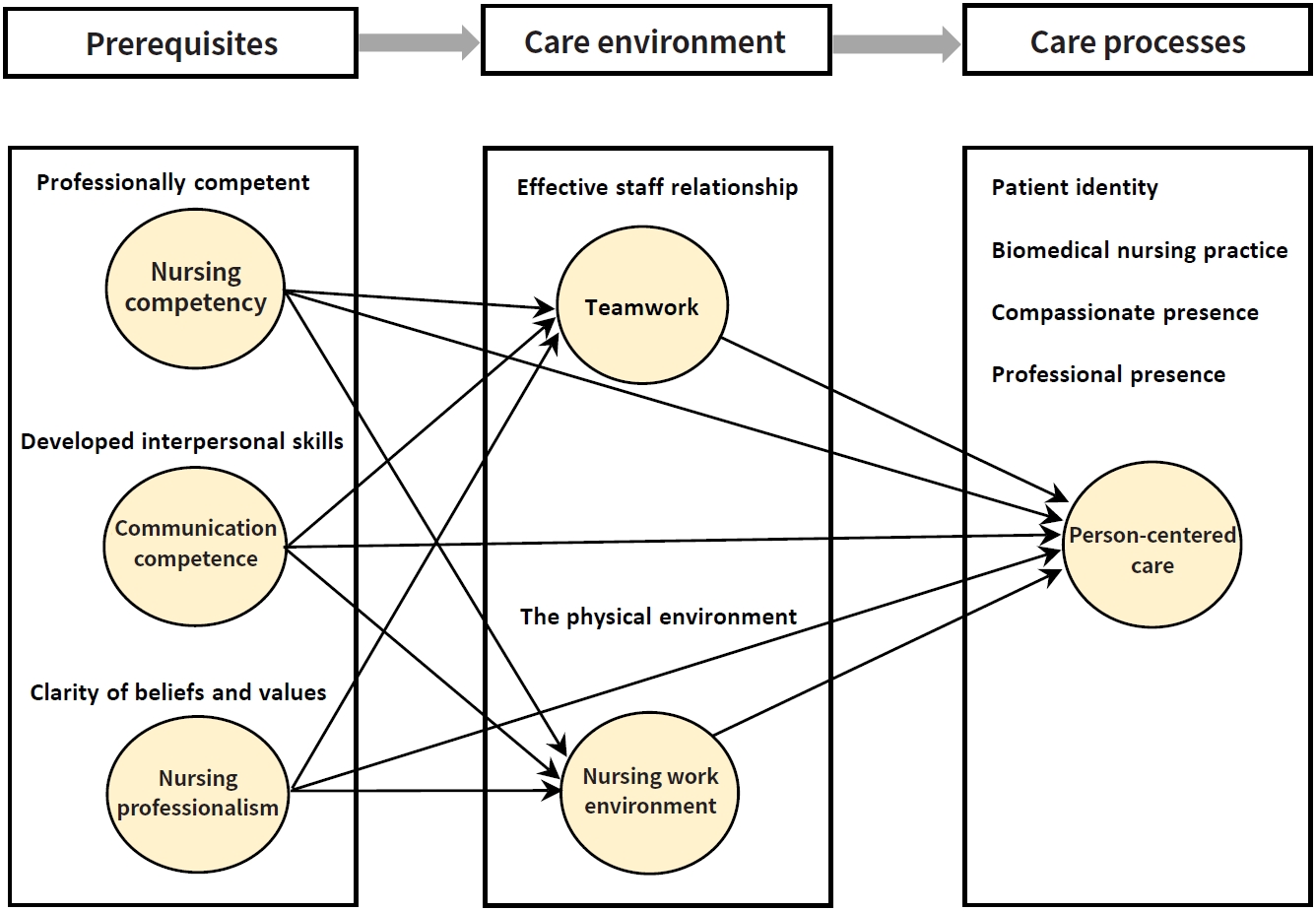
Person-centered care emphasizes the therapeutic relationship between medical staff and patients, founded on mutual trust and understanding. In intensive care settings, there is growing recognition of the need to improve the care environment and promote patient-focused nursing. This study aimed to construct and validate a predictive model explaining person-centered care in intensive care units. Methods: This study employed a cross-sectional design involving 230 intensive care unit nurses working in a tertiary hospital, each with more than one year of direct patient care experience. Data were collected online between March 2 and March 30, 2023. Data analysis was conducted using IBM SPSS ver. 26.0 and AMOS ver. 25.0. Results: Statistically significant pathways were identified from nursing competency to the nursing work environment and person-centered care; from communication competence to teamwork and person-centered care; from nursing professionalism to teamwork and the nursing work environment; and from the nursing work environment to person-centered care. Nursing professionalism indirectly influenced person-centered care through teamwork and the nursing work environment. Conclusion: Enhancing person-centered care in intensive care units requires recognizing the critical roles of communication competence, nursing competency, and the nursing work environment. Developing and implementing educational programs that strengthen communication and nursing competencies, alongside initiatives that improve the nursing work environment, are essential.
  • 247 View
  • 8 Download
Purpose
Over 10% of intensive care unit (ICU) patients die; however, research aimed at assessing and improving the quality of their deaths remains scarce. This study investigated the impact of communication among healthcare professionals and person-centered care provided by ICU nurses on the quality of dying and death (QODD) experienced by ICU patients.
Methods
We measured general characteristics of ICU nurses, interprofessional communication, and person-centered care, and identified their impact on the quality of death for patients who died in the ICU. Participants consisted of 103 ICU nurses employed at two tertiary hospitals in South Korea. Data were collected between January and May 2023. Descriptive statistics, the t-test, analysis of variance, the Mann-Whitney U test, Pearson correlation coefficients, and multiple linear regression analyses were conducted using SPSS version 23.0.
Results
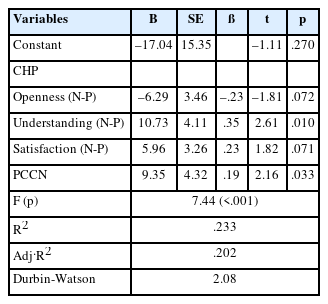
The mean QODD score was 44.73±21.26. QODD was positively correlated with openness (nurse-physician), understanding (nurse-physician), satisfaction (nurse-physician), and person-centered care. Factors significantly influencing QODD included nurse-physician communication, specifically understanding (β=.35, p=.010), and person-centered care (β=.19, p=.033), explaining 20.2% of the total variance (F=7.44, p<.001).
Conclusion
Improved communication among healthcare professionals and enhanced person-centered care are essential for improving the QODD for ICU patients. To achieve this, educational initiatives focusing on end-of-life care and communication training programs for healthcare professionals should be implemented.
  • 3,064 View
  • 58 Download
Predictive Factors of Intensive Care Unit Readmission among Older Patients: A Retrospective Study
Sunhui Choi, Kuem Sun Han, Sung Reul Kim, Hyemin Lim
Korean J Adult Nurs 2025;37(1):36-49.   Published online February 28, 2025
DOI: https://doi.org/10.7475/kjan.2025.37.1.36
Purpose
This study aimed to determine the rates of intensive care unit readmission and to identify the factors influencing readmission among intensive care unit patients aged≥65 years with internal medicine conditions.
Methods
We retrospectively reviewed electronic medical records from a tertiary care hospital in Seoul, analyzing the characteristics of patients who were and were not readmitted between December 2020 and September 2022.
Results
A total of 351 patients were included. The unplanned intensive care unit readmission rate was 4.8% within 7 days and 9.1% beyond 7 days after discharge. Comorbid diabetes, higher total bilirubin levels at intensive care unit admission, lower PaO2/FiO2 ratios at discharge, and elevated Blood Urea Nitrogen (BUN) levels at discharge were associated with an increased risk of readmission within 7 days. In contrast, hypertension, prolonged intensive care unit stays, and lower hemoglobin levels at discharge were associated with readmissions occurring after 7 days.
Conclusion
Intensive care unit readmission among older patients is influenced by several clinical and hematological factors. Nurses should consider a patient's history of diabetes and hypertension, length of intensive care unit stay, and laboratory values-specifically total bilirubin at admission, and PaO2/FiO2 ratio, hemoglobin, and BUN levels at discharge-when making discharge decisions. These findings can inform the development of discharge guidelines.
  • 2,451 View
  • 79 Download
  • 0 Scopus
Purpose
Patients in the Intensive Care Unit (ICU) experience a variety of symptoms. This descriptive correlational study aimed to determine the prevalence of symptoms and the physiological and situational factors associated with these symptoms in ICU patients.
Methods
We analyzed the Electronic Medical Records (EMRs) of 1,214 cases admitted to and discharged from the ICUs of a university hospital in Seoul over a 1-year period from June to September 2022. This analysis utilized standardized instruments embedded in EMRs and a natural language analysis framework developed by the researchers. Descriptive statistics, the x 2 test, the Fisher exact test, and multivariate logistic regression were employed to identify common symptoms and their related factors.
Results
In total, 85.7% of the cases had at least one symptom during their ICU stay, and 36.6% experienced 2 symptoms. Pain was the most frequently experienced symptom, affecting 69.5% of cases, followed by agitation (29.7%), dyspnea (29.7%), and delirium (4.8%). Multivariate logistic regression analysis indicated that the length of ICU stay influenced pain (odds ratio [OR]=1.04; 95% confidence interval [CI], 1.02~1.06; p<.001), delirium (OR=1.08; 95% CI, 1.06~1.11; p<.001), agitation (OR=1.07; 95% CI, 1.05~1.10; p<.001), and dyspnea (OR=1.19; 95% CI, 1.13~1.26; p<.001).
Conclusion
Pain, agitation, and dyspnea are common in ICU patients and are associated with the length of their ICU stay. Our study identifies factors related to these symptoms that could be targeted to manage and reduce their occurrence, providing a foundation for future research on various symptom assessment tools and natural language transcripts.
  • 780 View
  • 6 Download
  • 0 Scopus
Factors Influencing Performance of End-of-Life Care by ICU Nurses: A Descriptive Survey Study
Gyo Seon Lim, Yang Gyeong Yoo
Korean J Adult Nurs 2023;35(1):47-60.   Published online February 28, 2023
DOI: https://doi.org/10.7475/kjan.2023.35.1.47
Purpose
The purpose of this descriptive survey study was to investigate the relationship between death awareness, life-sustaining nursing stress, end-of-life care competency and performance, and resilience. Additionally, the factors influencing end-of-life care performance by ICU nurses were identified. Methods: Data were collected from one tertiary and two general hospitals in J province from July 1 to July 30, 2022. Nurses working in Intensive Care Units (ICU) for more than three months who had experience in end-of-life care were selected through convenience sampling. A total of 188 responses to the survey were included in the final analysis. An IBM SPSS program was used for the data analysis. Results: Factors impacting end-of-life care performance (with an explanatory power of 31.9%) were as follows: higher knowledge and behavioral competency in end-of-life care, higher relational patterns in resilience, higher levels of death positivity in death awareness, and clinical experience of less than a year compared to that of three to five years were associated with higher end-of-life care performance. Conclusion: These findings point to the urgent need for increasing end-of-life care performance among nurses in clinical practice; therefore, practical strategies must be developed and actively implemented to strengthen relevant competencies and resilience and promote death positivity. Based on these findings, future studies are needed to develop an intervention program to improve the spiritual scope of end-of-life care and verify the effects.

Citations

Citations to this article as recorded by  
  • Predictors of end-of-life care among emergency nurses: A cross-sectional study in Korea
    Ji Seon Lee, Sook Jung Kang
    Australasian Emergency Care.2025;[Epub]     CrossRef
  • 976 View
  • 46 Download
  • 1 Crossref
  • 0 Scopus
The Development of a Specific Quality of Life Scale for Hypertensive Patients: Methodological Study
Ho Jin Kim, Gab Sun Song
Korean J Adult Nurs 2022;34(6):523-536.   Published online December 31, 2022
DOI: https://doi.org/10.7475/kjan.2022.34.6.523
Purpose
The purpose of this study was to develop and verify a Quality of Life Scale (QOLS) specifically for hypertensive patients. Methods: In the development phase of the QOLS, initial items were derived based on literature review and content analysis through in-depth interviews. After verifying the content validity of the expert group, preliminary questions composed of 94 items were created and confirmed by conducting preliminary research on hypertensive patients. During the verification phase, the preliminary QOLS was administered to 392 hypertensive patients from general hospitals, medical clinics, and public health centers in Busan. Data were analyzed using item analysis, exploratory factor analysis, convergent validity, discriminant validity, criterion validity, and Cronbach’s ⍺. Results: The final scale consisted of 30 items derived from 5 factors. Five factors (negative emotion, acceptance of disease, self-reinforcement, social support, self-regulation) were extracted from the factor analysis, which explained 68.0% of the total variance. The convergent validity showed a positive correlation (r=.51, p<.001), discriminant validity showed an inverse correlation (r=-.60, p<.001), and criterion validity showed a positive correlation (r=.35~.64, p<.001). The Cronbach’s ⍺ was .94 and reliability of the subscales was .78~.92. Conclusion: The specific Quality of Life Scale for hypertensive patients (QOLS_HP) was composed of 30 items using a 5-point Likert scale. The scale demonstrated acceptable validity and reliability.
  • 995 View
  • 26 Download
  • 0 Scopus
Risk Factors associated with Unplanned Removal of Nasogastric Tubes in Neurocritical Patients
Jaejin Kang, Yang-Sook Yoo
Korean J Adult Nurs 2022;34(2):158-167.   Published online April 30, 2022
DOI: https://doi.org/10.7475/kjan.2022.34.2.158
Purpose
The purpose of this study was to identify the incidence and risk factors associated with the unplanned removal of nasogastric (NG) tubes in neurocritical patients.
Methods
Data were collected retrospectively from the medical records of 479 patients admitted to the tertiary hospital's neuro-intensive care units (NCU). Subjects were divided into two groups depending on whether there was unplanned NG tube removal. Multivariate logistic regression analysis was used to identify risk factors.
Results
Unplanned removal of NG tubes occurred in 35.9% of patients. The incidence of unplanned NG tube removal was 47.2 per 1,000 patient days. Intubated time of the NG tube was 3.96 days in patients with unplanned removal. Risk factors associated with unplanned removal were men (Odds Ratio [OR]=2.19), epilepsy (OR=9.99), traumatic brain injury (OR=5.50), stroke (OR=4.42), improvement of Glasgow Coma Scale (GCS) (OR=1.08), delirium (OR=1.88), physical restraint (OR=2.44), and drainage or decompression purpose (OR=1.67).
Conclusion
Unplanned removal of NG tubes occurred very frequently in neurocritical patients. Care should be taken for patients with neurological diseases who show improvement in their level of consciousness but are still confused due to brain lesions or delirium to reduce it. The application of physical restraints cannot guarantee the prevention of unplanned NG tube removal. Therefore, nurses need to assess the condition of patients and NG tubes frequently.In particular, more attention should be paid to using NG tubes for decompression or drainage purposes. It is also proposed to actively review the NG tube removal plan through periodic evaluation.

Citations

Citations to this article as recorded by  
  • Impact of the restraint decision tree for physical restraint use in South Korean neurointensive care units
    Jaejin Kang, Sol Kim, Minji Lee, Hyunjoo Na
    Nursing in Critical Care.2024; 29(5): 1110.     CrossRef
  • 1,069 View
  • 62 Download
  • 1 Crossref
  • 1 Scopus
Effects of A Multicomponent Intervention Program for Preventing Delirium in Geriatric Patients in the Intensive Care Unit
Ju Hee Hwang, Min Young Kim
Korean J Adult Nurs 2021;33(6):565-575.   Published online December 31, 2021
DOI: https://doi.org/10.7475/kjan.2021.33.6.565
Purpose
This study aimed to investigate the effects of a Multicomponent Intervention Program for Preventing Delirium (MIPPD) on the incidence of delirium, self-extubation or self-removal of the catheter, and length of stay among elderly patients in the Intensive Care Unit (ICU).
Methods
This study employed a nonequivalent control group pretest-posttest non-synchronized design to verify the MIPPD effects. The participants, 73 patients aged over 65 years were admitted to a university hospital's ICU in J province between December 2015 and July 2016. The MIPPD contained the following elements: family caregiver education, delirium assessment, reorientation activities, therapeutic communication, sensory intervention for vision and hearing impairments, management of immobility or limited mobility, family support, and maintenance of sleeping patterns. Under the program, nurses and family members provided immediate intervention to elderly patients with an expected length of stay of at least 48 hours.
Results
After the MIPPD application, the incidence of delirium in the intervention group was significantly lower (odds ratio=0.19, 95% confidence interval=0.03~0.97) than that in the control group. However, there were no significant differences between the groups in terms of self-extubation or catheter self-removal and length of stay.
Conclusions
This program can effectively reduce the incidence of delirium. Because prevention is optimal for delirium management, a proactive intervention must be considered; given that, in this study, there were no problems in terms of family engagement, an MIPPD involving family participation should be actively implemented in intensive care unit practice.

Citations

Citations to this article as recorded by  
  • The effectiveness of family participation interventions for the prevention of delirium in intensive care units: A systematic review
    Marli Lopo Vitorino, Adriana Henriques, Graça Melo, Helga Rafael Henriques
    Intensive and Critical Care Nursing.2025; 89: 103976.     CrossRef
  • Promoting Family Involvement in the Management of Delirium in Intensive Care: Scoping Review
    Sandra Lange, Wioletta Mędrzycka-Dąbrowska
    Medicina.2024; 60(12): 1934.     CrossRef
  • Microteoria de enfermagem na prevenção do delirium em pessoas idosas na unidade de terapia intensiva
    Sandra da Silva Kinalski, Margrid Beuter, Eliane Raquel Rieth Benetti, Marinês Tambara Leite, Larissa Venturini, Marcos Antônio Gomes Brandão
    Revista Latino-Americana de Enfermagem.2023;[Epub]     CrossRef
  • Factors Affecting Delirium in ICU Patients
    I Seul Jeong, Mi-Kyoung Cho
    International Journal of Environmental Research and Public Health.2023; 20(10): 5889.     CrossRef
  • Nursing microtheory in the prevention of delirium in older adult in the intensive care unit
    Sandra da Silva Kinalski, Margrid Beuter, Eliane Raquel Rieth Benetti, Marinês Tambara Leite, Larissa Venturini, Marcos Antônio Gomes Brandão
    Revista Latino-Americana de Enfermagem.2023;[Epub]     CrossRef
  • Educational intervention for family caregivers of older adults with delirium: An integrative review
    JuHee Lee, Insun Yeom, Subin Yoo, Soomin Hong
    Journal of Clinical Nursing.2023; 32(19-20): 6987.     CrossRef
  • Microteoría de enfermería en la prevención del delirium en personas mayores en la unidad de cuidados intensivos
    Sandra da Silva Kinalski, Margrid Beuter, Eliane Raquel Rieth Benetti, Marinês Tambara Leite, Larissa Venturini, Marcos Antônio Gomes Brandão
    Revista Latino-Americana de Enfermagem.2023;[Epub]     CrossRef
  • 3,174 View
  • 88 Download
  • 7 Crossref
  • 5 Scopus
Purpose
This study was conducted to identify the factors affecting the performance of person-centered care among Intensive Care Unit (ICU) nurses from an ecological perspective.
Methods
The participants were 172 ICU nurses working in eight hospitals in B city. Data were collected from July to August, 2020. The questionnaire consisted of measuring tools for general characteristics, performance of person-centered care, compassion satisfaction, communication competence, and teamwork. The SPSS/25.0 program was used to analyze the data using hierarchical multiple regression.
Results
According to the hierarchical multiple regression analysis, total nursing experience, compassion satisfaction, communication competence, and team work accounted for 44.1% of the variance in performance of person-centered care among ICU nurses (p<.001).
Conclusion
Enhancing compassion satisfaction, communication competence, and teamwork can help increase the performance of ICU nurses’ person-centered care. In addition, in order to improve the performance of person-centered care among ICU nurses, it is necessary to investigate and explore the factors hindering the performance of person-centered care among ICU nurses with more than 5 years of experience. Therefore, multidimensional efforts are needed to develop educational programs to increase the performance of person-centered care among ICU nurses.

Citations

Citations to this article as recorded by  
  • How the nursing work environment moderates the relationship between clinical judgment and person-centered care among intensive care unit nurses
    Mi Hwa Seo, Eun A. Kim, Hae Ran Kim, Mohammad Jamil Rababa
    PLOS ONE.2025; 20(1): e0316654.     CrossRef
  • Workload, Teamwork, Compassion Competence, and Person-centered Critical Care Nursing among Critical Care Nurses
    Hyun A Lee, Myung Sun Hyun, Jin-Hee Park, Eun Ji Seo
    Journal of Korean Critical Care Nursing.2025; 18(2): 14.     CrossRef
  • A Predictive Model for Person-Centered Care in Intensive Care Units in South Korea: A Structural Equation Model
    Sunmi Kwon, Kisook Kim
    Korean Journal of Adult Nursing.2025; 37(4): 467.     CrossRef
  • Factors Influencing Person-Centered Care Among Psychiatric Nurses in Hospitals
    Ji Su Lee, Mi Heui Jang, Min Jung Sun
    Healthcare.2024; 12(22): 2269.     CrossRef
  • Assessing Needs for Practical Training in Intensive Care Unit to Enhance Nursing Education: A Focus Group Interview
    Sunah Park, Bokyoung Kim
    Journal of Korean Critical Care Nursing.2024; 17(2): 55.     CrossRef
  • Factors Influencing Person-Centered Care among Nurses in COVID-19 Special Care Units at Tertiary General Hospitals: A Cross-Sectional Descriptive Study
    Kisook Kim, Sunmi Kwon
    Korean Journal of Adult Nursing.2023; 35(2): 127.     CrossRef
  • Influence of Person-Centered Perioperative Nursing and Patient Safety Competency on Patient Safety Management Activities among Operating Room Nurses: A Descriptive Survey Study
    Ji Yong Shin, Eun Hee Jang
    Korean Journal of Adult Nursing.2023; 35(2): 97.     CrossRef
  • Person-centred care among intensive care unit nurses: A cross-sectional study
    Hyuna Youn, Miyoung Lee, Sun Joo Jang
    Intensive and Critical Care Nursing.2022; 73: 103293.     CrossRef
  • Mediating Effect of Communication Competence in the Relationship between Compassion and Patient-Centered Care in Clinical Nurses in South Korea
    Miri Jeong, Kawoun Seo
    Healthcare.2022; 10(10): 2069.     CrossRef
  • Factors Influencing the Performance of Person-centered Care Among Nurses in Designated COVID-19 Hospitals
    Hyun-Joung Yun, Jaehee Jeon
    Korean Journal of Adult Nursing.2022; 34(4): 413.     CrossRef
  • Factors influencing mental health nurses in providing person-centered care
    Suyoun Ahn, Yeojin Yi
    Nursing Ethics.2022; 29(6): 1491.     CrossRef
  • 1,270 View
  • 101 Download
  • 11 Crossref
  • 8 Scopus
Risk Factors for Delirium in Trauma Intensive Care Unit Patients
Jongran Kim, Jeong-Ah Ahn
Korean J Adult Nurs 2020;32(6):623-631.   Published online December 31, 2020
DOI: https://doi.org/10.7475/kjan.2020.32.6.623
Purpose
This descriptive study aimed to present the incidence of delirium and identify risk factors for delirium in Trauma Intensive Care Unit (TICU) patients. Methods: The participants were 184 patients who were hospitalized in the TICU at a Regional Trauma Center in Gyeonggi-do. Data were collected between April and November 2019. For delirium measurement, the author used the Confusion Assessment Method for the Intensive Care Unit (CAM-ICU). Diverse dependent variables were collected through electronic medical records. Data were analyzed using descriptive statistics, independent t-test, x 2 -test, and binomial logistic regression. Results: Incidence of delirium in TICU patients was 34.8%. Logistic regression analysis showed that the risk factors for delirium in TICU patients were hemoglobin (Odds Ratio [OR]=0.62, 95% Confidence Interval [CI]=0.43~0.88), injury severity score (OR=1.10, 95% CI=1.01~1.20), length of TICU stay (OR=1.15, 95% CI=1.03~1.29), administered sedatives (OR=6.04, 95% CI=2.47~14.76), and use of restraints (OR=5.75, 95% CI=2.29~14.42). Conclusion: Based on the results of this study, healthcare providers, especially TICU nurses, should try to detect the signs and symptoms of delirium as early as possible, taking into account the specified risk factors of the patient. Preventive and practical intervention programs considering the risk factors must also be developed to prevent and alleviate delirium in TICU patients in the future.

Citations

Citations to this article as recorded by  
  • Comparison of the Validity of the PRE-DELIRIC model and the E-PRE-DELIRIC model for Predicting Delirium in patients after Cardiac Surgery
    Eun Ju Cho, Myoung Soo Kim
    Journal of Korean Academy of Fundamentals of Nursing.2024; 31(3): 275.     CrossRef
  • Investigation of Delirium Occurrence and Intervention Status in Intensive Care Unit at a Hospital and Perception of Delirium by Medical Staff
    Yi-Seul Kang, Soon-Hee Kim, Min-Jeoung Lee, Hyo-Jin Lee, Oak-Bun Lim, Sang-Bum Hong, Hye-Ran Choi
    Journal of Korean Critical Care Nursing.2023; 16(1): 71.     CrossRef
  • Intensive Care Experience of Critical Care Patients and Its Related Factors : A Secondary Analysis Study
    Jiyeon Kang, Hyojeong Woo
    Journal of Korean Critical Care Nursing.2023; 16(3): 11.     CrossRef
  • Characteristics and Risk Factors for Pressure Ulcers in Severe Trauma Patients Admitted to the Trauma Intensive Care Unit
    Seung-yeon Lim, Young-min Jeong, So-young Jeong
    Journal of Acute Care Surgery.2023; 13(2): 47.     CrossRef
  • Factors Affecting Delirium in ICU Patients
    I Seul Jeong, Mi-Kyoung Cho
    International Journal of Environmental Research and Public Health.2023; 20(10): 5889.     CrossRef
  • Risk factors for postoperative delirium in patients with colorectal cancer
    Hyunhwa Kim, Heeok Park, Eun Kyung Kim
    Journal of Clinical Nursing.2022; 31(1-2): 174.     CrossRef
  • Differences in Associated Factors according to the Time of Occurrence of Pressure Ulcers in Intensive Care Unit Patients
    Mijung Lee, Eunjeoung Seo, Miok Kim, Jeongok Park, Seonmi Lee, Hyunkyung Shin, Ilsim Yun, Mina Cho, Youngcha Cho, Bomi Kang, Hyunmi Seo, Misoon Lee, Sira Lee, Hyejoo Jang, Hyunsuk Jung, Jeong-Ah Ahn
    Journal of Korean Critical Care Nursing.2021; 14(3): 26.     CrossRef
  • 1,150 View
  • 53 Download
  • 7 Crossref
  • 3 Scopus
Development and Application of an Intervention for Noise Reduction in Intensive Care Units
Sun-Hee Yun, Na-Young Kwak, Yang-Sook Yoo
Korean J Adult Nurs 2020;32(6):584-598.   Published online December 31, 2020
DOI: https://doi.org/10.7475/kjan.2020.32.6.584
Purpose
This study aimed to develop an intervention to reduce noise in the Intensive Care Unit (ICU) and evaluate the effects of applying it. Methods: The research design was a non-equivalent control group quasi-experimental study. To develop noise reduction interventions in ICUs, preliminary intervention techniques to reduce noise were derived through a literature review, field survey, and focus group interviews. The intervention was developed by verifying the validity of the content and the clinical applicability, and the result was applied to practice. To assess the effect of the intervention, the following were evaluated: noise level in the ICU, perceived noise level, response to noise, satisfaction of patients and staff with noise management, sleep quality of patients, noise-related knowledge, and perception and performance of noise management of the staff. Results: With the intervention developed in this study, the noise level in the ICU, perceived noise level, and response to noise of patients and staff decreased, and satisfaction with noise management increased. The sleep quality of patients, noise-related knowledge, and perception and performance of noise management of the staff increased. Conclusion: This intervention is shown to be effective in reducing the noise level in the ICU. Therefore, if it is used actively in practice, it is expected to create a comfortable environment by reducing the noise level in the ICU.

Citations

Citations to this article as recorded by  
  • Noise reduction interventions in intensive care units: a systematic review
    Eugene Han, Haeun Kang, Yeonsoo Jang
    Intensive and Critical Care Nursing.2026; 92: 104234.     CrossRef
  • Factors Affecting Nurses’ Performance of Noise Management in Adult Intensive Care Units
    Seo Jeong Kim, Haeyoung Min, Majd T. Mrayyan
    Journal of Nursing Management.2023; 2023: 1.     CrossRef
  • 971 View
  • 20 Download
  • 2 Crossref
  • 1 Scopus
Influence of the Rapid Response Team Activation via Screening by Nurses on Unplanned Intensive Care Unit Admissions
Ye-Ji Huh, Seong mi Moon, Eun Kyeung Eun, Min young Kim
Korean J Adult Nurs 2020;32(5):539-549.   Published online October 31, 2020
DOI: https://doi.org/10.7475/kjan.2020.32.5.539
Purpose
This study aimed to identify the influence of the activation of the Rapid Response Team (RRT) through screening unplanned Intensive Care Unit (ICU) admissions.
Methods
A total of 539 cases in which the RRT was activated, from January 1, 2016 to December 31, 2017, were analyzed. Data were collected by reviewing rapid response team activity reports and electronic medical records and analyzed using the Chi-squared test and multiple logistic regression analysis. The analyzed types of RRT activation were electronic medical record-based screening and activation through direct call.
Results
Patients admitted to the ICU following RRT activation through direct call were twice as likely to experience an unplanned ICU admission than patients for which the RRT was activated through electronic medical record screening (Odds Ratio [OR]=2.05, 95% Confidence Interval [CI]=1.27~3.30). Other variables, including the medical department, activation duration in minutes, total national early warning score, and respiratory distress as the reason for activation (compared to sepsis or septic shock) predicted unplanned ICU admissions.
Conclusion
Electronic medical record screening by RRT may facilitate the early detection and monitoring of physiological deterioration in patients in the general medical ward. This strategy may help prevent unplanned ICU admissions and potentially reduce mortality.

Citations

Citations to this article as recorded by  
  • The effect of nurses' perceptions and satisfaction with hospital rapid response teams on burnout related to emergency situations in Korea: a cross-sectional study
    Bumin Kim, Nahyun Kim
    Journal of Korean Biological Nursing Science.2025; 27(2): 234.     CrossRef
  • Early Prediction of Sepsis in the Intensive Care Unit Using the GRU-D-MGP-TCN Model
    Seunghee Lee, Geonchul Shin, Jeongseok Hwang, Yunjeong Hwang, Hyunwoo Jang, Ju Han Park, Sunmi Han, Kyeongmin Ryu, Jong-Yeup Kim
    IEEE Access.2024; 12: 148294.     CrossRef
  • Nursing Students’ Clinical Judgment and Performance in Simulation of Recognizing and Responding of the Deterioriating Patient ; a retrospective mixed-methods
    Yi Kyung Ha
    Journal of Korean Critical Care Nursing.2023; 16(2): 42.     CrossRef
  • Effects of a Rapid Response Team on the Clinical Outcomes of Cardiopulmonary Resuscitation of Patients Hospitalized in General Wards
    Mi-Jung Yoon, Jin-Hee Park
    Journal of Korean Academy of Fundamentals of Nursing.2021; 28(4): 491.     CrossRef
  • 1,597 View
  • 42 Download
  • 4 Crossref
Psychological Resistance to Drug Therapy in Patients with Hypertension: A Qualitative Thematic Analysis
Jiyeon Kang, Yeon Jin Jeong
Korean J Adult Nurs 2020;32(2):124-133.   Published online April 30, 2020
DOI: https://doi.org/10.7475/kjan.2020.32.2.124
Purpose
To explore the nature of psychological resistance to the initiation of antihypertensive medication.
Methods
Participants were 13 adults with hypertension who were refusing or had refused to take antihypertensive drugs from July 2016 to October 2016. The data were collected through face-to-face in-depth interviews, and analyzed according to Braun and Clarke’s 6 steps of thematic analysis.
Results
Analysis of the psychological resistance experience to drug therapy in hypertensive patients resulted in 5 themes and 10 sub-themes from a total of 42 free codes. Participants were “holding out as much as possible without medication” without taking antihypertensive drugs due to “psychological opposition to starting treatment” and “situational barriers related to medication”. However, they were “coming to grips with reality” that they were not taking medication but would take it someday, and they gained “momentum for change” to start taking it.
Conclusion
The 5 themes derived from the data analysis of the experiences of 13 participants are interrelated and suggest the direction of intervention to lower psychological resistance. In particular, we propose the development of an intervention to assist patients in self-decision regarding taking antihypertensive medication. Additional research into the role of medical staff in lowering the psychological resistance of young hypertensive patients is needed.

Citations

Citations to this article as recorded by  
  • Withdrawal of antihypertensive medication in young to middle-aged adults: a prospective, single-group, intervention study
    Hae-Young Lee, Kyoung Suk Lee
    Clinical Hypertension.2023;[Epub]     CrossRef
  • 647 View
  • 1 Download
  • 1 Crossref
  • 1 Scopus
PURPOSE
Critical care nurses are often exposed to many stressors, which may predispose them to develop work-related Post-Traumatic Stress Disorder (PTSD). Hence, this study's purpose was to identify factors associated with PTSD among nurses in the Intensive Care Unit (ICU), who had experienced trauma events.
METHODS
For this descriptive study, 169 subjects were recruited at the C University Hospital, where data were collected through the intranet from February 1 to March 16, 2018. Based on the stress, appraisal-coping model, well-structured questionnaires were used to measure PTSD as the dependent variable; and Type D personality, resilience, communication ability, problem solving ability, stress coping style, stress inducing events, and social support as independent variables. Multiple logistic regression was used to analyze PTSD related factors.
RESULTS
The mean of PTSD symptoms was 15.52±12.94; with 20.7% and 45.6% of participants falling in the PTSD high risk and Type D personality groups, respectively. Moreover, resilience was found to be 107.41±12.79, traumatic events to be 28.25±7.07, and social support to be 80.22±12.20, while the following parameters were associated with PTSD: D type personality (Odds Ratio [OR]=4.27, 95% Confidence Interval [CI]=1.62~11.21), experience of traumatic events (OR=1.08, 95% CI=1.02~1.15), resilience (OR=0.96, 95% CI=0.92~0.99), and social support (OR=0.96, 95% CI=0.92~0.99).
CONCLUSION
While examining risk factors associated with PTSD, Type D personality and the occurrence of trauma events should be considered when nurses are assigned to ICUs, along with the improvements required in hospital culture for enhancing resilience and social support.

Citations

Citations to this article as recorded by  
  • The Effects of Operating Room Nurses’ Experiences of Verbal Violence, Resilience, and Social Support on Post-Traumatic Stress
    Do Kyun Kim, Sung Hee Shin
    Healthcare.2025; 13(16): 2027.     CrossRef
  • The impact of intensive care unit nurses’ deliberate rumination, resilience, and social support on post-traumatic growth
    Mi Hee Jin, Youngji Kim
    The Journal of Korean Academic Society of Nursing Education.2025; 31(4): 496.     CrossRef
  • Professional quality of life, resilience, posttraumatic stress and leisure activity among intensive care unit nurses
    Noori Shin, Yun‐Jung Choi
    International Nursing Review.2024; 71(1): 94.     CrossRef
  • The Moderating Role of Perceived Social Support in the Relation between Type D Personality and PTSD Symptoms among ICU and ER Nurses
    Sohyeon Kim, Myung-Ho Hyun
    STRESS.2023; 31(4): 197.     CrossRef
  • Psychopathological Factors Associated With Burnout in Intensive Care Nurses: A Cross-Sectional Study
    Erman Yıldız
    Journal of the American Psychiatric Nurses Association.2023; 29(2): 122.     CrossRef
  • Relationship among Post-traumatic Stress Disorder, Resilience, and Retention Intention in Nurses who had Perceived Traumatic Events
    Jin Young Lee, Ja Yun Choi
    Korean Journal of Adult Nursing.2022; 34(4): 403.     CrossRef
  • The Impact of Social Supports on the Excessive Alcohol Use of the Middle-Aged Adults in South Korea: Do All Types of Social Supports Have Positive Effects on Excessive Alcohol Users?
    Seong-Jun Maeng, Kwang-Hyun Kim, Jun-Hyeok Kang
    International Journal of Environmental Research and Public Health.2022; 19(19): 12624.     CrossRef
  • Post-traumatic Growth and it’s associations with Deliberate Rumination, Self-disclosure, and Social Support among Intensive Care Unit Nurses
    Sae Mi Min, Hee Jun Kim, Chun-Ja Kim, Jeong-Ah Ahn
    Journal of Korean Critical Care Nursing.2022; 15(2): 50.     CrossRef
  • Experience of Violence and Factors Influencing Response to Violence Among Emergency Nurses in South Korea: Perspectives on Stress-Coping Theory
    Seung-Yi Choi, Hyunlye Kim, Kwang-Hi Park
    Journal of Emergency Nursing.2022; 48(1): 74.     CrossRef
  • The Influence of Traumatic Events on Turnover Intention among Nurses Working in Intensive Care Units: The Moderating Effect of Emotional Intelligence
    Hyunmi Kim, Jiyoung Park
    Journal of Korean Critical Care Nursing.2021; 14(2): 70.     CrossRef
  • Predictors of posttraumatic growth of intensive care unit nurses in Korea
    Ae Kyung Chang, Hyejin Yoon, Ji Hyun Jang
    Japan Journal of Nursing Science.2021;[Epub]     CrossRef
  • Effect of Expressive Writing on Professional Quality of Life and Resilience among Intensive Care Unit Nurses
    Danbi You, Hye-Ja Park
    Journal of Health Informatics and Statistics.2021; 46(3): 276.     CrossRef
  • 795 View
  • 36 Download
  • 12 Crossref
  • 7 Scopus
Noise Level by Type in Adult Intensive Care Units of a Tertiary Teaching Hospital in Korea
Sun Hee Yun, Hee Young Choi, Sun Hee Lee, Eun Hee Peck, Yang Sook Yoo
Korean J Adult Nurs 2020;32(1):1-9.   Published online February 29, 2020
DOI: https://doi.org/10.7475/kjan.2020.32.1.1
PURPOSE
This study aimed to investigate the actual noise conditions in adult Intensive Care Units (ICUs) according to type, time, day of the week, and area.
METHODS
This study was conducted from February to March 2018. ICU noise levels were examined using a noise meter with a microphone an amplifier, auditory correction circuit, and indicator meter capable of directly reading A-weighted decibels (dBA). Noise was measured for 24 hours for seven days and the average dBA, maximum dBA, and minimum dBA were recorded.
RESULTS
The highest mean noise level was 58.48 dBA (range of 57.62~65.27), while lowest was 51.65 dBA (range of 51.36~52.86). Average noise levels on weekdays and weekends were over 50 dBA(the open zone was measured at 56.61 dBA, while the isolation zone was measured at 52.45 dBA. Further, daytime, evening work-times and weekdays were measured above 60 dBA, while nighttime noise levels were below 60 dBA. Finally, average noise levels during turnarounds, shift changes, and rounding times were above 60 dBA; open zone had higher average noise levels than the isolation zone.
CONCLUSION
This study showed that ICU noise levels exceeded those recommended by the World Health Organization regardless of type of noise, day of the week, or time. Therefore, studies are proposed to identify the need or importance of noise management by ICU personnel to reduce noise in ICUs. It also proposes studies to develop and apply noise reduction strategies that can be easily used in practice, reflecting the various characteristics of noise in ICUs.

Citations

Citations to this article as recorded by  
  • Factors Affecting Nurses’ Performance of Noise Management in Adult Intensive Care Units
    Seo Jeong Kim, Haeyoung Min, Majd T. Mrayyan
    Journal of Nursing Management.2023; 2023: 1.     CrossRef
  • Noise Experience Status and Response to Noise of Patients and Nursing Staff in the ICU
    Sun-Hee Yun, Jung-Eun Choi, Hyoung-Soon Kim, Yang-Sook Yoo
    Journal of Korean Academy of Fundamentals of Nursing.2021; 28(2): 207.     CrossRef
  • Development and Application of an Intervention for Noise Reduction in Intensive Care Units
    Sun-Hee Yun, Na-Young Kwak, Yang-Sook Yoo
    Korean Journal of Adult Nursing.2020; 32(6): 584.     CrossRef
  • 1,344 View
  • 19 Download
  • 3 Crossref
  • 3 Scopus
PURPOSE
This study aimed to identify the mediating effects of health belief on the disease-related knowledge, eHealth literacy, and self-care behavior of hypertension patients. eHealth is an emerging field of medical informatics, referring to the organization and delivery of health services and information using the internet and related technologies.
METHODS
A total of 156 patients who were receiving treatment for hypertension at the best internal medicine clinic in Busan City participated in the study. Data collection was conducted from May 22, to June 30, 2019. Collected data were analyzed with descriptive statistics, independent t-test, one-way analysis of variance, Pearson's correlation coefficient, and three-step mediated regression analysis using SPSS/WIN 25.0.
RESULTS
Significant positive correlations were observed between disease-related knowledge and eHealth literacy (r=.19, p=.016), disease-related knowledge and health belief (r=.32, p<.001), disease-related knowledge and self-care behavior (r=.16, p=.046), eHealth literacy and health belief (r=.17, p=.034), and health belief and self-care behavior (r=.27, p=.001). Health belief had a mediating effect (z=−2.47, p=.013) on the correlation between disease-related knowledge and self-care behavior.
CONCLUSION
To improve self-care behavior among hypertension patients, medical practitioners need to develop interventions that enhance health belief.

Citations

Citations to this article as recorded by  
  • Effects of e-health literacy on health-related quality of life in young adults with type 2 diabetes: Parallel mediation of diabetes self-efficacy and self-care behaviors
    Yura Jang, Youngran Yang
    Applied Nursing Research.2025; 82: 151917.     CrossRef
  • Influences of Online Health Information Seeking Behavior and E-health Literacy on Self-Management in Hemodialysis Patients: A Cross-Sectional Study
    Myeong-yi Kim, Jaehee Jeon
    Korean Journal of Adult Nursing.2025; 37(4): 502.     CrossRef
  • Factors influencing coping skills of middle-aged adults in COVID-19, South Korea
    Minkyung Gu, Heeyoung Woo, Sohyune Sok
    Frontiers in Public Health.2024;[Epub]     CrossRef
  • Influence of Digital Literacy and Patient Activation on Sick Role Behavior in Vulnerable Older Adults with Diabetes
    Young-Eun Yi, Hyun-Ju Lee
    Journal of Korean Academy of Fundamentals of Nursing.2024; 31(2): 179.     CrossRef
  • Relationship Between Electronic Health Literacy and Self-Management in People With Type 2 Diabetes Using a Structural Equation Modeling Approach
    Eun-Hyun LEE, Young Whee LEE, Eun Hee KANG, Hyun-Jung KANG
    Journal of Nursing Research.2024; 32(1): e315.     CrossRef
  • Electronic Health (eHealth) Literacy and Self-Care Behaviors—Results from a Survey of University Students in a Developing Country
    Salman Bin Naeem, Anthony Faiola, Aziz Ur-Rehman, Maged N. Kamel Boulos
    Information.2024; 15(10): 636.     CrossRef
  • Digital literacy among Korean older adults: A scoping review of quantitative studies
    Hun Kang, Jiwon Baek, Sang Hui Chu, JiYeon Choi
    DIGITAL HEALTH.2023;[Epub]     CrossRef
  • Investigating the relationship of electronic health literacy and self-care behaviors with life quality in patients with heart failure
    Masoomeh Bakhshayesh, Mitra Hojatansari, Soheila Rabie Siahkali
    Preventive Care In Nursing and Midwifery Journal.2023; 13(4): 30.     CrossRef
  • The Relation Between eHealth Literacy and Health-Related Behaviors: Systematic Review and Meta-analysis
    Keonhee Kim, Sangyoon Shin, Seungyeon Kim, Euni Lee
    Journal of Medical Internet Research.2023; 25: e40778.     CrossRef
  • Mediating Effects of Self-Efficacy and Social Support on the Relationship Between eHealth Literacy and Self-Care Competency in Patients Undergoing Percutaneous Coronary Interventions: A Cross-Sectional Study
    Eunhee Jo, Su-Jin Lee, Sun Hee Han
    Journal of Korean Academy of Fundamentals of Nursing.2023; 30(3): 325.     CrossRef
  • Investigating predictors of self‐care behavior among homebound older adults: The role of self‐efficacy, eHealth literacy, and perceived social support
    Arkers Kwan Ching Wong, Jonathan Bayuo, Frances Kam Yuet Wong
    Journal of Nursing Scholarship.2022; 54(3): 278.     CrossRef
  • The Relationship Between Participating in Online Parenting Communities and Health-Promoting Behaviors for Children Among First-Time Mothers: The Mediating Effect of Parental Efficacy
    Minyoung Woo, Sun-Mi Chae
    Journal of The Korean Society of Maternal and Child Health.2022; 26(3): 183.     CrossRef
  • Factors Influencing the Self-management Behaviors of the Elderly with Hypertension in the Local Community
    Jeongju Hong
    Journal of Korean Academy of Community Health Nursing.2021; 32(3): 303.     CrossRef
  • Relationships Between Mobile eHealth Literacy, Diabetes Self-care, and Glycemic Outcomes in Taiwanese Patients With Type 2 Diabetes: Cross-sectional Study
    Sophie Huey-Ming Guo, Hung-Chun Hsing, Jiun-Lu Lin, Chun-Chuan Lee
    JMIR mHealth and uHealth.2021; 9(2): e18404.     CrossRef
  • 771 View
  • 17 Download
  • 14 Crossref
  • 14 Scopus
PURPOSE
The purpose of this study was to assess the awareness of warning signs of stroke and identify the risk factors influencing such awareness among diabetics with hypertension who are at a high risk for stroke.
METHODS
Data from the 2017 Korea Community Health Survey were used. A total of 15,536 adults older than 30 years diagnosed with hypertension and diabetes mellitus were included in the final analysis. Data were analyzed using frequency, percentage, χ2 test, and logistic regression with SPSS/WIN 24.0 program.
RESULTS
Among the five warning signs of stroke, “sudden trouble in speaking or understanding” (79.0%) was the most commonly identified one and “sudden severe headache with an unknown cause” (65.2%) was the least. Only 48.8% participants identified all five warning signs and 11.8% could not identify any of them. In the logistic regression model, the risk of unawareness of warning signs of stroke was significantly higher among those aged 30~49 years and 70 years or older, with a lower educational level, without a spouse, and with a heavy alcohol consumption and current smoking status.
CONCLUSION
The level of awareness of warning signs was low in hypertensive diabetic adults. To improve awareness of warning signs of stroke, a customized educational program should be provided to hypertensive diabetic adults considering the risk factors relevant to unawareness of warning signs of stroke. The education on warning signs of stroke can potentially lead to a reduction in morbidity in the survivors.

Citations

Citations to this article as recorded by  
  • Factors Influencing Participation in Hypertension Management Education Among Diagnosed Hypertensive Patients in Busan: Utilizing the 2021 Community Health Survey
    Hye Jung Jun, Kyoung Mi Kim
    Research in Community and Public Health Nursing.2024; 35: 424.     CrossRef
  • Capsular warning syndrome and its clinical awareness and therapeutic approach: two case reports and a systematic review of the literature
    Hector R. Martínez, Jose A. Figueroa-Sanchez, Carlos A. Arreola-Aldape, Jose Alberto Moran Guerrero, Ana Luisa Trujillo-Bracho, Alejandro Cantú López
    Frontiers in Neurology.2023;[Epub]     CrossRef
  • Comparison of Stroke Knowledge, Health Beliefs, and Stroke Prevention Behavior between Early and Middle-Aged Adults
    Eun Ko
    STRESS.2022; 30(2): 98.     CrossRef
  • Blood Pressure Awareness and Knowledge of Cardio-Cerebrovascular Diseases in South Korean Women with Hypertension
    Yeo Won Jeong
    Healthcare.2021; 9(3): 360.     CrossRef
  • The Effect of Residence in Underserved Emergency Medical Services Areas on Awareness of Myocardial Infarction Symptoms in Korea
    Mirae Jo, Heeyoung Oh, Suk-Yong Jang
    Journal of Health Informatics and Statistics.2021; 46(1): 8.     CrossRef
  • 567 View
  • 6 Download
  • 5 Crossref
  • 4 Scopus
Factors Influencing Delirium in Neurological Intensive Care Unit Patient
Hyun Jin Lee, Sung Reul Kim
Korean J Adult Nurs 2018;30(5):470-481.   Published online October 31, 2018
DOI: https://doi.org/10.7475/kjan.2018.30.5.470
PURPOSE
The aims of this study were to describe the incidence rate of delirium and to identify factors influencing delirium in neurological intensive care unit patients.
METHODS
The participants were 193 critically ill patients with neurological disorder from Chonbuk national university hospital in Jeonju. Data were collected between April 1 and November 25, 2017 using four structured questionnaires: Confusion Assessment Method for the Intensive Care Unit, Glasgow Coma Scale, Acute Physiology and Chronic Health Evaluation II, and Karnofsky Performance Scale. Data were analyzed using descriptive statistics, independent t-test, χ2 test, Mann-Whitney U test, and logistic regression using the SPSS/WIN 24.0 program.
RESULTS
The incidence rate of delirium was 11.9%. Delirium was related with age, length of stay in intensive care unit, Glasgow Coma Scale score, Acute Physiology and Chronic Health Evaluation II score, Karnofsky Performance Scale score, use of physical restraint, antihypertensive drugs, and anticonvulsants. Logistic regression analysis showed that age, length of stay in intensive care unit, use of physical restraint, and anticonvulsants were factors influencing delirium in neurological intensive care unit patients.
CONCLUSION
Delirium was related to demographic, clinical, medication-related, and environmental factors in patients in neurological intensive care units. Therefore, nurses should consider the patient's age, length of stay intensive care unit, use of physical restraint, and anticonvulsants in assessing delirium in neurological intensive care unit patients. Delirium prevention programs considering these factors may be effective for such patients.

Citations

Citations to this article as recorded by  
  • Factors-related to the severity of delirium among older adults in neurologic intensive care units: A retrospective study using electronic medical record data
    Ae Young Cho, JiYeon Choi, Jung Yeon Kim, Kyung Hee Lee
    Journal of Korean Gerontological Nursing.2025; 27(2): 166.     CrossRef
  • Risk Factors for Delirium in Trauma Intensive Care Unit Patients
    Jongran Kim, Jeong-Ah Ahn
    Korean Journal of Adult Nursing.2020; 32(6): 623.     CrossRef
  • 751 View
  • 20 Download
  • 2 Crossref
  • 3 Scopus
Factors Affecting Caregivers' Burnout Caring for a Family Member in an Intensive Care Unit
Min Jeong Park, So Hee Park, Mi Young Chung
Korean J Adult Nurs 2017;29(5):517-526.   Published online October 31, 2017
DOI: https://doi.org/10.7475/kjan.2017.29.5.517
PURPOSE
The purpose of this study was to identify the factors which contribute to the burnout of a family member providing care to a family member in the intensive care unit (ICU).
METHODS
Data about participants' characteristics, stress, burden, social support and burnout were collected from March 1 to September 15, 2016. Data were collected through interviews and a self-report questionnaire. One hundred and twenty-three participants who were the primary caregiver participated in the study.
RESULTS
The reported mean stress score was 2.13±0.78 and of reported burden was 3.24±0.27. The mean score of social support was 3.17±0.59 and of burnout was 2.61±0.58. There were significant differences in education level, financial burden, assistant, and health status in burnout of the family caregivers. Burnout had significant correlations with stress (r=.76, p < .001), burden (r=.43, p < .001), and social support (r=-.62, p < .001). The influencing factors on burnout were stress (β=0.63, p < .001), burden (β=0.14, p=.010), and social support (β=-0.32, p < .001). These variables explained 71.8% of the total variance in burnout.
CONCLUSION
The results suggest that stress, burden, and social support should be considered in developing the nursing interventions to improve the burnout among family caregivers of the ICU patients.

Citations

Citations to this article as recorded by  
  • Challenges Experienced by Family Caregivers of the Adult Intensive Care Unit Patients in Korea: An Integrative Review
    JiYeon Choi, Judith A. Tate, Youn-Jung Son
    Clinical Nursing Research.2021; 30(4): 423.     CrossRef
  • Influence of Self-care on Burnout in Primary Family Caregiver of Person with Dementia
    Jeong Hwa Kwon, Gwi-Ryung Son Hong
    Journal of Korean Academy of Nursing.2021; 51(2): 217.     CrossRef
  • 776 View
  • 16 Download
  • 2 Crossref
  • 2 Scopus
Attitude, Role Perception and Nursing Stress on Life Sustaining Treatment among Intensive Care Unit Nurses
Su Jeong Lee, Hye Young Kim
Korean J Adult Nurs 2017;29(2):131-142.   Published online April 30, 2017
DOI: https://doi.org/10.7475/kjan.2017.29.2.131
PURPOSE
The aims of the study were to investigate relationships among intensive care unit (ICU) nurses' attitude, role perception, and nursing stress related to life sustaining treatment (LST), and secondly, to identify factors influencing nursing stress about LST.
METHODS
Participants were 202 conveniently sampled ICU nurses from general hospitals in Korea with over 300 beds. From December 1, 2015 to January 31, 2016, data were collected using structured questionnaires. The questionnaire was designed to measure nursing stress related to LST. Content validity and reliability was established for the instrument.
RESULTS
Relationships were found between attitude and role perception, and between role perception and nursing stress about LST. Participants' role perception, gender, education level, and the experience of dealing with family members of patients receiving LST accounted for 13% of variance in nursing stress about LST.
CONCLUSION
Results confirmed that ICU nurses' role perception affects nursing stress about LST. Accordingly, the nursing education programs related to LST should aim to enhance role perception of nurses, and strategies to reduce the nursing stress about LST of the nurses in ICU need to be further developed.

Citations

Citations to this article as recorded by  
  • Effects of Emergency Nurses’ Life-Sustaining Treatment Withdrawal Knowledge, Role Perception, and Job Stress on Providing End-of-Life Care
    Hyun Ju Park, Eun Ah Hong, So Hyeon Min, Heeje Yun, Hyung Bok Lee, Won Ho Choi
    Journal of Hospice and Palliative Care.2025; 28(3): 89.     CrossRef
  • Nursing-Related Behavioral Patterns among Hematologic Cancer Ward Nurses
    Sol-Ha Jeong, Jeongsoo Kim
    Asian Oncology Nursing.2025; 25(3): 146.     CrossRef
  • Unveiling nurses’ end-of-life care experiences: Moral distress and impacts
    Myung Nam Lee, So-Hi Kwon, SuJeong Yu, Sook Hyun Park, Sinyoung Kwon, Cho Hee Kim, Myung-Hee Park, Sung Eun Choi, Sanghee Kim, Sujeong Kim
    Nursing Ethics.2024; 31(8): 1600.     CrossRef
  • Factors Influencing Performance of End-of-Life Care by ICU Nurses: A Descriptive Survey Study
    Gyo Seon Lim, Yang Gyeong Yoo
    Korean Journal of Adult Nursing.2023; 35(1): 47.     CrossRef
  • Knowledge, Attitudes and Nursing Stress Related to Life-Sustaining Treatment among Oncology Nurses
    Seul Lee, Suyoun Hong, Sojung Park, Soojung Lim
    The Journal of Hospice and Palliative Care.2023; 26(3): 112.     CrossRef
  • Comparing Perceptions, Determinants, and Needs of Patients, Family Members, Nurses, and Physicians When Making Life-Sustaining Treatment Decisions for Patients with Hematologic Malignancies
    Semi Kim, Eun Hye Ham, Dong Yeon Kim, Seung Nam Jang, Min kyeong Kim, Hyun Ah Choi, Yun A Cho, Seung A Lee, R.N. Min Jeong Yun
    The Korean Journal of Hospice and Palliative Care.2022; 25(1): 12.     CrossRef
  • Factors Affecting Psychological Burnout in Nurses Caring for Terminal Cancer Patients
    Na-Ri Seo, Hyun-E Yeom
    The Korean Journal of Hospice and Palliative Care.2022; 25(4): 159.     CrossRef
  • Mediating Effects of Role Perception of Life-sustaining Treatment in the Relationship between Knowledge of Lifesustaining Treatment Plans and Attitudes toward Withdrawal of Life-sustaining Treatment among Nursing College Students
    Youngmi Park, Keumhee Nam, Joohee Bae
    The Korean Journal of Hospice and Palliative Care.2021; 24(1): 36.     CrossRef
  • Evaluation of the Effect of Intensive Nursing Intervention Based on Process Analysis
    Zhiying Zhang, Huiju Zhu, Osamah Ibrahim Khalaf
    Computational and Mathematical Methods in Medicine.2021; 2021: 1.     CrossRef
  • Analysis of Risk Factors of Hospital Emergency Nursing Based on Comprehensive Nursing Methods
    Fujuan Chen, Xueying Xiao, Youshan Ni, Yanan Zhu, Xiao Li, Osamah Ibrahim Khalaf
    Computational and Mathematical Methods in Medicine.2021; 2021: 1.     CrossRef
  • Attitudes of the General Public towards Death with Dignity and Their Determinants
    Jung-Whan Lee
    Journal of Health Informatics and Statistics.2021; 46(2): 230.     CrossRef
  • Attitudes, Perceptions, and Experiences toward End-of-Life Care Decision-Making among Intensive Care Unit Nurses in Korea : An Integrative Review
    JiYeon Choi, Youn-Jung Son, Kyounghoon Lee
    Journal of Korean Critical Care Nursing.2020; 13(1): 27.     CrossRef
  • The Effects of Nurses’ Knowledge of Withdrawal of Life- Sustaining Treatment, Death Anxiety, Perceptions of Hospice on Their Attitudes toward Withdrawal of Life-Sustaining Treatment
    Young Eun Lee, Yu Jin Jung, Yoo Na Jang, Hyo Eun Jeong
    The Korean Journal of Hospice and Palliative Care.2020; 23(3): 114.     CrossRef
  • The influence of Moral Sensitivity, Knowledge of Advanced Directives, Good Death Perception on Nurses’ Attitudes toward the Withdrawal of Life-Sustaining Treatment in a General Hospital
    Sun Yeob Choi, Kon Hee Kim
    The Korean Journal of Rehabilitation Nursing.2020; 23(2): 120.     CrossRef
  • Reliability and Validity of an Instrument Assessing Advance Directives for Nurse
    Hojung Cheon, Eunha Kim
    The Korean Journal of Hospice and Palliative Care.2019; 22(3): 134.     CrossRef
  • Text Network Analysis of Newspaper Articles on Life-sustaining Treatments
    Eun-Jun Park, Dae Woong Ahn, Chan Sook Park
    Journal of Korean Academy of Community Health Nursing.2018; 29(2): 244.     CrossRef
  • 928 View
  • 15 Download
  • 16 Crossref
  • 5 Scopus
Experiences of Families in the Intensive Care Unit: Interactions with Health Care Providers
Mimi Lee, Myungsun Yi
Korean J Adult Nurs 2017;29(1):76-86.   Published online February 28, 2017
DOI: https://doi.org/10.7475/kjan.2017.29.1.76
PURPOSE
The purpose of the study was to provide deep understanding of the reported experiences of families with their loved one in the intensive care unit (ICU), focusing on interactions with healthcare providers.
METHODS
The data were collected by individual interviews of eleven participants. The transcribed data were analyzed using qualitative content analysis to identify major themes and sub-themes that represented the experiences of families.
RESULTS
Five themes and 13 sub-themes emerged. “Captive of patients' delayed death: Fear and anxiety” describes psychological problems arising when the family member became critically ill enough to warrant being admitted to the ICU. “Families as the weak: Suppression and resistance” describes interpersonal difficulties arisingdue to lack of information and trust with healthcare providers. “Deprivation of authority and duty as families: Helplessness” illustrate situational barriers in attempting to protect and support family member. “Re-establishment of trust relationship with healthcare providers: Gratitude and appreciation” describes how they satisfied with themselves by regaining trust relationship. Lastly, “Acceptance of reality through direct care participation: Relief and peace” illustrates peace of mind by gaining sense of reality through active direct care participation.
CONCLUSION
This study demonstrates the positive and negative experiences of families with ICU patients. The results will be useful in developing family-centered nursing interventions.

Citations

Citations to this article as recorded by  
  • A Comparison of the Importance, Satisfaction, and Barrier Levels of Communication Performance between Family Members and Staff Nurses in Intensive Care Units
    Haetsal Hong, Myoungock Jang
    Journal of Korean Critical Care Nursing.2025; 18(1): 55.     CrossRef
  • The End-of-Life Experiences of Cancer Patients’ Families in a Tertiary Hospital Providing Palliative Care Consultation During the COVID-19 Pandemic
    Hyoung Suk Han, Mi Young Kim
    Journal of Hospice and Palliative Care.2025; 28(2): 40.     CrossRef
  • Experiences of Family Members With Visitation Prohibition for Critically Ill Patients
    Sunjung Kim, Sunghee H. Tak
    Western Journal of Nursing Research.2024; 46(11): 854.     CrossRef
  • Factors Affecting Intention of Signing the Advance Directives in Middle Aged Adults in Korea Based on the Theory of Planned Behavior: A Cross-sectional Study
    Hyun Jeong Park, Kyu Eun Lee
    Journal of Health Informatics and Statistics.2024; 49(3): 279.     CrossRef
  • The impact of family care visitation programme on patients and caregivers in the intensive care unit: A mixed methods study
    Hye Jin Yoo, JaeLan Shim
    Journal of Clinical Nursing.2023; 32(13-14): 3797.     CrossRef
  • Family's Perception of Proxy Decision Making to Authorize Do Not Resuscitate Order of Elderly Patients in Long Term Care Facility: A Q-Methodological Study
    Hyeon Jin Cho, Jiyeon Kang
    Journal of Korean Academy of Nursing.2021; 51(1): 15.     CrossRef
  • Challenges Experienced by Family Caregivers of the Adult Intensive Care Unit Patients in Korea: An Integrative Review
    JiYeon Choi, Judith A. Tate, Youn-Jung Son
    Clinical Nursing Research.2021; 30(4): 423.     CrossRef
  • Effects of a person‐centred care intervention in an intensive care unit: Using mixed methods to examine nurses’ perspectives
    Hye Jin Yoo, JaeLan Shim
    Journal of Nursing Management.2020;[Epub]     CrossRef
  • Critical care nurses’ communication experiences with patients and families in an intensive care unit: A qualitative study
    Hye Jin Yoo, Oak Bun Lim, Jae Lan Shim, Liza Heslop
    PLOS ONE.2020; 15(7): e0235694.     CrossRef
  • The Relationship between Person-Centered Nursing and Family Satisfaction in ICUs
    Jiyeon Kang, Eun-Ja Shin
    Journal of Korean Critical Care Nursing.2019; 12(3): 1.     CrossRef
  • Willingness to pay for family education and counselling services provided by critical care advanced practice nurses
    Chung Mee Ko, Chin Kang Koh, Sangho Kwon
    International Journal of Nursing Practice.2019;[Epub]     CrossRef
  • 1,357 View
  • 17 Download
  • 11 Crossref
  • 7 Scopus
Prevalence and Risk Factors of Unmet Healthcare Needs among Korean Adults with Hypertension
Heeyoung Oh, Eunha Gil
Korean J Adult Nurs 2017;29(1):22-31.   Published online February 28, 2017
DOI: https://doi.org/10.7475/kjan.2017.29.1.22
PURPOSE
The purposes of this secondary analysis study was to examine prevalence, risk factors and unmet healthcare needs among adults with hypertension.
METHODS
A sample of 3,386 adults over the age of 40 with hypertension were drawn from the Korea Health Panel Study (2013). Using SPSS 22.0 version, descriptive statistics including frequency, percentage, chi-square and logistic regression were performed.
RESULTS
Results showed that 18.9% of the sample reported unmet healthcare needs with the most frequently cited one was financial burdens (43.2%). The reported experiences of unmet healthcare needs differed by gender, marital status, vision or hearing impairment, memory problem, impaired mobility, subjective health status, total family income, depressive episode and the difficulty in making decisions. The sample participants were more likely to report unmet healthcare if they had vision impairment, low income and perception that their health status as moderate to poor. Those without vision impairment were less likely to report unmet healthcare needs.
CONCLUSION
The identified risk factors of unmet healthcare needs should be addressed which would enhance access both to health care and to resolution of unmet healthcare needs. Since visual ability seems to impact perception of unmet healthcare needs, it may be useful to find ways to address this factor.

Citations

Citations to this article as recorded by  
  • Regional disparities in health literacy for chronic diseases: focusing on healthcare resources and local extinction index
    Seokmin Ji, Young Gyu Kwon, Hyunseo Lee, Chaehwan Shin, Minsung Sohn, Mankyu Choi
    Frontiers in Public Health.2024;[Epub]     CrossRef
  • Identifying the Group Vulnerable to Unmet Medical Needs Due to Food Security: According to Children in the Household
    Min-Soo Kim, Hyeon-Ji Lee, Jae-Hyun Kim
    Healthcare.2023; 11(3): 423.     CrossRef
  • Factors related to undiagnosed diabetes in Korean adults: a secondary data analysis
    Bohyun Kim
    Journal of Korean Biological Nursing Science.2023; 25(4): 295.     CrossRef
  • Unmet Healthcare Needs and Related Factors Among Immigrants: A Cross-Sectional Secondary Analysis of 2019 Korea Community Health Survey Data
    SookKyoung Park, Hye Young Kim, Young-Me Lee
    INQUIRY: The Journal of Health Care Organization, Provision, and Financing.2023;[Epub]     CrossRef
  • 553 View
  • 8 Download
  • 4 Crossref
  • 4 Scopus
Experience of Workplace Violence among Intensive Care Unit Nurses
Yoon Young Hwang, Youngrye Park, Sunghee Park
Korean J Adult Nurs 2015;27(5):548-558.   Published online October 31, 2015
DOI: https://doi.org/10.7475/kjan.2015.27.5.548
PURPOSE
The purpose of this study was to explore the experience of workplace violence among intensive care unit nurses.
METHODS
The participants of this research were twelve registered nurses who work in the intensive care units (ICU) at the hospitals in Seoul and Gyunggido. Data were collected by individual in-depth interviews and analyzed using the phenomenological methodology by Colaizzi.
RESULTS
From significant statements, five theme clusters emerged as follow; 1) vulnerable young women to violence, 2) my own reflection was bruised and exhausted, 3) a hopeless everyday, 4) seeking a solution in relation, 5) establishing one's status as a professional nurse.
CONCLUSION
This study provides a profound understanding on the experiences of workplace violence among ICU nurses. The hospitals are suggested to provide a safe environment by developing programs and policies to prevent and cope with hospital workplace violence for ICU nurses.

Citations

Citations to this article as recorded by  
  • Violence against healthcare professionals in intensive care units: a systematic review and meta-analysis of frequency, risk factors, interventions, and preventive measures
    Sebastian Berger, Pascale Grzonka, Anja I. Frei, Sabina Hunziker, Sira M. Baumann, Simon A. Amacher, Caroline E. Gebhard, Raoul Sutter
    Critical Care.2024;[Epub]     CrossRef
  • Factors Related to Post-traumatic Stress Disorder Symptoms Among Intensive Care Unit Nurses
    SuHee Kim, YeoJin Im
    Asian Nursing Research.2024; 18(2): 159.     CrossRef
  • The Moderating Role of Perceived Social Support in the Relation between Type D Personality and PTSD Symptoms among ICU and ER Nurses
    Sohyeon Kim, Myung-Ho Hyun
    STRESS.2023; 31(4): 197.     CrossRef
  • Effects of Personality Traits and Mentalization on Workplace Bullying Experiences among Intensive Care Unit Nurses
    Sun Joo Jang, Eunhye Kim, Haeyoung Lee, Amanda Jane Henderson
    Journal of Nursing Management.2023; 2023: 1.     CrossRef
  • Clinical nurses’ experiences of workplace verbal violence: a phenomenological study
    Min Soo Woo, Hyoung Suk Kim, Jeung-Im Kim
    Korean Journal of Women Health Nursing.2022; 28(2): 154.     CrossRef
  • Validity and reliability of the gender equity scale in nursing education
    Sunhee Cho, So‐Hi Kwon, Sun Joo Jang
    Nursing & Health Sciences.2022; 24(2): 447.     CrossRef
  • Post-traumatic Growth and it’s associations with Deliberate Rumination, Self-disclosure, and Social Support among Intensive Care Unit Nurses
    Sae Mi Min, Hee Jun Kim, Chun-Ja Kim, Jeong-Ah Ahn
    Journal of Korean Critical Care Nursing.2022; 15(2): 50.     CrossRef
  • Mediating Effects of Psychological States on Work Performance of Visiting Nurses According to COVID-19 Workplace Quarantine Measures: A Multi-Group Path Analysis Study
    Jee-Hyun Hwang
    International Journal of Environmental Research and Public Health.2021; 19(1): 444.     CrossRef
  • Health-Related Symptoms and Working Conditions on Vulnerability to Presenteeism Among Nurses in South Korea
    Jee-Seon Yi, Eungyung Kim, Hyeoneui Kim
    Asia Pacific Journal of Public Health.2021; 33(8): 880.     CrossRef
  • The Moderating Effect of Supervisor's Support in Relation to Violence Experience between Co-workers and Organizational Commitment of Nurses Working in Special Departments of a Hospital
    Kyung Min Kim, Eun Nam Lee, Moon Ja Kim
    Journal of Korean Academy of Nursing Administration.2020; 26(4): 400.     CrossRef
  • Mediating Effect of Resilience on the Association between Violence Experience and Violence Response among Nurses
    Cheol Jeong, Eun Nam Lee
    Korean Journal of Adult Nursing.2018; 30(1): 41.     CrossRef
  • Experience of Violence from the Clients and Coping Methods Among Intensive Care Unit Nurses Working in a Hospital in South Korea
    Hye Jin Yoo, Eunyoung E. Suh, Soon Haeng Lee, Jin Hee Hwang, Ji Hye Kwon
    Asian Nursing Research.2018; 12(2): 77.     CrossRef
  • 668 View
  • 3 Download
  • 12 Crossref
Comparison of Domestic and International Research (1992-2011): Intensive Care Nursing Studies
Eun Hee Choi, Eun Hee Jang, Ji Youn Choi, So Jung Lee, Hyo Kuyng Seo, Kyung Sook Park
Korean J Adult Nurs 2015;27(4):384-396.   Published online August 31, 2015
DOI: https://doi.org/10.7475/kjan.2015.27.4.384
PURPOSE
The purpose of this study was to describe the approaches, methods and questions asked in intensive care unit studies published in Korean journals and the American Journal of Critical Care (AJCC) from 1992 to 2011. Only quantitative studies were reviewed.
METHODS
A total of 144 studies published in four Korean Journals and 521 studies published in American Journal of Critical Care (AJCC) were analyzed using descriptive statistics.
RESULTS
The most frequently used research design reported in Korean journals were surveys (83.5%), protocol development (10.1%), and randomized controlled trials (6.2%). In AJCC, the most frequently reported design was survey research (90.4%) and randomized controlled trials (16.1%). The most frequent nursing intervention reported in the AJCC was tube care (10.8%), and in Korean journals the intervention of suctioning (10.8%). In Korea, nurses were more likely to study instrument measurements (31.0%) and positioning (13.5%). In reported studies in the AJCC there were more reports on emotional support, exercise, and measurement research.
CONCLUSION
There is overlap in the type of studies between the two countries in term of study design, whereas the types of nursing problems studied differed in United States and Korea. The result suggests that there were gaps and those more diverse studies and physiological measurements are needed.

Citations

Citations to this article as recorded by  
  • Bridging local and global: Convergence, divergence and dialogue in digital government research communities
    Lei Zheng, Hong Zhang
    Government Information Quarterly.2025; 42(3): 102065.     CrossRef
  • Patterns of Symptoms and Symptom-related Factors of Patients in the Intensive Care Unit: A Secondary Data Analysis of Electronic Medical Records
    Moonjung Kwak, Yeon-Hwan Park
    Korean Journal of Adult Nursing.2024; 36(2): 146.     CrossRef
  • Trends in Evidence-based Nursing Research in South Korea
    Seang Ryu, Sun Weon Yun, Yun Sook Kim
    Journal of Korean Academy of Nursing Administration.2017; 23(4): 385.     CrossRef
  • 458 View
  • 0 Download
  • 3 Crossref
  • 1 Scopus
Pressure Ulcer Prevalence and Risk Factors at the Time of Intensive Care Unit Admission
Hye Ran Kwak, Jiyeon Kang
Korean J Adult Nurs 2015;27(3):347-357.   Published online June 30, 2015
DOI: https://doi.org/10.7475/kjan.2015.27.3.347
PURPOSE
This study was conducted to assess the prevalence rate of, and the risk factors for pressure ulcers in critical patients at the time of intensive care unit (ICU) admission.
METHODS
We reviewed the electronic medical records of 2,107 patients who were admitted to the intensive care units in D university hospital between January 1 and December 31, 2012. The collected date were analyzed by chi2-test, t-test, and multi-variate logistic regression with forward stepwise selection using the SPSS program version 21.
RESULTS
The prevalence rate of pressure ulcers at the ICU admission was 23.7%. Risk factors significantly affecting pressure ulcers carrying were the age of 80 years or older (OR=3.70, 95% CI: 1.80~7.60), body weight less than 50 kg (OR=2.82, 95% CI: 1.74~4.56), sedated consciousness (OR=6.10, 95% CI: 3.57~10.40), use of ventilator (OR=1.60, 95% CI: 1.02~2.49), use of vasopressors (OR=1.53, 95% CI: 1.09~2.14), ICU admission via operation room (OR=0.49, 95% CI: 0.29~0.85), and hospital admission from nursing homes (OR=13.65, 95% CI: 3.02~61.72).
CONCLUSION
The findings of this study suggested that the prevention efforts for pressure ulcers should be given in prior to ICU admission. Further research is necessary for developing nursing interventions for preventing pressure ulcers in the pre-ICU stage.

Citations

Citations to this article as recorded by  
  • Factors aggravating the stage of pressure injury in dyspneic patients
    Jung Eun Hong, Mi-Ock Shim, Heejung Choi, Yeongju Been, Seungmi Park
    Journal of Tissue Viability.2025; 34(3): 100898.     CrossRef
  • Home health care advanced practice nurses’ ability to visually differentiate pressure injuries and incontinence-associated dermatitis in Korea: a cross-sectional study
    Sun-Young Choi, Seungmi Park
    Journal of Korean Biological Nursing Science.2025; 27(4): 640.     CrossRef
  • Aetiology, risk factors and treatment of typical and atypical pressure ulcers in patients with traumatic brain injury: A narrative review
    Mohammadreza Dehghani, Hossein Pourmontaseri
    International Wound Journal.2024;[Epub]     CrossRef
  • The effect of support surface on the prevention of pressure injury in acute care settings: A multi-center prospective observational study
    Mi-Ock Shim, Chul-Gyu Kim, Ja Kyung Min, So Yeon Kwak, Hyunhee Ghil, Seungmi Park
    Journal of Tissue Viability.2024; 33(4): 652.     CrossRef
  • Development of a Pressure Injury Machine Learning Prediction Model and Integration into Clinical Practice: A Prediction Model Development and Validation Study
    Ju Hee Lee, Jae Yong Yu, So Yun Shim, Kyung Mi Yeom, Hyun A Ha, Se Yong Jekal, Ki Tae Moon, Joo Hee Park, Sook Hyun Park, Jeong Hee Hong, Mi Ra Song, Won Chul Cha
    Korean Journal of Adult Nursing.2024; 36(3): 191.     CrossRef
  • Evaluating the Knowledge Levels and Attitudes Regarding Pressure Injuries among Nurses in Turkey
    Seda Şahan, Sevil Güler
    Advances in Skin & Wound Care.2024; 37(9): 1.     CrossRef
  • Characteristics and Risk Factors for Pressure Ulcers in Severe Trauma Patients Admitted to the Trauma Intensive Care Unit
    Seung-yeon Lim, Young-min Jeong, So-young Jeong
    Journal of Acute Care Surgery.2023; 13(2): 47.     CrossRef
  • Risk Factors Associated With Pressure Ulcers in Patients With Traumatic Brain Injury Admitted to the Intensive Care Unit
    Jeong Eun Yoon, Ok-Hee Cho
    Clinical Nursing Research.2022; 31(4): 648.     CrossRef
  • Factors Associated with Pressure Injury Among Critically Ill Patients in a Coronary Care Unit
    Eunji Ko, Seunghye Choi
    Advances in Skin & Wound Care.2022; 35(10): 1.     CrossRef
  • Differences in Associated Factors according to the Time of Occurrence of Pressure Ulcers in Intensive Care Unit Patients
    Mijung Lee, Eunjeoung Seo, Miok Kim, Jeongok Park, Seonmi Lee, Hyunkyung Shin, Ilsim Yun, Mina Cho, Youngcha Cho, Bomi Kang, Hyunmi Seo, Misoon Lee, Sira Lee, Hyejoo Jang, Hyunsuk Jung, Jeong-Ah Ahn
    Journal of Korean Critical Care Nursing.2021; 14(3): 26.     CrossRef
  • The effect of uncoated paper application on skin moisture, risk of pressure injury and incidence of pressure injury in neurologic intensive care unit patients: A randomized controlled trial
    Yoo‐Hyung Choi, Sung Reul Kim
    International Journal of Nursing Practice.2021;[Epub]     CrossRef
  • Risk Factors of Medical Device-Related Pressure Ulcer in Intensive Care Units
    MiJee Koo, YoungA Sim, InSoon Kang
    Journal of Korean Academy of Nursing.2019; 49(1): 36.     CrossRef
  • Use of prophylactic silicone adhesive dressings for maintaining skin integrity in intensive care unit patients: A randomised controlled trial
    Yun J. Lee, Jung Y. Kim, Woo Y. Shin
    International Wound Journal.2019; 16(S1): 36.     CrossRef
  • Medical device‐related pressure ulcer (MDRPU) in acute care hospitals and its perceived importance and prevention performance by clinical nurses
    Jung Yoon Kim, Yun Jin Lee
    International Wound Journal.2019; 16(S1): 51.     CrossRef
  • Factors Predicting the Interface Pressure Related to Pressure Injury in Intensive Care Unit Patients
    Ji Seon Shine, Soo Jin Kim, Ji Hyun Lee, Mi Yu
    Journal of Korean Academy of Nursing.2017; 47(6): 794.     CrossRef
  • 1,447 View
  • 21 Download
  • 15 Crossref
  • 15 Scopus
The Factors Influencing Compliance of Multidrug-resistant Organism Infection Control in Intensive Care Units Nurses
Ji Hee Kim, Kyung Hee Lim
Korean J Adult Nurs 2015;27(3):325-336.   Published online June 30, 2015
DOI: https://doi.org/10.7475/kjan.2015.27.3.325
PURPOSE
This study was conducted to identify factors influencing compliance of multidrug-resistant organism infection control in intensive care units (ICU) nurses.
METHODS
Data were collected from 254 ICU nurses who were working at 6 general and advanced general hospitals in D city and G Province.
RESULTS
77.2% and 84.4% of the subjects correctly answered to questions about Methicillin-Resistant Staphylococcus Aureus (MRSA) and Vancomycin-Resistant Enterococcus (VRE), respectively. The scores of MRSA infection control compliance and VRE infection control compliance were 3.41 and 3.43, respectively. The factors influencing MRSA infection control compliance were empowerment, environmental safety recognition, and education satisfaction, which explained 30% of MRSA infection control compliance. The factors significantly related to VRE infection control compliance were empowerment, hospital types, environmental safety recognition, number of education sessions, and neonatal ICU, which explained 37% of VRE infection control compliance.
CONCLUSION
It is necessary to develop efficient educational programs for infection control including educational contents to improve empowerment and environmental safety recognition of nurses. Furthermore, administrative support for those infection control programs is also necessary.

Citations

Citations to this article as recorded by  
  • Factors Affecting the Performance of Infection Control of Multi-drug Resistant Organisms in Intensive Care Unit Nurses of General Hospitals based on the Theory of Planned Behavior: The Mediating Effect of Intention
    Nam-Sook Kim, So-Eun Choi
    Research in Community and Public Health Nursing.2023; 34: 183.     CrossRef
  • Factors Associated with Vancomycin-ResistantEnterococcusInfections in Hematologic Cancer Patients in Korea: A Retrospective Case-Control Study
    Jiyoung Kim, Ja Yun Choi
    Korean Journal of Adult Nursing.2022; 34(1): 97.     CrossRef
  • Factors Affecting Use of Personal Protective Equipment related to Acute Respiratory Infections in General Hospital Nurses
    Jungeun Kang, Jiyoung Kim
    Journal of Korean Academy of Fundamentals of Nursing.2020; 27(3): 277.     CrossRef
  • Factors associated with Oncology Nurses' Adherence to Chemotherapy-Induced Neutropenia Guidelines based on Pender's Health Promotion Model
    Gyeong-Jin Kim, Ja Yun Choi
    Korean Journal of Adult Nursing.2019; 31(4): 389.     CrossRef
  • Influencing Factors on Nursing Practices for Healthcare-associated Infections Control in Intensive Care Unit
    Soon Ok Kim, Jin Suk Ra
    Korean Journal of Healthcare-Associated Infection Control and Prevention.2018; 23(2): 39.     CrossRef
  • Development of Hospital Nurses' Job Description based on DACUM Method: Focusing on General Ward and Intensive Care Unit
    Sun Mi Lee, Yeon Hee Kim, Yu Mi Shim, Jin Sun Choi, Mi Yu
    Journal of Korean Academy of Nursing Administration.2017; 23(5): 535.     CrossRef
  • Factors Influencing Performance of MultiDrug-Resistant Organisms Infection Control in Nurses of General Hospital*
    Jeonglim Ryu, Yu Kyung Ko
    Journal of Korean Academy of Fundamentals of Nursing.2016; 23(2): 149.     CrossRef
  • Effect of Education on Infection Control for Multidrug Resistant Organism on Infection Control by NICU Nurses
    Jihee Lim, Kyung-Sook Bang
    Child Health Nursing Research.2016; 22(3): 172.     CrossRef
  • Knowledge and Compliance Level of the Multi-drug resistant Organisms of ICU nurses
    Joung-A Shon, Jin Hee Park
    Journal of the Korea Academia-Industrial cooperation Society.2016; 17(7): 280.     CrossRef
  • Factors related to the Management of MultiDrug-Resistant Organisms among Intensive Care Unit Nurses: An Application of the Health Belief Model*
    Suyoung Kim, Chiyoung Cha
    Journal of Korean Academy of Fundamentals of Nursing.2015; 22(3): 268.     CrossRef
  • 725 View
  • 18 Download
  • 10 Crossref
  • 4 Scopus
Predictors of Self-care Behaviors among Elderly with Hypertension using Quantile Regression Method
Eun Ju Lee, Euna Park
Korean J Adult Nurs 2015;27(3):273-282.   Published online June 30, 2015
DOI: https://doi.org/10.7475/kjan.2015.27.3.273
PURPOSE
The objective of this study was to identify the predictors of self-care behaviors among elderly patients with hypertension using quantile regression method.
METHODS
A total of 253 elderly patients diagnosed with hypertension was recruited via 3 different medical clinics for the study. The quantile regression and a liner regression was conducted using Stata 12.0 program by analyzing predictors of self-care behaviors.
RESULTS
In the ordinary least square, self-efficacy, period of disease, and education level explained 42% of the variance in self-care activities. In the quantile regression, affecting predictors of self-care behaviors were self-efficacy for all quantiles, the period of disease for from 60% quantile to 90% quantile, education level for 20%, 30%, and 50% quantiles, economic status for 10%, 50%, and 60% quantiles, age for 10%, 70% quantiles, fatigue for 10% quantile, knowledge about hypertension for 10% and 20% quantiles, and depression for 30% and 40% quantiles.
CONCLUSION
The affecting predictors of self-care behaviors among elderly with hypertension were different from the level of self-care behaviors. These results indicated the significance in assessing predictors according to the level of self-care behaviors when clinical nurses examine the patients' health behaviors and plan any intervention strategies. Specially, education level and knowledge about hypertension were the significant predictors of self-care activities for low quantiles. Clinical nurses may promote self-care activities of the given population though health education programs.

Citations

Citations to this article as recorded by  
  • Factors Influencing the Self-management Behaviors of the Elderly with Hypertension in the Local Community
    Jeongju Hong
    Journal of Korean Academy of Community Health Nursing.2021; 32(3): 303.     CrossRef
  • Mediating Effects of Health Belief on the Correlations among Disease-related Knowledge, eHealth Literacy, and Self-care Behaviors in Outpatients with Hypertension
    Gyoo Yeong Cho, Myung Nam Ha
    Korean Journal of Adult Nursing.2019; 31(6): 638.     CrossRef
  • 483 View
  • 6 Download
  • 2 Crossref
PURPOSE
The purpose of this study was to investigate the nutritional support, gastric residual volume, and nutritional status of the intensive care unit (ICU) patients on enteral feeding.
METHODS
A descriptive longitudinal design was used to collect 5 day data on enteral nutrition of 52 ICU patients in an university hospital. Nutritional support was calculated with actual caloric intake compared to individual caloric requirement. Residual volumes were measured prior to routine feedings, and the serum albumin levels and the total lymphocyte counts were checked to evaluate nutritional status. The data were analyzed using one group repeated measures ANOVA, paired t-test, and Spearman's bivariate correlation analysis.
RESULTS
The subjects received their first enteral feeding on the 5.75th day of ICU admission. The mean nutritional support rate was 49.1% of the requirement, however prescription rate and support rate were increased as time goes by. Gastric residual volumes were less than 10 cc in 95% cases. A significant negative correlation was found between nutritional support and nutritional status.
CONCLUSION
The nutritional support for ICU patient was low compared to the requirement, and their nutritional status was worse than at the time of ICU admission. Further studies are necessary to develop nursing interventions for improving nutritional support for ICU patients.

Citations

Citations to this article as recorded by  
  • Comparison of the nutritional indicators of critically Ill patients on extracorporeal membrane oxygen (ECMO)
    Nah-Mee Shin, Suk Yeon Ha, Yoon Soo Cho
    Journal of Nutrition and Health.2021; 54(5): 489.     CrossRef
  • The effect of nutritional supply on clinical outcomes and nutritional status in critically ill patients receiving continuous renal replacement therapy
    Ju Yeun Kim, Ji-Myung Kim, Yuri Kim
    Journal of Nutrition and Health.2015; 48(3): 211.     CrossRef
  • 525 View
  • 3 Download
  • 2 Crossref
PURPOSE
The purpose of this study was to explore and identify the role adaptation processes of family caregivers with patients transferred from intensive care unit to general ward.
METHODS
Using a grounded theory methodology, in-depth individual interviews were conducted. Data were collected from 11 participants. The participants were asked about their experiences of role adaptation considering situational contexts and interactional strategies. Transcribed data and field notes were analyzed using constant comparative analysis.
RESULTS
The core category was 'becoming almost a nurse with hope and fear.' The identified phenomena by the participants were the joy of being alive, having hope for a full recovery, anxiety and fear of uncertain future, feeling burdensome on a given role. The results included both role adaptation and mal-adaptation of caregivers.
CONCLUSION
The role adaptation processes of family caregiver with patients transferred from intensive care unit to general ward can be explained as becoming almost a nurse with hope and fear. The findings of the study provided fundamental information for developing programs to support the given family caregivers for successful role adaptation.

Citations

Citations to this article as recorded by  
  • Validity and Reliability of the Korean Version of the Parkinson’s Disease Questionnaire–Carer
    JuHee Lee, Young H. Sohn, Seok Jong Chung, Sung Hae Kim, Yujin Suh, Jungah Park, Yielin Kim
    Journal of Clinical Neurology.2023; 19(6): 547.     CrossRef
  • Transfer anxiety in parents of children transferred from pediatric intensive care units to general wards in South Korea: a hybrid concept analysis
    Jisu Park, Eun Kyoung Choi
    Child Health Nursing Research.2022; 28(2): 154.     CrossRef
  • Challenges Experienced by Family Caregivers of the Adult Intensive Care Unit Patients in Korea: An Integrative Review
    JiYeon Choi, Judith A. Tate, Youn-Jung Son
    Clinical Nursing Research.2021; 30(4): 423.     CrossRef
  • 445 View
  • 4 Download
  • 3 Crossref
Sleep Duration and the Related Factors of Hypertension among Korean Middle-aged Adults
Eunok Park
Korean J Adult Nurs 2014;26(3):372-381.   Published online June 30, 2014
DOI: https://doi.org/10.7475/kjan.2014.26.3.372
PURPOSE
This study investigated the prevalence of hypertension, explored sleep duration, and examined the related factors to hypertension in Korean middle-aged adults.
METHODS
Using raw data from the Korean National Health and Nutritional Examination Survey (KNHANES) conducted from 2008 to 2010, a secondary analysis was performed with data from 13,230 adults aged 30~64 years. chi2-test and multiple logistic regressions was used for the data analysis.
RESULTS
The prevalence of hypertension among Korean middle-aged adults was 21.8% and 40.3% among participants reported that their average sleep duration was below six hours a night. Risk factors for hypertension include: female (the odds ratio (OR) 1.66 for male), 50~64 years age group (OR 3.66 for 30~49 years age group), education level of elementary school (OR 1.84 for university level), low household income (OR 1.27 for upper), obesity (OR 2.41), high risk drinking (OR 1.64), and sleep duration< or =6 hrs (OR 1.16 for 8 hrs of sleep).
CONCLUSION
High risk population of hypertension could be male, aged, low education, and low income. Obesity, high risk drinking, and short sleep duration should be considered as risk factors for hypertension. Interventions for obesity management, adequate alcohol drinking and sleep duration could be considered for preventing hypertension.

Citations

Citations to this article as recorded by  
  • Sleep Deficit as a Risk Factor for Hypertension in Korean Adults
    Mi-Joon Lee, Bum-Jeun Seo, Inmyung Song
    Sustainability.2023; 15(3): 2586.     CrossRef
  • Relationship between sleep duration and prevalence of hypertension among Korean postmenopausal middle-aged women
    Eun Young Hong, Hye Ja Gu
    Korean Journal of Health Education and Promotion.2023; 40(5): 43.     CrossRef
  • The Influence of Health Behaviors and Sleep related Factors on Cognitive Function in the Elderly Hypertensive Patients
    Ahrin Kim, Hae Ok Jeon
    Journal of the Korea Academia-Industrial cooperation Society.2015; 16(10): 7078.     CrossRef
  • 557 View
  • 3 Download
  • 3 Crossref
Intensive Care Unit Nurse's Communication Experience
Youn Hui Won, Jiyeon Kang
Korean J Adult Nurs 2014;26(3):352-361.   Published online June 30, 2014
DOI: https://doi.org/10.7475/kjan.2014.26.3.352
PURPOSE
The purpose of this study was to explore the communication experience of intensive care unit (ICU) nurses in the workplace.
METHODS
The present study utilized a qualitative approach using focus group interview method. A total of three focus groups of 15 ICU nurses from two university hospitals were formed. The conversations during the focus group interviews were recorded and analyzed through Colaizzi's phenomenological method.
RESULTS
As a result of analyzing participants' conversation, Five theme clusters were elicited, namely, "one-way communication", "differences in the position of senior and junior nurses", "communication crisis", "beginning of understanding", and "movement toward change" out of 15 themes and 138 significant sentences.
CONCLUSION
ICU nurses report having experienced communication crisis because of the one-way communication of the ICU nursing environment and the hierarchical differences in junior and senior nurses' position. Systematic education and continuous training on communication skills need to be provided to improve interpersonal relationship among nurses and work environment in the ICUs.

Citations

Citations to this article as recorded by  
  • A Comparison of the Importance, Satisfaction, and Barrier Levels of Communication Performance between Family Members and Staff Nurses in Intensive Care Units
    Haetsal Hong, Myoungock Jang
    Journal of Korean Critical Care Nursing.2025; 18(1): 55.     CrossRef
  • Experience of Clinical Adaptation among Nurses in Intensive Care Unit
    Jin Young Hong, Sue Kyung Sohn
    Journal of Korean Critical Care Nursing.2024; 17(1): 1.     CrossRef
  • A Survey on Situation-related Communication Educational Needs for Novice Intensive Care Unit Nurses
    Wonjung Hwang, Jeongmin Ha, Dahye Park
    Journal of Korean Critical Care Nursing.2024; 17(1): 17.     CrossRef
  • Effects of Personality Traits and Mentalization on Workplace Bullying Experiences among Intensive Care Unit Nurses
    Sun Joo Jang, Eunhye Kim, Haeyoung Lee, Amanda Jane Henderson
    Journal of Nursing Management.2023; 2023: 1.     CrossRef
  • Nurses’ experiences of caring for severe COVID-19 patients
    Myoung Mi Kang, Ye Na Park, Seong Young Park, Ju Hyun Kim
    Journal of Korean Critical Care Nursing.2022; 15(2): 14.     CrossRef
  • Person-Centered Care Practice, Patient Safety Competence, and Patient Safety Nursing Activities of Nurses Working in Geriatric Hospitals
    Ayoung Huh, Juh Hyun Shin
    International Journal of Environmental Research and Public Health.2021; 18(10): 5169.     CrossRef
  • ICU nurses’ experiences of feeling hurt by medical personnel
    Jung-Hoon Lee, Yeoungsuk Song
    The Journal of Korean Academic Society of Nursing Education.2021; 27(4): 347.     CrossRef
  • A Study the Relationships among Verbal Violence Experience, Job Stress, and Resilience and the Communication Ability of Operating Room Nurses
    Hyejung Jung, Yoonshin Lee, Sung Hee Shin
    Journal of Korean Academy of Nursing Administration.2020; 26(2): 120.     CrossRef
  • The Relationship between the Work Environment and Person-centered Critical Care Nursing for Intensive Care Nurses
    Jiyeon Kang, Yun Mi Lim
    Journal of Korean Critical Care Nursing.2019; 12(2): 73.     CrossRef
  • Experience of Communication for Patient Safety by Perioperative Nurses
    Shinae Ahn, Nam-Ju Lee
    Journal of Korean Academy of Nursing Administration.2019; 25(4): 329.     CrossRef
  • Emergency department nurses’ experience of performing CPR in South Korea
    Mi-ran Lee, Chiyoung Cha
    International Emergency Nursing.2018; 38: 29.     CrossRef
  • Reliability and Validity of the Assessment Tool for Measuring Communication Skills in Nursing Simulation Education
    Hee Mo Yang, Seon Young Hwang
    Korean Journal of Adult Nursing.2016; 28(1): 95.     CrossRef
  • 920 View
  • 3 Download
  • 12 Crossref
  • 7 Scopus
Effects of Tailored Water Drinking on the Orthostatic Hypotension in the Elderly
Eunjoo Lee, Eun Hee Kim
Korean J Adult Nurs 2014;26(3):341-351.   Published online June 30, 2014
DOI: https://doi.org/10.7475/kjan.2014.26.3.341
PURPOSE
The purpose of the study was to examine preventive effects of tailored water drinking on orthostatic hypotension and heart rate variability in the elderly.
METHODS
A non-equivalent control group pre and post time-series design was adapted. Among a total of 64 elderly people admitted to two nursing homes, 35 elderly were assigned to the experimental group and 29 were assigned to the control group. As for the elderly people in the experimental group, tailed water drink was provided according to the scheduled time for six weeks. Blood pressure and heart rate were measured twice before the intervention in both groups. The data were analyzed with SPSS program using t-test, chi2-test, and repeated measure of ANOVA.
RESULTS
There were significant differences in blood pressure and heart rate variability between the two groups.
CONCLUSION
Tailored water drinking had preventive effects on decreasing blood pressure fall as well as prevalence of orthostatic hypotension in the elderly people.

Citations

Citations to this article as recorded by  
  • The Effect of a Biofeedback-Based Integrated Intervention for Older Adults with Orthostatic Hypotension: A Secondary Analysis on Psychological Health Outcomes in a Non-Randomized Pilot Trial
    Nahyun Kim, Jeonghwa Han, Hyunwook Kang
    Healthcare.2024; 12(21): 2143.     CrossRef
  • 649 View
  • 0 Download
  • 1 Crossref
Development and Application of the Sleeve-type Restraints for Intensive Care Unit Patients
Hyun Young Ko, Jiyeon Kang
Korean J Adult Nurs 2013;25(6):665-678.   Published online December 31, 2013
DOI: https://doi.org/10.7475/kjan.2012.24.6.665
PURPOSE
The purpose of this study was to develop sleeve-type restraints and to compare the sleeve-type and conventional wrist restraints.
METHODS
Forty four pairs of intensive care unit (ICU) patients and their families participated in the experiment. The nurses applied sleeve-type restraints to the patients in the experimental group, and wrist restraints to the control group. The trained research assistant measured ROMs, skin temperature, edema, and skin lesions of both upper extremities (UEs) before, 24, 48, and 72 hours after the restraints applied. The emotional response of family was measured 72 hours after the restraints applied. Thirty one ICU nurses evaluated the efficiency of both types of restraints.
RESULTS
Compared to the control group, changes of ROMs, edema, and skin abrasions on both U/Es of the experimental group indicated a significant difference in physical side effects. The emotional response scores of the experimental group were significantly lower than those of the control group. The mean efficiency scores for the sleeve-type restraints were significantly higher than those for the wrist restraints.
CONCLUSION
The results indicate that the sleeve-type restraints are better than wrist restraints with respect to physical side effects, emotional responses of family members, and application efficiency.

Citations

Citations to this article as recorded by  
  • Factors Influencing Nursing Practice for Physical Restraints among Nurses in the Intensive Care Unit
    Da Eun Kim, Hye Sook Min
    Journal of Korean Critical Care Nursing.2022; 15(3): 62.     CrossRef
  • Perceptions and Intention of Nurses in Using Physical Restraints for Dementia Patients in Geriatric Hospitals
    Hyunju Lee, Kye Ha Kim
    Journal of Korean Gerontological Nursing.2016; 18(3): 159.     CrossRef
  • Development and Application of Glove Type Restraints for Elderly Patients in Nursing Care Facilities: A Pilot Study
    Kisook Kim, Nanju Park
    Journal of Korean Gerontological Nursing.2016; 18(3): 107.     CrossRef
  • Families' Perception and Attitude toward Applied Physical Restraints in General Neurological Wards
    So-Yeon Ha, Yi-Kyung Ha, Myung-Hee Kim
    Journal of the Korea Academia-Industrial cooperation Society.2015; 16(5): 3293.     CrossRef
  • 445 View
  • 7 Download
  • 4 Crossref
  • 0 Scopus
Nutritional Intake and Timing of Initial Enteral Nutrition in Intensive Care Patients: A Pilot Study
Hyunjung Kim
Korean J Adult Nurs 2013;25(4):444-453.   Published online August 31, 2013
DOI: https://doi.org/10.7475/kjan.2013.25.4.444
PURPOSE
The purpose of this study was to describe the differences between early and delayed enteral nutrition on nutritional intake.
METHODS
A pilot cohort study was conducted with 45 critically ill adult patients who had a primary medical diagnosis. Energy prescribed and received were collected during the four days after initiation of enteral nutrition. Adequate feeding was defined as the energy intake more than 90% of required energy.
RESULTS
A total of 23 patients (52%) were received early enteral nutrition (within 48 hours of admission). Energy intake of early enteral nutrition was less than intake of delayed enteral nutrition during the four days of the study. Although the difference on day one was significantly greater than the differences on day two, the differences on day two were not different from days three or four. No statistical differences in the adequacy of nutritional intake were found between patients in the early and the delayed group.
CONCLUSION
In critically ill patients receiving early enteral nutrition, more aggressive administration from the beginning will improve the nutritional intake. Additional studies including a large multi-centre, randomized clinical trial are recommended.

Citations

Citations to this article as recorded by  
  • A Case Report about Diarrhea of Soeumin Caused by Tube Feeding Treated with Korean Medicinal Treatment
    Jeong-been Ha, Su-jung Lee, Jae-hwan Lew
    The Journal of Internal Korean Medicine.2020; 41(2): 150.     CrossRef
  • 473 View
  • 0 Download
  • 1 Crossref
  • 0 Scopus
The Factors related to Dyslipidemia and Hypertension among Male Office Workers
Eun Kyung Lee, Ok Soo Kim
Korean J Adult Nurs 2013;25(4):432-443.   Published online August 31, 2013
DOI: https://doi.org/10.7475/kjan.2013.25.4.432
PURPOSE
The purpose of this study was to investigate the factors related to dyslipdemia and hypertension among male office workers.
METHODS
This study was a cross-sectional survey. The sample was 204 male office workers aged 30 to 62 years without cardiovascular disease and not taking medication for hypertension and dyslipidemia. Data were collected from November, 2011 to March, 2012. Dyslipidemia was examined by checking serum lipid profiles.
RESULTS
Dyslipidemia was related to career (adjusted OR 1.06, 95% CI 1.03 1.51), time spent at desk (adjusted OR 1.25, 95% CI 1.03~1.51), job stress of Q25-49 (adjusted OR 2.72, 95% CI 1.24~5.93), inactivity (adjusted OR 6.86, 95% CI 2.62~17.93), and snack intake frequency (adjusted OR 1.57, 95% CI 1.03~2.38). Hypertension was related to career (adjusted OR 1.07, 95% CI 1.01~1.14), heavy drinking (adjusted OR 5.00, 95% CI 1.25~20.04), and snack intake frequency (adjusted OR 2.10, 95% CI 1.33~3.34).
CONCLUSION
Work and lifestyle-related factors were associated with dyslipidemia and hypertension in male office workers. These findings suggest that lifestyle intervention and improvement of working conditions are integral parts of cardiovascular disease prevention.

Citations

Citations to this article as recorded by  
  • Effects of a Remote Physical Activity Improvement Program on Male Office Workers with Metabolic Syndrome in Their 30s and 40s with Sedentary Behavior: A Randomized Controlled Trial
    Kyong Sil Park, Seon Young Hwang
    Asian Nursing Research.2024; 18(2): 81.     CrossRef
  • Factors Associated With Cardiovascular Disease Prevention Behavior Among Office Workers Based on an Ecological Model
    Jihyon Pahn, Youngran Yang
    Sage Open.2021;[Epub]     CrossRef
  • Comparison of Blood Triglyceride Level by Health and Dietary Behaviors Using the Seventh (2018) Korean National Health and Nutrition Examination Survey (KNHANES)
    Min Young Chong, Inhwa Han
    Journal of the East Asian Society of Dietary Life.2021; 31(5): 299.     CrossRef
  • Health promotion program for office workers with SEM based on the WHO’s healthy workplace framework
    Hosihn Ryu, Jiyeon Jung, Jihyun Moon
    Health Promotion International.2020; 35(6): 1369.     CrossRef
  • Investigation of Healthy Life Practices among Korean Males and Females in relation to Dyslipidemia Using data from the 2012 Korea National Health and Nutrition Examination Survey
    Sun-Hee Lee, GyeongAe Seomun
    Journal of Digital Convergence.2016; 14(1): 327.     CrossRef
  • Association of Work-related Characteristics and Hypertension among White Collar Workers
    Chae-Bong Kim, KyooSang Kim
    Journal of Korean Society of Occupational and Environmental Hygiene.2015; 25(3): 418.     CrossRef
  • 486 View
  • 1 Download
  • 6 Crossref
  • 5 Scopus
Perceptions of Family Care-givers toward Use of Physical Restraints: An Application of Q-methodology
Eun Ja Yeun, Jeong Hwa An, Jung A Kim, Mi Soon Jeon
Korean J Adult Nurs 2013;25(3):344-355.   Published online June 30, 2013
DOI: https://doi.org/10.7475/kjan.2013.25.3.344
PURPOSE
The purpose of this study was to identify on the perceptions of family care-givers toward use of physical restraints according to their values, beliefs, and perceptions using Q methodology.
METHODS
Thirty-three family care-givers classified 41 selected Q-statements into 9 points standard. The obtained data were analyzed by using a pc QUANL program.
RESULTS
Principal component analysis identified 4types of the perceptions of family care-givers toward the use of physical restraints. Type I is 'Rational accepted', which means that they perceived the restraints are essential therapeutic devices and had cooperative attitude to use of medical staffs' restraints. Type II is 'Sardonic sensibility', which means that they have a negative and a cynical attitude to use of physical restraints. Type III is 'Ambivalent', which means that they have conflicts between rationality and emotion, and type IV is 'Practical claim of a right', which means they insist that patients and their family members must be provided with a detailed explanation regarding the application of physical restraints.
CONCLUSION
The findings of this study suggest that perceptions toward the use of physical restraints among family care-givers should be understood for patients' safety and dignity in medical circumstance. Based on the results, this study will be useful in developing the customized nursing intervention for supporting family care-givers' subjectivity considering the Korean context.

Citations

Citations to this article as recorded by  
  • Families' Perception and Attitude toward Applied Physical Restraints in General Neurological Wards
    So-Yeon Ha, Yi-Kyung Ha, Myung-Hee Kim
    Journal of the Korea Academia-Industrial cooperation Society.2015; 16(5): 3293.     CrossRef
  • 365 View
  • 3 Download
  • 1 Crossref
  • 0 Scopus
Emotional Response of ICU Patients Family toward Physical Restraints
Jiyeon Kang, Eun Nam Lee, Eun Young Park, Youngock Lee, Mi Mi Lee
Korean J Adult Nurs 2013;25(2):148-156.   Published online April 30, 2013
DOI: https://doi.org/10.7475/kjan.2013.25.2.148
PURPOSE
The purpose of this study was to investigate the emotional response of family members of physically restrained patients in the intensive care units (ICUs).
METHODS
The study subjects were 200 family members of ICU patients who had been on physical restraints in two university hospitals. Data were collected using the "Instrument of family's emotional response toward physically restrained patients".
RESULTS
The mean score of familial emotional response was 2.69 out of a possible 5. The subcategory of acceptance was the highest with 3.56 points followed by depression (3.02), helplessness (2.94), anxiety (2.87), shock (2.74), avoidance (2.64), and grudge (2.08). Multiple stepwise regression analysis indicated that the age of family members, side effects of restraints, and information provision were the variables influencing on negative emotional response of family.
CONCLUSION
Family members showed slightly negative emotional response toward the physical restraints. This finding could be influenced by their limited knowledge of the need for the restraints. Educational programs or fact sheets to be given to family members may be helpful.

Citations

Citations to this article as recorded by  
  • Development of an Evidence-Based Instrument to Justify the Use of Physical Restraint in General Adult Ward Settings: A Systematic Review
    Lap Fung Tsang, Kin Fung So, Cheuk Fung Ng, Tak Po Cheung, Ka Po Lo, Siu Keung Tang, Lok Man Leung
    Journal of Patient Safety.2025; 21(7): e126.     CrossRef
  • The Conditions for Ethical Application of Restraints
    Parker Crutchfield, Tyler S. Gibb, Michael J. Redinger, Daniel Ferman, John Livingstone
    Chest.2019; 155(3): 617.     CrossRef
  • A Study on Caregiver's Perception of Restraints
    Hye-kyung Kang
    Journal of the Korea Academia-Industrial cooperation Society.2016; 17(5): 452.     CrossRef
  • Perceptions and Intention of Nurses in Using Physical Restraints for Dementia Patients in Geriatric Hospitals
    Hyunju Lee, Kye Ha Kim
    Journal of Korean Gerontological Nursing.2016; 18(3): 159.     CrossRef
  • Evidence-Based Practice Guideline: Changing the Practice of Physical Restraint Use in Acute Care
    Helen W. Lach, Kathy M. Leach, Howard K. Butcher
    Journal of Gerontological Nursing.2016; 42(2): 17.     CrossRef
  • Families' Perception and Attitude toward Applied Physical Restraints in General Neurological Wards
    So-Yeon Ha, Yi-Kyung Ha, Myung-Hee Kim
    Journal of the Korea Academia-Industrial cooperation Society.2015; 16(5): 3293.     CrossRef
  • 454 View
  • 1 Download
  • 6 Crossref
  • 3 Scopus

Randomized Controlled Trial

The Effects of Simulation Training for New Graduate Critical Care Nurses on Knowledge, Self-efficacy, and Performance Ability of Emergency Situations at Intensive Care Unit
Sunju Chang, Eunok Kwon, Young Ok Kwon, Hee Kyoung Kwon
J Korean Acad Adult Nurs 2010;22(4):375-383.   Published online August 31, 2010
PURPOSE
The purpose of this study was to examine if simulation training affects new graduate critical care nurses' knowledge, self-efficacy, and performance ability in emergency situations. METHODS: Forty new graduate critical care nurses were randomly assigned to either an experimental or a control group. The experimental group had didactic with simulation. The control group received only didactic without simulation about emergency situations. The data were collected before and after the training interventions. An independent t-test used for difference among variables. RESULTS: There were no significant demographic differences between the two groups or any differences on data collected knowledge, self-efficacy and performance ability. Following the training, there were significant performance ability scores (p<.001) among the nurses receiving didactic with simulation. There were no significant difference between the two groups relative to knowledge scores (p=.117), or the self-efficacy scores (p=.100). CONCLUSION: This study showed that simulation training for new graduate critical care nurses is useful to improve performance ability on emergency situations. Hence, providing simulation training to critical care nurses during an orientation period would improve quality of critical care nursing and help the new graduates nurse's adaptation.
  • 293 View
  • 12 Download
Original Articles
Knowledge and Management of Tracheal Tube Cuffs Among ICU Nurses in Korea
Sunju Chang, Misoon Song
J Korean Acad Adult Nurs 2009;21(6):570-579.   Published online December 31, 2009
PURPOSE
The aim of this research was to determine knowledge and management of tracheal tube cuffs among nurses of ICU.
METHODS
This descriptive survey recruited 150 nurses working at 8 different adult ICUs within 2 tertiary hospitals in Seoul. A survey questionnaire was developed to measure cuff management. The internal reliability of the tool was examined by Cronbach's alpha Descriptive statistics and multiple regressions were used to analyze data.
RESULTS
Among the 150 nurses, 94.0% replied that they would measure the pressure themselves. With regard to nurses' knowledge about tracheal tube cuffs, only 6% answered that they knew 'the appropriate cuff pressure'. The existence of a measuring device (p < .001), a guideline (p < .001), the level of knowledge on its related complications(p = .003), and clinical experience (p < .001) together accounted for 35.0% of the total variation in cuff management. They pointed out that the lack of time and the lack of education were major barriers to appropriate management; whereas education update was the most imperative factor for good management.
CONCLUSION
ICU nurses have inappropriate knowledge and practice in cuff management. Therefore continuing education is necessary for better practice of tracheal tube cuff management.
  • 143 View
  • 1 Download
Effects of Infection Control Strategies for Vancomycin Resistant Enterococci in Intensive Care Units
Kyung Ok Choi, Nam Cho Kim
J Korean Acad Adult Nurs 2009;21(4):435-445.   Published online August 31, 2009
PURPOSE
This study was to examine whether VRE infection control strategies have an effect on the decrease in incidence rates for VRE acquisition and VRE nosocomial infection in ICU.
METHODS
All the patients were examined for VRE carriers on ICU admission. Among them, patients hospitalized for over 48 hours were investigated for VRE acquisition rates and VRE nosocomial infection rate using VRE infection control strategies in ICU for the experimental group from September 2007 to April 2008. Before that, incidence of VRE acquisition and VRE nosocomial infection for the control group without Intervention were investigated from May to August 2007 retrospectively.
RESULTS
VRE acquisition rate in clinical specimens was 0.6% in the experimental group, that was significantly lower when compared to the control group. VRE carrier rate at admission to ICU was 15.4%. Out of 182 VRE carriers, 180 patients were identified by the active surveillance culture.
CONCLUSION
These results suggested that active surveillance culture at admission was considered to be an essential measure for detection of VRE carrier. But without strict isolation and adherence rating after each intervention, hand washing and contact isolation alone did not significantly decrease VRE nosocomial infection, although it did significantly decrease incidence of VRE acquired from clinical specimen.
  • 190 View
  • 0 Download
Risk Factors of Prehypertension in Korean Adults: The Korean National Health and Nutrition Examination Survey 2005
Oksoo Kim, Hae Ok Jeon, Dong Hee Kim, Bo Hye Kim, Hee Jeong Kim
J Korean Acad Adult Nurs 2009;21(3):281-292.   Published online June 30, 2009
PURPOSE
The purpose of this study was to investigate the risk factors related to prehypertension in Korean adults.
METHODS
The data were obtained from the Korean National Health and Nutrition Examination Survey 2005. The ubjects of this study were 3,981 adults aged over 20 years of age. Demographic characteristics, alcohol drinking, smoking, physical activity, stress, BMI, serum lipid profiles and blood pressure were analyzed in this study.
RESULTS
Prevalence of prehypertension was 38.9% in this study. As the result of multiple logistic regression, the risk of prehypertension in male, elderly and low income persons was increased. And the risk of prehypertension was increased in the case of problem drinking, alcohol abuse, formal smoker, overweight, obesity and hyperlipidemia in triglyceride.
CONCLUSION
To decrease prehypertension prevalence, it is necessary to detect and manage the influencing risk factors of prehypertension such as alcohol drinking, smoking, obesity, physical activity, stress and serum lipid profiles.
  • 151 View
  • 0 Download
The Development and Effectiveness of a Program to Prevent Ventilator Associated Pneumonia in the ICU
Keum Ok Ban
J Korean Acad Adult Nurs 2009;21(2):155-166.   Published online April 30, 2009
PURPOSE
This study developed and evaluated a systematic intervention among medical ICU nurses for preventing ventilator-associated pneumonia (hereafter VAP).
METHODS
A VAP prevention program was proposed based on a literature review, revised to fit the target situation, and validated. It was composed of one-time interventions including education, pamphlets, hand cultures, and a quiz event, as well as repeated interventions such as posters, reminders, posting hand culture results, and performance feedback. A simulated control group pretest-posttest design was used to verify the effectiveness of the VAP control program. The incidence of VAP among ICU patients was measured both during 3 months before (n = 80) and during 3 months after (n = 75) intervention.
RESULTS
The VAP prevention program's effectiveness, with a pre-intervention VAP rate of 17.38 and post-intervention rate of 11.04 per 1,000 ventilator days, showed a clinical tendency to decrease, but the difference was not statistically significant (p = .750).
CONCLUSION
A VAP prevention program of multiple interventions can be useful in decreasing the VAP rate. Given that the monthly decrease in the VAP rate was not considered statistically significant, long-term research needs to be done. Additionally, since this study targeted only nurses, it is suggested that future research targets other health care workers who can influence VAP rates.
  • 197 View
  • 0 Download
Experiences of Admission for Critically Ill Patients in ICU
Jin Hyang Yang
J Korean Acad Adult Nurs 2008;20(1):149-162.   Published online February 29, 2008
PURPOSE
The purpose of this study was to understand the meanings and nature of ICU admission experienced among patients with critical illness. The present study adopted a hermeneutic phenomenological method which was developed by van Manen.
METHODS
The participants for this study were 6 men and 3 women, who were over the age of 20 with ICU admission period more than 3 days. Data were collected by using in-depth interviews and observations from March, 2007 to September, 2007. The contents of the interviews were tape-recorded with the consent of the subject.
RESULTS
The essential themes that fit into the context of the 4 existential grounds of body, time, space and other people were as follows: a body that cannot react the way it wants, a wave of fear and insecurity everywhere, a struggle to survive, coming out from death's door, loss of time path, a long and continued waiting until escaping, more of machinery room than a patient's room, existence of life and death, an abyss of suffering seen thru another patient, taken care of by a doctor, trust and distrust, family, the ultimate safe zone.
CONCLUSION
Critically ill patients in ICU experienced feelings of discomfort, unsafety, and insecurity. The result of this study can give nurses some insight into these experiences and help promote empathetic care.
  • 108 View
  • 0 Download
Self Care Behavior according to the Risk of Vascular Complications in Elderly Women with Hypertension
Kyung Mi Kim, Haejung Lee, Yong Suk Kim
J Korean Acad Adult Nurs 2008;20(1):102-112.   Published online February 29, 2008
PURPOSE
The purpose of this study was to examine self care behaviors according to the risk levels of vascular complications in elderly women with hypertension.
METHODS
The subjects of this study were 162 women living in the community who had been diagnosed with hypertension in clinics. The data were analysed by the SPSS 10.0 program using descriptive statistics, t-test, and ANOVA with Scheff. post-hoc test.
RESULTS
The average self care behavior score of the elderly women was 2.79. Total self care behavior was significantly different depending on the risk levels of vascular complications such as systolic blood pressure, diastolic blood pressure, ankle-brachial index, and the framingham point score. Among sub-scores of self care behaviors, exercise management was the poorest performance compared with other self care behaviors.
CONCLUSION
This study proved the differences in self care behaviors according to the risk levels of vascular complications. To decrease the prevalence of vascular complication, it is necessary to develop programs specifically to enhance self care behaviors of elderly women with hypertension.
  • 154 View
  • 0 Download
The Life Style and Quality of Life according to the Pattern of Type D Personality in Patients with Hypertension
Youn Jung Son, Eun Kyeung Song
J Korean Acad Adult Nurs 2007;19(4):644-655.   Published online September 30, 2007
PURPOSE
The purposes of this study were to describe the pattern of type D personality, to compare the life style and quality of life between type D personality and non-type D personality patients, and to investigate the factors influencing quality of life in patients with hypertension.
METHODS
A cross sectional, descriptive study was used. The participants in this study were 193 outpatients who were diagnosed with hypertension at two university hospitals in urban area, Korea. The data was collected from December, 2006 to January, 2007. Type D personality was measured by the DS-14 scale.
RESULTS
The prevalence of type D personality was 83.9%. Patients of type D personality were significantly different in educational status, monthly income, fat intake and exercise, and had a lower overall quality of life than patients of non-type D personality. Under controlled general characteristics and life style factors, multiple linear regression analysis was performed. The most significant factor influencing quality of life in hypertensive patients was type D personality, and this factor explained their quality of life with a variance of 14.8%.
CONCLUSIONS
Various programs for psychological intervention are required to control for the distressed personality of patients with hypertension. Further studies should be conducted prospectively on a larger patient population.
  • 116 View
  • 0 Download
ICU Patients' Experience Process of Physical Restraint
Mi Young Kim
J Korean Acad Adult Nurs 2007;19(4):583-592.   Published online September 30, 2007
PURPOSE
The purposes of this study were to explore and describe the use of restraint on patients and to generate a grounded theory of how the use of restraint affects patients who have been restrained.
METHODS
Interview data from seven patients with physical restraint was analyzed using the Strauss and Corbin's grounded theory method. Data were collected and analyzed simultaneously. Unstructured and in-depth interviews were conducted retrospectively with patients recalling their memories of ICU following their transfer to general unit.
RESULTS
'Safety belt' was emerged as a core category and it reflected that physical restraint provided a sense of security to patients. On the basis of core category, a model of the experience process of restrained patients in ICU was developed. The experience process were categorized into four stages: resistance, fear, resignation, and agreement. Stages of these proceeds appeared to have been influenced by the nurses' attitude and caring behavior such as the frequency of nurse-patient interaction, repetition of explanation, and empathetic understanding.
CONCLUSION
These findings indicate that patients have mixed feelings towards restraint use, although negative feelings were stronger than positive ones. The result of this study will help nurses make effective nursing intervention.
  • 152 View
  • 0 Download
The Experiences of Young Adult with Hypertension
Seung Yun Yoo, Won Hee Lee
J Korean Acad Adult Nurs 2007;19(2):248-259.   Published online June 30, 2007
PURPOSE
The purpose of this study was to explore the experiences of young adults with hypertension, using phenomenology in order to describe the essence of such experiences and to understand them from the patients' point of view.
METHODS
Participants in this study were 4 hypertension patients with ages ranging from 20 to 35 years old, living in Seoul city. Data were collected from in-depth interviews done from October to November in 2005. Colazzi method(1978) was used to analyze the data.
RESULTS
The 12 themes were extracted in this study ; 'Discovery by accident', 'Denial of the diagnosis', 'A disease unworthy of the young men', 'Guilty feeling toward their parents', 'Fear of death', 'Unconvinced reason', 'Worry about the future', 'Attribute all symptoms to the disease', 'Will of not life-long medication', 'Concern for fertility problem', 'Not convinced with current treatment method', 'Becoming unimportant'.
CONCLUSION
The results of this study show that the young adult with hypertension will be in a high risk group of non compliance, so helpful program for them should be developed and the nurses need to pay more attention to the psychosocial aspect of nursing.
  • 182 View
  • 0 Download
The Relationships of Pain cognition, Performance Status, and Hope with Health-related Quality of Life in Cancer Patients
Eun Jung Ryu, Ju Mi Lee, So Young Choi
J Korean Acad Adult Nurs 2007;19(1):155-165.   Published online March 31, 2007
PURPOSE
The purpose of this study was to determine the relationships of pain cognition, performance status, and hope with health-related quality of life.
METHODS
Patients(n=149) with various cancer diagnoses completed the SF-36 standard Korean Version and the Herth Hope Index. The Perceived Meanings of Cancer Pain Inventory was used to measure the cognition dimension of pain, whereas the Brief Pain Inventory Korean version was used to represent the sensory dimension of pain.
RESULTS
The patients in the pain group had significant differences in the three dimensions(loss, threat, spiritual awareness) of pain cognition. There were statistically significant negative correlations between the three dimensions(loss, threat, and spiritual awareness) of pain cognitions and SF-36 dimension, and the positive correlations between challenge dimension and SF-36 dimension. Hope had the positive correlation with SF-36 dimensions.
CONCLUSION
Pain has a negative impact on health-related quality of life, especially on physical health. However, patients who ascribed more positive meaning to their pain, tended to have a higher quality of life. Therefore, nursing intervention to reinforce the positive aspects of pain cognition is to empower patients to create a sense of control and assume an active role in pain management and quality of life.
  • 119 View
  • 0 Download
A Study of Middle-Aged Women's Health Beliefs and Their Intention to Practice Health Behaviors to Prevent and Improve Hypertension
Mi Soon Je, Sam Soon Lee
J Korean Acad Adult Nurs 2007;19(1):109-120.   Published online March 31, 2007
PURPOSE
This study was conducted to investigate factors related to middle-aged women's health beliefs and their intention to practice health behaviors for preventing and improving hypertension.
METHODS
The participants were 319 middle-aged(40-59 years) women who lived G city. Data was collected from January to February, 2005. Personal interviews were performed. The data was analyzed using t-test, ANOVA, Scheffe's multiple comparison test and hierarchial multiple regression analysis.
RESULTS
Perceived susceptibility of health belief was high in those who had higher educational level, disease history and health education experience, significantly(p<0.05). Perceived seriousness was high in those who had higher educational level, middle economic status and health education experience, significantly(p<0.05). Perceived benefits was high in those who had higher educational level and perceived barriers was low in those who had disease history and hypertension, significantly(p<0.05). The subject's intention to practice health behaviors was significantly high in those who were younger, who had higher educational level and menopausal status(p<0.05). In hierarchial multiple regression analysis, the subject's intention was related to perceived seriousness, perceived benefit and educational level, significantly(p<0.05).
CONCLUSION
It is necessary to develope the education programs which can increase the subject's health belief and intention to practice health behaviors towards hypertension in middle-aged women.
  • 132 View
  • 0 Download
Intensive Care Unit Nurse's Knowledge, Nursing Performance, and Stress about Delirium
Hee Jung Suh, Yang Sook Yoo
J Korean Acad Adult Nurs 2007;19(1):55-65.   Published online March 31, 2007
PURPOSE
The study was conducted to survey intensive care unit nurse's knowledge, nursing performance, and stress involving delirium.
METHODS
The subjects of this study were 278 nurses from three hospitals in Seoul, who had worked at the intensive care unit more than six months. Data were collected using questionnaire from December, 2005 to January, 2006.
RESULTS
The mean score of knowledge about delirium was 31.60 out of 50 and it was significantly lower among those with clinical experience of 12-35 months and 60-119 months and those who didn't experience conflicts with patients' families. The mean score of nursing performance for delirium was 16.10 out of 23, and it was significantly higher among those who took care of 2 patients. The mean score of stress related to delirium was 63.92 out of 100, and it was significantly higher among those aged over 40, nurses who were university graduates, nurses who experienced conflicts with patients' families, and nurses who took care of 5 patients.
CONCLUSION
We need to develop systematic education programs in charge of patients with delirium.
  • 259 View
  • 0 Download
TOP