Purpose This scoping review examined the characteristics and educational effects of simulation-based disaster nursing education programs for nursing students and nurses and aimed to provide foundational evidence for future curriculum design and research.
Methods Following Joanna Briggs Institute methodology and the Preferred Reporting Items for Systematic Reviews and Meta-Analyses extension for scoping reviews, we searched four international and four Korean databases for studies published between January 2010 and December 2025. Studies were selected using the population, concept, and context framework and were limited to simulation-based educational interventions for disaster situations that reported quantitative learning outcomes. Twenty-four experimental or quasi-experimental studies with control groups met the inclusion criteria and were analyzed.
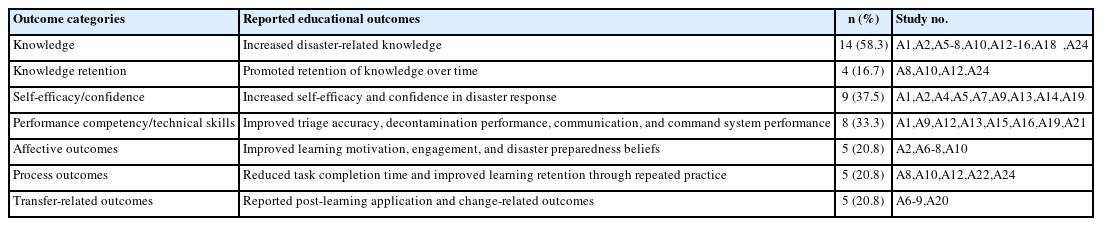
Results Most studies included nursing students, although several involved practicing nurses. Simulation modalities included online and virtual simulations, high-fidelity manikins, standardized patients, tabletop exercises, and blended formats, and addressed scenarios such as earthquakes, mass-casualty incidents, hazardous events, and infectious disease outbreaks. Educational outcomes were grouped into cognitive, affective, and performance domains. Across studies, improvements were frequently reported in disaster-related knowledge, self-efficacy, performance competency, and learning motivation; however, evidence for long-term retention, teamwork, and interprofessional collaboration remained limited.
Conclusion Simulation-based disaster nursing education may strengthen integrated disaster response competencies among nursing students and nurses. Structured programs incorporating pre-learning, scenario-centered practice, debriefing, and opportunities for repeated exposure may support competency development. Further research is needed to evaluate long-term and team-based outcomes and to develop multidisciplinary programs that more closely reflect real-world disaster contexts.
Purpose This scoping review identified the core components of nursing competence required for general ward nurses to recognize and manage clinical deterioration and examined how this competence has been conceptualized in previous studies. It also synthesized individual- and system-level factors associated with competence and identified research gaps relevant to nursing education, future research, and patient safety initiatives.
Methods This scoping review was conducted using Arksey and O’Malley’s framework and reported in accordance with the PRISMA-ScR guidelines. Six databases—PubMed, CINAHL, Embase, the Cochrane Library, Scopus, and Web of Science—were searched for studies published between January 2016 and December 2025 using search terms related to clinical deterioration and nursing competence.
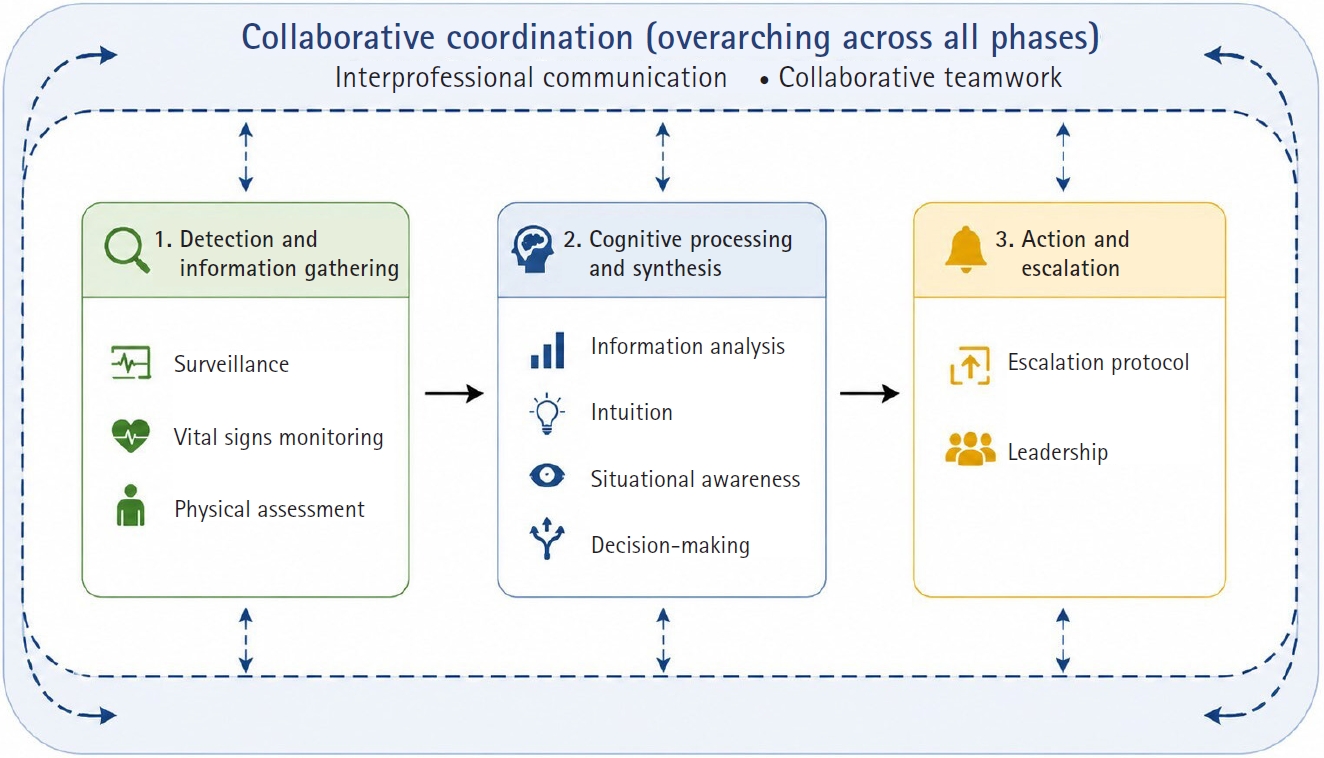
Results Twenty-one studies met the inclusion criteria. The findings were organized into two domains: nursing competencies and factors associated with competence. Technical competencies included physical assessment, vital-sign monitoring, surveillance, information analysis, and application of escalation protocols. Non-technical competencies included situational awareness, clinical decision-making, intuition, leadership, interprofessional communication, and teamwork. Individual-level factors included clinical experience, self-confidence, skill acquisition, and clinical judgment. System-level factors included education and training, relationship-building with physicians, supportive work environments, electronic tools, organizational support, and teamwork culture.
Conclusion Nursing competence in managing clinical deterioration is multidimensional and reflects the interaction of individual capabilities with system-level supports. Future research should develop educational strategies that strengthen both technical and non-technical skills while reinforcing organizational systems that support timely and effective responses to deterioration.
Purpose Stroke is a leading cause of morbidity and mortality worldwide, and rapid early detection is essential. Although screening tools such as FAST (face, arm, speech, and time) are widely used, they may miss posterior strokes, whereas BE-FAST (balance-eyes, face, arm, speech, and time) demonstrates greater sensitivity. However, its implementation in digital formats remains limited. This study aimed to develop, validate, and implement BE-ALERT (balance-eyes-arm weakness-language difficulties-extreme headache-reaction slowed or confusion-time to response) as a community-based early stroke detection application.
Methods This research and development study consisted of development, validation, diagnostic accuracy testing, and community implementation. The development and validation phase included 160 family caregivers of patients with stroke who were aged ≥18 years. The diagnostic accuracy phase included 500 family caregivers who accompanied consecutive patients with suspected stroke in the emergency department. Family caregivers completed the BE-ALERT assessment while accompanying the patients, and their assessment results were compared with neurologist-confirmed diagnoses.
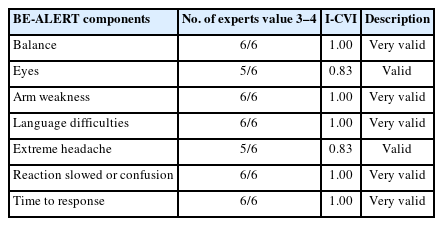
Results Validation showed a content validity index of 0.95 and a Cronbach α reliability coefficient of .82. Community implementation among 160 participants was associated with higher stroke knowledge scores (82.1) and stronger intention to seek immediate treatment (4.5). Receiver operating characteristic curve analysis yielded an area under the curve of 0.836, indicating good diagnostic accuracy. BE-ALERT showed a sensitivity of 85.0%, specificity of 82.1%, negative predictive value of 94.5% and System Usability Scale score of 74.
Conclusion BE-ALERT is a practical, accurate, and well-accepted tool for community-based early stroke detection. It may support stroke screening, public education, and timely treatment-seeking behavior.
Purpose This study evaluated the immediate and sustained effects of a clinical decision-making program based on Simon’s decision-making model on medication safety competency among advanced-beginner nurses in intensive care units.
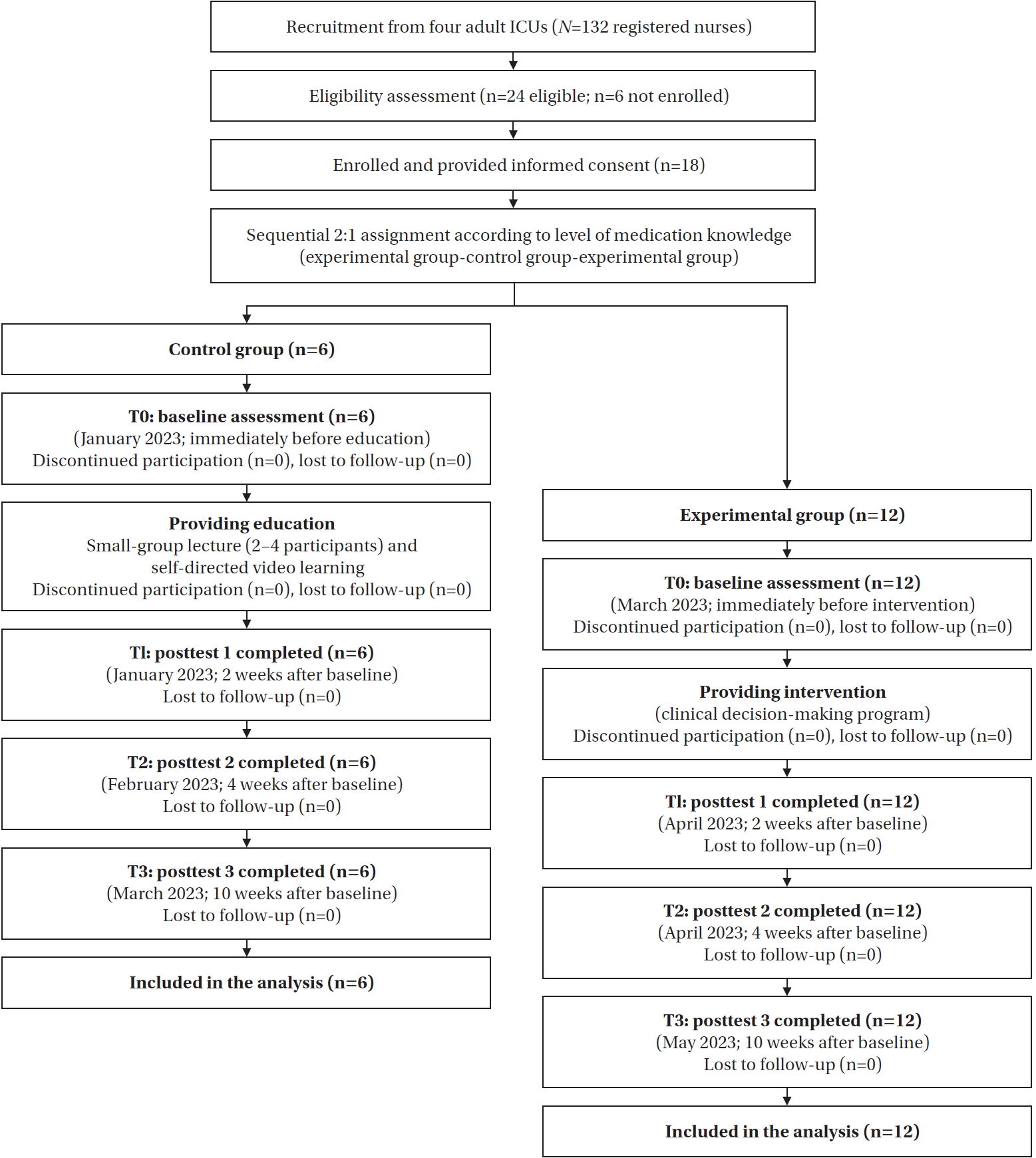
Methods This nonequivalent control group pretest-posttest study used a time-lagged design and included 18 intensive care unit nurses at a tertiary hospital, with 12 assigned to the intervention group and six to the control group. The intervention group participated in a 2-week clinical decision-making program that integrated case-based learning and high-fidelity simulation, whereas the control group received lecture-based education. Clinical decision-making ability, medication safety competency, and safety motivation were measured at baseline and at 2 and 4 weeks after baseline. Near-miss medication error experiences were assessed at baseline and at 4 and 10 weeks. Data were analyzed using the independent t-test, Mann-Whitney U test, and linear mixed models.
Results Clinical decision-making ability (F=3.94, p=.026), medication safety competency (F=4.97, p=.011), safety motivation (F=5.20, p=.009), and near-miss medication error experiences (F=14.28, p<.001) showed significant group-by-time interaction effects, indicating that outcome trajectories differed between the intervention and control groups.
Conclusion These findings suggest that the program may be an educational strategy for strengthening nurses’ clinical decision-making during medication administration and improving medication and patient safety in intensive care unit settings.
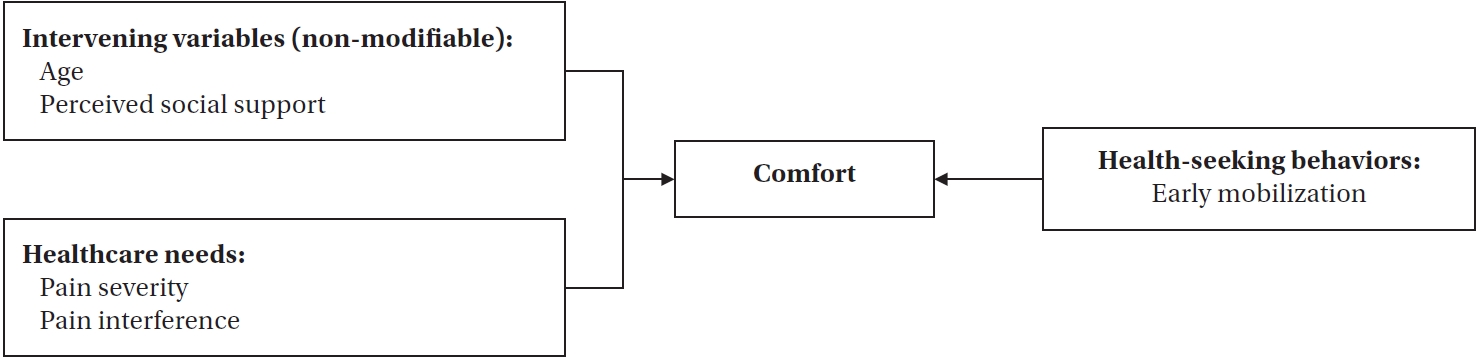
Purpose Guided by Kolcaba’s Comfort Theory, this study aimed to identify predictors of comfort among patients with hepatocellular carcinoma after liver resection.
Methods This cross-sectional predictive correlational study included 132 patients with hepatocellular carcinoma who underwent liver resection in Wenzhou, China. Demographic and clinical characteristics, including age, were collected. Comfort, pain severity, pain interference, perceived social support, and early mobilization were assessed using validated instruments. Data were analyzed using descriptive statistics, the independent-samples t-test, one-way analysis of variance, Pearson correlation coefficients, and standard multiple linear regression.
Results Participants reported a moderate overall level of comfort. In the multiple regression model, pain interference (β=−.25, p=.008) and perceived social support (β=.39, p<.001) were significant predictors of comfort, with perceived social support emerging as the strongest predictor. Pain severity (β=−.09, p=.287), age (β=−.09, p=.264), and early mobilization (β=.01, p=.909) were not significant predictors. The regression model was statistically significant and explained 27% of the variance in comfort (R²=.27, F=9.20, p<.001).
Conclusion Perceived social support and pain interference were independently associated with postoperative comfort among patients with hepatocellular carcinoma following liver resection. These findings highlight the importance of comprehensive pain management and nursing strategies that strengthen social support; such interventions may help improve postoperative comfort and recovery.
Purpose This study examined sociodemographic, clinical, and symptom-related factors associated with current employment among cancer survivors and described sex-based differences in occupational continuity.
Methods This cross-sectional study used data from the 2019 and 2021 Korea National Health and Nutrition Examination Survey. The sample included cancer survivors aged 19 to 65 years who did not have multiple primary cancers or missing data (n=289). Employment status was categorized as employed or non-employed. Sociodemographic factors (age, sex, education, marital and household characteristics, household income, and private insurance), clinical factors (time since diagnosis, cancer type, current cancer status, and comorbidity), and symptom-related factors (pain, fatigue, depression, memory problems, and sleep difficulties) were evaluated using hierarchical logistic regression. Weighted descriptive analyses were performed to examine sex-based differences in occupational continuity.
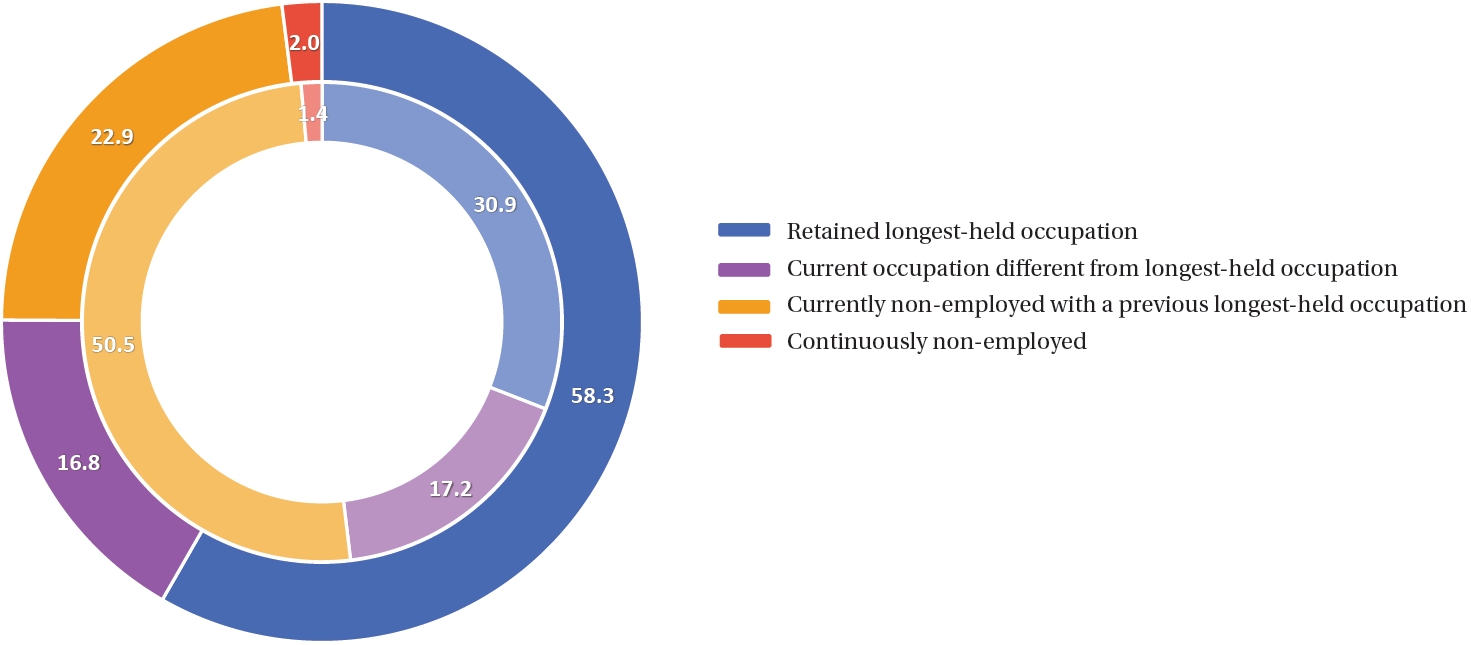
Results Overall, 56.6% of participants were employed. In the final model, male sex was associated with higher odds of employment (odds ratio [OR], 4.69; 95% confidence interval [CI], 2.21–9.94; p<.001), whereas monthly household income below 3 million Korean won was associated with lower odds of employment (OR, 0.41; 95% CI, 0.19–0.88; p<.05). Sleep difficulties were non-significantly associated with lower odds of employment (OR, 0.64; 95% CI, 0.41–1.00; p=.051). No clinical factor was significantly associated with employment. Male participants were more likely than female participants to retain their longest-held occupation (58.3% vs. 30.9%).
Conclusion Employment among cancer survivors was associated with sex and household income, and occupational continuity differed by sex. Although sleep difficulties were not statistically significant in the final model, sleep assessment and sex-sensitive vocational support may be useful components of survivorship nursing care.
Purpose This study examined the knowledge structure and thematic characteristics of health literacy research in Korea through keyword network analysis and topic modeling.
Methods Keyword frequency and co-occurrence network analyses included 637 articles. For latent Dirichlet allocation, English abstracts were combined with standardized author keywords. After preprocessing and document-frequency filtering, 636 articles remained in the effective latent Dirichlet allocation corpus. Models with 3–10 topics were evaluated across 10 random seeds according to log-likelihood, perplexity, semantic coherence, topic distinctiveness, cross-seed stability, and interpretability of representative documents. A five-topic solution was selected, and the final model was estimated using seed 2026. An abstract-only sensitivity analysis was conducted with 633 articles.
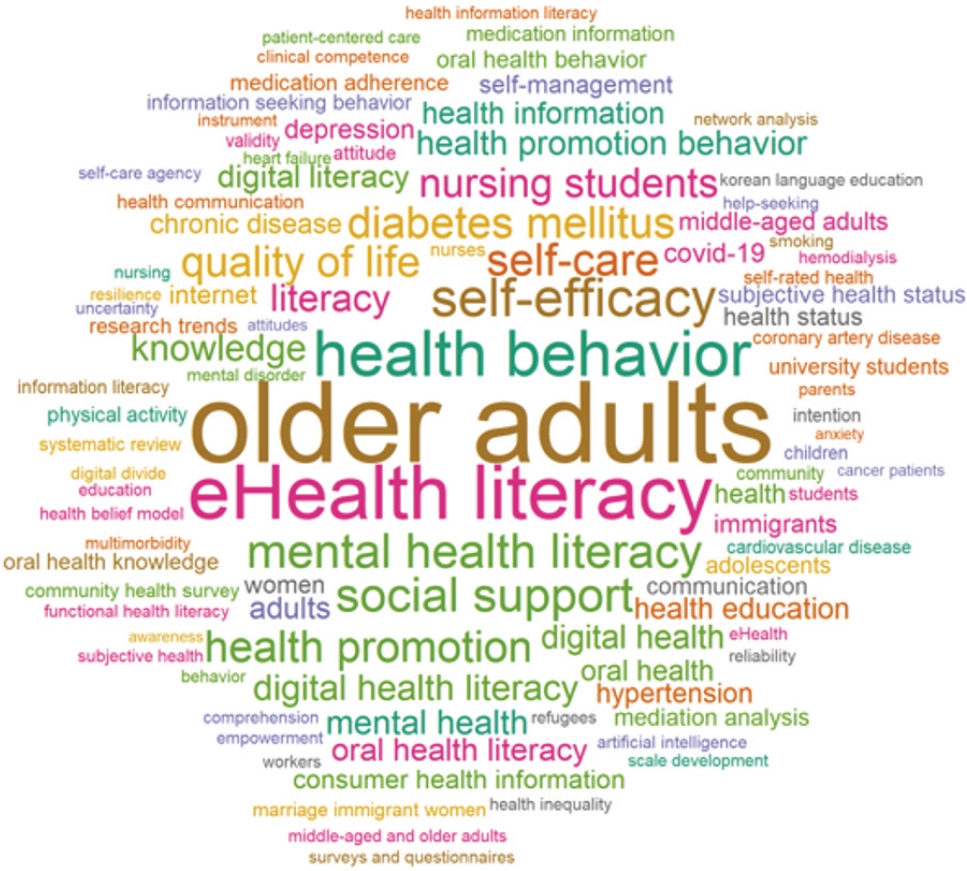
Results Health literacy occupied the most central position in the network, as expected because it was the core search concept. Among the remaining keywords, older adults, eHealth literacy, self-efficacy, health behavior, and self-care had the highest degree centrality. Louvain clustering identified six thematic communities. The five latent Dirichlet allocation topics were Health Literacy Measurement, Mental Health Literacy, Health Information and Communication, Digital Health Literacy, and Disease-Specific Health Literacy. Topic prevalence ranged from 17.1% to 21.4%. Disease-Specific Health Literacy was the largest topic (21.4%, n=136), followed by Digital Health Literacy (21.2%, n=135) and Mental Health Literacy (21.1%, n=134). The sensitivity analysis produced a broadly comparable five-topic structure.
Conclusion This study systematically mapped the knowledge structure of Korean health literacy research. The findings shed light on major research themes and their relationships and may help inform future research priorities.



 E-SUBMISSION
 First
First Prev
Prev