Abstract
-
Purpose
This study examined sociodemographic, clinical, and symptom-related factors associated with current employment among cancer survivors and described sex-based differences in occupational continuity.
-
Methods
This cross-sectional study used data from the 2019 and 2021 Korea National Health and Nutrition Examination Survey. The sample included cancer survivors aged 19 to 65 years who did not have multiple primary cancers or missing data (n=289). Employment status was categorized as employed or non-employed. Sociodemographic factors (age, sex, education, marital and household characteristics, household income, and private insurance), clinical factors (time since diagnosis, cancer type, current cancer status, and comorbidity), and symptom-related factors (pain, fatigue, depression, memory problems, and sleep difficulties) were evaluated using hierarchical logistic regression. Weighted descriptive analyses were performed to examine sex-based differences in occupational continuity.
-
Results
Overall, 56.6% of participants were employed. In the final model, male sex was associated with higher odds of employment (odds ratio [OR], 4.69; 95% confidence interval [CI], 2.21–9.94; p<.001), whereas monthly household income below 3 million Korean won was associated with lower odds of employment (OR, 0.41; 95% CI, 0.19–0.88; p<.05). Sleep difficulties were non-significantly associated with lower odds of employment (OR, 0.64; 95% CI, 0.41–1.00; p=.051). No clinical factor was significantly associated with employment. Male participants were more likely than female participants to retain their longest-held occupation (58.3% vs. 30.9%).
-
Conclusion
Employment among cancer survivors was associated with sex and household income, and occupational continuity differed by sex. Although sleep difficulties were not statistically significant in the final model, sleep assessment and sex-sensitive vocational support may be useful components of survivorship nursing care.
-
Key Words: Cancer survivors; Employment; Occupations; Socioeconomic factors; Sleep
INTRODUCTION
Advances in medical technology and the expansion of national cancer-control policies have substantially improved early detection and treatment outcomes, shifting cancer from a predominantly fatal disease toward a chronic condition compatible with long-term survival [
1,
2]. This shift is also evident in Korea: the total number of prevalent cancer cases reached approximately 2.73 million, and 1.70 million survivors (62.1%) had survived for more than five years after diagnosis, an increase of more than 110,000 from the previous year [
3].
For cancer survivors living longer after diagnosis, income generation and economic stability are essential to sustaining life after treatment. Even after treatment is completed, survivors require regular follow-up, recurrence surveillance, and ongoing health management, all of which can contribute to persistent financial burden through medical expenses, transportation costs, caregiving expenses, reduced working hours, and income loss [
4]. Although copayment-reduction policies in Korea have alleviated part of this burden, out-of-pocket expenses for services not covered by insurance remain substantial [
5]. Because approximately half of all cancer survivors are of working age [
6], employment interruption or reduced work participation may affect not only survivors themselves but also the economic stability of their families [
7]. Employment has also been associated with recovery of social roles, self-efficacy, psychological stability, and social reintegration after cancer [
8,
9].
Despite the importance of work participation, maintaining employment or returning to the labor market remains challenging for many cancer survivors. This process is shaped not only by willingness to work but also by post-treatment physical and psychological conditions, symptom burden, social support, and the occupational environment [
10]. Cancer survivors have higher levels of anxiety and depression than the general population and often experience multiple symptoms, including sleep disturbance and fatigue [
11-
13]. These symptoms may reduce quality of life, social functioning, and work performance. Workplace support, job security, and opportunities for work adjustment have also been suggested as important contextual factors in maintaining employment or returning to work [
7,
8,
14]. Therefore, employment status among cancer survivors should be understood in relation to sociodemographic and clinical characteristics as well as symptom and functional status.
Previous studies have examined factors associated with return to work and employment status among cancer survivors, but their findings have been inconsistent. For sociodemographic factors, Chen et al. [
15] reported that women were more likely than men to return to work, whereas Kang et al. [
16] found that women were more likely to experience work cessation after cancer diagnosis. Chen et al. [
15] identified older age as a barrier to return to work, whereas Johnsson et al. [
17] found no significant association between age and return to work. Findings on marital status and economic factors have also varied. Ahn et al. [
18] reported that having a spouse and lower household income were negatively associated with employment maintenance, whereas Johnsson et al. [
17] reported no significant association between marital status and return to work. Kang et al. [
16] further suggested that the economic role within the family may be related to work cessation.
Inconsistent findings have also been reported for clinical factors, symptoms, and functional status. Chen et al. [
15] and Kang et al. [
16] reported that advanced stage, chemotherapy, and recurrence were associated with a lower likelihood of return to work or with work cessation, whereas Arndt et al. [
19] found that cancer stage was associated with return to work but that cancer type and adjuvant treatment were not clearly related to this outcome. Lopez-Faneca et al. [
10] also suggested that disease status, including remission, progression, and recurrence, may influence labor-market outcomes. Regarding symptoms, Tan et al. [
20] reviewed cancer-related symptoms such as fatigue, depression, cognitive impairment, pain, and insomnia and found that associations with work outcomes varied by symptom and outcome measure. Similarly, Sohn et al. [
21] included fatigue and sleep quality in a study of Korean breast cancer survivors, but the final factors associated with return to work were marital status, time since diagnosis, anxious attachment, and quality of working life. These findings suggest the need to examine clinical status together with specific symptom and functional factors, including pain, fatigue, depression, memory problems, and sleep difficulties.
Individual and clinical characteristics may also be linked to employment status and occupational changes after cancer diagnosis. Kang et al. [
16] reported that work cessation, leave, and changes in employment status were associated with sociodemographic, clinical, work-related, and psychological factors. Mehnert et al. [
22] noted that work participation among cancer survivors has typically been assessed using binary employment status or sick-leave duration, whereas outcomes such as work retention, career choices, and job position after returning to work have been examined less often. Comparing survivors’ longest-held occupation with their current occupation may therefore provide additional information about their position in the labor market.
Overall, prior evidence indicates that employment status among cancer survivors is associated with sociodemographic characteristics, clinical status, and symptom and functional status. However, previous studies have often focused on specific cancer types, individual symptoms, or return-to-work experiences, and variation in variables and outcome measures has limited comparisons of the relative influence of these factors. Evidence on sex-based differences also remains limited, although Korean studies have reported that women experience greater employment disruption after cancer diagnosis [
23,
24]. Therefore, using nationally representative data, this study examined sociodemographic, clinical, and symptom-related factors associated with current employment among cancer survivors and described sex-based differences in occupational continuity.
METHODS
1. Study Design
This cross-sectional study used data from the 2019 and 2021 Korea National Health and Nutrition Examination Survey (KNHANES) [
25,
26]. KNHANES is an annual, nationally representative survey conducted by the Korea Disease Control and Prevention Agency using a multistage, stratified cluster-sampling design. Because each survey year uses an independent probability sample rather than following the same individuals over time, participant overlap between the 2019 and 2021 waves was not expected by design. The study is reported in accordance with the STROBE (Strengthening the Reporting of Observational Studies in Epidemiology) guidelines.
A total of 15,200 individuals participated in the 2019 and 2021 KNHANES. These survey years were selected because the Health-related Quality of Life Instrument with 8 Items (HINT-8), the source of the symptom-related variables in this study, was administered in 2019 and 2021 but not in 2020. Among respondents, 659 reported a history of cancer diagnosis. Adults aged 19 to 65 years were retained (n=343) to focus on cancer survivors who could still participate in the labor market. After participants with multiple primary cancers were excluded (n=10), 333 participants remained. Multiple primary cancers were excluded because more complex diseases and treatment trajectories may influence employment differently from employment after a single primary cancer. After cases with missing values in the variables of interest were further excluded (n=44), 289 participants were included in the final analysis (
Supplementary Figure 1).
1) Occupational characteristics
Employment status was assessed using a single item from the KNHANES health interview survey that asked whether respondents had worked for at least 1 hour for pay or at least 18 hours as unpaid family workers during the previous week. Temporary leave was counted as working. Respondents who answered “yes” were classified as employed, whereas those who answered “no” were classified as non-employed.
Working hours per week were assessed as the self-reported average number of hours worked per week, including overtime and night work but excluding meal breaks. Values were summarized descriptively among employed respondents.
Employment type was assessed among employed respondents using the survey item on type of work performed. Employment type was categorized as wage worker, self-employed worker or employer, or unpaid family worker and summarized descriptively.
Occupational continuity was derived from two separate survey items. Employed respondents reported their current occupation, and all adult respondents reported the occupation they had held for the longest period during their lifetime, regardless of current employment status. Both items were coded using the same major groups of the 7th Korean Standard Classification of Occupations, allowing the two codes to be compared directly. Four categories were defined: (1) retained longest-held occupation, when the two occupation codes were identical; (2) current occupation different from longest-held occupation, when both occupations were reported but the codes differed; (3) currently non-employed with a previous longest-held occupation, when no current occupation was recorded but a longest-held occupation was reported; and (4) continuously non-employed, when neither occupation was reported. This classification reflects the current correspondence between longest-held and current occupational status at the time of the survey and does not indicate occupational changes after cancer diagnosis.
2) Symptom-related variables
Symptom-related problems were measured using five items from HINT-8, a Korean instrument that assesses health-related quality of life during the previous week. The five selected items assessed pain, fatigue, depression, memory problems, and sleep difficulties and were chosen because previous studies have linked these symptoms to labor-market outcomes among cancer survivors [
20,
21]. Each item was rated on a 4-point scale indicating an increasing level of problem, so higher scores indicated more severe symptom-related problems. Each item was analyzed separately rather than as part of a summed index.
3) General and clinical characteristics
General participant characteristics included age, sex, educational level, marital status, head-of-household status, household size, monthly household income, and private insurance status. Clinical characteristics included cancer type, current cancer status, time since diagnosis, comorbidity, and healthcare utilization, defined as inpatient use within the previous year and outpatient use within the previous 2 weeks. Comorbidity was defined as having ever been diagnosed with, or currently having, at least one chronic condition other than cancer. The specific survey items, response categories, and recoding procedures for all study variables are presented in
Supplementary Table 1.
This study utilized publicly available raw data and did not involve additional data collection or direct participant contact. The 2019 and 2021 KNHANES raw datasets were downloaded from the KNHANES website (https://knhanes.kdca.go.kr) after registration and agreement to the data use policy [
25,
26]. The two annual datasets were subsequently merged for analysis.
This study was exempt from review by the Institutional Review Board of Kangbuk Samsung Hospital (IRB No. KBSMC 2026-04-061) because it analyzed publicly available, deidentified data and involved no direct participant contact or additional data collection.
6. Data Analysis
All analyses accounted for the complex-sampling design of KNHANES, including its multistage, stratified cluster sampling, sampling weights, strata, and primary sampling units. When the 2019 and 2021 datasets were combined, an integrated weight was generated according to the KNHANES analytic guidelines for the eighth survey period. Because the survey duration was equivalent across the two years, the annual health interview and examination survey weight (wt_itvex) was multiplied by an integration proportion of 1/2 rather than by a survey-district ratio, following Korea Disease Control and Prevention Agency guidance specific to the eighth period. Descriptive statistics were used to summarize participant characteristics. Differences between employed and non-employed groups were examined using complex-sample t-tests for continuous variables and design-adjusted chi-square tests for categorical variables.
To identify factors associated with employment status, hierarchical logistic regression analyses were performed. In these analyses, employed status was coded as 1 (event) and non-employed status as 0. Three models were constructed sequentially: Model 1 included sociodemographic variables, Model 2 additionally included clinical variables, and Model 3 further included symptom-related variables. The sample included 156 employed and 133 non-employed participants, and the full model contained 23 non-intercept parameters, yielding an event-to-parameter ratio of approximately 6.8 (156/23). Accordingly, the results were interpreted conservatively, with emphasis placed on the direction and consistency of associations rather than on the precise magnitude of individual estimates. Intercorrelations among the symptom items were examined using Pearson correlation coefficients to assess potential multicollinearity. Model explanatory power was summarized using Nagelkerke R2 as a descriptive pseudo-R2 index.
Occupational continuity was not modeled as an outcome; instead, weighted descriptive analyses were used to examine sex-based differences in its distribution. All statistical analyses were performed using IBM SPSS ver. 27.0 (IBM Corp., Armonk, NY, USA), and statistical significance was set at p<.05.
RESULTS
1. General Characteristics of the Study Participants
Participant characteristics are presented in
Table 1. A total of 289 cancer survivors were included in the analysis. The mean age was 51.9 years (standard error [SE]=0.71), and 68.5% of participants were female. Most participants had at least 12 years of education (86.3%) and were married (93.0%). Approximately half were heads of household (51.9%), and most lived in one- or two-person households (74.1%).
Regarding household income, 74.8% of participants reported a monthly household income of 3 million Korean won (KRW) or higher, and 92.3% had private insurance. The mean time since cancer diagnosis was 5.62 years (SE=0.20). Thyroid cancer was the most common cancer type (33.4%), followed by breast cancer (15.9%). Overall, 42.5% of participants reported currently having cancer, and 59.4% had comorbid conditions. For healthcare utilization, 18.3% had used inpatient services during the previous year, whereas 33.7% had used outpatient services during the previous two weeks. Among the five HINT-8 items assessing symptom-related problems, fatigue had the highest mean score (mean=2.02).
More than half of the participants were employed (n=156, 56.6%). Among employed participants, the mean working time was 36.56 hours per week (SE=1.28), and 76.0% were wage workers. For the correspondence between longest-held and current occupation, 39.5% retained their longest-held occupation, 17.1% had a current occupation that differed from their longest-held occupation, 41.8% were currently non-employed despite having a previous longest-held occupation, and 1.6% were continuously non-employed.
Table 2 presents employment status according to general and clinical characteristics among cancer survivors. Employment status differed significantly by sex, monthly household income, and private insurance coverage (
p<.05). Male participants were more likely to be employed than female participants (75.1% vs. 48.1%,
p<.001). Participants with a monthly household income of at least 3 million KRW had a higher employment rate than those with lower income (61.7% vs. 41.6%,
p<.05). Participants with private insurance also had a higher employment rate than those without private insurance (58.5% vs. 37.0%,
p<.05). No significant differences in employment status were found by age, education, marital status, household characteristics, time since diagnosis, cancer type, comorbidity, or healthcare utilization.
For the HINT-8 domains, employed participants had significantly lower symptom scores than non-employed participants for pain (1.69 vs. 1.88, p<.05), fatigue (1.90 vs. 2.16, p<.05), memory problems (1.57 vs. 1.77, p<.01), and sleep difficulties (1.58 vs. 1.81, p<.01), indicating indicating fewer symptom-related problems.
2. Factors Associated with Employment Status among Cancer Survivors
Hierarchical logistic regression analyses were performed to examine factors associated with employment status among cancer survivors across three models (
Table 3). In Model 1, which included sociodemographic factors, sex (odds ratio [OR], 3.37; 95% confidence interval [CI], 1.85–6.15;
p<.001) and household income (OR, 0.42; 95% CI, 0.20–0.88;
p<.05) were significantly associated with employment. Male survivors had higher odds of employment than female survivors, whereas participants with a monthly household income below 3 million KRW had lower odds of employment than those with a monthly household income of at least 3 million KRW. Private insurance did not reach statistical significance (OR, 3.00; 95% CI, 0.96–9.37;
p=.058). In Model 2, after clinical factors were added, sex (OR, 5.06; 95% CI, 2.47–10.40;
p<.001) and household income (OR, 0.42; 95% CI, 0.20–0.86;
p<.05) remained significantly associated with employment. None of the clinical factors, including cancer type, time since diagnosis, current cancer status, or comorbidity, were significantly associated with employment. In Model 3, after symptom-related factors were added, sex (OR, 4.69; 95% CI, 2.21–9.94;
p<.001) and household income (OR, 0.41; 95% CI, 0.19–0.88;
p<.05) remained significantly associated with employment. Among the symptom-related factors, each 1-point increase in sleep difficulties was associated with associated with lower odds of employment, although this association did not reach statistical significance (OR, 0.64; 95% CI, 0.41–1.00;
p=.051); pain, fatigue, depression, and memory problems were not significant. Intercorrelations among the five symptom items were low to moderate (r=.21–.42), indicating no evidence of serious multicollinearity (
Supplementary Table 2).
Employment rates differed significantly by sex: 75.1% of male participants were employed, compared with 48.1% of female participants (χ
2=14.06,
p<.001).
Supplementary Table 3 presents participant characteristics by sex. Significant sex-based differences were observed in head-of-household status, occupational continuity, and pain (
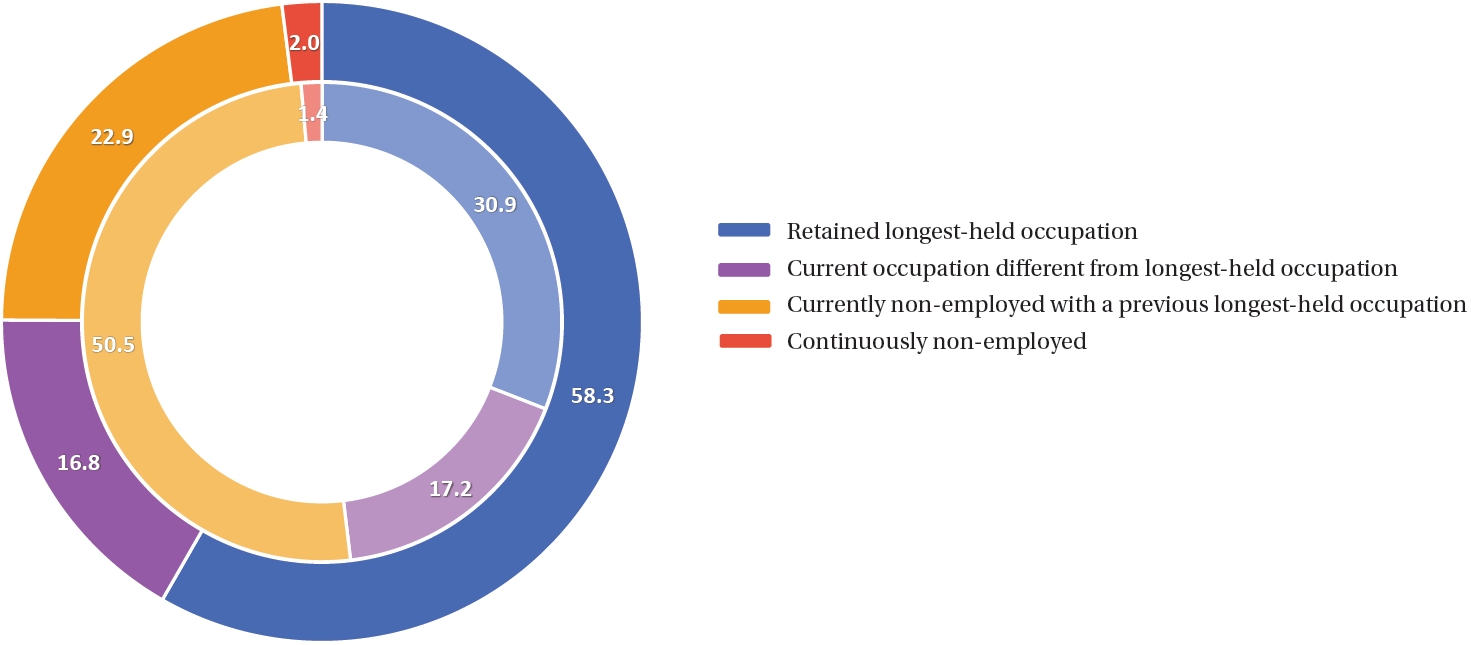
p<.05). Among male participants, 58.3% retained their longest-held occupation, 16.8% had a current occupation that differed from their longest-held occupation, and 22.9% were currently non-employed despite having a previous longest-held occupation. Among female participants, 30.9% retained their longest-held occupation, 17.2% had a current occupation that differed from their longest-held occupation, and 50.5% were currently non-employed despite having a previous longest-held occupation. Continuously non-employed status was rare in both groups (
Figure 1).
DISCUSSION
This study used data from the 2019 and 2021 KNHANES to examine factors associated with current employment status and to describe sex-based differences in occupational continuity among cancer survivors aged 19 to 65 years. More than half of the participants were employed, and employment was associated with sex and household income rather than with available clinical characteristics, including cancer type, current cancer status, time since diagnosis, and comorbidity. Current employment status and occupational continuity did not fully correspond: although 56.6% of participants were employed, only 39.5% remained in the occupation they had held for the longest period, and this discrepancy was more pronounced among women than among men. These findings suggest that, among the variables measured in this study, current employment was more consistently associated with sociodemographic characteristics than with clinical characteristics and that occupational continuity provides information not captured by a binary employment indicator alone.
The employment rate observed in this study (56.6%) was similar to the 54.3% reported in a previous analysis of Korean cancer survivors aged 19 to 60 years using KNHANES data from 2008 to 2018 [
27], but higher than the 42.0% reported in an earlier population-based analysis using KNHANES data from 2010 to 2014 [
28]. These differences should be interpreted cautiously because the studies differed in survey years, age restrictions, and sample-selection criteria. Nevertheless, these findings consistently indicate that slightly more than half of working-age Korean cancer survivors participate in the labor market, whereas a substantial proportion remains non-employed. Cancer survivors have also been reported to have a higher risk of unemployment than individuals without a cancer history [
29,
30].
In addition, 17.1% of participants had a current occupation that differed from their longest-held occupation, and 41.8% were currently non-employed despite having a previous longest-held occupation. These findings suggest that current employment status alone may not adequately describe labor-market participation among cancer survivors and that occupational-continuity patterns should also be considered [
22]. However, because KNHANES does not indicate whether the difference between longest-held and current occupation occurred after cancer diagnosis, these results should be interpreted as a cross-sectional distribution of occupational continuity rather than as evidence of a causal postdiagnosis employment trajectory.
Sex-based differences were also observed in occupational continuity. Male participants were more likely than female participants to retain their longest-held occupation, whereas female participants were more likely to be currently non-employed despite having a previous longest-held occupation. This pattern should not be interpreted as a cancer-related employment pathway; rather, it suggests that female cancer survivors may have lower current correspondence between their longest-held and current occupational status. This interpretation is consistent with previous Korean evidence showing sex-based differences in employment disruption and return-to-work outcomes among cancer survivors [
23,
24].
Male sex was associated with higher odds of current employment in the final model. However, this finding should not be interpreted as evidence that sex itself causally determines employment status or occupational continuity. In the Korean labor market, women may face structural vulnerabilities, including career discontinuity, concentration in non-regular employment, and disproportionate caregiving responsibilities, even before a cancer diagnosis [
24]. In the present study, female participants had a lower employment rate and lower current correspondence between longest-held and current occupational status than male participants. These findings support the need for sex-sensitive assessment and vocational support, while recognizing that unmeasured factors, such as caregiving roles, employment type, workplace support, and prediagnosis employment history, may also contribute to the observed differences.
Lower household income remained associated with lower odds of employment in the final model, suggesting that labor-market participation among cancer survivors is embedded in broader socioeconomic conditions rather than being solely a health-related issue [
31]. Cancer survivors with lower household incomes may experience greater financial burden during and after treatment and may have more limited access to resources that support continued employment or reemployment, including education, social networks, and flexible work arrangements [
32]. However, because this study was cross-sectional, the direction of the relationship between household income and employment status cannot be determined. Employment support for cancer survivors should therefore consider socioeconomic vulnerability alongside health-related needs.
Although sleep difficulties were not statistically significant in the final model, sleep problems remain clinically relevant in cancer survivorship and may affect daily functioning and survivorship care needs [
33,
34]. Sleep quality should therefore be interpreted as a supportive assessment domain rather than as an independent factor associated with employment in this study.
Clinical variables included in the final model, such as cancer type, time since diagnosis, current cancer status, and comorbidity, were not significantly associated with employment. This finding should not be interpreted as evidence that clinical factors are irrelevant. More detailed clinical and occupational variables, including cancer stage, treatment modality, treatment-related adverse effects, workplace environment, and physical job demands, were not available in the KNHANES dataset; therefore, the clinical impact of cancer may not have been fully captured [
35]. In this community-based sample of long-term cancer survivors, the more consistent associations were observed for sex and household income, suggesting that employment status should be understood in both health-related and socioeconomic contexts.
The findings of this study have several implications for survivorship nursing practice. First, assessment of employment status among cancer survivors should include not only whether survivors are currently employed or non-employed but also their occupational-continuity patterns. Second, vocational counseling and referral should consider sex and socioeconomic context because employment was associated with both sex and household income. Third, although sleep difficulties were not statistically significant in the final model, sleep quality may be assessed as part of comprehensive survivorship care, together with fatigue, cognitive concerns, daily functioning, and work-related difficulties. These implications should be understood as exploratory and supportive rather than as evidence of causal effects on employment status [
36].
A strength of this study is that it used nationally representative KNHANES data with complex-sampling analyses; however, several limitations should be noted. First, the cross-sectional design precludes causal inference, and because KNHANES does not collect employment history before cancer diagnosis, current employment status could not be linked to a prediagnosis baseline or assumed to reflect a return-to-work trajectory after cancer diagnosis. Second, employment status was operationalized as a binary outcome and did not capture qualitative aspects of labor participation, such as full-time versus part-time work, sick leave, or reduced work intensity. In addition, each symptom was measured using a single HINT-8 item rather than a multi-item scale, which prevented assessment of internal consistency and may have captured a narrower aspect of each symptom than validated multi-item instruments; therefore, both the employment and symptom-related findings should be interpreted with caution. Third, the discrepancy between longest-held and current occupations cannot be assumed to have occurred after cancer diagnosis; therefore, occupational continuity should be interpreted as a current status distribution rather than as a causal employment trajectory. Fourth, key variables such as cancer stage, treatment modality, treatment-related adverse effects, workplace environment, and physical job demands were unavailable in the dataset, and the clinical impact of cancer may therefore not have been fully captured. Fifth, the full model included 156 employed events across 23 non-intercept parameters, corresponding to approximately 6.8 events per parameter, and some cancer types included very few cases (e.g., four participants with liver cancer); therefore, the ORs for these subcategories were estimated with wide CIs and should be interpreted cautiously. Sixth, the overrepresentation of females and thyroid cancer survivors warrants caution when generalizing the results. Finally, sex-based differences in this study were examined primarily through descriptive analyses. Given the limited number of male survivors (n=84), sex-stratified regression and sex-by-symptom interaction models could not be estimated with adequate stability and therefore were not conducted.
Future studies with larger samples should use longitudinal designs and adequately powered sex-stratified or interaction analyses to clarify changes in employment status and occupational continuity after cancer diagnosis. Such studies should also incorporate cancer stage and treatment characteristics and determine whether factors associated with employment differ by sex.
CONCLUSION
This study found that current employment status among cancer survivors aged 19 to 65 years was associated with sex and household income, whereas sleep difficulties showed a possible association that did not reach statistical significance. Although 56.6% of participants were employed, only 39.5% retained their longest-held occupation, and 41.8% were currently non-employed despite having a previous longest-held occupation. These findings suggest that labor-market participation among cancer survivors should be understood not only in terms of current employment status but also in relation to occupational continuity.
Based on these findings, survivorship care should include assessment of current employment status, occupational continuity, and socioeconomic context. Sleep quality may also be assessed as part of comprehensive survivorship care, although its association with employment was not statistically significant in the final model. Future longitudinal studies are needed to clarify changes in employment status and occupational continuity after cancer diagnosis.
-
CONFLICTS OF INTEREST
The authors declared no conflict of interest.
-
AUTHORSHIP
Study conception and design - BH; data curation and analysis - BH; interpretation of the data - BH and SKK; and drafting or critical revision of the manuscript for important intellectual content - BH, SKK, and SJP.
-
FUNDING
This study was supported by a National Research Foundation of Korea (NRF) grant funded by the Korean government (No. RS-2025-25400539).
-
ACKNOWLEDGEMENT
Bomi Hong received scholarships from the Brain Korea 21 FOUR Project funded by the National Research Foundation of Korea, Yonsei University, College of Nursing.
-
DATA AVAILABILITY STATEMENT
The data used in this study are publicly available from the Korea National Health and Nutrition Examination Survey website (https://knhanes.kdca.go.kr). No new data were generated in this study.
SUPPLEMENTARY MATERIAL
Figure 1.
Sex differences in occupational continuity among cancer survivors.
The outer ring represents males (n=84) and the inner ring represents females (n=205). Values represent weighted percentages. Data are from the 2019 and 2021 Korea National Health and Nutrition Examination Survey [
25,
26].
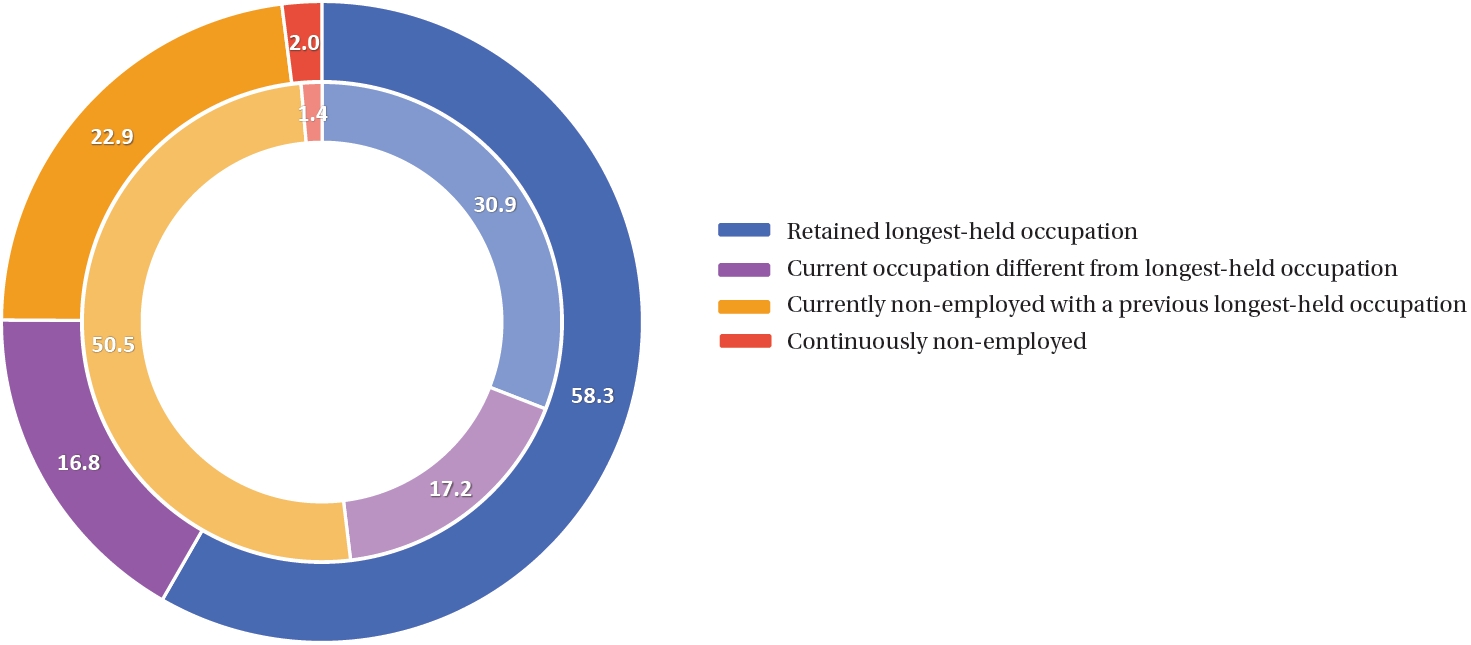
Table 1.Characteristics of Participants (N=289, Weighted N=1,133,708)
|
Characteristics |
M±SE or % (SE) |
Unweighted n |
|
General and clinical characteristics |
|
|
|
Age (year) |
51.90±0.71 |
289 |
|
Sex |
|
|
|
Male |
31.5 (3.3) |
84 |
|
Female |
68.5 (3.3) |
205 |
|
Education |
|
|
|
Less than 12 years of education |
13.7 (2.3) |
50 |
|
12 years of education or more |
86.3 (2.3) |
239 |
|
Marital status |
|
|
|
Married |
93.0 (1.9) |
271 |
|
Unmarried |
7.0 (1.9) |
18 |
|
Head of household |
|
|
|
Yes |
51.9 (3.3) |
153 |
|
No |
48.1 (3.3) |
136 |
|
Household size |
|
|
|
1 or 2 |
74.1 (2.9) |
216 |
|
3 or more |
25.9 (2.9) |
73 |
|
Household income |
|
|
|
<3 million KRW/month |
25.2 (2.8) |
86 |
|
≥3 million KRW/month |
74.8 (2.8) |
203 |
|
Private insurance |
|
|
|
Yes |
92.3 (1.6) |
262 |
|
No |
7.7 (1.6) |
27 |
|
Time since diagnosis (year) |
5.62±0.20 |
289 |
|
Type of cancer |
|
|
|
Thyroid cancer |
33.4 (3.5) |
92 |
|
Breast cancer |
15.9 (2.4) |
49 |
|
Stomach cancer |
9.1 (1.9) |
30 |
|
Colon cancer |
8.8 (1.8) |
27 |
|
Cervical cancer |
3.9 (1.2) |
13 |
|
Lung cancer |
2.4 (0.9) |
8 |
|
Liver cancer |
1.2 (0.6) |
4 |
|
Other cancer |
25.2 (3.2) |
66 |
|
Current cancer status |
|
|
|
Yes |
42.5 (3.5) |
129 |
|
No |
57.5 (3.5) |
160 |
|
Comorbidities |
|
|
|
Yes |
59.4 (3.4) |
172 |
|
No |
40.6 (3.4) |
117 |
|
Use of inpatient services within the previous year |
|
|
|
Yes |
18.3 (2.6) |
60 |
|
No |
81.7 (2.6) |
229 |
|
Use of outpatient services within the previous 2 weeks |
|
|
|
Yes |
33.7 (3.2) |
103 |
|
No |
66.3 (3.2) |
186 |
|
Symptom-related problems (range 1-4)†
|
|
|
|
Fatigue |
2.02±0.05 |
289 |
|
Pain |
1.77±0.05 |
289 |
|
Sleep difficulties |
1.68±0.05 |
289 |
|
Memory problems |
1.66±0.04 |
289 |
|
Depression |
1.57±0.04 |
289 |
|
Occupational characteristics |
|
|
|
Current employment status |
|
|
|
Employed |
56.6 (3.5) |
156 |
|
Non-employed |
43.4 (3.5) |
133 |
|
Working hours per week (n=156) |
36.56±1.28 |
156 |
|
Employment type (n=156) |
|
|
|
Wage worker |
76.0 (3.9) |
109 |
|
Self-employed and employer |
20.7 (3.6) |
41 |
|
Unpaid family worker |
3.3 (1.4) |
6 |
|
Occupational continuity |
|
|
|
Retained longest-held occupation |
39.5 (3.4) |
104 |
|
Current occupation different from longest-held occupation |
17.1 (2.4) |
52 |
|
Currently non-employed with a previous longest-held occupation |
41.8 (3.5) |
129 |
|
Continuously non-employed |
1.6 (0.8) |
4 |
Table 2.Employment Status According to General and Clinical Characteristics among Cancer Survivors (N=289)
|
Variables |
Employed (n=156) |
Non-employed (n=133) |
Adjusted χ2/t (p) |
|
M±SE or unweighted frequency (weighted %) |
|
Age |
51.50±0.81 |
52.43±1.25 |
–0.60 (.538) |
|
Sex |
|
|
14.06 (<.001) |
|
Male |
59 (75.1) |
25 (24.9) |
|
|
Female |
97 (48.1) |
108 (51.9) |
|
|
Education |
|
|
0.88 (.398) |
|
Less than 12 years of education |
24 (49.8) |
26 (50.2) |
|
|
12 years of education or more |
132 (57.7) |
107 (42.3) |
|
|
Marital status |
|
|
0.00 (.991) |
|
Married |
146 (53.9) |
125 (46.1) |
|
|
Unmarried |
10 (55.6) |
8 (44.4) |
|
|
Head of household |
|
|
2.55 (.111) |
|
Yes |
90 (62.1) |
63 (37.9) |
|
|
No |
66 (50.7) |
70 (49.3) |
|
|
Household size |
|
|
2.18 (.141) |
|
1 or 2 |
111 (53.9) |
105 (46.1) |
|
|
3 or more |
45 (64.4) |
28 (35.6) |
|
|
Household income |
|
|
6.77 (.010) |
|
<3 million KRW/month |
36 (41.6) |
50 (58.4) |
|
|
≥3 million KRW/month |
120 (61.7) |
83 (38.3) |
|
|
Have private insurance |
|
|
4.46 (.035) |
|
Yes |
146 (58.5) |
116 (41.5) |
|
|
No |
10 (37.0) |
17 (63.0) |
|
|
Time since diagnosis |
5.71±0.27 |
5.50±0.27 |
0.58 (.563) |
|
Type of cancer |
|
|
5.24 (.630) |
|
Thyroid cancer |
50 (55.9) |
42 (44.1) |
|
|
Breast cancer |
25 (57.0) |
24 (43.0) |
|
|
Stomach cancer |
17 (55.9) |
13 (44.1) |
|
|
Colon cancer |
14 (41.0) |
13 (59.0) |
|
|
Cervical cancer |
6 (46.1) |
7 (53.9) |
|
|
Lung cancer |
3 (44.5) |
5 (55.5) |
|
|
Liver cancer |
2 (54.6) |
2 (45.4) |
|
|
Other cancer |
39 (65.8) |
27 (34.2) |
|
|
Currently have cancer |
|
|
1.32 (.252) |
|
Yes |
64 (52.1) |
65 (47.9) |
|
|
No |
92 (60.0) |
68 (40.0) |
|
|
Comorbidities |
|
|
0.01 (.941) |
|
Yes |
92 (56.4) |
80 (43.6) |
|
|
No |
64 (56.9) |
53 (43.1) |
|
|
Use of inpatient services within the previous year |
|
|
0.15 (.714) |
|
Yes |
31 (59.0) |
29 (41.0) |
|
|
No |
125 (56.1) |
104 (43.9) |
|
|
Use of outpatient services within the previous 2 weeks |
|
|
1.18 (.347) |
|
Yes |
51 (52.2) |
52 (47.8) |
|
|
No |
105 (58.9) |
81 (41.1) |
|
|
Symptom-related problems (range 1-4)†
|
|
|
|
|
Fatigue |
1.90±0.07 |
2.16±0.09 |
–2.18 (.030) |
|
Pain |
1.69±0.06 |
1.88±0.07 |
–2.04 (.044) |
|
Sleep difficulties |
1.58±0.06 |
1.81±0.07 |
–2.58 (.009) |
|
Memory problems |
1.57±0.05 |
1.77±0.06 |
–2.68 (.009) |
|
Depression |
1.51±0.05 |
1.65±0.07 |
–1.52 (.133) |
Table 3.Factors Associated with Employment Status among Cancer Survivors: Results of Logistic Regression Analyses (N=289)
|
Variables |
Model 1 |
Model 2 |
Model 3 |
|
OR (95% CI) |
|
Sociodemographic factors |
|
|
|
|
Age |
1.00 (0.96–1.03) |
1.00 (0.96–1.04) |
1.00 (0.96–1.05) |
|
Sex: male (ref: female) |
3.37 (1.85–6.15)**
|
5.06 (2.47–10.40)**
|
4.69 (2.21–9.94)**
|
|
Education: ≥12 years (ref: <12 years) |
1.15 (0.48–2.78) |
1.00 (0.43–2.32) |
0.99 (0.41–2.39) |
|
Marital status: married (ref: unmarried) |
0.97 (0.30–3.14) |
0.90 (0.26–3.20) |
1.01 (0.29–3.52) |
|
Head of household: yes (ref: no) |
0.62 (0.34–1.12) |
0.63 (0.34–1.15) |
0.61 (0.33–1.12) |
|
Household income <3 million KRW/month (ref: ≥3 million KRW/month) |
0.42 (0.20–0.88)*
|
0.42 (0.20–0.86)*
|
0.41 (0.19–0.88)*
|
|
Household size: 1–2 members (ref: ≥3 members) |
0.75 (0.38–1.44) |
0.82 (0.41–1.64) |
0.75 (0.37–1.53) |
|
Private insurance: yes (ref: no) |
3.00 (0.96–9.37) |
2.62 (0.80–8.58) |
2.75 (0.86–8.72) |
|
Clinical factors |
|
|
|
|
Time since diagnosis |
|
0.94 (0.76–1.15) |
0.91 (0.74–1.11) |
|
Cancer type (ref: other cancer) |
|
|
|
|
Thyroid cancer |
|
1.13 (0.46–2.74) |
1.08 (0.46–2.57) |
|
Breast cancer |
|
1.36 (0.33–5.59) |
1.01 (0.25–4.07) |
|
Stomach cancer |
|
0.35 (0.07–1.72) |
0.36 (0.07–1.85) |
|
Colon cancer |
|
0.35 (0.08–1.62) |
0.30 (0.07–1.32) |
|
Cervical cancer |
|
0.78 (0.12–4.93) |
0.71 (0.12–4.31) |
|
Lung cancer |
|
0.63 (0.12–3.40) |
0.73 (0.13–4.07) |
|
Liver cancer |
|
0.31 (0.03–3.70) |
0.22 (0.02–2.53) |
|
Currently have cancer: yes (ref: no) |
|
1.49 (0.82–2.70) |
1.38 (0.77–2.47) |
|
Comorbidities: yes (ref: no) |
|
0.92 (0.48–1.78) |
0.84 (0.43–1.65) |
|
Symptom-related factors |
|
|
|
|
Fatigue |
|
|
0.89 (0.59–1.34) |
|
Pain |
|
|
1.16 (0.75–1.81) |
|
Sleep difficulties |
|
|
0.64 (0.41–1.00) |
|
Memory problems |
|
|
0.70 (0.41–1.19) |
|
Depression |
|
|
0.95 (0.56–1.62) |
|
Nagelkerke R² |
.166 |
.205 |
.245 |
|
Wald F (p) |
4.03 (<.001) |
2.49 (.001) |
2.47 (<.001) |
REFERENCES
- 1. Vaz-Luis I, Masiero M, Cavaletti G, Cervantes A, Chlebowski RT, Curigliano G, et al. ESMO expert consensus statements on cancer survivorship: promoting high-quality survivorship care and research in Europe. Ann Oncol. 2022;33(11):1119-33. https://doi.org/10.1016/j.annonc.2022.07.1941
- 2. World Health Organization. Cancer [Internet]. Geneva: World Health Organization; 2026 [cited 2026 July 31]. Available from: https://www.who.int/news-room/fact-sheets/detail/cancer
- 3. Ministry of Health and Welfare; Korea Central Cancer Registry. 2023 National cancer registration statistics [Internet]. Goyang: National Center for Cancer Knowledge and Information; 2026 [cited 2026 May 14]. Available from: https://www.cancer.go.kr/lay1/bbs/S1T674C816/B/61/view.do?article_seq=85579
- 4. Benedict C, Fisher S, Schapira L, Chao S, Sackeyfio S, Sullivan T, et al. Greater financial toxicity relates to greater distress and worse quality of life among breast and gynecologic cancer survivors. Psychooncology. 2022;31(1):9-20. https://doi.org/10.1002/pon.5763
- 5. Kim JY, Lee KE, Kim K, Lee MA, Yoon WS, Han DS, et al. Choosing wisely: the Korean perspective and launch of the 'Right Decision in Cancer Care' initiative. Cancer Res Treat. 2020;52(3):655-60. https://doi.org/10.4143/crt.2020.221
- 6. Hong S, Won YJ, Lee JJ, Jung KW, Kong HJ, Im JS, et al. Cancer statistics in Korea: incidence, mortality, survival, and prevalence in 2018. Cancer Res Treat. 2021;53(2):301-15. https://doi.org/10.4143/crt.2021.291
- 7. Blinder VS, Gany FM. Impact of cancer on employment. J Clin Oncol. 2020;38(4):302-9. https://doi.org/10.1200/JCO.19.01856
- 8. Mehnert A. Employment and work-related issues in cancer survivors. Crit Rev Oncol Hematol. 2011;77(2):109-30. https://doi.org/10.1016/j.critrevonc.2010.01.004
- 9. Islam T, Dahlui M, Majid HA, Nahar AM, Mohd Taib NA, Su TT, et al. Factors associated with return to work of breast cancer survivors: a systematic review. BMC Public Health. 2014;14 Suppl 3:S8. https://doi.org/10.1186/1471-2458-14-S3-S8
- 10. Lopez-Faneca L, Ruiz-Frutos C, Gomez-Salgado J, Fagundo-Rivera J, Palomo-Gomez R, Allande-Cusso R, et al. Prognostic factors affecting return to work in cancer patients: a systematic review. Occup Environ Med. 2025;82(6):305-12. https://doi.org/10.1136/oemed-2025-110212
- 11. Mitchell AJ, Chan M, Bhatti H, Halton M, Grassi L, Johansen C, et al. Prevalence of depression, anxiety, and adjustment disorder in oncological, haematological, and palliative-care settings: a meta-analysis of 94 interview-based studies. Lancet Oncol. 2011;12(2):160-74. https://doi.org/10.1016/S1470-2045(11)70002-X
- 12. Pitman A, Suleman S, Hyde N, Hodgkiss A. Depression and anxiety in patients with cancer. BMJ. 2018;361:k1415. https://doi.org/10.1136/bmj.k1415
- 13. Duijts SF, Faber MM, Oldenburg HS, van Beurden M, Aaronson NK. Effectiveness of behavioral techniques and physical exercise on psychosocial functioning and health-related quality of life in breast cancer patients and survivors: a meta-analysis. Psychooncology. 2011;20(2):115-26. https://doi.org/10.1002/pon.1728
- 14. Tamminga SJ, de Boer AG, Verbeek JH, Frings-Dresen MH. Breast cancer survivors' views of factors that influence the return-to-work process: a qualitative study. Scand J Work Environ Health. 2012;38(2):144-54. https://doi.org/10.5271/sjweh.3199
- 15. Chen WL, Chen YY, Wu WT, Ho CL, Wang CC. Life expectancy estimations and determinants of return to work among cancer survivors over a 7-year period. Sci Rep. 2021;11(1):12858. https://doi.org/10.1038/s41598-021-92306-9
- 16. Kang D, Bae KR, Kim HY, Ahn Y, Kim N, Shim Y, et al. Changes in working status after cancer diagnosis and socio-demographic, clinical, work-related, and psychological factors associated with it. BMC Cancer. 2022;22(1):917. https://doi.org/10.1186/s12885-022-10013-8
- 17. Johnsson A, Fornander T, Olsson M, Nystedt M, Johansson H, Rutqvist LE. Factors associated with return to work after breast cancer treatment. Acta Oncol. 2007;46(1):90-6. https://doi.org/10.1080/02841860600857318
- 18. Ahn E, Cho J, Shin DW, Park BW, Ahn SH, Noh DY, et al. Impact of breast cancer diagnosis and treatment on work-related life and factors affecting them. Breast Cancer Res Treat. 2009;116(3):609-16. https://doi.org/10.1007/s10549-008-0209-9
- 19. Arndt V, Koch-Gallenkamp L, Bertram H, Eberle A, Holleczek B, Pritzkuleit R, et al. Return to work after cancer: a multi-regional population-based study from Germany. Acta Oncol. 2019;58(5):811-8. https://doi.org/10.1080/0284186X.2018.1557341
- 20. Tan CJ, Yip SY, Chan RJ, Chew L, Chan A. Investigating how cancer-related symptoms influence work outcomes among cancer survivors: a systematic review. J Cancer Surviv. 2022;16(5):1065-78. https://doi.org/10.1007/s11764-021-01097-5
- 21. Sohn KJ, Kim SH, Lee H, Kim S. Factors affecting return to work in breast cancer survivors in Korea: a cross-sectional study. Womens Health Nurs. 2024;30(4):277-87. https://doi.org/10.4069/whn.2024.12.10
- 22. Mehnert A, de Boer A, Feuerstein M. Employment challenges for cancer survivors. Cancer. 2013;119 Suppl 11:2151-9. https://doi.org/10.1002/cncr.28067
- 23. Park JH, Park EC, Park JH, Kim SG, Lee SY. Job loss and re-employment of cancer patients in Korean employees: a nationwide retrospective cohort study. J Clin Oncol. 2008;26(8):1302-9. https://doi.org/10.1200/JCO.2007.14.2984
- 24. Choi Y, Han JW, Lee WY. Gender differences in employment disruption and return to work among cancer survivors in South Korea. Support Care Cancer. 2025;33(12):1028. https://doi.org/10.1007/s00520-025-10033-7
- 25. Korea Disease Control and Prevention Agency. The Eighth Korea National Health and Nutrition Examination Survey (KNHANES VIII-1), 2019 [Internet]. Cheongju: Korea Disease Control and Prevention Agency; 2020 [cited 2026 July 20]. Available from: https://knhanes.kdca.go.kr/knhanes/postSendPage.do?url=/rawDataDwnld/rawDataDwnld.do&postparam=%7B%22menuId%22:%2210031001%22%7D
- 26. Korea Disease Control and Prevention Agency. The Eighth Korea National Health and Nutrition Examination Survey (KNHANES VIII-3), 2021 [Internet]. Cheongju: Korea Disease Control and Prevention Agency; 2022 [cited 2026 July 20]. Available from: https://knhanes.kdca.go.kr/knhanes/postSendPage.do?url=/rawDataDwnld/rawDataDwnld.do&postparam=%7B%22menuId%22:%2210031001%22%7D
- 27. Bae KR, So WY, Lee SJ. Health behaviors of cancer survivors according to the employment status and occupation: a cross-sectional study. Healthcare (Basel). 2023;11(22):2974. https://doi.org/10.3390/healthcare11222974
- 28. Lee A, Lee JE. Factors related to employment situation among Korean cancer survivors: results from a population-based study. Asian Pac J Cancer Prev. 2019;20(1):33-40. https://doi.org/10.31557/APJCP.2019.20.1.33
- 29. de Boer AG, Taskila T, Ojajarvi A, van Dijk FJ, Verbeek JH. Cancer survivors and unemployment: a meta-analysis and meta-regression. JAMA. 2009;301(7):753-62. https://doi.org/10.1001/jama.2009.187
- 30. Butow P, Laidsaar-Powell R, Konings S, Lim CY, Koczwara B. Return to work after a cancer diagnosis: a meta-review of reviews and a meta-synthesis of recent qualitative studies. J Cancer Surviv. 2020;14(2):114-34. https://doi.org/10.1007/s11764-019-00828-z
- 31. Altice CK, Banegas MP, Tucker-Seeley RD, Yabroff KR. Financial hardships experienced by cancer survivors: a systematic review. J Natl Cancer Inst. 2017;109(2):djw205. https://doi.org/10.1093/jnci/djw205
- 32. Yabroff KR, Dowling EC, Guy GP, Banegas MP, Davidoff A, Han X, et al. Financial hardship associated with cancer in the United States: findings from a population-based sample of adult cancer survivors. J Clin Oncol. 2016;34(3):259-67. https://doi.org/10.1200/JCO.2015.62.0468
- 33. Savard J, Morin CM. Insomnia in the context of cancer: a review of a neglected problem. J Clin Oncol. 2001;19(3):895-908. https://doi.org/10.1200/JCO.2001.19.3.895
- 34. Zhou ES, Partridge AH, Syrjala KL, Michaud AL, Recklitis CJ. Evaluation and treatment of insomnia in adult cancer survivorship programs. J Cancer Surviv. 2017;11(1):74-9. https://doi.org/10.1007/s11764-016-0564-1
- 35. Spelten ER, Sprangers MA, Verbeek JH. Factors reported to influence the return to work of cancer survivors: a literature review. Psychooncology. 2002;11(2):124-31. https://doi.org/10.1002/pon.585
- 36. Sun Y, Shigaki CL, Armer JM. Return to work among breast cancer survivors: a literature review. Support Care Cancer. 2017;25(3):709-18. https://doi.org/10.1007/s00520-016-3446-1




 E-SUBMISSION