

| Jeonghyun Cho | 2 Articles |
Purpose
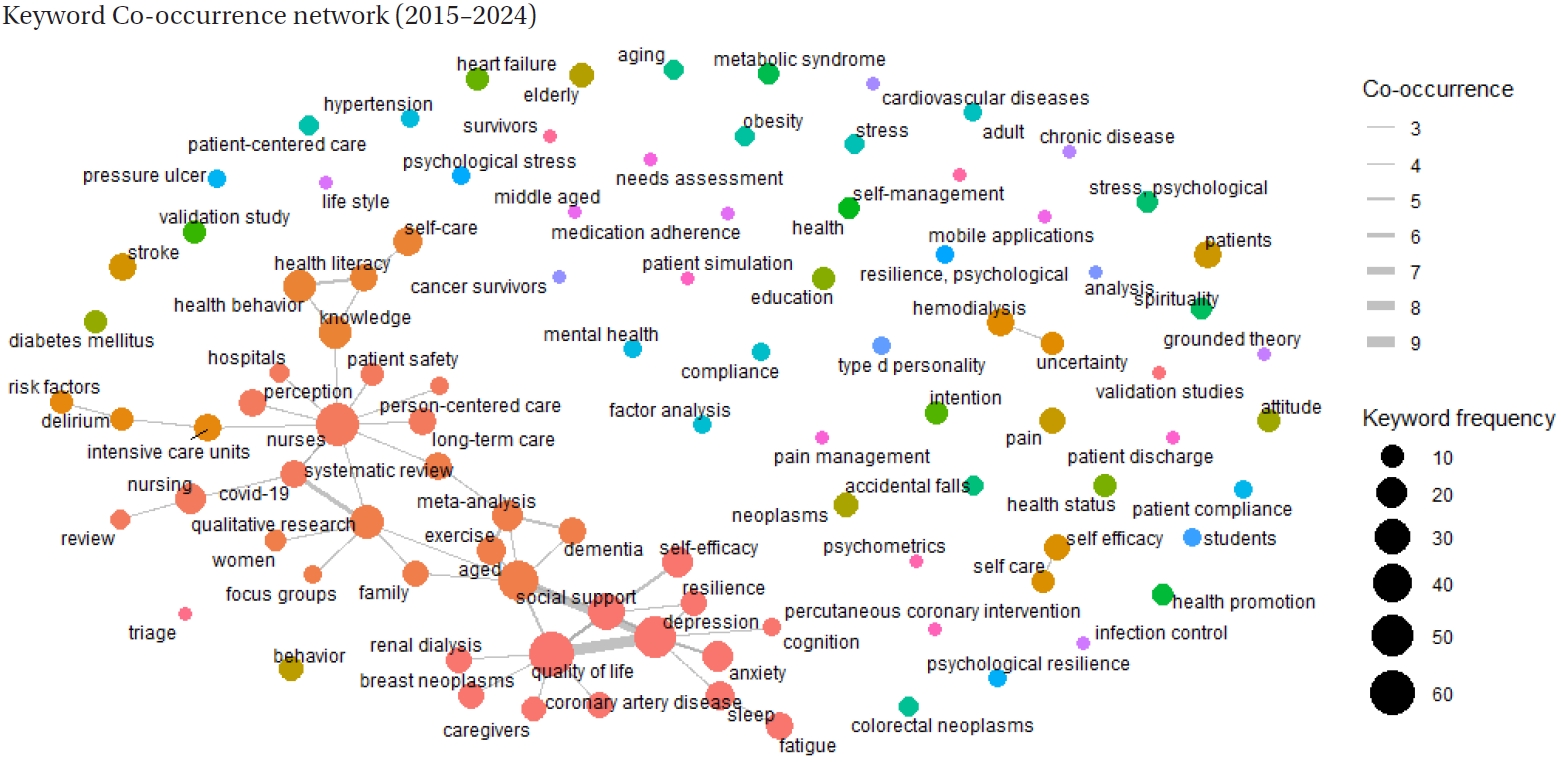
This study analyzed publications from the past decade in the Korean Journal of Adult Nursing (KJAN) to examine patterns in research design and thematic trends using both manual coding and topic modeling approaches. Methods A retrospective review was conducted of research articles published in KJAN between 2015 and 2024. Study designs and methodological characteristics were classified using a structured coding framework and analyzed with descriptive statistics. A text-mining approach incorporating keyword network analysis and latent Dirichlet allocation topic modeling was applied to examine thematic patterns. Results Over the past decade, quantitative research was the predominant methodological approach, accounting for more than 70% of the 544 studies. The proportion of qualitative research decreased, whereas literature reviews increased. Within quantitative research, experimental studies declined, while secondary-data analyses and online surveys increased substantially. Keyword and topic analyses consistently highlighted psychological health, quality of life, chronic illness, and older adults as central research domains. Topic modeling further identified five major themes: (1) clinical interventions and symptom management; (2) disease management and health literacy; (3) psychological health, quality of life, and family/social support; (4) health behavior and functional/physical health; and (5) clinical practice, nursing workforce, and work environment. Conclusion Adult nursing research in South Korea demonstrates both continuity and change, with sustained emphasis on psychosocial and chronic illness–related topics and increasing attention to workforce issues. To strengthen future scholarship, greater efforts are needed to ensure that findings derived from diverse research designs are reported in a coherent and integrated manner.
Purpose
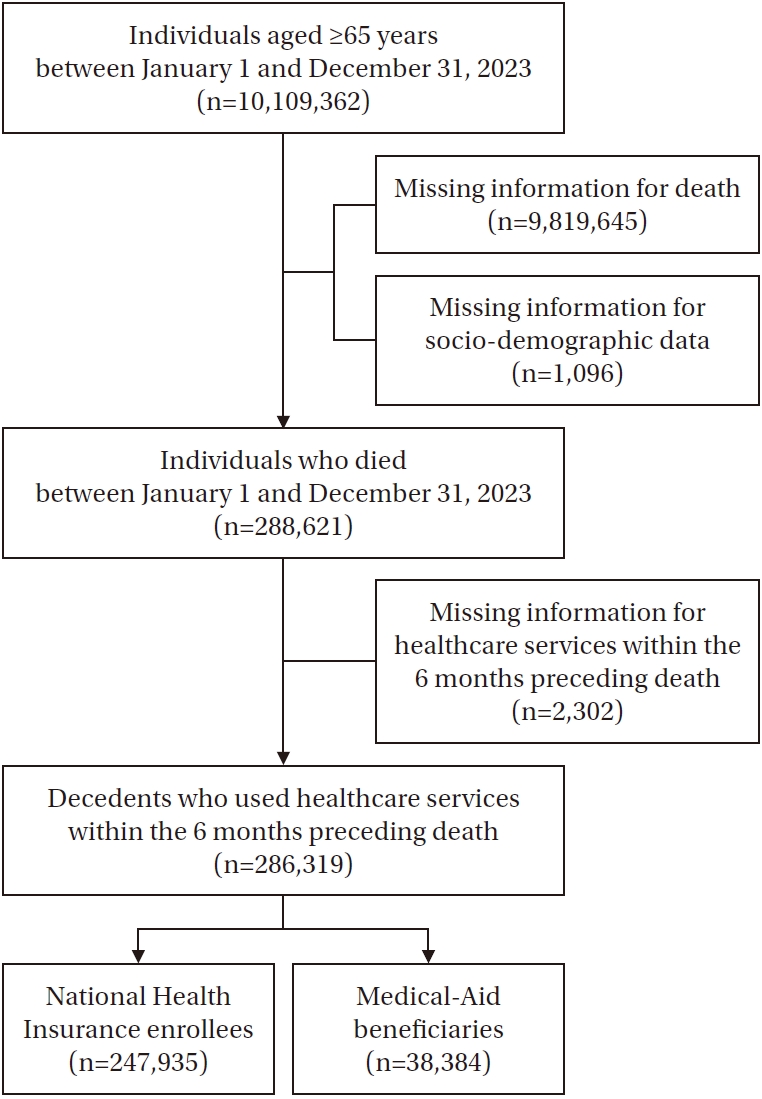
This study investigated differences in the use of life-sustaining treatments during the last six months of life between older adults covered by the National Health Insurance (NHI) and those enrolled in the Medical Aid (MA) program. Methods: A retrospective cohort design was applied using national claims data from the National Health Insurance Service. The study population included individuals aged ≥65 years who died in 2023, with 286,319 decedents (247,935 with NHI and 38,384 with MA) analyzed. We compared hospitalization frequency and duration, intensive care unit (ICU) stays, and the use of life-sustaining treatments, including cardiopulmonary resuscitation, mechanical ventilation, hemodialysis, chemotherapy, transfusions, and vasopressors, between NHI and MA groups. Logistic regression analyses were conducted with adjustments for age, sex, comorbidities, place of death, and advance care planning status. Results: Completion rates of advance directives and physician orders for life-sustaining treatment were lower in MA than in NHI decedents. MA decedents had fewer admissions but significantly longer hospital and ICU stays than NHI decedents. They were less likely to receive mechanical ventilation, chemotherapy, transfusion, and vasopressors but more likely to undergo hemodialysis. Conclusion: Substantial disparities exist in end-of-life care by insurance type, suggesting that socioeconomic inequalities and reimbursement structures influence patterns of intensive care near the end of life. Targeted interventions are needed to ensure equitable, patient-centered end-of-life care for socioeconomically vulnerable older adults.
|
|
 E-SUBMISSION