Abstract
-
Purpose
This study analyzed publications from the past decade in the Korean Journal of Adult Nursing (KJAN) to examine patterns in research design and thematic trends using both manual coding and topic modeling approaches.
-
Methods
A retrospective review was conducted of research articles published in KJAN between 2015 and 2024. Study designs and methodological characteristics were classified using a structured coding framework and analyzed with descriptive statistics. A text-mining approach incorporating keyword network analysis and latent Dirichlet allocation topic modeling was applied to examine thematic patterns.
-
Results
Over the past decade, quantitative research was the predominant methodological approach, accounting for more than 70% of the 544 studies. The proportion of qualitative research decreased, whereas literature reviews increased. Within quantitative research, experimental studies declined, while secondary-data analyses and online surveys increased substantially. Keyword and topic analyses consistently highlighted psychological health, quality of life, chronic illness, and older adults as central research domains. Topic modeling further identified five major themes: (1) clinical interventions and symptom management; (2) disease management and health literacy; (3) psychological health, quality of life, and family/social support; (4) health behavior and functional/physical health; and (5) clinical practice, nursing workforce, and work environment.
-
Conclusion
Adult nursing research in South Korea demonstrates both continuity and change, with sustained emphasis on psychosocial and chronic illness–related topics and increasing attention to workforce issues. To strengthen future scholarship, greater efforts are needed to ensure that findings derived from diverse research designs are reported in a coherent and integrated manner.
-
Key Words: Research design; Adult; Nursing; Review; Korea
INTRODUCTION
Analyzing research trends provides insight into the evolution of academic disciplines by revealing shifts in research focus, methodological developments, and emerging topics [
1]. Such analyses help scholars and practitioners identify knowledge gaps, inform future research directions, and enhance the relevance of studies to contemporary societal needs [
2,
3].
The
Korean Journal of Adult Nursing (KJAN) has played a pivotal role in advancing nursing research in South Korea. Established in 1989 alongside the founding of the Korean Society of Adult Nursing, the journal has contributed substantially to the formalization and expansion of nursing science in South Korea [
4,
5]. In 2004, KJAN was designated a registered journal by the National Research Foundation of Korea (NRF), further strengthening its academic standing. Its inclusion in internationally recognized databases, including CINAHL and Scopus, in 2011 further enhanced its global visibility and scholarly impact [
4,
5].
In 2008, KJAN increased its publication frequency to six issues per year, a schedule that continued through 2022 [
6]. Beginning in 2023, the journal returned to publishing four issues annually [
6]. During the period of expanded publication, KJAN published an average of approximately 70 articles per year, reflecting growth in the volume of adult nursing research. However, alongside this quantitative expansion, evaluating the qualitative advancement of the journal—particularly in terms of scientific rigor and theoretical foundations—has become increasingly important. Moreover, the growing emphasis on interdisciplinary collaboration in the health sciences underscores the need to examine how nursing theories are applied and integrated in studies published in KJAN. Through its relatively high publication frequency compared with other subspecialty journals, KJAN has contributed to the dissemination of high-quality research. By addressing diverse health concerns across adulthood—from acute care to health promotion and mental health [
4]—the journal has also supported the advancement of research quality across the broader field of nursing.
Several studies have examined research trends in KJAN. Suh et al. [
7] in 2000 conducted an early analysis covering the period from the journal's inception through 2000. Subsequent investigations focused on specific methodological aspects, including quantitative research methodologies and qualitative research methodologies [
8,
9]. The most recent comprehensive trend analysis was conducted in 2015 and examined articles published between 2010 and 2014 [
4]. Since then, no study has systematically evaluated research trends over the subsequent decade (2015–2024), underscoring the need for an updated review. Globally, the COVID-19 pandemic has been associated with a surge in research addressing nurse staffing, mental health, and digital health [
10]. Accordingly, analyzing research trends over the past 10 years (2015–2024) allows assessment of whether similar shifts have occurred in KJAN and provides insight into the journal’s current position within the broader academic landscape.
Although previous studies provided valuable insight into the general characteristics of research articles published in KJAN, they primarily relied on descriptive analyses of research design, methodologies, and study populations. More recently, studies in nursing and other health care disciplines have adopted advanced analytic approaches, including text network analysis and topic modeling, to examine research trends. These methods enable systematic and objective analysis of large volumes of textual data, facilitating the identification of key themes and relationships among research topics. For example, one study applied these techniques to articles published in the
Journal of Korean Academy of Psychiatric and Mental Health Nursing between 2013 and 2022, identifying major themes and their evolution over time [
11]. In addition, several nursing studies have used text network analysis to assess keyword distributions, co-occurrence patterns, and thematic structures within published research [
2,
12]. Given the increasing application of these approaches in nursing scholarship, applying them to KJAN offers an opportunity to gain deeper insight into research trends over the past decade.
Therefore, this study aimed to analyze research trends in KJAN over the past decade (2015–2024) by examining the distribution of authors, research designs, study populations, data collection methods, and analytic techniques. In addition, text network analysis and topic modeling were used to examine author-provided keywords and abstracts, providing a comprehensive understanding of prevailing research themes and their interconnections. The application of these methods has expanded within nursing scholarship for the analysis of research topic trends. Through this comprehensive approach, the present study seeks to enhance the methodological rigor and scholarly quality of research published in KJAN, contribute to the development of an independent body of nursing knowledge, and propose strategic directions for the future advancement of adult nursing scholarship and the journal itself.
METHODS
1. Study Design
This study used a retrospective descriptive design to analyze methodological and thematic trends in KJAN from 2015 to 2024. A text-mining approach, including keyword network analysis and latent Dirichlet allocation (LDA) topic modeling, was applied to identify thematic structures. The study is reported in accordance with the PRISMA (Preferred Reporting Items for Systematic Reviews and Meta-Analyses) guidelines.
2. Study Subjects
A total of 548 articles were identified from all issues of KJAN published between 2015 and 2024. After exclusion of four retracted articles, 544 articles remained and were included in the final analysis.
3. Study Instruments
A structured codebook was developed to extract and classify the characteristics of each study. The codebook was informed by prior research trend analyses in nursing and included categories for: (1) general study characteristics (authors, study populations, data collection settings); (2) methodological characteristics (quantitative, qualitative, mixed methods, review, and methodological studies); (3) funding status; (4) key research terms; and (5) abstracts. Research design categories included quantitative experimental studies, nonexperimental observational designs, secondary-data analyses, qualitative approaches, and methodological studies. This framework was iteratively refined through coder training and consensus meetings, particularly for studies with ambiguous or underreported methodological details.
4. Data Collection
Data collection, including article retrieval, metadata extraction, and PDF verification, was conducted from February 24 to March 3, 2025. Metadata and keywords extracted via Python-based automation were manually reviewed by two researchers, who cross-checked the outputs against the full-text PDFs.
To classify methodological characteristics, the research team first reviewed prior nursing research trend analyses [
3,
4,
8] and standard nursing research methodology textbooks [
13-
15] to develop an initial coding framework for research design classification. Using this framework, one researcher performed the primary coding for each article, including: (1) research design classification; (2) purpose-based categorization of quantitative studies; and (3) classification of data collection timing (e.g., cross-sectional, longitudinal, retrospective).
When articles could not be readily classified using the initial guidelines, these cases were discussed with the principal investigator, and classification decisions were made collaboratively. After completion of the initial coding, articles requiring further discussion were re-examined, and the coding guidelines were refined accordingly. The research team then reached consensus on the revised classification framework, which was used to finalize the coding. Because this study used a consensus-based coding approach with a researcher-developed classification framework, rather than independent parallel coding with a standardized instrument, interrater reliability statistics were not calculated.
5. Data Analysis
A multistep analytic approach was used to examine research characteristics and thematic trends. SAS ver. 9.4 (SAS Institute, Cary, NC, USA) was used to calculate frequencies and percentages for research designs, study populations, data collection methods, funding sources, and thesis-related characteristics.
To capture explicit thematic emphases, author-provided keywords were analyzed using frequency statistics. A word cloud was generated in R (ver. 4.5.2), with font size proportional to term frequency, to provide a visual overview of dominant research terms across the decade [
16]. To examine structural relationships among research topics, a keyword co-occurrence matrix was constructed, with keywords appearing in the same article considered co-occurring. Using the igraph package ver. 2.2.1 in R (
https://igraph.org), a weighted network was created, and community structures were identified using the Louvain clustering algorithm. This approach enabled identification of thematic clusters and relational patterns beyond simple frequency counts. Topic modeling was conducted using LDA to identify the underlying thematic structure of articles published in KJAN from 2015 to 2024. Author-provided keywords and English-language abstracts were used as textual inputs. Text preprocessing included lowercasing, removal of punctuation and numbers, and stopword filtering.
Domain-specific stopword refinement was performed iteratively. First, generic methodological and structural terms (e.g., study, results, participants) were excluded based on prior knowledge because they provide limited discriminative value for identifying substantive research themes. Next, to provide an objective rationale for further refinement, document frequency (DF) was calculated as the percentage of abstracts in which a token appeared at least once. Among high-DF tokens (top 5%), a subset of low-information terms—primarily procedural or reporting-related terms, statistical or modeling-related terms, software-related terms, or generic measurement terms (e.g., analyzed, collected, regression)—was identified. These tokens were added to the domain-specific stopword list to reduce low-information drivers of topic formation. DF-based screening was used as a supplementary criterion rather than a rigid exclusion rule.
Aggressive stemming or lemmatization was not applied to avoid over-normalization and to preserve semantically meaningful distinctions in nursing and clinical terminology [
17]. Instead, conservative normalization was applied, and multiword expressions (e.g., quality of life) were retained as compound terms to enhance interpretability. This approach is consistent with prior research indicating that stemming does not necessarily improve—and may even degrade—topic model interpretability [
17].
To determine the optimal number of topics, candidate models were evaluated with topic numbers ranging from k=3 to 10. Model selection was based on a combination of statistical fit and semantic quality, including perplexity and topic coherence. Although perplexity continued to decrease as k increased, topic coherence and interpretability were maximized at k=5. Models with fewer topics (k≤4) tended to merge conceptually distinct research areas, whereas models with more topics (k≥6) yielded fragmented or overlapping topics with reduced interpretability. Based on topic coherence, interpretability, and analytic parsimony, a five-topic model was selected for the final analysis. In the final model, each article was assigned to the topic with the highest posterior probability (γ), and topic distributions were compared across two publication periods (2015–2019 and 2020–2024).
For these analyses, the authors made the following preparations. One author received supplementary training through workshops on big data analysis using R and gained practical experience applying R and Python during the analysis. The research team also included members with prior experience in literature review and content analysis.
RESULTS
1. Study Characteristics
Study characteristics are summarized by period in
Table 1. Across the decade, 544 articles were published, with 315 (57.9%) in 2015–2019 and 229 (42.1%) in 2020–2024. Most first authors were affiliated with universities (71.5% overall), although this proportion decreased slightly over time (73.7% to 68.6%), while hospital-based first authors increased from 25.1% to 31.0%. Only a small proportion of papers originated from other institutions (≤1%).
With respect to study populations, adults and older adults were consistently the primary focus. Across all years, 49.8% of studies included adults and 47.1% included older adults, with a greater emphasis on older adults in 2015–2019 (52.7%) than in 2020–2024 (39.3%). Patient-based studies accounted for nearly half of all articles (48.4%), whereas nurse-focused research increased from 13.3% in 2015–2019 to 22.3% in 2020–2024, reaching 17.1% overall. Smaller but non-negligible proportions of studies focused on students (5.3%) or families (4.0%), or were based on document-based studies (10.9%).
Most studies were conducted in clinical environments. Tertiary or university hospitals were the most common setting (37.5% overall), followed by general hospitals (22.1%). Community settings (11.2%), long-term care facilities (5.3%), universities (3.5%), and community or welfare centers (5.3%) were used less frequently. Notably, literature-based studies and those using online communities or websites increased in the latter period: literature as a setting rose from 9.8% to 15.3%, and online or website settings increased from 1.9% to 5.2%. Public health centers were used in only a small proportion of studies (approximately 1.3%), and other settings were rare. Regarding data collection methods, survey designs predominated but declined over time, from 64.1% in 2015–2019 to 45.9% in 2020–2024 (56.4% overall). In contrast, use of online survey panels increased markedly (from 1.3% to 15.3%), reflecting the expansion of web-based data collection. Studies using electronic medical records (EMRs) accounted for approximately one-fifth of articles in both periods (19.1% overall).
In terms of research funding, 71.0% of studies reported no research funding, with similar proportions in both periods. Government grants (including NRF and ministries) supported 14.3% of studies overall, and university funding supported 11.2%, with a modest decline in university-funded work in the later period (13.0% to 8.7%). Finally, a substantial proportion of articles originated from theses: overall, 41.7% were thesis-based, although this proportion decreased from 43.8% in 2015–2019 to 38.9% in 2020–2024, suggesting a gradual shift toward non-thesis research outputs.
2. Trend in Research Design and Methodological Characteristics
Table 2 summarizes the methodological characteristics of the reviewed studies across two periods (2015–2019 and 2020–2024). A total of 544 studies were included, with 315 published during 2015–2019 and 229 during 2020–2024.
Quantitative studies accounted for the majority of publications in both periods (73.7% in 2015–2019 and 70.7% in 2020–2024). Qualitative research comprised 8.5% overall and decreased slightly in the later period. Reviews and methodological or instrument-development studies increased modestly over time, rising from 8.6% to 11.4% and from 5.4% to 7.9%, respectively.
Within quantitative studies, nonexperimental observational designs remained dominant (63.5% overall). The proportion of experimental or intervention studies decreased from 23.7% to 14.8% in the later period. Secondary-data analyses increased, particularly studies classified as secondary-data analyses (12.1% to 17.3%). Among nonexperimental studies, correlational research was overwhelmingly the most common purpose (85.3% in 2015–2019 and 85.5% in 2020–2024). Cross-sectional designs accounted for the majority of studies in both periods (90.8%), indicating a consistent reliance on single-timepoint data. Retrospective and longitudinal designs remained relatively uncommon. Experimental studies decreased in frequency over time, from 55 in the earlier period to 24 in the later period. Randomized controlled trials (RCTs) increased proportionally (from 9.1% to 33.3%), although the absolute number remained small. Most experimental studies were quasi-experimental, representing 77.2% overall.
Among qualitative studies, content analysis became more prominent in the later period (35.5% to 66.7%). Phenomenology and grounded theory were more common in earlier years but declined in more recent publications. Ethnographic research remained rare across both periods.
3. Keyword Trends Based on Word Cloud Visualization
The word cloud for 2015–2019 demonstrated clear thematic concentrations in adult nursing research (
Figure 1A). The most visually prominent terms included quality of life, depression, aged, nurses, and social support, reflecting strong scholarly attention to psychosocial well-being and gerontological care. Keywords such as anxiety, sleep, exercise, self-care, and self-efficacy also appeared frequently, suggesting sustained interest in psychological health and health-promoting behaviors. In addition, terms related to chronic illness management, including stroke, hemodialysis, and dementia, formed notable clusters, indicating ongoing engagement with populations requiring long-term and intensive care.
The word cloud for 2020–2024 revealed both continuity and emerging themes (
Figure 1B). While quality of life, nurses, and aged remained dominant, COVID-19 became one of the largest and most salient terms, highlighting the pandemic's substantial impact on research priorities during this period. Closely related concepts such as intensive care units, delirium, patient safety, and heart failure also featured prominently, indicating increased focus on acute care, critical care environments, and pandemic-related clinical challenges. Psychological and behavioral constructs, including depression, anxiety, self-care, and self-efficacy, continued to appear frequently, reflecting sustained attention to mental health and patient self-management.
The aggregated word cloud for the full decade displayed considerable thematic stability (
Figure 1C). Quality of life was the most prominent term overall, followed by nurses, aged, depression, and social support. This pattern underscores sustained emphasis on psychosocial outcomes, nursing workforce, and patient interactions, and the health of older adults. Additional clusters related to chronic conditions (stroke, renal dialysis, coronary artery disease), psychological health (fatigue, sleep, resilience), and health behaviors (health behavior, exercise, self-care) further illustrate the central focus areas that shaped adult nursing research during the past 10 years.
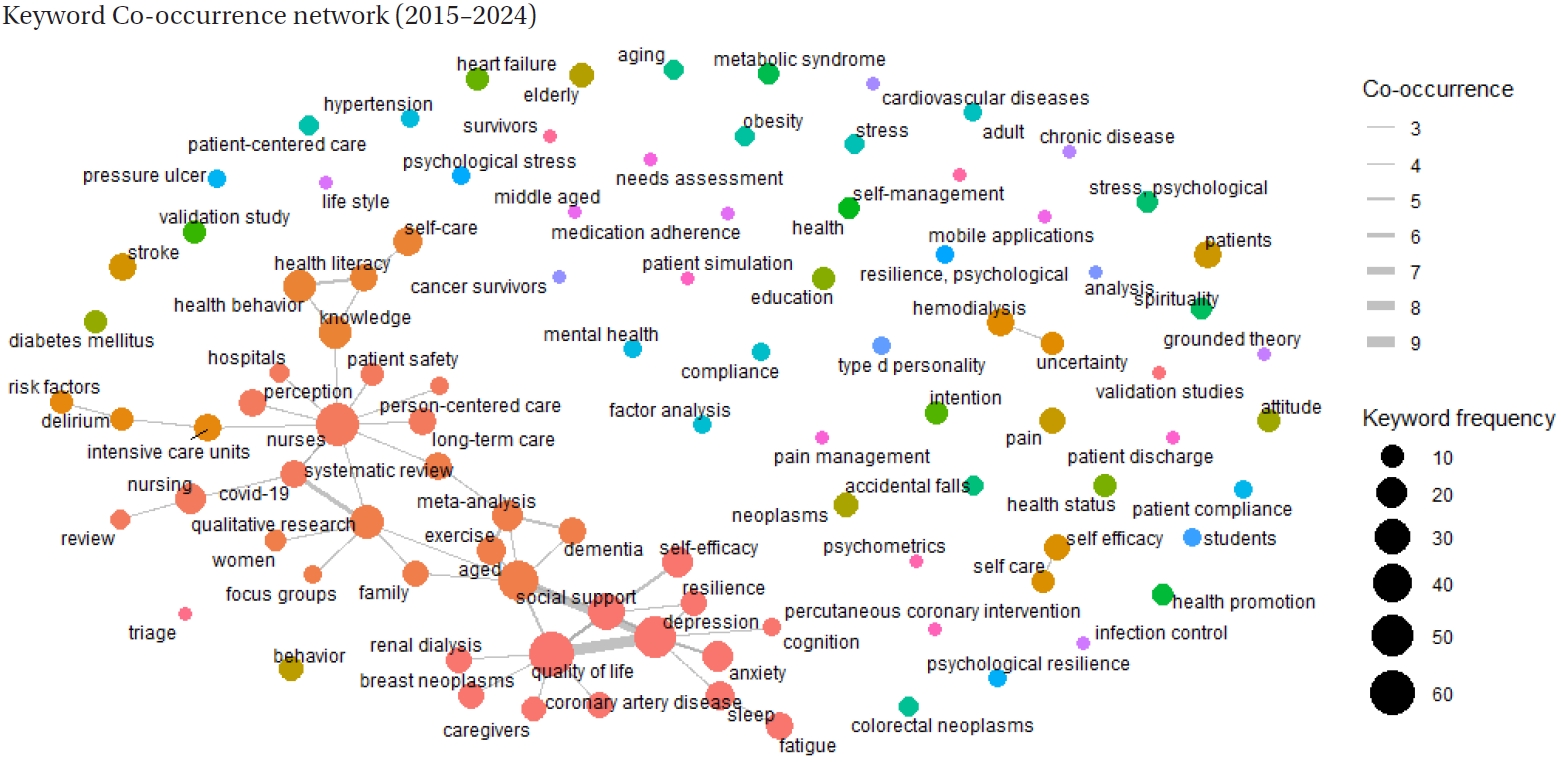
The keyword co-occurrence network for 2015–2024 revealed the overall thematic structure of research published in the journal (
Figure 2). The network comprised densely connected clusters as well as peripheral nodes with fewer linkages. Larger nodes represent higher-frequency keywords, whereas thicker edges indicate stronger co-occurrence relationships. Several thematic clusters were visually identifiable, including groups related to mental health (e.g., depression, anxiety, social support), chronic illness and older adults (e.g., aged, dementia, quality of life), and clinical practice topics (e.g., patient safety, nurses, person-centered care). The network exhibited a moderately interconnected structure, with some highly frequent keywords functioning as hubs that bridged multiple research areas. In contrast, many keywords appeared as isolated or weakly connected nodes, suggesting topic-specific or emerging research interests. Overall, the visualization indicates that although research topics were diverse, a few central themes—particularly quality of life, nursing practice, psychological outcomes, and chronic disease—served as major connecting axes within the field.
Network centrality analysis further highlighted the structural importance of several keywords within the co-occurrence network (
Supplementary Table 1). Quality of life and nurses showed the highest degree centrality, indicating that these terms were connected to the largest number of other keywords and functioned as network hubs. Depression and aged also demonstrated high degree and closeness centrality, suggesting that mental health and older adult populations were embedded across diverse research topics. In terms of betweenness centrality, nurses, quality of life, knowledge, and social support frequently acted as bridges linking otherwise distant keyword clusters. This pattern suggests that studies focusing on nurses' roles and patients' quality of life often integrated multiple domains, such as psychological outcomes, self-management, and health behaviors. Keywords related to psychological constructs, including anxiety, self-efficacy, and health behavior, also ranked highly across centrality measures, underscoring their cross-cutting relevance in adult nursing research published in KJAN over the past decade.
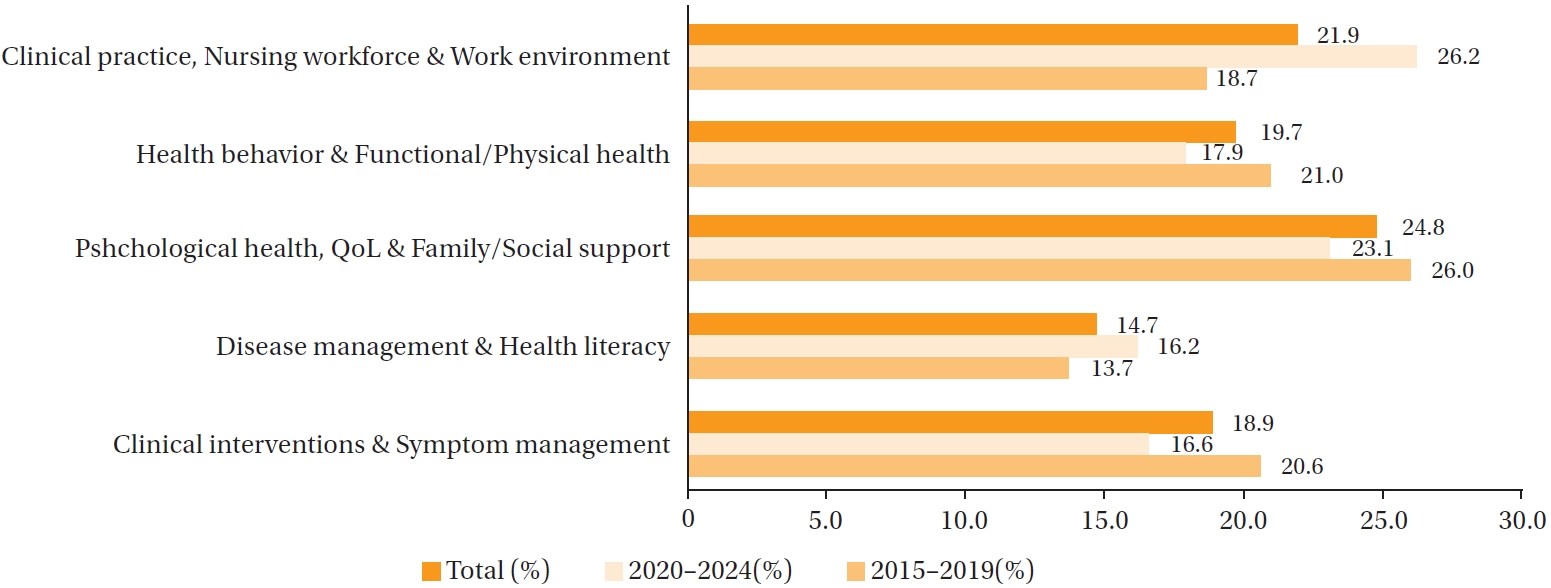
Topic modeling of 544 abstracts published in KJAN between 2015 and 2024 identified five major thematic domains: (1) clinical interventions and symptom management, (2) disease management and health literacy, (3) psychological health, quality of life, and family/social support, (4) health behavior and functional/physical health, and (5) clinical practice, nursing workforce, and work environment (
Figure 3,
Supplementary Table 2). These topics reflect a coherent structure of adult nursing scholarship encompassing clinical, psychosocial, behavioral, and practice-focused research. Based on posterior topic assignments, the overall distribution showed that psychological health and quality of life research was the most prevalent across the decade (24.8%), followed by research on clinical practice, the nursing workforce, and the work environment (21.9%), reflecting sustained emphasis on mental health outcomes and system-level pressures within adult nursing.
Meaningful temporal differences emerged between 2015–2019 and 2020–2024. From 2015 to 2019, research was dominated by psychological health, quality of life, and social support (26.0%), followed by health behavior and functional/physical health (21.0%) and clinical interventions and symptom management (20.6%). In contrast, during 2020–2024, clinical practice, nursing workforce, and work environment became the most prominent domain (26.2%), indicating a shift toward workforce resilience, staffing conditions, and clinical practice environments—patterns aligned with the heightened demands and disruptions associated with the COVID-19 pandemic. While psychological health research remained substantial (23.1%), health behavior and clinical intervention topics showed modest declines, possibly reflecting reduced feasibility of patient-facing studies during pandemic-related restrictions.
DISCUSSION
1. Research Design and Topic Trends and Their Implications
The findings of this study indicate both continuity and change in the methodological and thematic patterns of research published in KJAN over the past decade. Quantitative designs, particularly nonexperimental and cross-sectional studies, remained dominant in both periods, continuing a pattern reported in earlier analyses of South Korean nursing research [
3,
4,
7,
8,
18]. Most quantitative studies used a cross-sectional design. The proportion of experimental research decreased, and among longitudinal studies, retrospective designs were comparatively common. These patterns highlight persistent structural and practical challenges in conducting intervention and longitudinal research within South Korean nursing contexts. The observed increases in reviews and instrument-development studies suggest that research designs are diversifying beyond traditional approaches. Notably, the proportional increase in RCTs, despite an overall decline in experimental studies, can be viewed favorably. Park et al. [
19] in 2025 analyzed research trends in
Journal of Korean Academy of Nursing (JKAN) and leading international nursing journals over the past decade and reported a predominance of cross-sectional studies in JKAN, a marked decrease in experimental studies, and modest increases in reviews and instrument-development studies; these observations are consistent with the present findings. In contrast, international journals exhibited different patterns: the
International Journal of Nursing Studies published a high proportion of reviews, including systematic reviews and meta-analyses, as well as experimental studies, whereas the
Journal of Advanced Nursing published a large proportion of qualitative studies and evidence syntheses. Given that systematic reviews, meta-analyses, and RCTs generally provide higher levels of evidence, KJAN should continue to encourage submissions using these rigorous designs to strengthen the evidentiary base of South Korean nursing research.
A notable methodological transition during this decade was the increase in secondary-data analyses, particularly in the later period. This shift reflects broader trends in South Korean health sciences, where national datasets, EMRs, and large-scale online survey panels have become more accessible. EMR-based research remained stable at approximately one-fifth of publications, underscoring the growing role of digital data sources in adult nursing research. At the same time, the sharp increase in online survey use after 2020 represents a clear departure from earlier years, when most studies relied on in-person or paper-based surveys. This change is consistent with the digital acceleration associated with the COVID-19 pandemic and the broader adoption of web-based data collection in health research [
20,
21].
Study population patterns also shifted meaningfully. While adults and older adults remained the primary focus of KJAN publications, studies involving older adults decreased in the later period, whereas nurse-focused studies increased substantially. This transition reflects national and global concerns regarding the nursing workforce, burnout, turnover intention, and organizational climate—issues that gained particular urgency during and after the pandemic. Although earlier reviews of South Korean nursing journals did not specifically emphasize psychosocial or behavioral constructs as dominant domains, visual keyword analyses in recent trend studies indicate that themes such as quality of life, depression, anxiety, dementia, and self-efficacy have consistently appeared as major foci across leading journals [
18]. These psychosocial concepts have remained central to South Korean nursing scholarship for more than a decade, forming a stable foundation for inquiry across clinical, community, and aging-related research. Our findings indicate that these psychosocial themes remain prominent in adult nursing research and increasingly intersect with workforce-related topics, such as burnout, patient safety, and organizational climate, that gained importance during and after the COVID-19 pandemic.
The convergence of keyword visualization, network centrality analysis, and topic modeling confirms the persistence of psychological health, quality of life, chronic illness, and gerontology as foundational domains in adult nursing research. This pattern is consistent with prior bibliometric and trend analyses of South Korean nursing and health science literature, which similarly identified quality of life, depression, anxiety, aging, and chronic disease management as enduring core themes [
4,
18].
Text network analysis and topic modeling use large datasets to quantify contextual word meanings and relationships among terms. These methods enable the extraction of core concepts from the literature, visualization of relationships among concepts, and assessment of the influence of derived concepts [
22]. Text network analysis provides an objective representation of relationships among strongly associated keywords by visualizing large-scale textual data [
23]. Topic modeling uses probabilistic algorithms to infer latent thematic structures from extensive text data, facilitating the identification of coherent topic groupings and the generation of research insights [
24]. Topic modeling results further clarify how the thematic landscape of KJAN research evolved over the past decade. Five dominant themes were identified: clinical interventions and symptom management, disease management and health literacy, psychological health and quality of life, health behavior and functional health, and nursing workforce and work environment. Psychological and quality of life–related research remained consistently central, including studies addressing depression, anxiety, caregiver burden, and resilience among adults with chronic illness. Research on health behaviors and functional status also maintained stable representation, including studies examining lifestyle modification, physical activity, and functional decline in older adults.
The topic modeling analysis also showed a marked increase in studies related to the nursing workforce and practice environment after 2020, indicating a substantive shift in the thematic structure of adult nursing research published in KJAN. Importantly, this trend likely reflects not only increased attention to workforce management but also a broader reconceptualization of workforce issues as integral to adult nursing practice and patient outcomes.
In adult nursing contexts, nurses play a central role in the ongoing management of patients with complex, chronic, and high-acuity conditions. Consequently, staffing adequacy, clinical expertise, workload, and work environments function not as peripheral organizational factors but as core conditions shaping the quality and safety of patient care. The prominence of the nursing workforce topic in KJAN suggests that recent research increasingly frames nurses’ working conditions, burnout, and professional roles as determinants of adult patient outcomes, rather than as background system-level variables. The COVID-19 pandemic was a critical catalyst that amplified these concerns. During this period, adult nursing practice was characterized by unprecedented workload intensity, expanded clinical responsibilities, and sustained exposure to high-risk environments. Accordingly, research attention shifted toward nurse burnout, turnover intention, staffing instability, and practice environments, which became highly visible threats to the continuity and quality of adult patient care. International studies have similarly described the pandemic's role in accelerating scholarly focus on nursing workforce sustainability and its implications for patient safety and care quality [
25-
27].
Notably, the increased prominence of nursing workforce-related topics does not suggest reduced importance of clinical or psychosocial research in adult nursing. Rather, it indicates an integrative shift in which workforce conditions are increasingly examined as foundational contexts within which clinical interventions, symptom management, and psychosocial care are delivered. This interpretation is supported by recent topic modeling and bibliometric studies of major nursing journals, which similarly identified practice environments, job satisfaction, and burnout as cross-cutting themes intersecting with clinical and chronic disease management research [
28].
Taken together, the increasing emphasis on nursing workforce issues in KJAN reflects global research trends and the clinical realities of adult nursing in South Korea. As adult patients present with increasing clinical complexity and long-term care needs, understanding and addressing workforce-related factors have become essential for advancing evidence-based adult nursing practice.
2. Recommendations for Improving Research Design Reporting
During the coding process, substantial inconsistency was observed in how research designs were labeled across studies, highlighting the need for greater standardization of design terminology within nursing research. In nonexperimental studies, authors used different criteria to describe the same design structure: some emphasized the timing of data collection using terms such as cross-sectional, longitudinal, or retrospective, whereas others focused primarily on research purpose using labels such as descriptive or correlational. Nursing research methodology textbooks classify research designs along multiple dimensions, including research purpose, temporal orientation, data collection timing, and sampling approach, suggesting that a more integrated approach to design labeling would improve clarity [
13-
15]. Combining purpose and timing—for example, cross-sectional descriptive study, longitudinal correlational study, or retrospective causal inference study—would allow readers to more accurately understand the structural characteristics of the design.
Several studies classified as secondary analyses did not clearly report essential dataset information, including the dataset name, the organization responsible for data collection, the year of original data collection, and whether the dataset had been used in prior publications. This limitation reduces interpretability and undermines methodological transparency. Consistent with recommendations in the literature, secondary analyses should explicitly describe the origin, purpose, and structure of the primary dataset [
14,
29,
30]. Such reporting enables readers to evaluate the appropriateness of the research design, sampling strategy, and analytic approach. A related issue concerns ethical reporting of secondary analyses: identifying the dataset name, the institution or organization that originally collected the data, the year(s) of data collection, and prior use in published studies provides essential context for evaluating design and analytic appropriateness.
Clearer and more standardized reporting of secondary data use would strengthen methodological transparency across studies. In several papers reviewed, essential dataset information—such as the dataset name, the organization or institution responsible for initial collection, the year(s) of data collection, and prior use in published studies—was not explicitly stated, limiting readers' ability to assess the suitability of the data for the stated research aims. To address this gap, researchers conducting secondary analyses should describe the origin, context, and structure of the primary dataset. Practical examples include specifying that a study is “a secondary-data analysis using [dataset name] collected by [agency] in [year]” or “a secondary analysis of data originally collected by the authors in [year] for a previous study on [topic].” For studies using EMR data, additional clarity is warranted, such as specifying that the analysis used “EMR data extracted from [hospital or medical center] between [start year] and [end year].” These templates allow readers to evaluate sampling, data provenance, and potential biases, thereby improving the interpretability and rigor of secondary-data research.
In addition to reporting the provenance of secondary datasets, studies should clearly specify the underlying research design. Use of secondary data does not replace the need to indicate whether the study used a cross-sectional correlational design, a longitudinal cohort design, or another methodological structure. Reporting both elements—for example, “a cross-sectional correlational study using secondary data from [dataset name] collected by [agency] in [year]”—improves clarity because research design and secondary data use carry distinct methodological implications. Explicit reporting of both aspects allows readers to evaluate alignment between the dataset and the stated aims, assess temporal assumptions, and identify potential biases inherent in secondary-data research.
This review has several limitations. First, because the analysis focused solely on articles published in a single journal, the findings may not fully represent broader trends in South Korean nursing research. Second, keyword and topic modeling analyses were based on abstracts and author-provided keywords, which may not capture the full content of each study; therefore, the findings should be interpreted as approximate thematic patterns. Finally, temporal comparisons between the two periods were descriptive rather than inferential, and the study did not assess methodological quality within individual articles. These limitations should be considered when interpreting the trends identified in this review.
CONCLUSION
This review provides a comprehensive picture of methodological and thematic developments in KJAN over the past decade. While nonexperimental designs and psychosocial themes remained foundational elements of adult nursing research, recent years showed a marked rise in secondary-data analyses and topics related to clinical practice and nurses’ work. The shift toward digital data sources and the influence of the COVID-19 pandemic were evident in changing research priorities and methods. Improving the clarity and consistency of research design reporting, particularly in secondary data studies, remains an essential step for advancing the rigor and transparency of South Korean nursing scholarship. Taken together, these findings offer direction for future adult nursing research and highlight the evolving landscape of health, illness, and workforce challenges faced by nurses and the populations they serve.
-
CONFLICTS OF INTEREST
Jeonghyun Cho served as the Editor-in-Chief of the Korean Journal of Adult Nursing from 2024 to 2025. She was not involved in the review process for this manuscript. Otherwise, there were no conflicts of interest.
-
AUTHORSHIP
Study conception and/or design acquisition - EP, JL, and JSK; analysis - EP and JSK; interpretation of the data – EP, JHK, JSK, HMS, JC, and BP; and drafting or critical revision of the manuscript for important intellectual content - EP, JL, JHK, JSK, HMS, JC, and BP.
-
FUNDING
This research was supported by the 2026 scientific promotion funded by Jeju National University.
-
ACKNOWLEDGEMENT
None.
-
DATA AVAILABILITY STATEMENT
No new data were created or analyzed during this study. Data sharing is not applicable to this article.
SUPPLEMENTARY MATERIAL
Figure 1.Word clouds of author keywords in Korean Journal of Adult Nursing (KJAN) across three periods (2015–2019 [A], 2020–2024 [B], 2015–2024 [C]). The word clouds illustrate the most frequently occurring author-provided keywords across three publication periods. Larger text indicates higher keyword frequency.
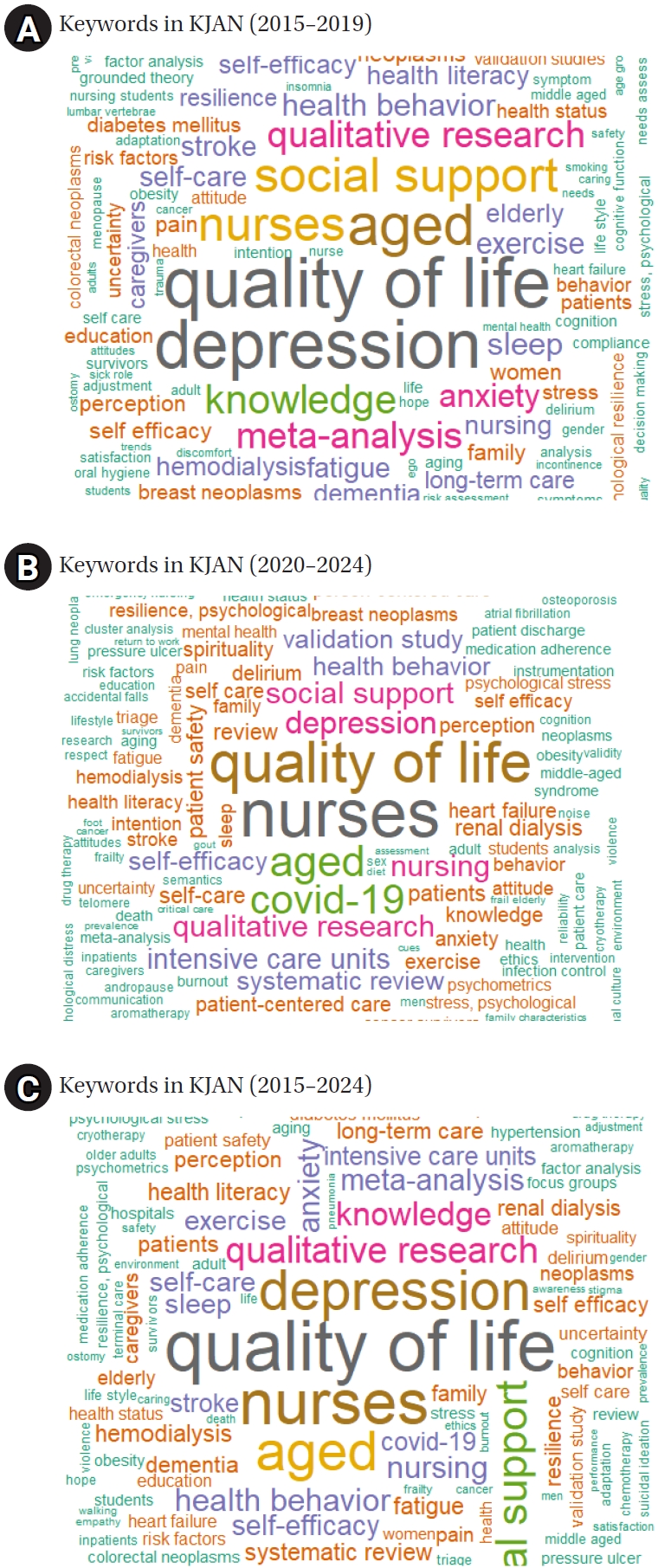
Figure 2.Mapping research trends: a keyword co-occurrence network (2015–2024).
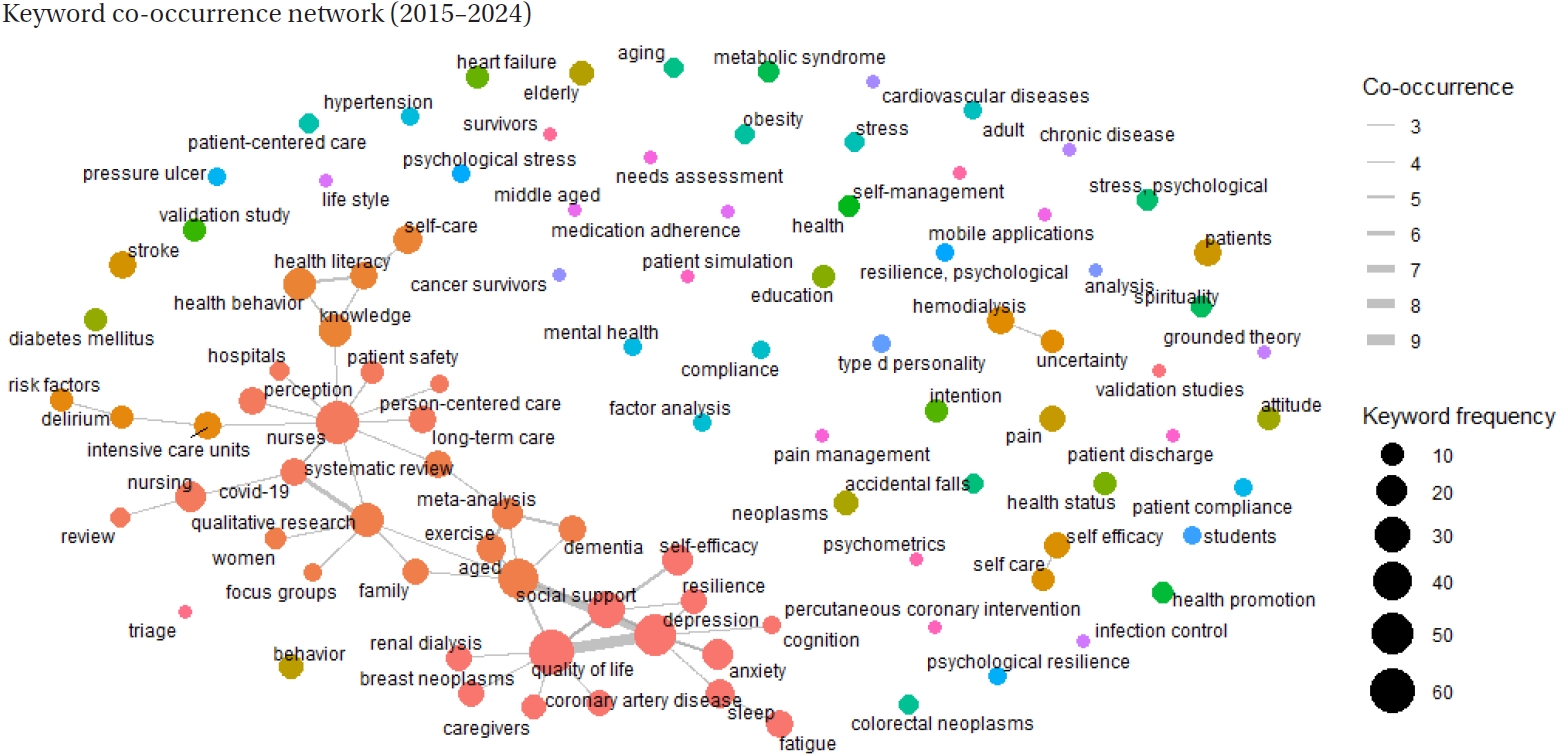
Figure 3.Trend in research topics in Korean Journal of Adult Nursing papers across two periods (2015–2019 vs. 2020–2024). Percentages were calculated within each period based on the total number of articles published. QoL=quality of life.
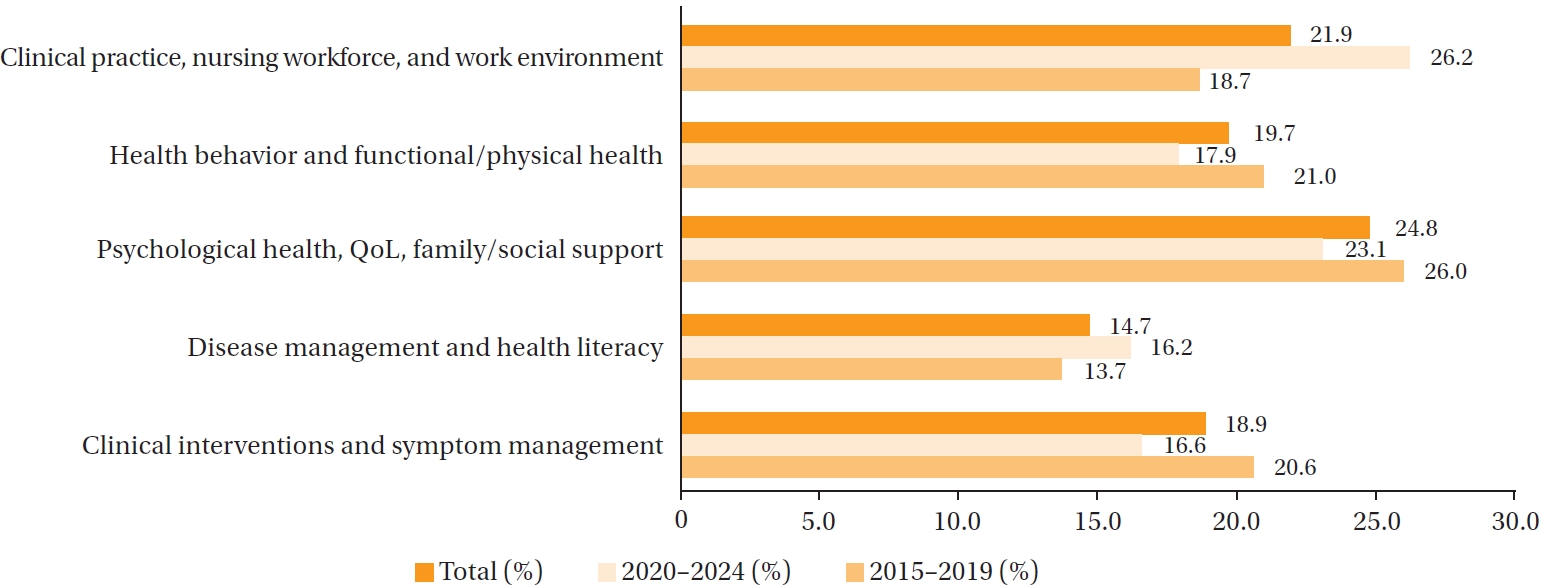
Table 1.Study Characteristics by Period (2015–2019 and 2020–2024)
|
Categories |
Classifications |
2015–2019 |
2020–2024 |
Total |
|
n (%) |
n (%) |
n (%) |
|
Total |
|
315 (100) |
229 (100) |
544 (100) |
|
First author’s institution |
University |
232 (73.7) |
157 (68.6) |
389 (71.5) |
|
Hospital |
79 (25.1) |
71 (31.0) |
150 (27.6) |
|
Others |
4 (1.3) |
1 (0.4) |
5 (0.9) |
|
Subjects |
Patients |
156 (49.5) |
107 (46.7) |
263 (48.4) |
|
Nurses |
42 (13.3) |
51 (22.3) |
93 (17.1) |
|
Adults |
162 (51.4) |
109 (47.6) |
271 (49.8) |
|
Older adults |
166 (52.7) |
90 (39.3) |
256 (47.1) |
|
Students |
20 (6.4) |
9 (3.9) |
29 (5.3) |
|
Family members |
17 (5.4) |
5 (2.2) |
22 (4.0) |
|
Document-based studies |
30 (9.5) |
29 (12.7) |
59 (10.9) |
|
Data collection setting |
Tertiary hospital/university hospital |
114 (36.2) |
90 (39.3) |
204 (37.5) |
|
General hospital/hospital |
71 (22.5) |
49 (21.4) |
120 (22.1) |
|
Community |
31 (9.8) |
30 (13.1) |
61 (11.2) |
|
Long-term care |
21 (6.7) |
8 (3.5) |
29 (5.3) |
|
University |
13 (4.1) |
6 (2.6) |
19 (3.5) |
|
Online community/website |
6 (1.9) |
12 (5.2) |
18 (3.3) |
|
Community center/welfare center |
21 (6.7) |
8 (3.5) |
29 (5.3) |
|
Public health center |
4 (1.3) |
3 (1.3) |
7 (1.3) |
|
Literature |
31 (9.8) |
35 (15.3) |
66 (12.1) |
|
Other |
8 (2.5) |
0 (0) |
8 (1.5) |
|
Data collection |
Survey |
202 (64.1) |
105 (45.9) |
307 (56.4) |
|
Online survey |
4 (1.3) |
35 (15.3) |
39 (7.2) |
|
EMR |
64 (20.3) |
40 (17.5) |
104 (19.1) |
|
Research funding |
None |
224 (71.1) |
162 (70.7) |
386 (71.0) |
|
Governments (NRF, Ministry) |
44 (14.0) |
34 (14.9) |
78 (14.3) |
|
University |
41 (13.0) |
20 (8.7) |
61 (11.2) |
|
Other |
6 (1.9) |
13 (5.7) |
19 (3.5) |
|
Thesis |
No |
177 (56.2) |
140 (61.1) |
317 (58.3) |
|
Yes |
138 (43.8) |
89 (38.9) |
227 (41.7) |
Table 2.Study Design and Methodological Profiles by Period (2015–2019 and 2020–2024)
|
Categories |
Classifications |
2015–2019 |
2020–2024 |
Total |
|
N |
% |
N |
% |
N |
% |
|
Total |
315 |
100.0 |
229 |
100.0 |
544 |
100.0 |
|
Research design |
Quantitative |
232 |
73.7 |
162 |
70.7 |
394 |
72.4 |
|
Qualitative |
31 |
9.8 |
15 |
6.6 |
46 |
8.5 |
|
Mixed methods |
3 |
1.0 |
2 |
0.9 |
5 |
0.9 |
|
Q methodology |
3 |
1.0 |
1 |
0.4 |
4 |
0.7 |
|
Review |
27 |
8.6 |
26 |
11.4 |
53 |
9.7 |
|
Methodological/instrument |
17 |
5.4 |
18 |
7.9 |
35 |
6.4 |
|
Other/not classifiable |
2 |
0.6 |
5 |
2.2 |
7 |
1.3 |
|
Quantitative Research (subtotal) |
232 |
100.0 |
162 |
100.0 |
394 |
100.0 |
|
Quantitative research methods |
Experimental/intervention |
55 |
23.7 |
24 |
14.8 |
79 |
20.1 |
|
Non-experimental/observational |
145 |
62.5 |
105 |
64.8 |
250 |
63.5 |
|
Non-experimental/secondary-data analysis |
28 |
12.1 |
28 |
17.3 |
56 |
14.2 |
|
Non-experimental/secondary analysis |
4 |
1.7 |
5 |
3.1 |
9 |
2.3 |
|
Non-experimental research (subtotal) |
177 |
100.0 |
138 |
100.0 |
315 |
100.0 |
|
Research purpose |
Descriptive study |
16 |
9.0 |
14 |
10.1 |
30 |
9.5 |
|
Correlational study |
151 |
85.3 |
118 |
85.5 |
269 |
85.4 |
|
Causal inference study |
10 |
5.6 |
6 |
4.3 |
16 |
5.1 |
|
Time perspective |
Cross-sectional |
165 |
93.2 |
121 |
87.7 |
286 |
90.8 |
|
Multipoint Cross-sectional |
1 |
0.6 |
6 |
4.4 |
7 |
2.2 |
|
Longitudinal |
11 |
6.2 |
11 |
8.0 |
22 |
7.0 |
|
Retrospective |
5 |
2.8 |
10 |
7.2 |
15 |
4.8 |
|
Prospective |
6 |
3.4 |
1 |
0.8 |
7 |
2.2 |
|
Experimental Research (subtotal) |
55 |
100.0 |
24 |
100.0 |
79 |
100.0 |
|
Experimental Design |
Randomized controlled trial |
5 |
9.1 |
8 |
33.3 |
13 |
16.5 |
|
Quasi-experimental (non-randomized) |
45 |
81.8 |
16 |
66.7 |
61 |
77.2 |
|
Others |
5 |
9.1 |
0 |
0 |
5 |
6.3 |
|
Qualitative Research (subtotal) |
31 |
100.0 |
15 |
100.0 |
46 |
100.0 |
|
Qualitative Research Methods |
Phenomenology/descriptive phenomenology |
10 |
32.3 |
3 |
20.0 |
13 |
28.3 |
|
Grounded theory |
10 |
32.3 |
1 |
6.7 |
11 |
23.9 |
|
Ethnography |
0 |
0 |
1 |
6.7 |
1 |
2.2 |
|
Content analysis |
11 |
35.5 |
10 |
66.7 |
21 |
45.7 |
REFERENCES
- 1. Yanbing S, Hua L, Chao L, Fenglan W, Zhiguang D. The state of nursing research from 2000 to 2019: a global analysis. J Adv Nurs. 2021;77(1):162-75. https://doi.org/10.1111/jan.14564
- 2. Kim YH, Moon SM, Kwon IG, Kim KS, Jeong GH, Shin ES, et al. Research trends of articles published in the Journal of Korean Clinical Nursing Research from 2000 to 2017: text network analysis of keywords. J Korean Clin Nurs Res. 2019;25(1):80-90. https://doi.org/10.22650/JKCNR.2019.25.1.80
- 3. Choe MA, Kim NC, Kim KM, Kim SJ, Park KS, Byeon YS, et al. Trends in nursing research in Korea: research trends for studies published from the inaugural issue to 2010 in the Journal of Korean Academy of Nursing and the journals published by member societies under Korean Academy of Nursing Science. J Korean Acad Nurs. 2014;44(5):484-94. https://doi.org/10.4040/jkan.2014.44.5.484
- 4. Han NK, Kim S, Kim MS, Kim JG, Kim CH, Choi SH. Trend analysis of research in the Korean Journal of Adult Nursing for 5 years (2010~2014): focused on usage of nursing theories. Korean J Adult Nurs. 2015;27(5):527-36. https://doi.org/10.7475/kjan.2015.27.5.527
- 5. Korean Society of Adult Nursing. About the journal [Internet]. Gwangju: Korean Journal of Adult Nursing; 2025 [cited 2025 April 1]. Available from: https://kjan.or.kr/index.php?body=about
- 6. Korean Society of Adult Nursing. Korean Journal of Adult Nursing: 2013 (v25 n1) to present [Internet]. Gwangju: Korean Journal of Adult Nursing; 2025 [cited 2025 April 1]; Available from: https://kjan.or.kr/articles/archive.php
- 7. Suh MJ, Kim SS, Song MS, Yee MS, Oh EG, Shin KR, et al. An analysis on the contents and the trend of nursing research published in Journal of Korean Academy of Adult Nursing (1989-2000). Korean J Adult Nurs. 2001;13(4):571-80.
- 8. Kim YK, Hwang S, Kim I, Kim JS, Oh HY, Lee JK, et al. Analysis of quantitative research published by Korean Journal of Adult Nursing (1989~2011). Korean J Adult Nurs. 2012;24(1):85-97. https://doi.org/10.7475/kjan.2012.24.1.85
- 9. Kim YK, Hwang SY, Shin SJ. Analysis of qualitative research published by Korean Journal of Adult Nursing (1989-2011). Korean J Adult Nurs. 2011;23(6):633-41.
- 10. Zhang Q, Li S, Liu J, Chen J. Global trends in nursing-related research on COVID-19: a bibliometric analysis. Front Public Health. 2022;10:933555. https://doi.org/10.3389/fpubh.2022.933555
- 11. Kim EJ, Han K. An analysis of research published in the Journal of Korean Academy of Psychiatric and Mental Health Nursing from 2013 to 2022 using text network analysis and topic modeling. J Korean Acad Psychiatr Ment Health Nurs. 2023;32(2):188-202. https://doi.org/10.12934/jkpmhn.2023.32.2.188
- 12. Lee SK, Hong HS. Text network analysis of research topics and trends on global health nursing literature from 1974 -2017. J Adv Nurs. 2021;77(3):1325-34. https://doi.org/10.1111/jan.14685
- 13. Eun Y, Koo MO, Lee HK, Jeon MY, Son HM, Kim CK, et al. Nursing research. 7th ed. Seoul: Hyunmoonsa; 2022.
- 14. Polit DF, Beck TC. Nursing research: generating and assessing evidence for nursing practice. Alphen aan den Rijn: Wolters Kluwer; 2020.
- 15. Fain JA. Reading, understanding, and applying nursing research. Seoul: Medical Science; 2022.
- 16. Silge J, Robinson D. Tidytext: text mining and analysis using tidy data principles in R. J Open Source Softw. 2016;1(3):37. https://doi.org/10.21105/joss.00037
- 17. Schofield A, Mimno D. Comparing apples to apple: the effects of stemmers on topic models. Trans Assoc Comput Linguist. 2016;4:287-300. https://doi.org/10.1162/tacl_a_00099
- 18. Yu S, Kim JI, Park JH, Jang SJ, Suh EE, Song JE, et al. Analysis of research topics and trends in the Journal of Korean Academy of Nursing to improve its international influence. J Korean Acad Nurs. 2020;50(4):501-12. https://doi.org/10.4040/jkan.20167
- 19. Park JH, Kim HK, Kim G, Bae SH. Ten-year trends in research designs and keywords: a bibliometric comparison of the Journal of Korean Academy of Nursing and leading international nursing journals. J Korean Acad Nurs. 2025;55(4):557-67. https://doi.org/10.4040/jkan.25119
- 20. Hlatshwako TG, Shah SJ, Kosana P, Adebayo E, Hendriks J, Larsson EC, et al. Online health survey research during COVID-19. Lancet Digit Health. 2021;3(2):e76-7. https://doi.org/10.1016/S2589-7500(21)00002-9
- 21. De Man J, Campbell L, Tabana H, Wouters E. The pandemic of online research in times of COVID-19. BMJ Open. 2021;11(2):e043866. https://doi.org/10.1136/bmjopen-2020-043866
- 22. Park J, Han AY. Medication safety education in nursing research: text network analysis and topic modeling. Nurse Educ Today. 2023;121:105674. https://doi.org/10.1016/j.nedt.2022.105674
- 23. Zavarrone E, Grassia MG. Text analysis: an overview. In: Balakrishnan N, Colton T, Everitt B, Piegorsch W, Ruggeri F, Teugels JL, editors. Wiley StatsRef: statistics reference online. Hoboken, NJ: Wiley; 2018. p. 1-3.
- 24. Roberts ME, Stewart BM, Airoldi EM. A model of text for experimentation in the social sciences. J Am Stat Assoc. 2016;111(515):988-1003. https://doi.org/10.1080/01621459.2016.1141684
- 25. Auerbach DI, Buerhaus PI, Donelan K, Staiger DO. Projecting the future registered nurse workforce after the COVID-19 pandemic. JAMA Health Forum. 2024;5(2):e235389. https://doi.org/10.1001/jamahealthforum.2023.5389
- 26. Chan GK, Bitton JR, Allgeyer RL, Elliott D, Hudson LR, Moulton Burwell P. The Impact of COVID-19 on the nursing workforce: a national overview. Online J Issues Nurs. 2021;26(2):1-17. https://doi.org/10.3912/OJIN.Vol26No02Man02
- 27. Dall'Ora C, Saville C, Rubbo B, Turner L, Jones J, Griffiths P. Nurse staffing levels and patient outcomes: a systematic review of longitudinal studies. Int J Nurs Stud. 2022;134:104311. https://doi.org/10.1016/j.ijnurstu.2022.104311
- 28. Oner B, Hakli O, Zengul FD. A text mining and network analysis of topics and trends in major nursing research journals. Nurs Open. 2024;11(1):e2050. https://doi.org/10.1002/nop2.2050
- 29. Wickham RJ. Secondary Analysis Research. J Adv Pract Oncol. 2019;10(4):395-400. https://doi.org/10.6004/jadpro.2019.10.4.7
- 30. Vandenbroucke JP, von Elm E, Altman DG, Gotzsche PC, Mulrow CD, Pocock SJ, et al. Strengthening the Reporting of Observational Studies in Epidemiology (STROBE): explanation and elaboration. Int J Surg. 2014;12(12):1500-24. https://doi.org/10.1016/j.ijsu.2014.07.014


 , Jungsun Lee3,*

 E-SUBMISSION