Purpose This scoping review examined the characteristics and educational effects of simulation-based disaster nursing education programs for nursing students and nurses and aimed to provide foundational evidence for future curriculum design and research.
Methods Following Joanna Briggs Institute methodology and the Preferred Reporting Items for Systematic Reviews and Meta-Analyses extension for scoping reviews, we searched four international and four Korean databases for studies published between January 2010 and December 2025. Studies were selected using the population, concept, and context framework and were limited to simulation-based educational interventions for disaster situations that reported quantitative learning outcomes. Twenty-four experimental or quasi-experimental studies with control groups met the inclusion criteria and were analyzed.
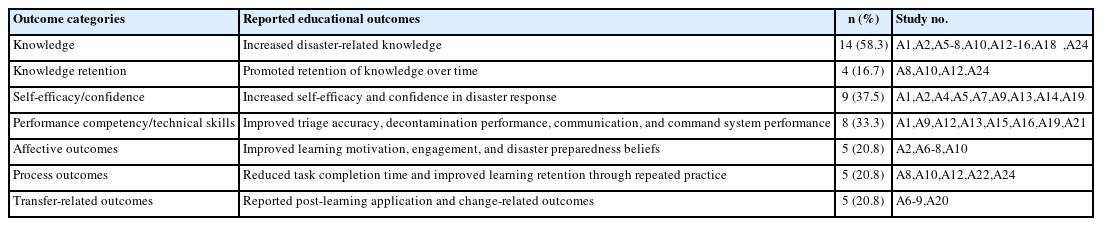
Results Most studies included nursing students, although several involved practicing nurses. Simulation modalities included online and virtual simulations, high-fidelity manikins, standardized patients, tabletop exercises, and blended formats, and addressed scenarios such as earthquakes, mass-casualty incidents, hazardous events, and infectious disease outbreaks. Educational outcomes were grouped into cognitive, affective, and performance domains. Across studies, improvements were frequently reported in disaster-related knowledge, self-efficacy, performance competency, and learning motivation; however, evidence for long-term retention, teamwork, and interprofessional collaboration remained limited.
Conclusion Simulation-based disaster nursing education may strengthen integrated disaster response competencies among nursing students and nurses. Structured programs incorporating pre-learning, scenario-centered practice, debriefing, and opportunities for repeated exposure may support competency development. Further research is needed to evaluate long-term and team-based outcomes and to develop multidisciplinary programs that more closely reflect real-world disaster contexts.


 E-SUBMISSION
 First
First Prev
Prev