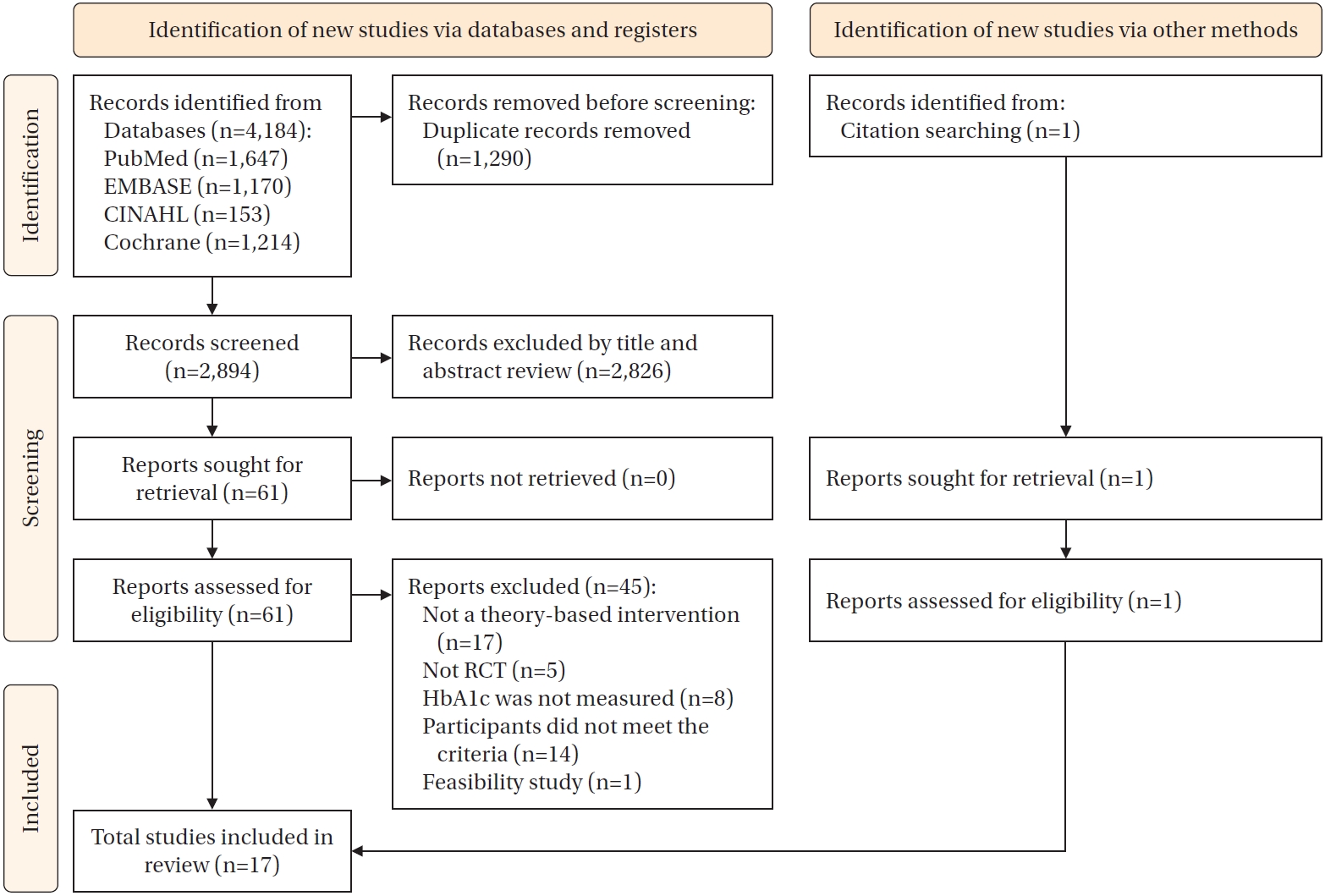
Purpose This review aimed to analyze the use of behavior change techniques (BCTs) and the degree of theory implementation using a theory coding scheme (TCS) in mobile self-management interventions for type 2 diabetes mellitus (T2DM). Methods: In this scoping review, four electronic databases (PubMed, EMBASE, CINAHL, and CENTRAL) and gray literature sources were searched. Studies were independently screened according to predefined criteria. The BCT taxonomy was used to categorize techniques, and the TCS was applied to evaluate the quality of theory implementation. Results: Seventeen randomized controlled trials were included. Twenty-five unique BCTs were identified (mean, 8.1 per study). Commonly used BCTs included social support (unspecified) (n=14), instructions on how to perform a behavior (n=14), feedback on behavior (n=11), and prompts/cues (n=11). Techniques related to capability, such as habit formation, rewards, framing/reframing, and verbal persuasion, were rare (n=1 study each). TCS scores ranged from 5 to 15 (mean, 10.3). All included studies cited a theory, used it to select intervention techniques, and employed randomization. However, no study used the findings to refine the theory, and only one conducted a mediational analysis of theoretical constructs. Conclusion: Mobile T2DM self-management interventions commonly rely on a limited range of BCTs and show restricted theoretical application beyond basic implementation. Future interventions should employ a broader array of BCTs and apply theories more rigorously, including tailoring interventions, empirically testing theoretical mechanisms, and refining theories based on results to increase their effectiveness.


 E-SUBMISSION
 First
First Prev
Prev