

| Jungsun Lee | 1 Article |
Purpose
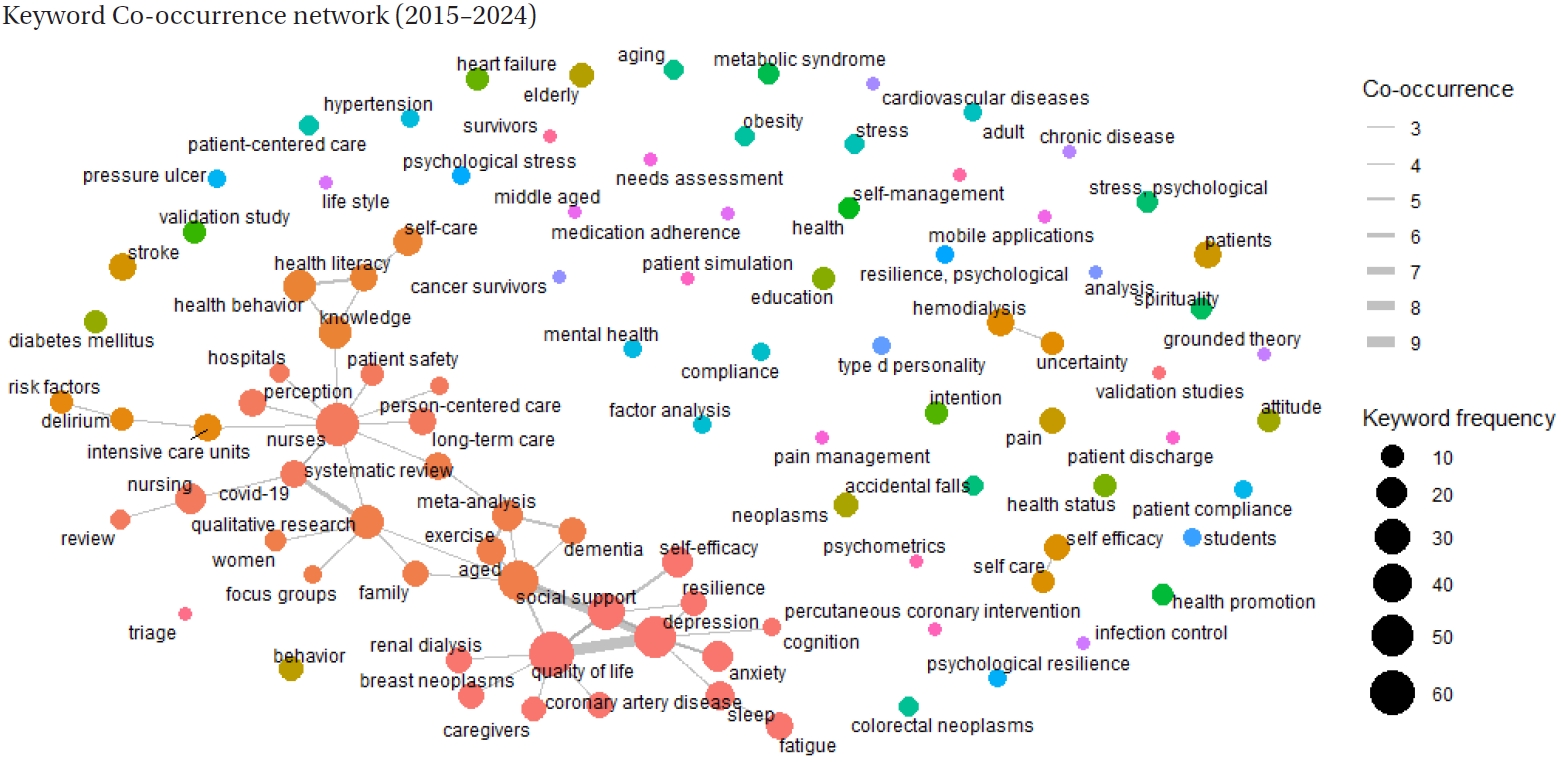
This study analyzed publications from the past decade in the Korean Journal of Adult Nursing (KJAN) to examine patterns in research design and thematic trends using both manual coding and topic modeling approaches. Methods A retrospective review was conducted of research articles published in KJAN between 2015 and 2024. Study designs and methodological characteristics were classified using a structured coding framework and analyzed with descriptive statistics. A text-mining approach incorporating keyword network analysis and latent Dirichlet allocation topic modeling was applied to examine thematic patterns. Results Over the past decade, quantitative research was the predominant methodological approach, accounting for more than 70% of the 544 studies. The proportion of qualitative research decreased, whereas literature reviews increased. Within quantitative research, experimental studies declined, while secondary-data analyses and online surveys increased substantially. Keyword and topic analyses consistently highlighted psychological health, quality of life, chronic illness, and older adults as central research domains. Topic modeling further identified five major themes: (1) clinical interventions and symptom management; (2) disease management and health literacy; (3) psychological health, quality of life, and family/social support; (4) health behavior and functional/physical health; and (5) clinical practice, nursing workforce, and work environment. Conclusion Adult nursing research in South Korea demonstrates both continuity and change, with sustained emphasis on psychosocial and chronic illness–related topics and increasing attention to workforce issues. To strengthen future scholarship, greater efforts are needed to ensure that findings derived from diverse research designs are reported in a coherent and integrated manner.
|
|
 E-SUBMISSION