

Assistant Professor, Department of Nursing, Dongnam Health University, Suwon, Korea


Purpose
Cardiac rehabilitation (CR) reduces morbidity and mortality, yet women continue to face psychosocial, logistical, and cultural barriers that limit adherence. A clearer conceptual understanding of adherence promotion is needed to guide gender-sensitive nursing interventions and inform policy development. This study aimed to clarify the concept of adherence promotion in CR for women, strengthen its theoretical foundation, and inform the design of equitable, contextually responsive interventions.
Methods
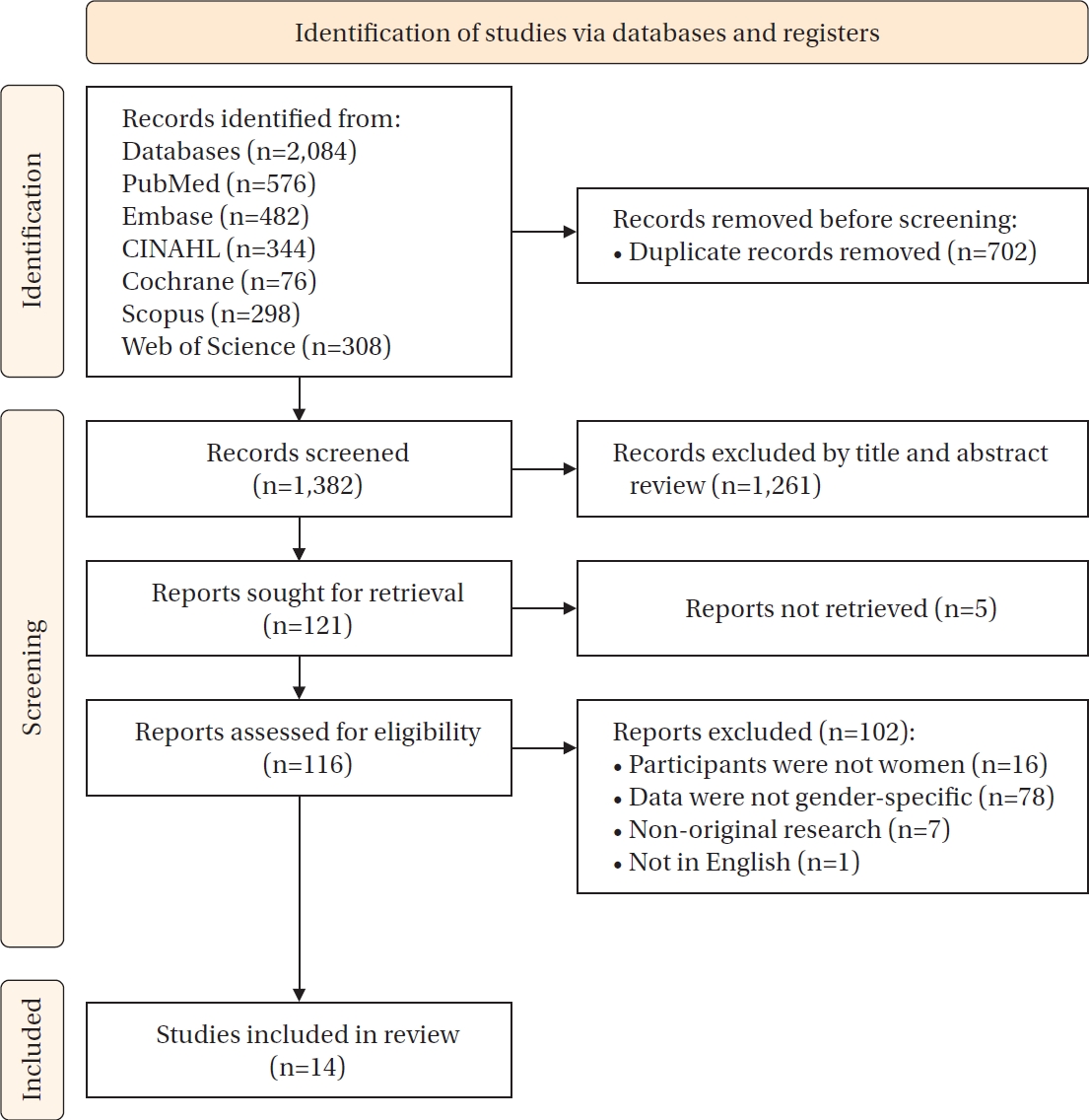
Walker and Avant’s eight-step concept analysis method was used. A structured search of PubMed, CINAHL, Embase, Scopus, Web of Science, and the Cochrane Library identified 2,084 records published between 2016 and 2025. Fourteen studies met the inclusion criteria and were thematically analyzed to identify defining attributes, antecedents, consequences, and empirical referents.
Results
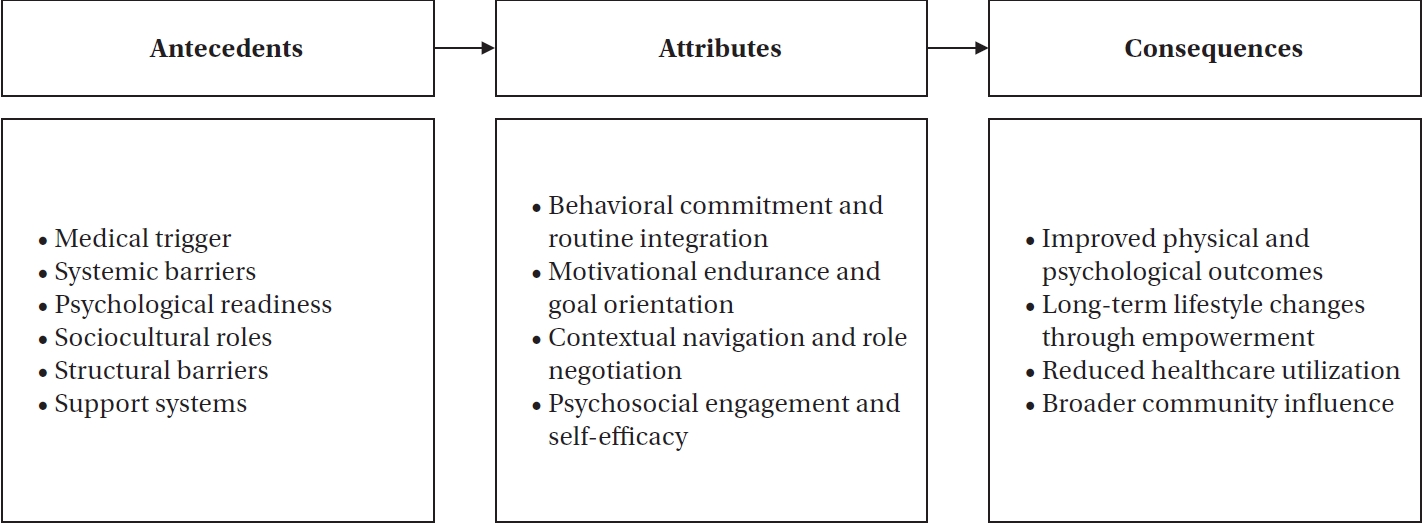
Four defining attributes were identified: (1) behavioral commitment and routine integration, (2) motivational endurance and goal orientation, (3) contextual navigation and role negotiation, and (4) psychosocial engagement and self-efficacy. Antecedents included a qualifying cardiovascular event, psychological readiness, sociocultural gender roles, and access to care. Consequences included improved physical and psychological outcomes, lifestyle change, empowerment, reduced healthcare utilization, and community influence. Empirical referents included attendance rates, self-efficacy measures, and qualitative indicators of resilience and peer support.
Conclusion
Women’s adherence to CR is shaped by emotional, social, physical, and systemic factors. Nurse-led, gender-sensitive interventions, including telehealth, peer support, and community outreach, may strengthen engagement and improve equity. Future research should develop scalable nurse-driven models to improve adherence and cardiovascular outcomes.
 E-SUBMISSION