

| Kisook Kim | 1 Article |
Purpose
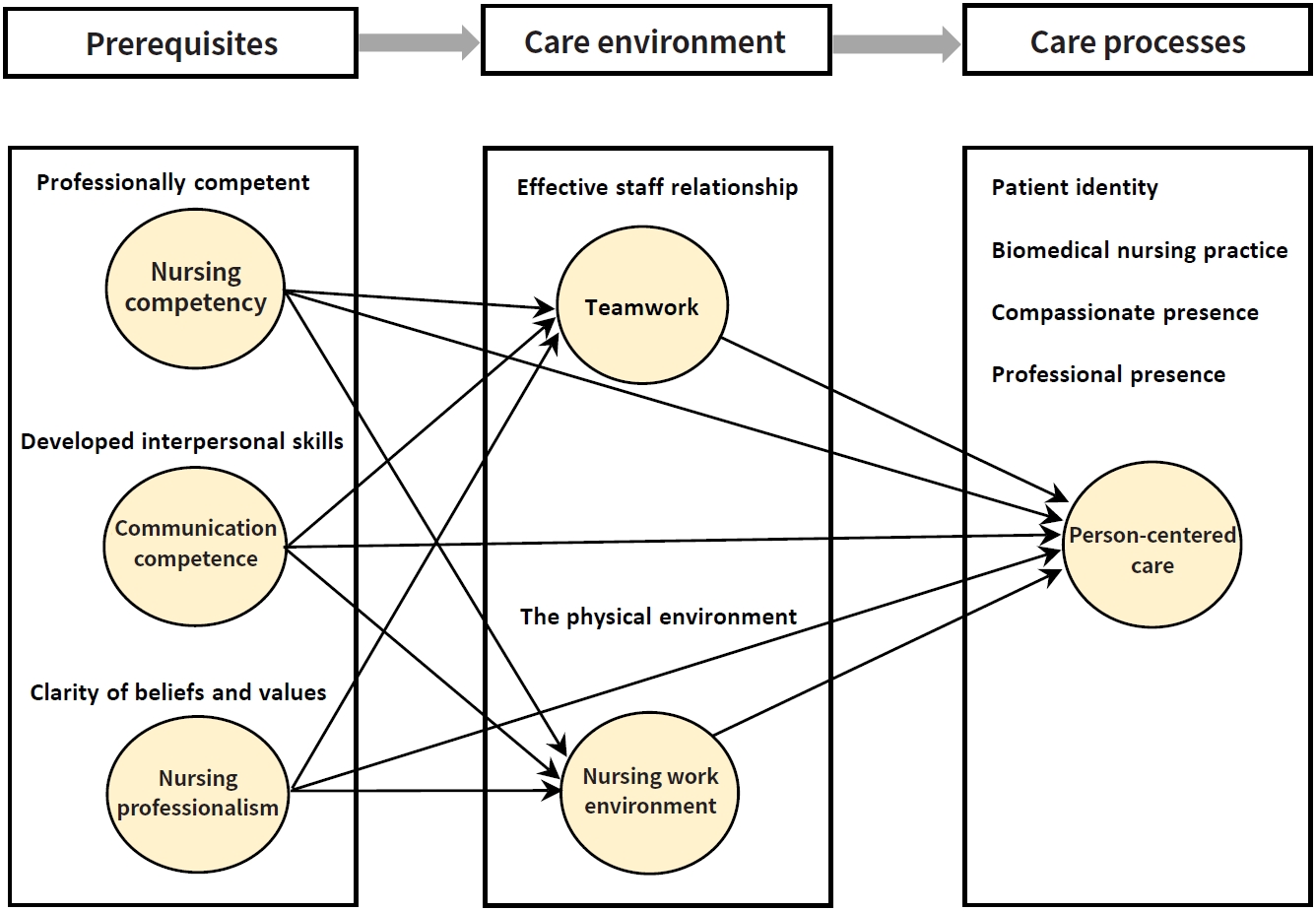
Person-centered care emphasizes the therapeutic relationship between medical staff and patients, founded on mutual trust and understanding. In intensive care settings, there is growing recognition of the need to improve the care environment and promote patient-focused nursing. This study aimed to construct and validate a predictive model explaining person-centered care in intensive care units. Methods: This study employed a cross-sectional design involving 230 intensive care unit nurses working in a tertiary hospital, each with more than one year of direct patient care experience. Data were collected online between March 2 and March 30, 2023. Data analysis was conducted using IBM SPSS ver. 26.0 and AMOS ver. 25.0. Results: Statistically significant pathways were identified from nursing competency to the nursing work environment and person-centered care; from communication competence to teamwork and person-centered care; from nursing professionalism to teamwork and the nursing work environment; and from the nursing work environment to person-centered care. Nursing professionalism indirectly influenced person-centered care through teamwork and the nursing work environment. Conclusion: Enhancing person-centered care in intensive care units requires recognizing the critical roles of communication competence, nursing competency, and the nursing work environment. Developing and implementing educational programs that strengthen communication and nursing competencies, alongside initiatives that improve the nursing work environment, are essential.
|
|
 E-SUBMISSION